Tuesday, July 22, 2025

“Apostle of the Apostles” - Liturgical Notes on the Feast of St Mary Magdalene

In the Missal of St Pius V, the Creed is said on every Sunday, and several categories of feasts: all those of the Lord, the Virgin Mary, Angels, Apostles, Doctors, etc. To this list is added one other woman, St Mary Magdalene, in commemoration of the fact that it was she who announced the Resurrection of Christ, the foundation of the Faith, to the Apostles; for this reason she has often been called “the Apostles of the Apostles.” This custom was widely observed in the Middle Ages, but originally not accepted at Rome itself; the Ordinal of the papal liturgy in the reign of Pope Innocent III (1198-1216) specifies that the Creed is not to be said on the feast, indicating that it was known to be done elsewhere. It was still omitted according to the rubrics of printed editions of the Roman Missal in the first half of the 16th century; its addition in the rubrics of 1570 is one of the rare cases where a new custom was added to the Roman Rite from elsewhere in the highly conservative Tridentine reform. (It was removed from her feast in 1955, and from the Doctors in 1961.)
Two pages of a Roman Missal printed at Lyon, France, in 1500 (folio 95 recto and verso). The rubric about the Creed begins in the middle of the right column of the first page. Note that at the break between the two pages, St Bonaventure is listed as a Saint on whose feast the Creed is said; this edition was printed for the Franciscans, who counted him informally as a Doctor before the title was officially given in 1588. (Bibliothèque nationale de France, département Réserve des livres rares.)
The Gregorian propers of her Mass (Introit, Gradual etc.) are taken from the various common Masses of holy women; in the Middle Ages, the Epistle was that of Holy Matrons, Proverbs 31, 10-31, “Who shall find a valiant woman? etc.” In the Tridentine Missal, a new Epistle was created, the Song of Songs, 3, 2-5 and 8, 6-7, which begins as follows.
I will rise, and will go about the city: in the streets and the broad ways I will seek him whom my soul loveth: I sought him, and I found him not. (quaesivi illum et non inveni.) The watchmen who keep the city, found me: Have you seen him, whom my soul loveth? When I had a little passed by them, I found him whom my soul loveth: I held him: and I will not let him go ...
St Gregory the Great refers the words “I will seek him whom my soul loveth” to John 20, 11-18, when Mary meets Christ at the tomb and mistakes him for the gardener, in the Breviary homily for Easter Thursday.
We must consider how great was the force of love that had enkindled this woman’s heart, who left not the tomb of the Lord, though even the disciples were gone away. She sought Him Whom she had not found there, (exquirebat, quem non invenerat) and as she sought Him, she wept, … Whence it came to pass that she alone, who had stayed behind to seek Him, was the only one who then saw Him.
“When I had a little passed by them” (i.e. the watchmen of the city) then refers to tomb of the Lord being just outside the city, and the words “I held him: and I will not let him go” to her embracing the Lord, until He says to her, “Cling to me not, for I am not yet ascended to my Father.”

‘Noli me tangere’ by Jacob van Oostsanen, 1507. The words of John 20, 15, that Mary Magdalene at first thought the Risen Christ was the gardener, gave rise to a delightful tradition of portraying Him with various gardening implements, such as the shovel seen here, or the kind of broad-brimmed hat often worn by gardeners.
From the time of St Gregory, the Western Church accepted that Mary Magdalene was also the sinful woman who anoints Christ’s feet in the house of Simon the Pharisee, as recounted in Luke 7, 36-50, the Gospel for her feast. This connection was probably made from the words that immediately follow this passage, or at least reinforced by them, Luke 8, 1-3. “And it came to pass afterwards, that he travelled through the cities and towns, preaching and evangelizing the kingdom of God; and the twelve with him: And certain women who had been healed of evil spirits and infirmities; Mary who is called Magdalen, out of whom seven devils were gone forth, And Joanna the wife of Chusa, Herod’s steward, and Susanna, and many others who ministered unto him of their substance.” (Mark 16, 9 also refers to the seven devils.)

She is also traditionally held in the West to be Martha and Lazarus’ sister, of whom Christ says in the same Gospel “Mary hath chosen the best part, which shall not be taken away from her.” (Luke 10, 38-42) This passage is read on the feast of St Martha on July 29th, the octave of Mary Magdalene; from it, Martha has traditionally been seen as the symbol of the active life, and Mary of the contemplative. The same passage is then read also on the feast of the Assumption, a custom inherited, like the feast of itself, from the Byzantine Rite; this was understood allegorically in the Middle Ages to signify that in the person and life of the Virgin Mary are perfected both the active and the contemplative life.
Christ in the House of Mary and Martha, by Henryk Semiradzki, 1886
The Byzantine Rite (in which the Creed is said at every Eucharistic liturgy) keeps July 22 as the feast of the “Myrrh-bearer and Equal to the Apostles, Mary Magdalene,” and on June 4 commemorates “Mary and Martha, the sisters of Lazarus the Just.” Neither of the two Marys thus distinguished is associated with the sinful woman of Luke 7, but the Gospel of Mary Magdalene’s feast day is the passage from Luke 8 noted above. The two sisters are traditionally numbered among the “Myrrh-bearers” who went to the tomb to anoint the body of Christ on the morning of the Resurrection, although they are not named as such by the Gospel; with them are included also Mary, the mother of James and Joses, Mary, the wife of Cleophas, Joanna and Susanna named in Luke 8, and Salome, the mother of the sons of Zebedee. They are commemorated as a group on the second Sunday after Easter, along with Joseph of Arimathea and Nicodemus. At Vespers of the preceding Saturday, the following idiomel is sung, paraphrasing Matthew 28 and Luke 24.
Mary Magdalen and the other Mary came to the grave seeking the Lord, and they saw an Angel like lightning sitting on the stone, who said to them, ‘Why do you seek the living among the dead? He has risen as he said; in Galilee you will find him’. To him let us cry aloud, ‘Lord, risen from the dead, glory to you!’
In the Roman Rite, Matthew 28, 1-7 is the Gospel of the Easter vigil, which concludes with a very much shortened Vespers; the antiphon for the Magnificat is the beginning of the Gospel, “And in the end of the Sabbath, when it began to dawn towards the first day of the week, came Mary Magdalen and the other Mary, to see the sepulcher, alleluia.” Even though the term “Apostle of the Apostles” does not occur in the Roman liturgical books, the liturgy itself proclaims this role for her as the first person named in the accounts of the Resurrection.

The church of Rome was traditionally very conservative about the addition of new texts to the Office; one often finds that the proper Office of a saint hugely popular in the Middle Ages, such as St Nicholas, is found in virtually every medieval Breviary except that of the Roman Curia, the basis of the Breviary of St Pius V. Such is the case with Mary Magdalene, whose Roman Office is mostly that of the common of Holy Women. She has proper antiphons for the Benedictus and the two Magnificats, but none for the psalms; there are also three proper hymns, although that of Matins is a single stanza and a doxology. Three responsories at Matins referring to her are borrowed from Easter, but the rest are taken from the common of Holy Women.

Other medieval breviaries, however, adopted one of various proper Offices for the feast, of which the most interesting is that found in the Dominican Breviary. At First Vespers, the antiphon of the Magnificat reads as follows:
Celsi mériti María, quae solem verum resurgentem vidére meruisti mortalium prima: óbtine ut nos visu gloriae suae tecum laetíficet in caelis.
Mary of high merit, that first among mortals did merit to see the true Sun rising; obtain that He may grant us joy by the vision of His glory in heaven.
And at the Benedictus:
O mundi lampas, et margaríta praefúlgida, quae resurrectiónem Christi nuntiando, Apostolórum Apóstola fíeri meruisti! María Magdaléna, semper pia exoratrix pro nobis adsis ad Deum, qui te elégit.
O lamp of the world, and bright-shining pearl, who by announcing the Resurrection of Christ, didst merit to become the Apostle of the Apostles! Mary Magdalene, of thy kindness stand thou ever before God, who chose thee, to entreat him for us.
Outstanding among the responsories of Matins is the eighth, (necessarily not as beautiful in my translation).
R. O felix felícis mériti María, quæ resurgentem a mórtuis Dei Filium vidére meruisti mortalium prima! Pro cujus amore, sæculi contempsisti blandimenta: * sédula nos apud ipsum, quæsumus, prece commenda. V. Ut tecum mereámur, o Dómina, pérfrui felicíssima ipsíus præsentia. Sédula.
R. O happy Mary of happy merit, that first among mortals did merit to see the Son of God rising from the dead; for whose love thou disdained the blandishments of the world: * by thy prayer, we ask thee, commend us to Him with diligence. V. That with thee, o Lady, we may merit to enjoy his most happy presence. By thy prayer.
The Office used by the Premonstatensians shares a number of texts with that of the Dominicans; it contains this very interesting and uncommonly long (and hence rather rarely used) antiphon:
Fidelis sermo et omni acceptione dignus, quia Christus Jesus venit in hunc mundum peccatores salvos facere; et qui nasci dignatus est de Maria Virgine, tangi non dedignatus est a Maria peccatrice. Haec est illa Maria, cui dimissa sunt peccata multa, quia dilexit multum. Haec est enim illa Maria, quae resurgentem a mortuis prima omnium videre meruit Dominum nostrum Iesum Christum, quem pro nostris reatibus oret, quaesumus, in aeternum.
A faithful saying, and worthy of all acceptance, that Jesus Christ came into this world to save sinners; and He that deigned to be born of the Virgin Mary, did not disdain to be touched by Mary the sinner. This is that Mary, to whom many sins were forgiven, because she loved much. This is indeed that Mary, who before all others merited to see our Lord Jesus Christ rising from the dead; and we ask that she pray Him forever for our sins.
Lastly, we may note the Preface of her feast in the Ambrosian liturgy, another text that can only suffer in translation.
Vere dignum et justum est, aequum et salutare, nos te, Pater omnipotens, omni tempore glorificare, et in die festivitatis hodiernae Beatae Mariae Magdalenae exultantibus animis praedicare. Quam sic tui amoris igne accendere dignatus es; ut ad Christi Filii tui vestigia devota corrueret, et eadem pretioso unguento perfunderet. Osculari quoque, ac lacrimis rigare, et capillis non cessat extergere, donec audire promeruit, ‘Dimissa sunt tibi peccata, vade in pace.’ O beata fides, divinae misericordiae munita praesidio! O digna conversio, quae tantum munus accepit, ut quae antea draconis antiqui faucibus merito tenebatur astricta, plena jam gaudens libertate, sanctis Apostolis dominincae Resurrectionis mereretur esse praenuncia. Et ideo…
Truly it is fitting and just, meet and profitable to salvation, that we glorify Thee, Father almighty, in every moment, and on this feast day of blessed Mary Magdalene proclaim Thee with spirits rejoicing. Whom Thou didst so deign to kindle with the fire of Thy love, that in devotion she fell at the feet of Christ, Thy Son, and anointed them with precious ointment; and ceased not to kiss them, to wash them with her tears, and wipe them with her hair, until she merits to hear, ‘Thy sins are forgiven go, in peace.’ O blessed faith, strengthened with the help of divine mercy. O worthy conversion, that merited to receive so great a gift, that she who was formerly deservedly held fast in the jaws of the ancient dragon, now rejoicing in complete freedom, should merit to be the first to announce the Lord’s Resurrection to the Holt Apostles. And therefore with the Angels and Archangels…
The Penitent Magdalene, by Caravaggio, ca. 1594-95.

Tuesday, July 15, 2025

“Their Sound Is Gone Out” - The Division of the Apostles

July 15th is the traditional day for the feast known as the “Divisio Apostolorum – the Division (or ‘Dispersion’) of the Apostles”, a feast which was very popular in the Middle Ages, and continued into the Tridentine period on many local calendars, but was never on the general Calendar. It is the liturgical commemoration of an ancient tradition that some time after the Ascension, (Durandus says twelve years), the Apostles cast lots for which part of the world each one of them would take, and spread out from Jerusalem to preach the Gospel in the various nations. The common Office of the Apostles refers to this idea repeatedly, as, for example, in the first antiphon of Matins, taken from Psalm 18. “Their sound hath gone forth into all the earth: and their words unto the ends of the world.”, and likewise the third antiphon from Psalm 44, “Thou shalt make them princes over all the earth; they shall remember thy name, O Lord.”

The earliest reference to this specific feast is a sequence which was well-known and widely used in the Middle Ages, written by one Godeschalk, a monk of Limburg abbey in western Germany, who died in 1098. It is written in the earlier and freer style of sequences like the Victimae Paschali, with less rhyme and structure than later ones such as St Thomas’ Lauda Sion or the Stabat Mater. It makes frequent use of the Patristic interpretation of the first words of Psalm 18, “The heavens proclaim the glory of God”, according to which the “heavens” are understood to be the Apostles, as St Gregory says in the Breviary. (Common lesson of the 2nd nocturn of the Apostles.)

The Sequence “Caeli enarrant gloriam” in the Mass of the Division of the Apostles, starting towards the top of the second column here. (Click to enlarge.) From the Missal according to the Use of Augsburg, Germany, ca. 1510.
Thus the prayer which concludes it, (as is typical of the genre,) reads, “These are the heavens, in whom Thou dwellest, the Angel of great counsel, whom Thou didst call no longer servants, but friends, to whom Thou makest known all things which Thou hast heard from the Father. / Keep undivided, and in the bond of peace, the flock that was gathered by their division, that we may be one in Thee, as thou are one in the Father. / Have mercy on us, Thou that dwellest in the heavens.”

The Gospel of the feast is that of the Ascension, (Mark 16, 14-20) but with the first verse left off, “Jesus appeared to the eleven as they were at table: and he upbraided them with their incredulity and hardness of heart, because they did not believe them who had seen him after he was risen again.” This omission is entirely appropriate for the common use of the feast among missionary congregations, since it celebrates the mission of the Apostles and their fulfillment of the commandment which Christ gives them in the verse which now opens the Gospel, “Go ye into the whole world, and preach the gospel to every creature.”

There is a tradition known from the 4th century that the baptismal creed now called the Apostles’ Creed was composed as a rule of the Faith by the Twelve before this dispersal, with each one of them contributing an article. This is often represented in art, as here in the border of this page of the famous Hours of Catherine of Cleves, ca. 1440. (In the center is depicted the legend of the Ten Thousand Martyrs, represented symbolically by ten figures.)

It is also seen here in a Carthusian Breviary ca. 1490, (starting near the top of the right column), in which the name of an Apostle is printed in red before each article of the Creed.

Like many of the traditions held dear by the medievals, it was called into question by some of the scholars of the Renaissance, particularly at the time of the Council of Florence in 1438. As the Council wrestled with the question of reunion between the Eastern and Western churches, the issue of the Creeds, and especially the Latin addition of “Filioque” to that of Nicea, was of course one of the most important topics of discussion. The Latins, who recognized three Creeds used in the liturgy, the Apostles, the Nicene, and the Athanasian, were unpleasantly surprised to learn that the Greek delegates had never heard of the first of these.

Fr Nicholas Ayo, C.S.C., in a book on St Thomas’ Sermons on the Apostles’ Creed, beautifully summarizes why we may still refer to it by this name. “With the Apostles’ Creed we have the teaching of the Apostles as passed on by authentic apostolic succession. … The Creed summarizes the Scriptures, which in turn summarize the teaching of the early Church by the Apostles, who in turn were taught of Jesus, who was taught of God.” (Sermon-Conferences of St. Thomas Aquinas on the Apostles’ Creed, p. 175)

Friday, December 06, 2024

The Conglorified Life-Maker

Lost in Translation #114

In the Niceno-Constantinople Creed, the Holy Spirit is identified in a somewhat curious manner:

Καὶ εἰς τὸ Πνεῦμα τὸ Ἅγιον, τὸ Κύριον, τὸ ζῳοποιόν,
Which in Latin is:
Et in Spíritum Sanctum, Dóminum et vivificantem
And which I translate as :
And in the Holy Spirit, the Lord and Life-maker.
I translate vivificans as “Life-Maker” rather than the more common “Giver of Life” for two reasons. First, the verb vivifico etymologically means to make life: vivus+facio. Second, as we have seen before, making and being made are important themes in the Creed. The Father is the Maker of Heaven and earth, the Son is He through whom all things are made, and now we learn that the Holy Spirit is the Maker of life. Calling the Holy Spirit a Life-Maker is a way of affirming His full and equal divinity.

But the word would not have entered the Creed were it not for the vicissitudes of history. The Pneumatomachians” or “Spirit-fighters” (also known as the Macedonians) denied the divinity of the Holy Spirit, and since He was not God, He was not a Life-Maker but a life-needer, that is, a creature who needed life from a higher source. It was Saint Basil the Great who refuted this error. Lifting a rare Greek term from the pages of philosophy [1], Basil called the Holy Spirit a ζῳοποιόs or Life-Maker. The Latin vivificans is rarer still, appearing only in ecclesiastical Latin. [2]

We can also attribute another line of the Creed, simul adoratur et conglorificatur, to Basil’s fight with the Spirit-fighters. The latter somehow got it into their heads that no glory should not be attributed to the Holy Spirit. Basil easily refuted their argument by noting all the places in the Scriptures that even creatures are given glory and then asking them:
While so many are being glorified, do you wish the Spirit alone to be without glory? “The dispensation of the Spirit,” Scripture says, “comes in glory.” How, then, is He unworthy of being glorified? According to the Psalmist, great is the glory of the just, but according to you, the glory of the Spirit is nothing. How, then, is there not an evident danger that from such words they bring inevitable sins from themselves? If the man who is saved by works of righteousness glorifies even those who fear the Lord, he would not defraud the Spirit of the glory that is owed to Him. [3]
The Creed is one of the ways that we do not defraud the Spirit of the glory that is owed Him.
Basil the Great
The Basilian fingerprints on the Creed are an instructive reminder about how doctrine develops. It is tempting to think of dogmatic development as a strictly logical process that deductively moves from first principles to conclusions, or from what is implicitly held to what is explicitly stated. But the truth is a little more complicated than that. Mostly, dogma is defined in reaction to a doctrinal crisis, and doctrinal crises are specific. Had the Spirit-fighters attacked some other aspect of the Holy Spirit, we would probably be saying something different in the Creed. If, for example, they denied that the Holy Spirit is Love, we might be saying every Sunday, Et in Spiritum Sanctum, Dominum et Caritatem. Fundamentalists are wrong to think that the Truth descends from Heaven in a hermetically-sealed container, and modernists are wrong to think that truth is at best in a Heraclitan flux. Doctrinal development reminds us that Catholic dogma is both historically conditioned and absolutely true, and that sometimes, it is easier to understand those truths when one knows the history behind them.

Notes
[1] See Theophrastus, On the Causes of Plants 2.9.6; Proclus, Institutio Physica 145; Porphyry, acc. to Eusebius, Preparation for the Gospel 3.11; Damascius, On First Principles 80.
[2] See Augustine, Against Two Letters of the Pelagians 2.10, 33; Prudentius, Apotheosis 234; Paulinus Nola, Hymn 26.207; Jerome, Epistle 108, 11.
[3] On the Holy Spirit, trans. Stephen Hildebrand (St. Vladimir’s Seminary Press, 2011), 24.55.

Friday, November 29, 2024

The Power of Prepositions

Lost in Translation #113

The verses in the Nicene Creed concerning the Incarnation, Passion, and Death of Jesus Christ contain a number of expressive prepositions. Prepositions, though usually diminutive in size, can be surprisingly difficult to translate, perhaps because they express a relation between two or more things, and relations are understood differently by different cultures. For example, to say in Latin that “The glass is on the table” I must say that “The glass is in the table” (poculum in mensa est), and I would use the same formulation to say that there an inlaid stones in the table (tesserae in mensa sunt). And were I to use another preposition like supra for the glass’s location, a Roman would picture a glass hovering over a table.

De and Ex
The verse concerning the Incarnation has two prepositions denoting the relationship between Jesus Christ, the Holy Spirit, and the Blessed Virgin Mary. The original Greek is:
σαρκωθέντα ἐκ Πνεύματος Ἁγίου καὶ Μαρίας τῆς παρθένου καὶ ἐνανθρωπήσαντα,
And the Latin translation is:
Et incarnátus est de Spíritu Sancto ex María Vírgine: et homo factus est.
Which I translate as:
And He was incarnated by the Holy Ghost from the Virgin Mary, and was made man.
De is the Latin translation for the Greek ἐκ while ex is the translator’s way of signifying that Μαρίας τῆς παρθένου (“of the Virgin Mary”) is in the genitive case. One would have thought that the Latin ex would be used for the Greek ἐκ since they are etymologically kindred. And one can translate into Latin “of the Virgin Mary” without the explicit use of a preposition, as does the original Greek.
Although the choice of de and ex are surprising, the prepositions successfully accentuate certain aspects of the Incarnation. De is a preposition that can mean both “the material of which any thing is made” and “the producing cause or reason.” [1] The Second Person of the Holy Trinity is of the same material, so to speak, as the Third, and the Third Person was instrumental in incarnating the Second Person when He (the Holy Spirit) overshadowed the Blessed Virgin Mary at the moment of Christ’s conception. (see Luke 1, 35)
The older official English translation and the current Italian translation add “by the power of the Holy Spirit” (e per opera dello Spirito Santo), probably as a nod to Luke 1, 35: “The Holy Ghost shall come upon thee, and the power of the most High shall overshadow thee.” The addition, however, obscures the double meaning of de, and upon closer analysis it is not faithful to the biblical narrative either, for in the Gospel according to Saint Luke the Holy Spirit does not act by the power of the Most High; the Holy Spirit is the power of the Most High. The 2011 ICEL translation is a welcome improvement: “And by the Holy Spirit was incarnate of the Virgin Mary, and became man.”
Ex, on the other hand, “denotes out from the interior of a thing,” and it too can “indicate the material of which any thing is made or consists.” [2] In His divinity, Jesus Christ is consubstantial with the Father and Holy Spirit, while in His humanity He is consubstantial with mankind in general and the Blessed Virgin Mary in particular. For while we take 50% of our DNA from our father and 50% from our mother, Jesus took 100% of his DNA from His mother. Hence the official French translation: Par l’Esprit Saint, il a pris chair de la Vierge Marie, “By the Holy Spirit, He took flesh of/from the Virgin Mary.”
On a different note, most of the older English translations of the Creed render et homo factus est as “and [He] was made man.” The 2011 ICEL translation and its predecessor, on the other hand, have “and [He] became man.” “Became” is a perfectly acceptable way of translating the passive voice of facere, but it loses a connection to the other references to “making” in the Creed, which are significant. God the Father is the Maker (factor) of Heaven and earth, while His Son is begotten, not made (genitum non factum) and He through whom all things were made (per quem omnia facta sunt). And yet this same Unmade, Maker-of-All Son was made something, He was made a human being in the person of Jesus Christ. Translating factus est as “made man” rather than “became” highlights this profound paradox.
Etiam
The next line is Crucifixus etiam pro nobis or “He was crucified also for us.” “Also” or etiam is not a preposition but a conjunction, which is used here to translate the Greek -τε (“and”). Curiously, the current English, French, Italian, and German translations of the Missal omit the word altogether.
One wonders why the Latin translator chose etiam when he could have used several other words for “and” (et, atque, ac, etc.) or another word for “also” such as quoque. Whatever his reasoning, etiam has added meaning because it can be used to introduce a more important idea and thus has the sense of “and even” or “nay.” [3] And if this meaning is kept in mind, etiam here expresses astonishment at the Christ event from beginning to end. “The eternally begotten Son of God,” the text seems to be saying, “became a lowly human being. And as if that weren’t enough, He was even crucified for our sake!”
Sub
The next line is Sub Pontio Piláto passus, et sepultus est or “Under Pontius Pilate, He suffered and was buried.” Pontius Pilate, the Roman governor of Judea from A.D. 26 to 36, is no doubt mentioned by name to stress the historicity of the Crucifixion. As we have seen in other parts of the Mass, care is taken to remind the believer that he believes in historical reality rather than instructive myth. The preposition sub is small but powerful, for it can mean “subject to” or “in the time of.” [4] In this case, it means both.
Still, Pontius Pilate is the only proper name of a person in the Ordinary of the Mass that I can think of who is not a Divine Person, an Angel, or a Saint. A Greek Orthodox priest friend told me that he was trained in seminary not to mention anyone in the homily who was not holy, for the mere mention of someone’s name triggers the image of that person in the listener’s mind, and if that person is not a living icon of Christ, it is a distraction. It would seem that for the most part a similar logic is at play in the Ordinary of the Roman Mass.
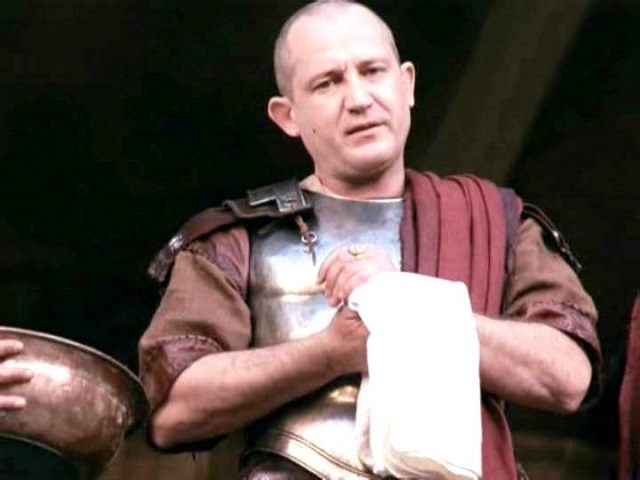
But Pontius Pilate is an exception. Not only is he not holy, but he has the blood of the innocent Lamb on his hands, despite his vain efforts to wash it off. The Coptic Church believes that Pilate repented and died a Saint, but personally, I have my doubts. While the Passion of Our Lord caused Peter to repent and weep bitterly, it incited Pilate to become friends with the despicable Herod, who had formerly been his enemy. (Luke 23, 12) The historian Josephus claims that Pilate was dismissed from his post for cruelly suppressing a Samaritan revolt; and if you are considered cruel by the Romans who, in the words of Tacitus “make deserts and call it peace,” you must be very cruel indeed. At the very least, even if the Coptic tradition is true, the Pilate at the time of the Crucifixion, the one on whose orders Jesus Christ suffered, died, and was buried, was a baddie. And so in the Ordinary, Pilate’s name sticks out like a fly on a wedding cake.
And God help me—and dear reader, please forgive me—this anomaly reminds me of the song “Pilate’s Dream” from the utterly atrocious but occasionally astute Jesus Christ Superstar.
I dreamt I met a Galilean,
A most amazing man.
He had that look you very rarely find,
The haunting, hunted kind.

I asked him to say what had happened,
How it all began.
I asked again; he never said a word,
As if he hadn’t heard.

And next the room was full
Of wild and angry men.
They seemed to hate this man.
They fell on him and then
They disappeared again.

Then I saw thousands of millions
Crying for this man.
And then I heard them mentioning my name,
And leaving me the blame.
We know, of course, that it was Pilate’s wife who had a dream. Nonetheless, the closing image is chilling. Thanks to the recitation of the Creed, millions of Catholics every Sunday cry for the God-Man, and leave Pontius Pilate the blame.

Notes
[1] “De,” 2.I.C.3 and 5, Lewis and Short Latin Dictionary (Oxford: Clarendon Press, 1879), 513-14.
[2] “Ex,” intro and III.C, Ibid., 669-70.
[3] “Etiam,” II.A, Ibid., 662.
[4] “Sub,” I.C.3, Ibid., 1772.

Friday, November 22, 2024

Numbering the Heavens

Lost in Translation #112

In the Niceno-Constantinopolitan Creed, God the Father is said to have created Heaven and earth (οὐρανοῦ καὶ γῆς) while the Son of God is said to have come down from the Heavens (ἐκ τῶν οὐρανῶν) to become man and, after His resurrection from the dead, to have ascended into the Heavens (εἰς τοὺς οὐρανούς), where He sits at the right hand of the Father. One might be tempted to dismiss the use of both the singular number and the plural as a need for poetic variety, rather than an indication of two different places. On the other hand, it is worth asking whether God the Son came from the Heaven that His Father created, as if He were a creature like Heaven itself. Surely not, for the Nicene Creed was written to reject this Arian position. Therefore, when the Son is said to have come and to return to “the Heavens,” the plural may indicate the place where the Holy Trinity alone abides, as opposed to the place created by God for His blessed creatures (the Angels and Saints).

These subtleties, in any event, are lost in translation. All the official vernacular versions of the 1970 Roman Missal that I consulted use “heaven” (singular) every time: the Italian has cielo, the French ciel, the German Himmel, and the English “heaven.”
But the greatest peculiarity of all is the Latin translation that is in both the old and new Roman Missal, which has that God is the Creator of Heaven (caelum), that His Son descends from the Heavens (caeli), and that the Son ascends into Heaven (caelum). The Latin, in other words, follows the Greek numbering of the noun the first two times but not the third.
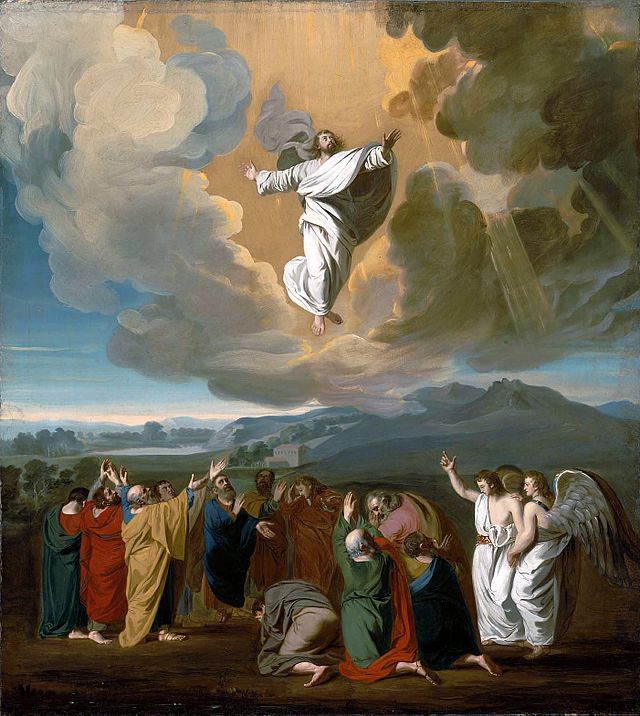
The advantage of the original Greek is that it shows that the place whence Jesus came is the exact same place whither He returns. By ascending into Heaven, Jesus perfectly closes the circle of His journey. Such a circle, it seems to me, is typical of ancient Greek thought, from the departure and homecoming of Odysseus in Homer’s Odyssey to the emanation and return of the soul in Plotinus’ Enneads. The Roman mentality, by contrast, is more like the trajectory in Vergil’s Aeneid. By journeying to Italy, Aeneas is technically returning to his ancestral home,[1] but it is a home to which he has never been before. Thus, Aeneas’ journey is both circular and linear, with the movement of the plot dominated by the latter. Perhaps by proclaiming that Jesus came from the Heavens and ascended into Heaven, the Latin Creed is drawing attention to how Heaven is now different thanks to the Ascension and the holy souls, rescued from Limbo, who now fill it. Or, Heaven is now different because a human soul and body has entered it for the first time, a High Priest offering His own blood in a Temple not made of human hands. (See Heb. 9, 12)
And there may be a second reason for the Latin “mistranslation.” To my mind, rendering a place or region in the plural makes it more indeterminate or amorphous. Someone who is lost in the canyons, for example, seems more lost to me that someone who is lost in the canyon; in the latter case, we can deploy the search party with greater precision. Jesus coming from the “heavens” could mean that Jesus is coming from an amorphous place on High, but when Jesus returns, He is returning to a determinate place specified in the next verse: He sitteth at the right hand of the Father. The specificity of this location may have inspired the Latin translator to call the place of this throne “heaven” rather than “the heavens,” and that specificity ties in nicely with the specificity of the concrete body and soul of the Incarnate Word, who is not returning to the Father in the same condition as He left.

Note
[1] The Trojans are called Dardans, and Dardanus is said in Aeneid 3.163, 7.273, and 8.180 to have come from Hesperia, an ancient name for Italy.

Friday, November 15, 2024

Consubstantial with the Father


Lost in Translation #111

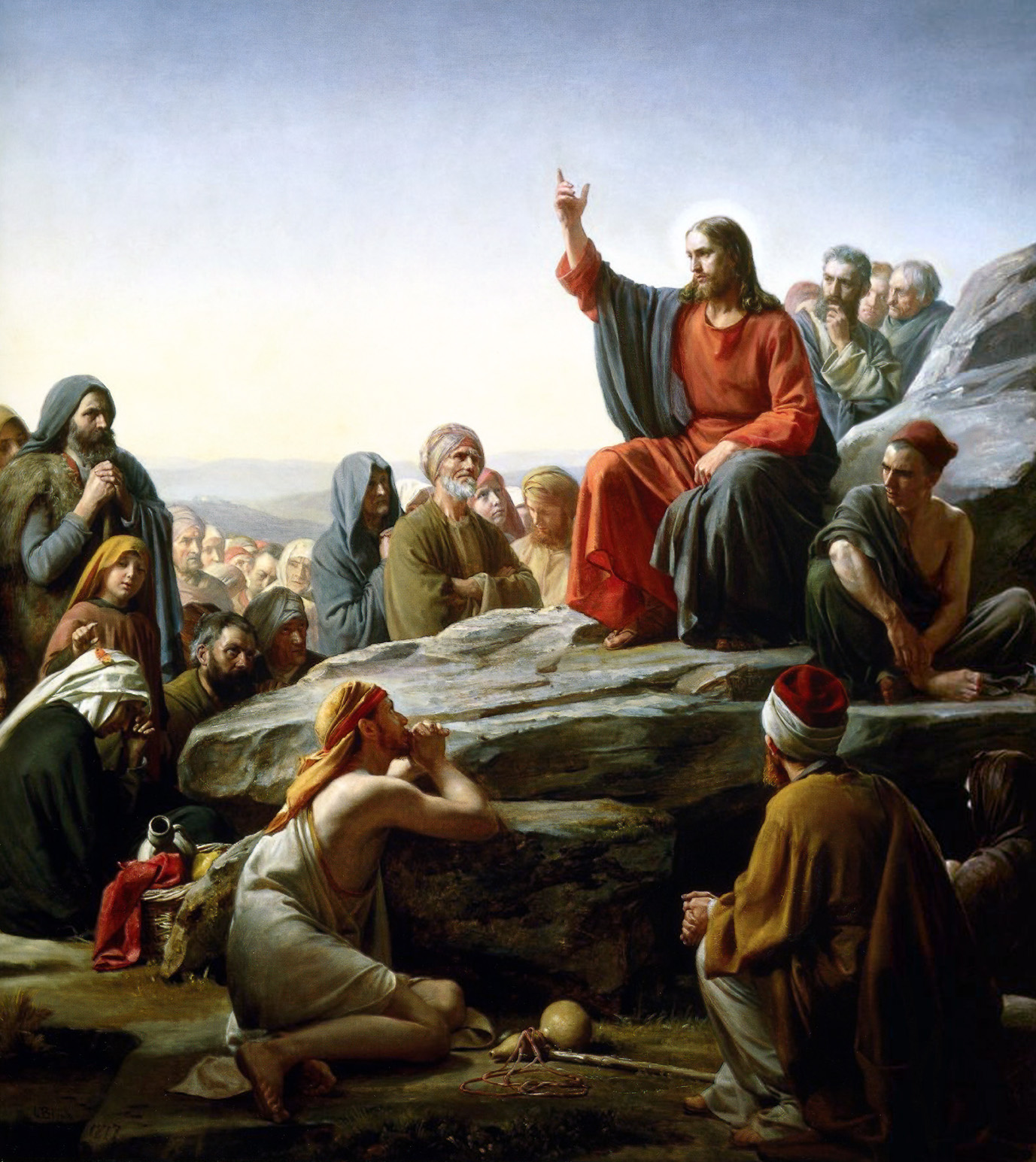
During the Sermon on the Mount, Jesus tells His listeners:

Do not think that I am come to destroy the law, or the prophets. I am not come to destroy, but to fulfill. For amen I say unto you, till heaven and earth pass, one jot, or one tittle shall not pass of the law, till all be fulfilled. (Matt. 5, 17-18)
A jot is an iota, the smallest letter in the Greek alphabet, and a tittle is a tiny mark used in Hebrew to differentiate one letter from another. Christ’s point is that He will fulfill the Mosaic Law down to the smallest detail.
But the iota resurfaced during the first ecumenical Council three centuries later. The Council of Nicaea was convened in 325 A.D. to determine what Christians really believed about Jesus Christ: was He truly God, or was He merely godlike? The entire debate hinged on the Greek iota (comparable to our letter i): Christ was either of the same substance as God (homoousios), or he was of a similar but distinct substance (homoiousios). After much deliberation, the Council professed Christ to be of the same substance (homoousios) as God the Father, enshrining their definition in the Nicene Creed that is now recited at Mass every Sunday.
First Council of Nicaea
Thus, there is literally one iota of difference between orthodoxy and heresy, a fact which illustrates how the smallest deviation from the truth can lead to the greatest error (incidentally, from this comes our phrase of not budging one iota). And it is also a testimony to Christianity’s unique obsession with the truth. Whereas the other two great monotheistic religions of the West are more concerned with orthopraxy (right practices), Christianity shows a pronounced interest in orthodoxy (which means both right belief and right worship). For Chesterton, this preoccupation with orthodoxy involves a combination of “two almost insane positions” that somehow still amount “to sanity”:
Last and most important, it is exactly this which explains what is so inexplicable to all the modern critics of the history of Christianity. I mean the monstrous wars about small points of theology, the earthquakes of emotion about a gesture or a word. It was only a matter of an inch; but an inch is everything when you are balancing. The Church could not afford to swerve a hair's breadth on some things if she was to continue her great and daring experiment of the irregular equilibrium. Once let one idea become less powerful and some other idea would become too powerful. It was no flock of sheep the Christian shepherd was leading, but a herd of bulls and tigers, of terrible ideals and devouring doctrines, each one of them strong enough to turn to a false religion and lay waste the world. Remember that the Church went in specifically for dangerous ideas; she was a lion tamer. (Orthodoxy, chapter 6)
What is so dangerous about the Son being of the same substance as the Father? For starters, it is an inexhaustible (and hence untamable) mystery. It is easy for the mind to grasp the concept of someone who is half-god and half-man, like Hercules; it is impossible for the mind to grasp the concept of someone who is fully God and fully man, like Jesus of Nazareth. It is easy for the mind to see how someone can be extremely similar to someone else, as when an earthly son is the spitting image of his earthly father; it is impossible for the mind to grasp how someone is of the exact same stuff as someone else, as God the Son is consubstantial with God the Father while also having a human intellect, will, body, etc.
Jesus Christ, Hagia Sophia, Constantinople
Given the storied history of homoousios and what it tells us about Christianity’s priorities, it is scandalous to see how it has been translated. The Latin Credo faithfully renders the word as consubstantialis, consubstantial or of the same substance. But the 1970 ICEL translation had “one in being with the Father.” Aside from the equally lamentable German eines Wesens (which means the same thing), no other official translation has been so ontologically sloppy or indifferent to the truth. The French Missal has consubstantiel, for example, and the Italian stessa sostanza (same substance).
Worse, when in 2006 the Vatican wanted the USCCB to use “consubstantial” in their new English translation, the American bishops protested on the grounds that this was a word that “required theological explanation”—as if the very job of a bishop was not to provide theological explanation. Happily, the Vatican did not budge one iota and Chesterton’s lion tamer returned to the ring with “consubstantial”—a scandal to the Jews, folly to the Greeks, and a pain in the neck to lazy prelates.

Friday, October 25, 2024

Credo in Unum Deum

Lost in Translation #109

Because of its wealth of meaning, it is tempting to provide a detailed commentary on the Creed. We resist this temptation for two reasons: first, the Lost in Translation series limits itself to questions of, well, translation; and second, it would be difficult to top Msgr. Ronald Knox’s The Creed in Slow Motion.

But we will say three things about the Creed and its place in the Mass before moving on to linguistic issues.
First, by being recited after the readings, the Creed “forms the answer and the echo to the voice of God, who has spoken to us by His prophets and apostles, yea, by His own Son.” [1] In other words, the Creed distills the grand biblical narrative—a portion of which we have just heard in the Epistle and Gospel—into a core of essential beliefs (the “echo”), which we go on to affirm personally in the opening line: “I believe” (the “answer”).
Second, by being recited before the Offertory, which is only for fully initiated Catholics, the Creed is our key into the Mass of the Faithful. In the early centuries, the non-baptized could only attend the so-called Mass of the Catechumens, from the beginning of the Mass until the homily. When the Mass of the Faithful began at the Offertory Rite, they were dismissed from the congregation. As a tie-in to our baptism, the Creed reminds us of the sacrament that enables us to participate in the Sacrifice of the Mass.
And the metaphor of a key is not random. Commenting on Christianity’s unique preoccupation with the truth, Chesterton writes:
This is why the faith has that elaboration of doctrines and details which so much distresses those who admire Christianity without believing in it. When once one believes in a creed, one is proud of its complexity, as scientists are proud of the complexity of science. It shows how rich it is in discoveries. If it is right at all, it is a compliment to say that it's elaborately right. A stick might fit a hole or a stone a hollow by accident. But a key and a lock are both complex. And if a key fits a lock, you know it is the right key. [2]
Even the appearance of the Creed on a page resembles a key: assuming that it is left-justified, it is like a key that is smooth on one side and jagged on the other. The Creed is our key into the mysteries of truth and the mysteries of the altar.
Third, the Creed may be a distillation of the biblical narrative, but it is still a narrative. It has a Trinitarian structure, proceeding from Father to Son to Holy Spirit; it begins with the beginning of time, the creation of Heaven and earth, and ends with an anticipation of the Resurrection of the Dead at the end of time; and it contains a brief biography of the life of Jesus Christ. The various truths of the Creed are called “articles.” In Latin, an articulus is a joint or the portion of a limb or finger that is in between two joints. Either way, the Creed is a narrative skeleton which the other parts of the body (virtues, gifts and fruits of the Holy Spirit, etc.) fill out to make a complete and living person.
The first line of the Creed, which is the only article about God the Father, is: 
Credo in unum Deum, Patrem omnipotentem, factórem cæli et terræ, visibilium omnium et invisibilium. 
Which the 2011 ICEL edition of the (new) Roman Missal and many others translate as: 
I believe in one God, the Father Almighty, Maker of Heaven and earth, and of all things visible and invisible. [3]
The translation is a significant improvement over the earlier ICEL translation, which has two flaws with respect to this article:
We believe in God, the Father, the Almighty, maker of heaven and earth, of all that is seen and unseen. [4]
First, it is true that the original Niceno-Constantinopolitan Creed of A.D. 381 begins with “we believe” rather than “I believe”, because it is a statement issued by the assembly of Council Fathers on behalf of the entire Church. But in the Rite of Baptism, the opening is changed to “I believe,” for when a person is baptized, his personal belief is crucial to receiving the sacrament. This is true even in the case of an infant, whose godparents recite (in the old rite) the Creed on his behalf, for they are acting as surrogates of the child’s intellect and will until they reach a proper state of development. By using “I believe” in the Creed at Mass, we are being reminded of our baptism and the importance of our personal affirmation of the truths proclaimed by the Catholic Church.
Second, the early ICEL translation failed when it translated visibilium omnium et invisibilium as “of all that is seen and unseen.” There is an important difference between an object that is unseen and an object that is invisible. An unseen object has the potential to be seen even though it is not being seen right now, while an invisible object is incapable of ever being seen. Rocks buried below the earth’s surface are unseen; Angels are invisible. The Nicene Creed clearly affirms that God made not only material objects, but spiritual subjects as well—that is, celestial beings and immortal human souls. The early ICEL translation, on the other hand, leaves the door open for a materialist world view, the ideology that denies a spiritual realm.

Pietro Perugino, God the Creator and Angels, 1507-8
Finally, both ICEL translations were correct in translating factorem as “maker.” Curiously, the Nicene Creed calls God the Father this word rather than the Apostles’ Creed’s “Creator.” The Greek poiētḗs, which the Latin translates as factor, does indeed mean “maker,” but its obvious relation to our word “poet” tempts us to call God the Father “the Poet of Heaven and earth, and of all things visible and invisible.” For is not the entire cosmos one vast and exquisite epic?

Notes
[1] Gihr, 483.
[2] Chesterton, Orthodoxy (Ignatius Press, 2005), 89.
[3] 2011 Roman Missal, 10.
[4] 1985 Sacramentary, 368.
[5] We will leave it to another day to discuss how this statement is true even though Angels appeared to many in the Bible and even wrestled with them.

Thursday, July 22, 2021

“Apostle of the Apostles” - Liturgical Notes on the Feast of St Mary Magdalene

In the Missal of St Pius V, the Creed is said on every Sunday, and several categories of feasts: all those of the Lord, the Virgin Mary, Angels, Apostles, Doctors, etc. To this list is added one other woman, St Mary Magdalene, in commemoration of the fact that it was she who announced the Resurrection of Christ, the foundation of the Faith, to the Apostles; for this reason she has often been called “the Apostles of the Apostles.” This custom was widely observed in the Middle Ages, but originally not accepted at Rome itself; the Ordinal of the papal liturgy in the reign of Pope Innocent III (1198-1216) specifies that the Creed is not to be said on the feast, indicating that it was known to be done elsewhere. It was still omitted according to the rubrics of printed editions of the Roman Missal in the first half of the 16th century; its addition in the rubrics of 1570 is one of the rare cases where a new custom was added to the Roman Rite from elsewhere in the highly conservative Tridentine reform. (It was removed from her feast in 1955, and from the Doctors in 1961.)
Two pages of a Roman Missal printed at Lyon, France, in 1500 (folio 95 recto and verso). The rubric about the Creed begins in the middle of the right column of the first page. Note that at the break between the two pages, St Bonaventure is listed as a Saint on whose feast the Creed is said; this edition was printed for the Franciscans, who counted him informally as a Doctor before the title was officially given in 1588. (Bibliothèque nationale de France, département Réserve des livres rares.)
The Gregorian propers of her Mass (Introit, Gradual etc.) are taken from the various common Masses of holy women; in the Middle Ages, the Epistle was that of Holy Matrons, Proverbs 31, 10-31, “Who shall find a valiant woman? etc.” In the Tridentine Missal, a new Epistle was created, the Song of Songs, 3, 2-5 and 8, 6-7, which begins as follows.
I will rise, and will go about the city: in the streets and the broad ways I will seek him whom my soul loveth: I sought him, and I found him not. (quaesivi illum et non inveni.) The watchmen who keep the city, found me: Have you seen him, whom my soul loveth? When I had a little passed by them, I found him whom my soul loveth: I held him: and I will not let him go ...
St Gregory the Great refers the words “I will seek him whom my soul loveth” to John 20, 11-18, when Mary meets Christ at the tomb and mistakes him for the gardener, in the Breviary homily for Easter Thursday.
We must consider how great was the force of love that had enkindled this woman’s heart, who left not the tomb of the Lord, though even the disciples were gone away. She sought Him Whom she had not found there, (exquirebat, quem non invenerat) and as she sought Him, she wept, … Whence it came to pass that she alone, who had stayed behind to seek Him, was the only one who then saw Him.
“When I had a little passed by them” (i.e. the watchmen of the city) then refers to tomb of the Lord being just outside the city, and the words “I held him: and I will not let him go” to her embracing the Lord, until He says to her, “Cling to me not, for I am not yet ascended to my Father.”
‘Noli me tangere’ by Jacob van Oostsanen, 1507. The words of John 20, 15, that Mary Magdalene at first thought the Risen Christ was the gardener, gave rise to a delightful tradition of portraying Him with various gardening implements, such as the shovel seen here, or the kind of broad-brimmed hat often worn by gardeners.
From the time of St Gregory, the Western Church accepted that Mary Magdalene was also the sinful woman who anoints Christ’s feet in the house of Simon the Pharisee, as recounted in Luke 7, 36-50, the Gospel for her feast. This connection was probably made from the words that immediately follow this passage, or at least reinforced by them, Luke 8, 1-3. “And it came to pass afterwards, that he travelled through the cities and towns, preaching and evangelizing the kingdom of God; and the twelve with him: And certain women who had been healed of evil spirits and infirmities; Mary who is called Magdalen, out of whom seven devils were gone forth, And Joanna the wife of Chusa, Herod’s steward, and Susanna, and many others who ministered unto him of their substance.” (Mark 16, 9 also refers to the seven devils.)

She is also traditionally held in the West to be Martha and Lazarus’ sister, of whom Christ says in the same Gospel “Mary hath chosen the best part, which shall not be taken away from her.” (Luke 10, 38-42) This passage is read on the feast of St Martha on July 29th, the octave of Mary Magdalene; from it, Martha has traditionally been seen as the symbol of the active life, and Mary of the contemplative. The same passage is then read also on the feast of the Assumption, a custom inherited, like the feast of itself, from the Byzantine Rite; this was understood allegorically in the Middle Ages to signify that in the person and life of the Virgin Mary are perfected both the active and the contemplative life.
Christ in the House of Mary and Martha, by Henryk Semiradzki, 1886
The Byzantine Rite (in which the Creed is said at every Eucharistic liturgy) keeps July 22 as the feast of the “Myrrh-bearer and Equal to the Apostles, Mary Magdalene,” and on June 4 commemorates “Mary and Martha, the sisters of Lazarus the Just.” Neither of the two Marys thus distinguished is associated with the sinful woman of Luke 7, but the Gospel of Mary Magdalene’s feast day is the passage from Luke 8 noted above. The two sisters are traditionally numbered among the “Myrrh-bearers” who went to the tomb to anoint the body of Christ on the morning of the Resurrection, although they are not named as such by the Gospel; with them are included also Mary, the mother of James and Joses, Mary, the wife of Cleophas, Joanna and Susanna named in Luke 8, and Salome, the mother of the sons of Zebedee. They are commemorated as a group on the second Sunday after Easter, along with Joseph of Arimathea and Nicodemus. At Vespers of the preceding Saturday, the following idiomel is sung, paraphrasing Matthew 28 and Luke 24.
Mary Magdalen and the other Mary came to the grave seeking the Lord, and they saw an Angel like lightning sitting on the stone, who said to them, ‘Why do you seek the living among the dead? He has risen as he said; in Galilee you will find him’. To him let us cry aloud, ‘Lord, risen from the dead, glory to you!’
In the Roman Rite, Matthew 28, 1-7 is the Gospel of the Easter vigil, which concludes with a very much shortened Vespers; the antiphon for the Magnificat is the beginning of the Gospel, “And in the end of the Sabbath, when it began to dawn towards the first day of the week, came Mary Magdalen and the other Mary, to see the sepulcher, alleluia.” Even though the term “Apostle of the Apostles” does not occur in the Roman liturgical books, the liturgy itself proclaims this role for her as the first person named in the accounts of the Resurrection.

The church of Rome was traditionally very conservative about the addition of new texts to the Office; one often finds that the proper Office of a saint hugely popular in the Middle Ages, such as St Nicholas, is found in virtually every medieval Breviary except that of the Roman Curia, the basis of the Breviary of St Pius V. Such is the case with Mary Magdalene, whose Roman Office is mostly that of the common of Holy Women. She has proper antiphons for the Benedictus and the two Magnificats, but none for the psalms; there are also three proper hymns, although that of Matins is a single stanza and a doxology. Three responsories at Matins referring to her are borrowed from Easter, but the rest are taken from the common of Holy Women.

Other medieval breviaries, however, adopted one of various proper Offices for the feast, of which the most interesting is that found in the Dominican Breviary. At First Vespers, the antiphon of the Magnificat reads as follows:
Celsi mériti María, quae solem verum resurgentem vidére meruisti mortalium prima: óbtine ut nos visu gloriae suae tecum laetíficet in caelis.
Mary of high merit, that first among mortals did merit to see the true Sun rising; obtain that He may grant us joy by the vision of His glory in heaven.
And at the Benedictus:
O mundi lampas, et margaríta praefúlgida, quae resurrectiónem Christi nuntiando, Apostolórum Apóstola fíeri meruisti! María Magdaléna, semper pia exoratrix pro nobis adsis ad Deum, qui te elégit.
O lamp of the world, and bright-shining pearl, who by announcing the Resurrection of Christ, didst merit to become the Apostle of the Apostles! Mary Magdalene, of thy kindness stand thou ever before God, who chose thee, to entreat him for us.
Outstanding among the responsories of Matins is the eighth, (necessarily not as beautiful in my translation).
R. O felix felícis mériti María, quæ resurgentem a mórtuis Dei Filium vidére meruisti mortalium prima! Pro cujus amore, sæculi contempsisti blandimenta: * sédula nos apud ipsum, quæsumus, prece commenda. V. Ut tecum mereámur, o Dómina, pérfrui felicíssima ipsíus præsentia. Sédula.
R. O happy Mary of happy merit, that first among mortals did merit to see the Son of God rising from the dead; for whose love thou disdained the blandishments of the world: * by thy prayer, we ask thee, commend us to Him with diligence. V. That with thee, o Lady, we may merit to enjoy his most happy presence. By thy prayer.
The Office used by the Premonstatensians shares a number of texts with that of the Dominicans; it contains this very interesting and uncommonly long (and hence rather rarely used) antiphon:
Fidelis sermo et omni acceptione dignus, quia Christus Jesus venit in hunc mundum peccatores salvos facere; et qui nasci dignatus est de Maria Virgine, tangi non dedignatus est a Maria peccatrice. Haec est illa Maria, cui dimissa sunt peccata multa, quia dilexit multum. Haec est enim illa Maria, quae resurgentem a mortuis prima omnium videre meruit Dominum nostrum Iesum Christum, quem pro nostris reatibus oret, quaesumus, in aeternum.
A faithful saying, and worthy of all acceptance, that Jesus Christ came into this world to save sinners; and He that deigned to be born of the Virgin Mary, did not disdain to be touched by Mary the sinner. This is that Mary, to whom many sins were forgiven, because she loved much. This is indeed that Mary, who before all others merited to see our Lord Jesus Christ rising from the dead; and we ask that she pray Him forever for our sins.
Lastly, we may note the Preface of her feast in the Ambrosian liturgy, another text that can only suffer in translation.
Vere dignum et justum est, aequum et salutare, nos te, Pater omnipotens, omni tempore glorificare, et in die festivitatis hodiernae Beatae Mariae Magdalenae exultantibus animis praedicare. Quam sic tui amoris igne accendere dignatus es; ut ad Christi Filii tui vestigia devota corrueret, et eadem pretioso unguento perfunderet. Osculari quoque, ac lacrimis rigare, et capillis non cessat extergere, donec audire promeruit, ‘Dimissa sunt tibi peccata, vade in pace.’ O beata fides, divinae misericordiae munita praesidio! O digna conversio, quae tantum munus accepit, ut quae antea draconis antiqui faucibus merito tenebatur astricta, plena jam gaudens libertate, sanctis Apostolis dominincae Resurrectionis mereretur esse praenuncia. Et ideo…
Truly it is fitting and just, meet and profitable to salvation, that we glorify Thee, Father almighty, in every moment, and on this feast day of blessed Mary Magdalene proclaim Thee with spirits rejoicing. Whom Thou didst so deign to kindle with the fire of Thy love, that in devotion she fell at the feet of Christ, Thy Son, and anointed them with precious ointment; and ceased not to kiss them, to wash them with her tears, and wipe them with her hair, until she merits to hear, ‘Thy sins are forgiven go, in peace.’ O blessed faith, strengthened with the help of divine mercy. O worthy conversion, that merited to receive so great a gift, that she who was formerly deservedly held fast in the jaws of the ancient dragon, now rejoicing in complete freedom, should merit to be the first to announce the Lord’s Resurrection to the Holt Apostles. And therefore with the Angels and Archangels…
The Penitent Magdalene, by Caravaggio, ca. 1594-95.

Monday, October 26, 2020

An Allegorical Rationale for the Ministers Sitting During the Gloria and Credo

Seated clergy removing birettas at the Name of Jesus
In discussions of the classical Roman rite and the twentieth-century liturgical reform, one example that always comes up of “something that just had to change” in the Tridentine Mass — one among many things targeted as supposed flaws by reform-minded people — is the custom whereby the ministers (the priest at a Missa cantata, the priest, deacon, and subdeacon at a Missa solemnis) return to their seats for the duration of the sung Gloria and Credo after they have recited the text themselves at the altar.* The reform-minded protest against both the “duplication” of the text and the alleged oddity of everyone sitting during the singing of these parts of the Mass Ordinary. Shouldn’t the clergy sing the texts together with the people, and everyone remain standing?

In an earlier article at NLM, “Is It Fitting for the Priest to Recite All the Texts of the Mass?,” I defended an affirmative answer to that question on spiritual and liturgical grounds. I shall not rehash the same arguments here. Nor will I comment on practical reasons for sitting, such as lengthy pieces of polyphony, or giving older or infirm clergy a chance to rest. I also would not dispute that the monastic custom (at least, I have seen it most often at monasteries) of the ministers remaining standing during the entirety of the Gloria and Credo is fitting for the relatively short duration of chanted Ordinaries; I do not maintain that the ministers should always sit down. The rubrics allow them to remain at their places; sitting is a concession.

Rather, taking it for granted that there are theological reasons for duplicating and practical reasons for sitting, I would like to consider some theological connections that have occurred to me over the years as I have watched this custom and thought about it. The contemplative atmosphere of the classical Roman liturgy has nurtured in me a patient, open-minded, speculative disposition towards texts, music, and ceremonies. My habit of mind is now to ask, in accord with the allegorical method of our ancestors: “What meanings can I glean from the liturgy as it exists in front of me?,” rather than: “How ought it to be improved?”

I can honestly say that I had never pondered the mystery of the “session” or seatedness of the Son of God until I had seen ministers moving from the altar in a liturgically dignified manner and sitting down ceremonially at the High Mass and Solemn Mass. Until then, “sits [or is seated] at the right hand of the Father” had been no more than a line rattled off when reciting the Apostles’ Creed or the Niceno-Constantinopolitan Creed. Yet it is a mystery important enough to receive many mentions in the New Testament (cf. Mk 16:19, Acts 7:55, Rom 8:34, Heb 1:3, Rev 3:21), and in liturgical texts. In the Gloria itself: Qui sedes at dexteram Patris, miserere nobis: “Thou who art seated at the right [hand] of the Father, have mercy on us.” In the Credo: Et ascendit in caelum, sedet ad dexteram Patris: “And He ascended into heaven, [and] is seated at the right [hand] of the Father.”

Moreover, in a church that had no pews in the nave, the sitting of the clergy would more obviously accentuate their special role in the liturgy. St. Thomas Aquinas quotes St. Gregory the Great (Hom. xxix in Evang.): “It is the judge’s place to sit, while to stand is the place of the combatant or helper” (Summa theologiae III, q. 58, a. 1, ad 3).

It is not exactly scripted in the rubrics when the ministers are to sit down, nor are they required to do so; they may remain standing the whole time, a posture that will always retain its resurrectional significance, as it does to this day in the Eastern tradition. Nevertheless, it was the Solemn High Mass that made the custom of being seated “click” for me.

At the "Et incarnatus est"
The ministers all kneel at the altar, as is appropriate, for the Et incarnatus est de Spiritu Sancto ex Maria Virgine: et homo factus est. Then they rise and return to the sedilia at the side of the sanctuary. The priest, who primarily represents Christ in the offering of the Mass, is seated. Around this time, the schola (and in some places the people too) are singing: passus et sepultus est — Christ, having suffered, was laid in the tomb. The Creed almost suggests this natural moment of rest as it mentions the lowest and humblest point of the Savior’s descent among us.

At the same time, the subdeacon remains standing while the deacon proceeds to the credence, receives the burse from the MC, and brings it to the altar to set forth the corporal. During this time the schola is usually singing Et resurrexit tertia die, secundum Scripturas, et ascendit in caelum. The reason we can turn from the Scriptural part of the service (the Mass of the Catechumens) to the Eucharistic sacrifice (the Mass of the Faithful) is that Christ is indeed risen from the dead, and death hath no more dominion over Him. He is able to renew His sacrifice among us sacramentally precisely because He is glorified. His rising on the third day was the great opening not only of the kingdom of heaven but of the sevenfold font of sacramental grace that brings us to heaven.

Deacon carrying the burse and corporal to the altar during the Credo

Call it accidental if you wish, but I find it very beautiful that as this Christological confession is sung, the principal minister occupies a seat as does Christ the Lord in heavenly glory, while the deacon, also bearing His image, prepares the altar for the “return” of the King, and the subdeacon stands at attention. The Creed then acknowledges the seating of Christ at the right hand of the Father, and His return in glory: sedet ad dexteram Patris: et iterum venturus est cum gloria. Around this time, the deacon returns to the side, and both he and the subdeacon take their seats. In this way, the various intertwined mysteries the Creed mentions at this point (around the resurrection, ascension, and session) are all somehow put on display, as if being acted out before our eyes.

Then, when the schola sings: Et vitam venturi saeculi, “[and I believe] in the life of the world to come,” all make the sign of the Cross, the ministers rise, and the people rise as well. This final strophe of the Creed has just mentioned the general resurrection of the dead and the life without end in heaven, when all the blessed will share the glory of the risen Lord. How appropriate that the “general rising” takes place right at this point in the Creed!

It is as if we are permitted to “act out,” in a sense, certain of the mysteries confessed, even as the priest during the Canon “acts out” some of Christ’s gestures, as Michael Fiedrowicz describes:
The traditional rubrics of the Roman Canon call for a “reenacting” of Christ’s actions through the celebrating priest. He not only reads aloud the words of institution, but copies Christ’s gestures as they are described: at the moment of the accepit panem/calicem he takes the offerings in his hands, which were anointed by the blessing (in sanctas et venerabiles manus suas), lifts his eyes (elevatis oculis), gratefully (gratias agens) bows his head, makes a sign of the Cross at the benedixit, and in a humble attitude completes the transubstantiation, with his arms touching the altar, once more emphasizing the union with Christ. (The Traditional Mass, p. 274)
Postscript

Years after the above “picture” was formed in my mind, I decided to consult William Durandus, whose Rationale Divinorum Officiorum had recently entered my library. Sure enough, he had beat me to the main point, once more demonstrating that “there is nothing new under the sun” (Eccles 1:9). Book IV, chapter 18 concerns “Of the Seating of the Bishop or the Priest and the Ministers,” of which the following lines are apropos (pp. 168–69 in the Thibodeau trans.):
He is seated in a prominent place, so that just as the vinedresser cares for his vineyard, he cares for his people; for the Lord, seated in the highest heavens, guards His city (cf. Ps 126:1)…. Sitting down after the prayer signifies the seating of Christ at the right hand of the Father after His Ascension, for the seat naturally goes to the victor. Thus, the seating of the priest designates the victory of Christ… The seating of the ministers signifies the seating of those to whom it is said: You shall also sit on the twelve thrones, judging the twelve tribes of Israel (Mt 19:28): namely, those who now reign in heaven; those who labor in the choir signify those who are as yet pilgrims in this world… Some ministers sit with the bishop, through whom is understood that the members of Christ at last have repose in peace, about which the Apostle says: He seated us together in heaven, in Christ (Eph 2:6), or else those who judge the twelve tribes of Israel; others remain standing, through whom is understood those members of Christ who continue with the struggle in this world.

* NOTE: I have decided not to address here the question of the sitting of the clergy during the Kyrie, although the enterprising reader will find it pleasant to meditate on the allegorical interpretations that might be proffered.

Visit Dr. Kwasniewski’s website, SoundCloud page, and YouTube channel.

Wednesday, July 15, 2020

“Their Sound Is Gone Out” - The Division of the Apostles

July 15th is the traditional day for the feast known as the “Divisio Apostolorum – the Division (or ‘Dispersion’) of the Apostles”, a feast which was very popular in the Middle Ages, and continued into the Tridentine period on many local calendars, but was never on the general Calendar. It is the liturgical commemoration of an ancient tradition that some time after the Ascension, (Durandus says twelve years), the Apostles cast lots for which part of the world each one of them would take, and spread out from Jerusalem to preach the Gospel in the various nations. The common Office of the Apostles refers to this idea repeatedly, as, for example, in the first antiphon of Matins, taken from Psalm 18. “Their sound hath gone forth into all the earth: and their words unto the ends of the world.”, and likewise the third antiphon from Psalm 44, “Thou shalt make them princes over all the earth; they shall remember thy name, O Lord.”

The earliest reference to this specific feast is a sequence which was well-known and widely used in the Middle Ages, written by one Godeschalk, a monk of Limburg abbey in western Germany, who died in 1098. It is written in the earlier and freer style of sequences like the Victimae Paschali, with less rhyme and structure than later ones such as St Thomas’ Lauda Sion or the Stabat Mater. It makes frequent use of the Patristic interpretation of the first words of Psalm 18, “The heavens proclaim the glory of God”, according to which the “heavens” are understood to be the Apostles, as St Gregory says in the Breviary. (Common lesson of the 2nd nocturn of the Apostles.)

The Sequence “Caeli enarrant gloriam” in the Mass of the Division of the Apostles, starting towards the top of the second column here. (Click to enlarge.) From the Missal according to the Use of Augsburg, Germany, ca. 1510.
Thus the prayer which concludes it, (as is typical of the genre,) reads, “These are the heavens, in whom Thou dwellest, the Angel of great counsel, whom Thou didst call no longer servants, but friends, to whom Thou makest known all things which Thou hast heard from the Father. / Keep undivided, and in the bond of peace, the flock that was gathered by their division, that we may be one in Thee, as thou are one in the Father. / Have mercy on us, Thou that dwellest in the heavens.”

The Gospel of the feast is that of the Ascension, (Mark 16, 14-20) but with the first verse left off, “Jesus appeared to the eleven as they were at table: and he upbraided them with their incredulity and hardness of heart, because they did not believe them who had seen him after he was risen again.” This omission is entirely appropriate for the common use of the feast among missionary congregations, since it celebrates the mission of the Apostles and their fulfillment of the commandment which Christ gives them in the verse which now opens the Gospel, “Go ye into the whole world, and preach the gospel to every creature.”

There is a tradition known from the 4th century that the baptismal creed now called the Apostles’ Creed was composed as a rule of the Faith by the Twelve before this dispersal, with each one of them contributing an article. This is often represented in art, as here in the border of this page of the famous Hours of Catherine of Cleves, ca. 1440. (In the center is depicted the legend of the Ten Thousand Martyrs, represented symbolically by ten figures.)


It is also seen here in a Carthusian Breviary ca. 1490, (starting near the top of the right column), in which the name of an Apostle is printed in red before each article of the Creed.


Like many of the traditions held dear by the medievals, it was called into question by some of the scholars of the Renaissance, particularly at the time of the Council of Florence in 1438. As the Council wrestled with the question of reunion between the Eastern and Western churches, the issue of the Creeds, and especially the Latin addition of “Filioque” to that of Nicea, was of course one of the most important topics of discussion. The Latins, who recognized three Creeds used in the liturgy, the Apostles, the Nicene, and the Athanasian, were unpleasantly surprised to learn that the Greek delegates had never heard of the first of these.

Fr Nicholas Ayo, C.S.C., in a book on St Thomas’ Sermons on the Apostles’ Creed, beautifully summarizes why we may still refer to it by this name. “With the Apostles’ Creed we have the teaching of the Apostles as passed on by authentic apostolic succession. … The Creed summarizes the Scriptures, which in turn summarize the teaching of the early Church by the Apostles, who in turn were taught of Jesus, who was taught of God.” (Sermon-Conferences of St. Thomas Aquinas on the Apostles’ Creed, p. 175)

More recent articles:

For more articles, see the NLM archives: