Monday, December 23, 2024

“Tuned to the Truth: The Catholic Triad of Faith, Life, and Liturgy” (Part 3: Conclusion)

We conclude our translation of P. Bernward Deneke FSSP's Pro Missa Tridentina lecture. Part 1 | Part 2. - PAK
 
(source)
5. Separating the true from the good

Where the altars are no longer inhabited by the truth and Christian rites are no longer inspired by it, error and falsehood are imminent. Renouncing the truth has a corrosive effect. The symbolic, i.e. the composite, falls apart, degenerating into the diabolical.

Against this background, here are some remarks that concern more the personal religious life of individual Catholics than the situation of the Church. For although in circles of true believers one usually honors the truth, takes its moral implications (the good) seriously, and by no means considers the aesthetic side (the beautiful) to be of secondary importance, it can still happen here that the various areas become disconnected.

Thus, among conservative Christians, morality sometimes degenerates into a barren or even toxic moralism, robbed of its foundation in the truth of faith. It poses a greater danger to genuine morality as a whole than does open immorality. While the latter openly declares itself to be against the norms of morality and thus reveals itself as their enemy, moralism presents itself in the name of morality, but distorts it in a caricatural, sometimes downright malicious way, and thus brings it into disrepute.

The opposite danger is the separation of the true from the good and the beautiful, which becomes an end in itself. Not infrequently, the faith is present, but not strong enough to have a concrete effect on the way of life. From this point of view, for example, the liturgical celebration of this faith is either appreciated only from a taste point of view or, on the contrary, considered to be of low rank. Because the bond that should hold together truth, goodness and beauty is weakening, considerable tensions arise in the life of such a person, even to the point of inner contradiction.


Hugo von Hofmannsthal's Everyman, who is beset by death, is an extreme example of the power of holding on to faith without it shaping one's life. Everyman already has one foot in hell and is desperately looking for salvation. Faith in the form of a personification approaches him and says, “You have laughed at me all your life / And thought God's word was nothing worth, / Now in your hour of death / Is there another word coming out of your mouth?”

Everyman's “I believe – I believe” stammering is answered by Faith with the remark: “That's poor talk!” Whereupon Everyman begins to apologize: “Oh, that God has mercy on me! / I believe the Twelve Articles with diligence, / Which I know from my childhood: / What they represent entirely, / I accept as sacred and true.” But according to James 2:26, faith without works is dead, like a body without a soul. So Everyman is told about the first divine virtue: “Faith is a poor part. / Don't build any bridges over to the other side. / Don't you know better?[1]

True faith, as the Council of Trent teaches, is fundamentum et radix omnis iustifications, “foundation and root of all justification” (Decree De iustificatione, chap. 8, DH 1532), of every supernatural, salvific life. But this foundation must actually bear something, allow the root to grow out of the juices and forces it draws from the earth; otherwise it is a matter of a fides non formata caritate, a faith that is not formed by active love and therefore remains ineffective.

For this reason, I am partly, but not entirely, in agreement with Nicolás Gómez Dávila, who is always worth reading, when he, as always with a sharp pen against the trends of the time, presents the provocative aphorism: “The corpulent and horny canon who believes in God is more indisputably Christian than the strict and careworn pastor who believes in man.[2]

Dávila is right in that faith in God is a basic requirement for being a Christian and that a humanistic “belief in man” can never replace it. However, does not gluttony and lust in their own way also challenge the indisputability of this faith? At least according to Catholic teaching, faith is only salvific if it is connected with the divine virtue of love – and that means: with the will to live according to God's commandments.

Incidentally, the following incident shows how the traditional liturgy, as it were, sends out strong signals in the area of moral life. Many years ago, I met a gentleman who, having grown up Catholic, not only distanced himself from the Church during his student days, but also openly opposed it. In the left-wing circles in which he moved, this was taken for granted. Until one day, during a protest action against a church dignitary, he was awakened as if from a deep sleep and then quickly changed sides.

In short, he reconnected with his abandoned homeland, attended church services, and even went to communion despite not having gone to confession since his childhood. The conditions for receiving the body of the Lord were not mentioned anywhere, and there was nothing to indicate that he should receive another sacrament in his condition.

Until he happened to attend a Holy Mass according to the old rite, which was unknown to him until then. Fascinated, he followed the events. And when the moment of Holy Communion arrived, he remained in the pew with the intention of confessing first. Why? Not because the priest had given any indication in his sermon. Rather, it was because the whole liturgy, but especially the approach to Communion and the manner of receiving it, said to him: You are not worthy for the Lord to come under your roof; first he must speak the word of absolution, and so your soul shall be healed.
 

6. Veritatis Splendor

Those who prefer the traditional liturgy often sense a specific danger among the faithful: aestheticism, that is, the independence of that realm which is described with qualities such as “beautiful,” “sublime,” and “glamorous.” What can be said in response to the accusation of aestheticism?

First of all, it should be noted that an aesthetic view of the liturgy is entirely appropriate. As public worship of the visible Church, it is essentially sensual and thus falls within the αἴσθησις, perception. Its form, its structure, the atmosphere of its sacredness, the transparency of its rites and symbols in terms of their spiritual content, their sublimity – all this is, of course, the subject of aesthetic contemplation.

In this way, the traditional liturgy, whether in the rich unfolding of a pontifical mass or in the simple celebration of a requiem, will prove to be truly beautiful. For, according to St. Thomas Aquinas, beauty is that which delights the eye because it possesses perfection (perfectio), proportion and inner harmony (proportio, consonantia), as well as a certain splendor (claritas) (S.Th. I 39,8).

Who would claim that this does not apply (or should not apply!) to the Church's liturgical heritage? Her cult is indeed the perfect expression of the purest worship of God, harmonious in its inner and outer form and – as outsiders have often testified – radiant. In contemplating the liturgy, as St. Thomas again describes it as a peculiarity of the experience of beauty, human desire comes to a fulfilled rest in a knowing way (S.Th. I-II 27,1 ad 3).

This consideration of the liturgy from an aesthetic point of view must now be clearly distinguished from aestheticism, i.e. its reduction to the aesthetic sphere. To look at it in this way is forbidden by the liturgy itself. Its statements about the necessity of true faith and about the required right life are far too explicit for someone who sincerely engages with it to stop at its perceptible form.

Thus, the Credo is one of the essential components of Sunday and festival masses. The early church name for it is symbolon, meaning a “combination” of fundamental mysteries that represent pars pro toto the entire treasury of the church and are thus a mark of recognition of the true Christian. Furthermore, the liturgical prayers often ask for fidei firmitas, the “firmness of faith” (cf. the prayer of the Trinity Sunday).

Accordingly, the liturgy has faith as a prerequisite and also as an aim. It is, in the words of Klaus Gamber, “dogma celebrated.” As such, it emerges from the mysterium fidei and leads into it. To paraphrase an important remark by St. Clement of Alexandria about understanding the Old Testament (Strom. VII 17), one can say: Without right faith, the appropriate key is missing for understanding the act of worship; for with a bent or incomplete exemplar, lacking the appropriate "teeth," the lock of the sacred vault cannot be opened to access the treasures stored within.

Ultimately, the beauty of the liturgy is grounded in its truth. Beauty is veritatis splendor, the splendor of truth. According to Martin Heidegger, it is “the fate of the essence of truth, whereby truth means: the disclosure of that which hides itself”.[3] It would be better to say that not truth, but beauty is the “disclosure of that which hides itself”. In beauty, the mysterious truth is made luminously manifest, and this is particularly the case in the liturgy.
 

7. Conclusion

Truth is therefore the keynote of the Catholic faith, life and worship. The truth that reveals itself to us in the Christian mysteries of the triune God, of creation, incarnation and redemption, of the church, of sanctification and perfection. The truth that radiates into Christian activity, into the simple and heroic works of love, into the heart of individuals and into human communities. The truth that makes itself perceptible in acts of worship, in personal and especially liturgical prayers in their dignity, in their conciseness and abundance, their humility and solemnity, their inner abundance and outer splendor.

Without truth, morality becomes a moralistic system or a matter of mere sentiment; worship becomes a hollow, gutted externality, a mirage and, unfortunately, all too often a stage for human self-promotion. Through, with, and in truth, however, the various spheres find their place in the overall order.

That is why it is essential for the survival of Christianity to rediscover the keynote of the triad and to emphasize it, especially today. Even if the fifth or the third, the moral or the aesthetic aspect of our catholicity, is at times at the top or bottom of the chord and perhaps drowns out the main note, the whole must still be tuned to this, the truth. This becomes evident in the following encounter with the traditional liturgy of the Mass, which concludes these remarks.

In my youth, when I myself began to discover the rich heritage of Catholic tradition, I met a student who had found his way to the faith in an amazing way. At his university, a lecture was given by Max Thürkauf, a professor of technical chemistry in Basel who died in 1993 and was a convinced Catholic. With scepticism, yet also a certain fascination, the still unbelieving listener followed the lecture.

He was deeply touched by a poem that Thürkauf quoted at the end, the Adoro te devote latens Deitas, that hymn-like prayer to the Most Holy Sacrament of the Altar, which in all probability was written by St. Thomas Aquinas and which in German reads: “Gottheit tief verborgen, betend nah ich Dir” (O Deity, deeply hidden, I adore You devoutly).[4] Although he was not at all familiar with the Church's Eucharistic beliefs, the student requested the text and guarded it like a treasure. He memorized the verses, even though he was not yet able to understand them. He began to search for what the Adoro te evoked, but he was unable to find it during his visits to various churches.

One day, he happened upon a service that was so very different from those he had previously experienced. It was held in the Latin language of worship and was pervaded by silence, reverence, and adoration. When the priest lifted up the consecrated host during this Holy Mass according to the traditional rite, the words came to the student's mind: Adoro te devote, latens Deitas, quae sub his figuris vere latitas.

He had arrived where beauty bears witness to truth and love proclaims it. Here he did not experience a vague sense of the numinous, but recognized the One who is truth Himself. And so he was able to intone the triad with which the Holy Mass concludes, the triad of beauty of glory, goodness of grace, and the keynote of truth: “We have seen his glory, the glory of the only Son from the Father, full of grace and truth,” plenum gratiae et veritatis (John 1:14).

NOTES

[1] Hugo von Hofmannsthal, Jedermann. Das Spiel vom Sterben des reichen Mannes. In Dramen (Frankfurt am Main, 1979), 10–71; here, 61.

[2] Nicolás Gómez Dávila: Einsamkeiten. Glossen und Text in einem. Trans. Günther Rudolf Sigl (Vienna, 1987), 88.

[3] Martin Heidegger, Was heißt Denken? (Tübingen, 1971), 8.

[4] Ed. note: see also Dominus vobiscum no. 25, p. 22-36 [in German], available online here.

Thursday, December 19, 2024

“Tuned to the Truth. The Catholic Triad of Faith, Life, and Liturgy” (Part 2)

We continue our translation of P. Bernward Deneke FSSP's lecture. See here for Part 1. - PAK

3. The basis of the Christian creed

It is now time to examine the matter of truth within the sphere of the Christian religion. This should be done on the basis of the following problem: What is the answer of a serious Catholic to the question of why he professes and practices this faith, of all things?

Reasons of subjective utility, such as pointing to personal advantages, the resulting prestige and social advancement, do not come into question; they have been eliminated almost everywhere in our time. The days when one had to be baptized a Catholic in order to become General Music Director in Vienna, like Gustav Mahler, are over.

Instead, motives of personal preference may be offered as an answer, for example in the subjective form: “Catholicism is simply beautiful, it corresponds to my personal taste,” or in a more objective form: “The Catholic world of faith, life and worship meets the highest aesthetic standards, which are not found in any other Christian denomination or other religion.”

There are indeed sincere people who find their way to the Catholic faith on the via aesthetica. The fascination that emanates in particular from our liturgy is described with a strong autobiographical coloring by Oscar Wilde in the 11th chapter of his novel The Picture of Dorian Gray:
It was rumoured of him once that he was about to join the Roman Catholic communion, and certainly the Roman ritual had always a great attraction for him. The daily sacrifice, more awful really than all the sacrifices of the antique world, stirred him as much by its superb rejection of the evidence of the senses as by the primitive simplicity of its elements and the eternal pathos of the human tragedy that it sought to symbolize. He loved to kneel down on the cold marble pavement and watch the priest, in his stiff flowered dalmatic, slowly and with white hands moving aside the veil of the tabernacle, or raising aloft the jewelled, lantern-shaped monstrance with that pallid wafer that at times, one would fain think, is indeed the "panis caelestis," the bread of angels, or, robed in the garments of the Passion of Christ, breaking the Host into the chalice and smiting his breast for his sins. The fuming censers that the grave boys, in their lace and scarlet, tossed into the air like great gilt flowers had their subtle fascination for him. 

Ten years separated the scandal-ridden author, when he wrote this in 1890, from his own last-minute conversion: On November 28, 1900, Father Cuthbert Dunn in Paris admitted the seriously ill Wilde into the Church before he died on November 30 as a result of an inflammation of the middle ear with penetration into the midbrain.

It is deeply gratifying when, in Catholic worship, especially in the offering of the sacrifice and the adoration of the Eucharistic Lord, that beauty shines forth which – according to Dostoyevsky's famous saying – “saves the world”. But is that always the case? And is a great aesthetic experience enough to justify the most important, all-important choice in life?

Even a hyperaesthete like Oscar Wilde would certainly have answered in the negative at the hour of his conversion, which was carried out without liturgical pomp in the squalor of his sickbed. And those who have grown up in the Church and matured as Christians are also unlikely to cite beauty as the ultimate reason for their Catholicism.

Another answer comes from the moral sphere. It is said, for example, “No other worldview has such a high-minded and coherent ethic; in no other religion or Christian denomination does one resist relativizing trends that undermine and erode morality as in the Catholic Church.

The argument is valid in itself, but not without problems at the present time. In the present hour, when wafts of ambiguity have been cast over the monument of unambiguousness by statements from high places, the moral authority and superiority of institutional Catholicism appears questionable in the eyes of not a few observers.

Furthermore, an analysis of the morally good shows that it is not self-justifying, but rests on a deeper basis. In philosophy, there has been and continues to be extensive debate about whether the sphere of ought, that is, the morally good, is connected to the sphere of being – and thus of truth. Without burdening the reader with the arguments about David Hume's being-should fallacy and George E. Moore's natural fallacy, it should be noted that, for example, St. Thomas Aquinas takes the reference of the good to the truth for granted, which he also substantiates with arguments. The often quoted sentence Agere sequitur esse, “Action follows from being”, expresses the essential, as does the other: Nihil volitum, nisi praecognitum, "Nothing is willed that has not been previously known.”

Josef Pieper, who has written a valuable booklet entitled “Reality and the Good” about the foundations of the “should” in being, summarizes St. Thomas' view as follows:

All ‘should’ is based on ‘being’. Reality is the foundation of the ethical. The good is in accordance with reality. Those who want to know and do good must turn their gaze to the objective world of being. Not to their own 'convictions', not to their 'conscience', not to 'values', not to arbitrarily set 'ideals' and 'role models'. They must look away from their own act and look at reality."[1]
What is important in our context: anyone who states that the ethical height, the moral claim, in short: the goodness of the Catholic religion is the reason for their decision in favor of it, has not yet stated the ultimate reason. Goodness presupposes truth. A worldview can only be truly good if it is really real, that is, if it corresponds to reality, and that means: if it is true.

Therefore, the answer of our serious Catholic to the question of why he has adopted this faith and no other is: “I am Catholic because I am convinced of the truth of the Christian religion.”

“Truth of the Christian religion” means nothing other than: This religion is objectively true. Its contents are facts even if no human being recognizes them. The events, teachings and institutions faithfully accepted in Catholic Christianity really go back to the one and only God and have validity before him.

It is obvious that this view corresponds to the biblical testimony. When the disciples on the road to Emmaus had hurried back to Jerusalem to the eleven apostles after their encounter with the risen Jesus to tell them about their experience, they learned there that the Lord had truly risen and had appeared to Simon (Luke 24:34). The true – in the original Greek text ὄντως, “genuine”, “real” – is emphasized. In the 15th chapter of 1 Corinthians, Paul also insists on the reality of the resurrection, without which faith is in vain. Inspired by this, in the Easter season, believers of Greek tongue greet each other with “Christòs anésti – alithõs anésti”, and Russians with “Christos voskres – voistinu voskres”: “Christ is risen – He is truly risen.”

The Christian faith is thus based on the truth and veracity of this event, and, as logic demands, everything that the resurrection implies as a prerequisite and what it subsequently explains is also established. Prerequisites are truths such as the Trinity of God, the incarnation of the eternal Son in the virginal womb of Mary through a conception brought about by the Holy Spirit, and his voluntary surrender of life for us on the cross. In the wake of the resurrection, we recognize the mission of the Holy Spirit, the birth of the visible Church with its sacraments and the offices authorized to represent Christ, with its perpetual sacrifice, the lasting presence of the Lord in the Eucharist, with its authority to forgive sins, its inerrancy and indestructibility. And our prospect of future bliss in the presence of God is linked to the resurrection of Jesus.

All this and much more is, so the Catholic Christian is convinced, true and real. Because he accepts it as true and real by faith, he is a Catholic Christian. It is not goodness or beauty that forms the keynote of the Catholic triad, but truth. It carries goodness as well as beauty, allows it to be truly good and truly beautiful.

St Thomas teaching students
4. What is truth?

In view of this emphasis on truth, the question raised by Pontius Pilate at the trial of Jesus may now arise. The Lord had given the following self-testimony: “Yes, I am a king. For this I have come into the world, to bear witness to the truth. Everyone who is of the truth hears my voice.” (John 18:37) The governor reacted to this in a manner that, according to Carl Schmitt's apt description, was not a genuine search for truth, but rather a tired skepticism and agnosticism or the superior tolerance displayed by the ideologically neutral statesman.[2] However, this should not prevent us from asking the Pilate question with a genuine desire for knowledge: What is truth?

In a formulation that has become classic, St. Thomas Aquinas explains truth as an adaequatio intellectus et rei, as an “approximation of the intellect and a thing (or a set of facts)” (S.Th. I 21,2). If I think about something, let it be x, and if it is actually true that it is x, then my judgment is true. My thought is measured here against reality. If the two coincide, then there is truth.

What is important here is that the opposite is also true. It is not only the state of affairs that can be the measure of knowledge, but also knowledge that can be the measure of the state of affairs. Instead of speaking of a logical truth, we speak of an ontological truth, namely the truth that does not lie in the post-cognitive thought, but rather in the thing itself.

This sounds very philosophical and abstract and should therefore be illustrated. An artist has a certain image in his imagination, it captures him, awakens his creative urge and his creative powers. He wants to place what he has seen as a work of art in the objective world of the visible, so he reaches for his paintbrush and begins his painting.

This will now be “true” insofar as it corresponds to the artistic idea, but it will be “untrue” insofar as it either falls short of it due to a lack of skill or is overgrown in its authentic form by additions, perhaps details that are intended only to show off mere skill. If, for example, Caspar David Friedrich, whose 250th birthday we are celebrating this year, had added beach huts and ships to his Monk by the Sea (Mönch am Meer), even if they were perfectly depicted, it would certainly no longer have been about the original inner vision. The painting would have become “untrue”.

In a higher sense, this ontological truth applies to the relationship of all created beings to their Creator. Whatever is created has truth in so far as it corresponds to the original, archetypal divine idea. The truth of a tree, for example, lies in the fact that it is as God conceived it. The same applies to man, albeit with the difference that he is endowed with truth not only in the sense of an objective gift, but that it was also given to him as an objective task in life. We are to become what we already always are in the creative thoughts of God; in the words of Friedrich Rückert: “Before each stands an image of what he should become: / As long as he is not that, his peace is not complete.”[3]

It should be mentioned in passing that this view is diametrically opposed to the existentialism of a Jean-Paul Sartre and his descendants, according to which man has neither a predetermined nature nor a divine mission, but must rather design himself and realize this design himself. Between such a view and the Christian view there is an unbridgeable gulf, which remains even if some moral theologians of our time try to combine the two.

At this point, if we briefly apply the ontological truth to the exalted object of the sacred liturgy, we can say that it is “true” insofar as it corresponds to the divine original model, as it appears in revelation and in the proclamation of the Church. A rite of the Mass in which the sacrifice of Jesus Christ and his Eucharistic presence are validly expressed and which leads the faithful to genuine worship of God and fruitful participation in the mysteries, is undoubtedly in accordance with God's thoughts. Therefore it is “true”. And so it is a sure guide for us into the truth of the mysterium fidei.

Truth is therefore a relation; a relationship between thought and reality. From here, we have a glimpse into the very foundations of truth. Where else should they lie but in God Himself? However, it seems important to me to correct the frequently heard statement that God Himself is the truth, the “absolute truth”.

St. Thomas Aquinas also argues in this direction when he writes in his commentary on John: “All truth that our intellect can grasp is finite, and therefore there must be a truth that transcends every intellect, that is incomprehensible and infinite, and that is God” (Commentary on the Gospel of John, Prologue, 6).

On closer inspection, however, one is more likely to agree with St. Augustine when he distinguishes: “Truthful” (verax) is the Father, “the truth” (veritas), however, is the Son (Commentary on the Gospel of John V 1). While Scripture does not simply identify God with the truth, Jesus calls himself “way, truth and life” (Jn 14:6). This saying certainly requires a more extensive theological discussion, but this much is certain: the eternal Logos, from whom the Father was born before time and of one being with him, is from eternity "the radiance of his glory and the express image of his being“ (Hebrews 1:3) and as the incarnate Son, ”the image of the invisible God” (Colossians 1:15); whoever sees him sees the Father (14:9). Since the Second Divine Person is the perfect image of the First, having emerged from the latter's self-awareness, it is more appropriate to ascribe truth or “being the truth” not simply to God, but more precisely to the Son.

In any case, truth consists in agreement and has its ultimate reason in God. In the briefest formula, one can say: the divine truth is the Son, the Christian truth is Christ. Jesus could have answered the governor's question, “What is truth?” quite succinctly: “I am.” On the foundation of this truth, everything rests. It is both the supporting basis and the all-encompassing whole; the principle that gives meaning and purpose to everything, without which everything, including the good and the beautiful, would fall into meaninglessness and aimlessness.

To understand the relationship between truth, goodness and beauty, let us take a brief look at the divine archetype. Saint Thomas Aquinas explains that the two inner-divine processes, the begetting of the Son and the breathing of the Holy Spirit, correspond to the knowing and the willing in God. There can be no process of love without a focus on the process of the Word, because the will only focuses in love on that which has been previously recognized. Although there is no before or after in God's eternity, the logical order of the generation of the Son must be attributed a priority (S.Th. I 27,3 ad 3).

Transferred to the relationship between the cognitively true and the volitionally good, this in turn means the priority of the true. As already stated: Nihil volitum, nisi praecognitum, “Nothing is willed that has not been previously known.” But beauty also presupposes truth. More will be said about this at a later point in order to understand it.

(To be concluded next time.)

NOTES

[1] Josef Pieper, Reality and the Good (Munich, 1949), 11.

[2] Carl Schmitt, Der Leviathan in der Staatslehre des Thomas Hobbes (Cologne, 1982), 67.

[3] Friedrich Rückert, Werke, vol. 2 (Leipzig/Vienna, 1897), 44.

Tuesday, October 29, 2024

Why Beauty Matters

And “Art for Art’s Sake” Is Anti-Human

The purpose of art and the role of beauty in the culture have been subjects of ongoing debate. While some view art as existing purely for its own sake - ‘art for art’s sake’ - divorced from any broader utility or message, others argue that art must serve a didactic or ideological function. The traditional Christian perspective, however, offers a distinct understanding that avoids these extremes, and the result is art for God’s sake, which, if done well, will always be art for our sake too.

The interior of St Mark’s Cathedral Venice: Is this art for art’s sake, or art for God’s sake? (Image from Wikimedia Commons by Rob Hurson)
Central to the Christian view is the recognition of the profound unity of the material and spiritual dimensions in the human person. As beings composed of both body and soul, humans possess material and spiritual needs. Consequently, the purpose of art cannot be reduced solely to aesthetic considerations or purely practical or ideological aims. Rather, true art must harmonise these aspects, reflecting and serving the totality of human nature, material and spiritual.
This understanding is rooted in Christian anthropology, which sees beauty not as a superfluous addition to an object’s utility, but as an integral part of its purpose. When an object is truly beautiful, its beauty is seen as a sign that its purpose is in accord with God’s governance of the world—a reflection of divine inspiration or the beauty of Creation itself.
Take, for example, something as mundane as a toothbrush. While its primary purpose is the practical one of cleaning teeth and promoting bodily health, a well-designed toothbrush incorporates elements of beauty that speak to a broader understanding of human well-being. Its harmonious design serves its practical function and invites the user to consider the more profound implications of oral hygiene for overall health and spiritual vitality. While few will consciously contemplate such things when brushing their teeth (least of all first thing in the morning or last thing at night!), most of us, even with something as simple as a toothbrush, would not choose an ugly one in preference to a beautiful one. This means that we are accepting the invitation of beauty at some level.
This principle is even more evident and more important in works of art with a direct spiritual or liturgical purpose, such as sacred art or architecture. In these cases, beauty plays a crucial role in elevating the human spirit and facilitating the contemplation of the divine. For instance, the beauty of a cathedral is not merely an aesthetic embellishment, but a vital component of its purpose as a house of worship, drawing the hearts and minds of the faithful towards heaven.
The Christian perspective recognises that individuals possess free will and can respond positively or negatively to the call of beauty. While beauty can inspire a deepening desire for virtue and a closer relationship with God, it can also be rejected or dismissed as mere sentimentality.
Ultimately, the traditional Christian view sees art and beauty not as ends in themselves, but as means of elevating the human person and facilitating a deeper engagement with the spiritual realm. Beauty is not a superficial adornment but a reflection of the divine order – a sign that an object or work of art fulfils its intended purpose in harmony with God’s design.
In this understanding, the apprehension of beauty is not merely an emotional response but a profound experience that can engage the intellect, will, and emotions in a multifaceted way. It is a call to contemplate the divine, to pursue virtue, and to recognise the unity of the material and spiritual dimensions of human existence.
By integrating these perspectives, the traditional Christian view offers a nuanced and holistic approach to the purpose of art and the role of beauty – one that recognises their intrinsic value while situating them within a broader framework of human flourishing and spiritual growth.
One presumes that even Our Lady cleaned her teeth, and even this humble activity would have been done gracefully and beautifully.

Tuesday, January 31, 2023

We Must Recognize the Utility of Beauty if We are to Transform American Culture

It is common for people who wish to see beauty in contemporary culture to be critical of architecture, say, for being ugly because it is designed on ‘utilitarian’ principles. What they mean by this is that the architect has not considered how to make his design beautiful, because he is only interested in creating a building that serves its function. For example, a newly built library is ugly because the architect only considered how it could house and give people access to books, and made no effort to incorporate a beautiful design. The critics of such a library would argue, typically, that the artist ought to have made the library beautiful as well as creating a design based upon its utility (or to use another word, ‘usefulness’). 

I would argue slightly differently. I would say that when any human artifact is made well it is beautiful. Beauty is not something that is an add-on to its usefulness. Rather when the library is as useful in the fullest sense of the word, it is inevitable that it will  be beautiful. Beauty, as I see it, is intimately bound up with utility, because when it has integrity, everything about it is in conformity to its purpose.  

The problem with our ugly library is not that the architect was utilitarian. Rather, because he only considered the material instead of the spiritual needs of readers, he did not understand the full purpose of a library. In fact he was not utilitarian enough! If people are to be at ease and able to read in peace and tranquility, the building must be a beautiful environment for reading. These functions of a beautiful library are related to our spiritual needs. Any information that we read and which is grasped by the intellect will have an impact on our spiritual lives too and it is important that the environment predisposes us to open to both spiritual and intellectual formation through what we read. Traditional church architecture has been proven over time to create the environment leads to contemplation of God. The main focus on the design of churches is as a place of worship, however activity of worship properly  includes the engagement of the intellect through the reception of information that is imparted to us via written and spoken word. It is appropriate, therefore that the design of a library should draw on that of a church, so that we learn what we read in such a way that it raises our hearts to God. And, traditionally this is precisely what we see. It is no accident that the libraries of the Oxford and Cambridge colleges are built in the gothic style. The design of the library is not identical to the college chapel, being proper to the function of a library, but it is closely related to it.
The cloister at Boston Public Library, early 20th century
This is not suggesting that every human activity has a spiritual component. Rather, since the human person is a unity of body and soul,  even activities directed primarily towards the good of the body,  must impact the soul as well. 

Take the most mundane of activities, say, cleaning our teeth. I brush my teeth every day because I want to be healthy and I don’t want my breath to smell bad. I cannot for the life of me see how I can brush my teeth spiritually! However, to have bodily health contributes to my well being as a person and hence contributes in some indirect way to my spiritual health too, thereby enhancing my capacity to undertake the work of the Lord. A toothbrush suited to its purpose will therefore have a beauty that speaks of this greater picture of the benefits of cleaning our teeth in a way that is in harmony with its primary purpose, and will incline us to use it for the benefit of our health. This is the utility of beauty in a toothbrush! It would be perfectly reasonable, therefore, to incorporate traditional proportions, which are rooted in the beauty of the cosmos, into the design of toothbrushes. 

The mundane: English Edwardian toothbrushes

When, unlike a toothbrush,  the object we are considering does have a direct impact on the spiritual life, such as how we pray, then it is all the more obvious that its beauty, which directs us to God, has a direct impact on our ability to carry out that activity well. The beauty of sacred art plays a direct role in raising our hearts to heaven which is what we must do to pray well. This means that everything associated with the liturgy for example, the art, music, architecture, vestments and so on, must be appropriately beautiful in order to serve its purpose well. 

And the sacred! Both should be beautiful

Tuesday, January 24, 2023

Respect for Tradition is Vital if We Want a Culture of Beauty

Without it we have nothing to guide us

The traditional assumption is that when we apprehend beauty in the world around us, we are discerning a property that belongs to the objects regarded. Consistent with this, we call beauty an objective quality. This is to distinguish it from the subject - the person who views the object and makes a judgement on its beauty.

The strongest argument in favor of this assertion, I would say, is that when the assumption of the objectivity of beauty was broadly accepted, the culture that emerged from that society was more beautiful that it is today. Each of you ask yourself: which art, architecture or music is the most beautiful? Most people pick something from the past when people believed this. Similarly, I might ask which part of Oxford do the 10 million visitors visit each year? Or which part of Florence do similar number of tourists go to look at? Is it the part of town with the old buildings with designs rooted in the assumption of objective beauty and incorporating traditional harmony and proportion, or the new buildings built sine WW2 by architects who abandoned the old principles. It is the former. If you do not agree with me on this, you are entitled to your opinion, and you are very unlikely to accept the rest of my argument.

Would you rather pay for a holiday in Florence to see the Duomo…?

….or this 21st century student accommodation?

To categorize beauty as an objective quality is not to say that everyone makes the same judgements. Clearly there is a subjective element too, because we see differences in opinion from person to person on what is beautiful.

When there is a difference of opinion, one might ask, how do we know who is right? What standard is there to help us make such a judgement?

This is not an easy question to answer. In another context, if we were considering the morality of someone’s action for example, we might look to the Magisterium or to Scripture directly for an authoritative judgement. We can know that murder is wrong because Scripture tells us so!

However, there are no equivalent ‘Ten Commandments of beauty’ that God has revealed to us. As a consequence, it is usually fruitless to attempt to make rational arguments that one thing is more beautiful than another, or that my judgment is more accurate than yours, because there is no accepted visible standard that we can use to back up such a claim.

What about those criteria already mentioned - integrity, clarity and due proportion - some might ask? Can’t I apply these criteria to get a definitive answer?

These can help to a degree, but the difficulty here is that we still have to make a personal judgment on the degree of integrity, clarity and due proportion that the object possesses, and so are effectively left with the same difficulty, except multiplied by three!

The capacity of unaided human reason to judge beauty is so variable that we cannot be sure of the validity of any single judgment.

All is not lost, however; just because it is difficult to be sure that any single human judgement is good, it doesn’t mean that we have no measure at all. We know that human nature is drawn to beauty just as it is drawn to the common good, and so we can look at the broad pattern of likes and dislikes of most people over time in a society to consider what is beautiful. We might term this the ‘common taste’ and it is analogous to concepts such as common sense, common law and the highest of these, the common good.

This ‘common taste’ or, put another way, the common sense of what is beautiful, is that standard that emerges over time, and in the consideration of most people in a society. Another word for this common taste over generations is tradition. As an aspect of the culture, the artistic traditions of a society can vary from society to society even while retaining universal principles. So, for example, within the iconographic tradition of sacred art, each national church will tend to develop it’s own style: Greek icons are distinct from Russian icons, which are in turn distinct from English Romanesque icons.

The best way to decide if a piece of art is beautiful, therefore, is to ask what tradition tells us about it. If something has been considered beautiful by many people for a long period of time, there is a greater chance that it is beautiful than for those objects which only a few people appreciate for a short period of time. Tradition is not an infallible guide, but more reliable than a panel of elite intellectuals in a university art department!

In consulting tradition, we consider the society for whom a beautiful object was intended. So we would say that the cosmos was made for all men to behold and so if we want to consider whether or not the cosmos is objectively beautiful we ask ourselves if generally, men have thought that it was.

Similarly, when we look at sacred art, the best guide to the goodness of the style is consideration of the impact that it has on the worshipers in the churches for whom it was intended. Does it on the whole draw people to God as hoped? The pool of people to draw on in this latter category is much smaller than ‘all men’ and so the reliability of the judgment of the effect will be less certain, but nevertheless it is still the best that we have.

Popular culture vs tradition
This appeal to general opinion is likely to disturb some readers who, sensing that popular art and culture is low-brow and superficial, worry about an overreliance on democracy and popularity. However, if we give at least as much weight to the past as to the present, we have a good chance of overcoming the vagaries of fashion. Much of what is popular today will not even be known by the next generation. Some popular items will remain known and appreciated in subsequent generations, however, and it is these are more likely to be truly beautiful. Chesterton called this approach of considering both past and present opinion, the ‘democracy of the dead’. The more we look at the art that transcends its own time and has been considered beautiful by many people in the society for whom it was intended, the greater chance we have of being able to choose the best.

I would argue that we should be so respectful of tradition that in judging the best art we should adopt a general principle referred to by Benedict XVI as a ‘hermeneutic of continuity.’ By this principle, the default position is always with tradition. We assume that tradition has the best answer, the best content, the best style, unless we have compelling evidence that it does not. If current needs are identical to those of the past, we conform to tradition. Where needs are different, it must respond in accordance with the needs of the community (not to the mere whim of the artist). This principle was articulated in a different way by Pius XII in the encyclical Mediator Dei when he said the following:
What we have said about music, applies to the other fine arts, especially to architecture, sculpture and painting. Recent works of art which lend themselves to the materials of modern composition, should not be universally despised and rejected through prejudice. Modern art should be given free scope in the due and reverent service of the church and the sacred rites, provided that they preserve a correct balance between styles tending neither to extreme realism nor to excessive “symbolism,” and that the needs of the Christian community are taken into consideration rather than the particular taste or talent of the individual artist. (195)
These principles guide our judgment. There is room for much variation, and individual expression and taste even while remaining in conformity to the principles that Pius articulates. This is true of all artistic traditions. They conform to principles which can be applied differently according to different needs. This is not the same thing as having unbending rules that cannot be adapted to different situations. Indeed it is the mark of a living tradition that it can always adapt to contemporary needs without contravening the principles that define it. It is clear that Pius XII understood this.

Would you be more excited about studying here, Magdalen College, Oxford?

...or here, at Oxford’s 20th century Mathematical Institute, on the right?

Tuesday, October 25, 2022

Oh Happy Fault! God Permits Ugliness in the World So That Its Beauty Can Be Even Greater

Gargoyles and dissonant chords have a role in our appreciation of beauty, through the ancient Via Pulchritudinis Negativa - the Way of Beauty by Negation.

If beauty is good, and ugliness is the absence of beauty, then isn’t ugliness always bad? The answer is yes…generally. However, if we accept that all that is bad is permitted by God so that a greater good can arise from it, then this principle must apply to ugliness too. That is, that ugliness is present in this world so that a greater beauty can arise from it.

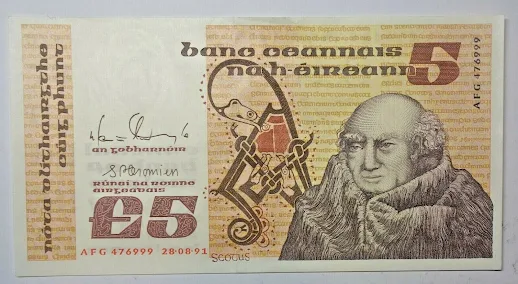
This was the view of some medieval commentators, who believed that the juxtaposition of ugliness and beauty can be used to enhance our ability to apprehend what is beautiful. For example the Irish Neo-Platonist philosopher John Scotus Eriugina wrote in the 9th century AD: 
For anything that is considered deformed in itself as part of a whole not only becomes beautiful in the totality, because it is well ordered, but is also a cause of Beauty in general; thus wisdom is illuminated by the relation to foolishness, knowledge by comparison with ignorance, which is merely imperfection and wanting, life by death, light by the opposition of shadows, worthy things by the lack of praise for them, and to be brief, all virtues only win praise by comparison with the opposite vices but without this comparison they would not be worthy of praise...As is the case with a beautiful painting, for example. For all that is ordered according to the design of divine Providence is good, beautiful and just. Indeed what could be better than the fact that the comparison of opposites lets us sing the ineffable praises of both the universe and the Creator?
De divisione naturae, V; quoted in The History of Beauty by Umberto Eco. 
Johns Scotus Eriugina depicted on the Irish 5-pound note.
One might perhaps think of this as a sort of apophatic aesthetics. We approach the apprehension of Beauty by contrast with what it is not. This is analogous to apophatic theology (apophatic is Greek for negation), alternatively referred to as the via negativa (in Latin the ‘road of negation.’) These are commonly used terms for a way of approaching God that emphasizes His unknowability and the inadequacy of positive theological attributes to define Him. By the via negativa we describe God by referring to what he is not. For example, He is not finite, rather he is infinite; He is not bound by time, rather He is eternal. By this principle, we can also follow what one might call the via pulchritudinis negativa - the Way of Beauty by Negation - help us apprehend beauty.
Artists and musicians have applied this principle creatively through centuries.
As a general principle, artists will know that in a painting if everything is in accord with a perfectly idealized template or pattern it tends to look sterile and dull. When he introduces judiciously small and occasional deviations and aberrations, however, suddenly the whole work looks richer and more interesting and, paradoxically, more perfect. As an artist, I aim to paint things that incorporate principles of order, symmetry, harmonious proportions, and balance in the application of tone and color. Nevertheless, I always introduce anomalies that subtly break free of a rigid application of the idealized pattern in small details because I have found that it adds to the beauty of the whole.
Through centuries, artists who paint in Christian figurative traditions have always deviated from strict adherence to natural appearances. This partial abstraction is present in all authentic Christian art. The fact that we recognize that a piece of art conforms to, say, the iconographic, the gothic or baroque styles is because artists deviates from strict naturalism in accepted ways. The fact that when we look at traditional paintings in these styles and typically it doesn’t even think of this partial abstraction as ugly distortion is testament to how well traditional practices employ the via pulchritudinis negativa to raise the beauty of the painting.
Christ Pantocrator, by the 20th century iconographer Gregory Kroug
Similarly, when a virtuoso musician plays a piece of music, they do not play precisely what the composer has written down. So when Glenn Gould plays Bach, or Alfred Brendel plays Bach, they deviate subtly from the precise rendition of the score, lagging slightly in the rhythm here, leading slightly there, as they interpret the score. These tiny subtle aberrations contribute to what becomes a brilliant interpretation of the piece as a whole. And again, if we are even aware of what the pianist is doing, the effect is so powerful that we never interpret his variations as mistakes. It is often said that the greatest artists, musicians and composers master the rules and then know how to break them. I would say that in fact, they are not breaking the rules, rather, they are transcending them. By this I mean that they understand that such rules are simply man’s attempt to capture the beauty of an ideal and will be incomplete. They are necessary, but can only get us so close. The virtuoso intuits the ideal to which the rules are directing us, but which they cannot capture completely.
So we see gargoyles in Gothic cathedrals, which are skillfully and intricately carved distorted figures arising from the imagination of the mason that add to the overall beauty of the edifice.
A gargoyle from Salisbury Cathedral
Similarly, when illuminating manuscripts, monks would deliberately introduce ‘mistakes’. The reason often given is that this reflects an acknowledgement that man cannot match the perfection of God; this helps to remind us that even the ‘perfect’ version that would have been produced without the deliberate mistake cannot in fact match the perfection of God. To the modern eye is is difficult to see the ‘mistake’, but the beauty of the whole is still apparent.
A folio from the Lindisfarne Gospel

Monday, April 26, 2021

How Liturgical “Forms” Concretely Define Religious Belief — or Undermine It

For a thousand years, priests offering Mass in the Roman rite observed the rule that they should hold their thumb and forefinger together from the time of the consecration until the ablutions (a rule still observed, of course, wherever the traditional Latin Mass is celebrated). This custom reflects the Church’s profound faith in the Real Presence. After the consecration, Our Lord is really, truly, substantially present wherever the outward appearances of bread and wine are present, which means in every last particle of the host. For this reason, the priest should not casually handle other things after touching the host, but keep those two fingers together except when distributing communion, until he is able to wash them in the ablutions. In this way, too, the priest is continually reminded of the awesome mystery he is handling with his fingers — and so are the laity.

As a layman, it bothered me that this longstanding and sensible custom had disappeared, so I decided to pose a number of questions to a sizeable group of priests who celebrate the usus antiquior, primarily to learn the importance they themselves attach to the custom. The results were published at NLM in five installments, with a concluding reflection (links may be found here). One priest responded to the series with the following account:
At the Mass in which I was ordained a deacon, the Eucharist was “served” from a glass dish of sorts … I purified it with great care after Holy Communion; it required a rather noticeable period of time to do so, which was obviously more than local clergy and people were used to. After that Mass both the vocation director and the ordaining bishop “corrected” me on this matter, with the bishop reminding me that the purification was only a “ritual purification” and that such care was not needed in carrying it out, since a sacristan would wash everything after. (A totally incoherent position.)
          This was my introduction — and a rather painful one, at that — to the practical lack of faith on the part of the clergy in the Real Presence, which I have witnessed and experienced many times in the 11 years since then. I say “practical,” because few would deny the Real Presence and most would even defend it quite eloquently. But the way they actually handle the Eucharist betrays their lack of understanding and/or belief. (This is particularly the case with how they handle the Precious Blood, the purificator, etc. — but this is the topic of another discourse.)
          Therefore, when I began to study the usus antiquior and learned about the detailed and systematic process of purification, which really leaves little room for error, and of the practicalities such as holding the consecrating digits together until purification, my faith was confirmed. And, although knowledge of the Church’s historic practice served, perhaps, to heighten my awareness of just how bad things generally can be now, and thus heightened my sense of pain, yet at the same time, it was a consolation to know that I was on the right track.
This author has put his finger (if I may say so) on the nub of the problem. The Catholic faith is not something purely abstract that we learn and assent to as an intellectual exercise. We learn our faith and we discern its meaning through practice, through what we do with or to the words, things, and persons that embody this faith. How we speak to Our Lord or about Him; how we handle the sacramental signs and, above all, His all-holy and life-giving Body and precious Blood; how we treat our priests and how they treat their people. This is where we find out, experientially, day after day, what the Catholic religion is — and whether it has been replaced by a rival system of belief.

In our practice, we teach ourselves; by our example, we teach those around us, especially children. This is where modern liturgy has grievously failed, in numerous ways and as a matter of practice, through its repudiation of the meaning of vital forms of expression, forms that convey the essence and purpose of the Mass. What is at stake in the escalating tensions between divergent liturgical “sensibilities” is not just mere “form” (as if we were talking about matters of taste or fine art), but rather, the meaning inherent in form and expressed by it — that is to say, truth. And not truth alone, but justice, as in the virtue of justice by which we give to God and the things of God that which they rightly demand and which we owe as His creatures and dependents. Thus, the divergence between “old rite” and “new rite” is a divergence of truth and justice: two different “religions,” taking this word in its Thomistic acceptation.

Just as the reverent forms and practices of the traditional liturgy point to and express vital truths for our faith, the numerous casual practices that permeate Novus Ordo liturgies are not coherent with the meaning and the purpose of the Mass. A friend of mine, a young lady who transitioned a few years ago from the Novus Ordo to the traditional rite, sent me a reflection that illustrates this point:

In my years attending the N.O. at very mainstream parishes (not like Oratorians at all), I experienced a palpable and oppressive sense of what I can only describe as a dictatorship of the casual. It wasn’t that I didn’t personally wish for more reverence, but the atmosphere just made it feel very out of place. It felt strange to be one of the few who bowed in the creed (we never dreamed of making a genuflection). It felt equally strange to show extra reverence such as bowing of the head after adoring the host at the consecration. Some faithful received on the tongue, but this was unusual. If one stayed in the pew, even for a moment, to make acts of thanksgiving after Holy Mass, one was most certainly in the minority. Then of course there was the chit-chat about sports games, social events, and all kinds of trivialities that took place in the Sacred Presence. Also there were frequent rounds of applause tucked into liturgies. Rounds of applause for a good joke in the homily, for a speaker advertising the parish picnic, for the choir upon completion of the rousing recessional song — the occasions were all too frequent.
          There is a pervading “bad attitude” that results in this oppressive dictatorship of the casual. It is a mystery to me what drives this insidious force. It took root years ago, but why does it still thrive when many good people in these parishes desire, if only in a vague way, greater reverence? Now, I know that we should all be willing to openly express our faith in God even unto death. However, something has gone terribly wrong when one feels a furtive sense, almost guilt — a feeling of “Well, who do you think you are, acting all holy!” — when one expresses reverence in a visible act.
          I’ll give a vignette that comes to mind. My sisters and I thought wearing veils would be kind of nice, but I remember my argument against it was: “We’re already such a distraction up in front of church playing our instruments in view of everyone. Then we’re going to throw veils into the equation? Besides they don’t ‘go’ with the kind of music we play.” I really don’t know if that reasoning was sound, but it illustrates the conundrum of reverence-hungry faithful who find themselves in the rigid N.O. framework. It’s a framework where piety and devotion often look ridiculous. Think of it: we have on our hands an atmosphere where showing due honor to Our Lord in what is supposed to be His house, at what is His Sacrifice, looks ridiculous. This is a brazen evil.

It is ironic that some Novus Ordo proponents criticize those who favor the traditional liturgy as people fixated on form, when in reality it is impossible not to care about form, since there is no truth accessible to us humans without the clothing of form. Every liturgy comes to us as a definite concrete set of forms with their own inherent meaning, and this meaning will be either full, rich, accurate, and nourishing of orthodoxy, or banal, impoverished, ambiguous, and inadequate to our needs. In this sense, everyone is fixated on form because human language and spiritual activity are formal through and through. The primacy of form, and the corresponding priority of getting it right, are inescapable; there is no “essential thing” independent of form that is “enough” for us.

No doubt, truth is known by the divine intellect apart from any created form; but men know the truth as expressed in a definite way, under sensible and intelligible signs. Some signs are well suited to the truth they signify, and others are not. For example, solemnity is compatible with, indeed required by, the notion of the sacred, while casualness and spontaneity are not.

Martin Mosebach’s The Heresy of Formlessness illuminates the folly (and ugliness) of imposing on ourselves the modern faith in abstract society and an abstract world with abstractions reigning globally and governing relationships individually, in contrast to the real spiritual vitality that can be found in things, real things, and how real things and actions resonate in the spiritual realm. This sensitivity to material reality is something our society has lost — not only the idea that there is a spiritual reality encompassing the material world, but also that we touch the spiritual through what we do with matter, or, in other words, that the form of things and what we do with them matters in the life of the spirit. One sees the same Cartesian contempt for the flesh in the liturgical reform, which strips barren the inherited treasury of forms in order to present as purely verbal and conceptual a worship as is still consonant with public human activity.

As the historical record indicates, Modernity fears Catholicism because Catholicism reminds it — reminds us — that reality includes the supernatural, that which encompasses and penetrates the natural with mysterious powers that reason can approach, but only through faith and analogy. This approach requires a surrender to the divine and an acceptance of tradition that modern epistemology in its egocentric rationalism and voluntarism cannot tolerate. Like liberalism in Newman’s analysis, a halfway house between Catholicism and atheism, the Novus Ordo is a halfway house between a time-embracing and time-transcending tradition and a modernity trapped in its own death spiral.

In conclusion, the past fifty years of liturgical praxis have taken a serious toll on the faith life in our communities. The Novus Ordo perspective dwells erroneously on abstractions like validity and fails to recognize the deep (human and divine!) connection between form, meaning, and truth. The consequences of this error are now unmistakable. According to Bishop Barron, for every new Catholic, six are leaving the Church. In a survey of Catholics, 80% under age 50 do not believe in the Real Presence. The pandemic has only accelerated the already glaring differences between the traditional practice of Catholicism and its modern substitute. The loss of faith evidenced statistically is understandable, even predictable, given that the main catechism for most Catholics is the Mass. A concerted return to the traditional liturgy is not simply beneficial but necessary for the continued life of our churches. Bishops who do not grasp this in time will preside over the white-chasubled funerals of their cremated dioceses.

In the cycles of history, including the history of salvation unfolded for us in Scripture, we perceive times of exile, as well as the varied responses people make to their exilic condition. It seems that we are living in a peculiar time marked by institutional self-exile, as if the Church had become its own Pharaoh and Pilate. That is no excuse for failing to do what we can and must as children of Israel, as disciples of Christ; rather, it is the perfect opportunity to pray for and seek a return to Catholic tradition, having at its heart a liturgy that is worthy of — and truly communicative of — the most important work the Church does, and, consequently, that is capable of serving as the foundation for a coherent future.

Tuesday, April 14, 2020

Beauty, Reverence, and Whether It's All in the Eye of the Beholder - with Dr. Alice von Hildebrand

On the latest episode of Square Notes: The Sacred Music Podcast, we interview the sagacious Dr. Alice von Hildebrand, inspired by this excellent article she wrote back in 2006 for the St. Austin Review, “Wrong Approaches to Art.”


Dr. von Hildebrand, from the privileged vantage point of her many years on this side of heaven, shares what she sees as key in perceiving beauty, and it is the same key that undergirds a proper celebration of the sacred liturgy, and the love of a Christian for spouse, child, or stranger: reverence. We hope you’ll tune in for the wisdom she shares in this episode. 


You can catch us on our website, YouTube, iTunes, Stitcher, or your favorite podcast app. Please note that we have discontinued publishing on SoundCloud.

Monday, September 23, 2019

Resisting the Lowest Common Denominator: A Priest’s Cri de Coeur

Jesus did not settle for the LCD

A priest shared with me some insights from a meeting he attended of diocesan priests with their bishop. In what follows, I will be drawing upon what he told me.

In the meeting, the bishop said that the clergy should work against the temptation to settle for the “LCD,” the lowest common denominator. For, if we allow every member of the clergy to “roam free,” as it were, and aspire to no diocesan-wide standards of excellence, the principle of entropy, or we could just say man’s fallen nature, tells us that things will tend to roll down hill and decay over time, and eventually — at some point not too far down the road — every parish will face immense pressure to conform to this LCD: whatever options are least confrontational, most politically correct, and most socially acceptable will eventually win the day. It takes real vision to see this inevitable outcome and to combat it from the start. Free choice can be attractive, but ultimately results in division and degradation.

The priest then reflected: this is exactly what I and many brother priests have seen clearly happening with the liturgy. Because of the equivocal nature of the Missal of Paul VI, which leaves so much at the disposal of the celebrant, we have quickly slid to the LCD in every area where there is legitimate free choice. In other words, there is no free choice within the system.

For example:

1. A priest is free to celebrate ad orientem or versus populum — in fact, the Missal presumes celebrating ad orientem, which would put us in harmony with the rest of Tradition. But because of the LCD factor, only versus populum is acceptable. Any priest who chooses to celebrate ad orientem is seen as divisive, and is eventually pressured into conforming, unless he wants to be ostracized not only from the faithful, but even from his bishop and brother priests. But is it the priest who is the source of division? Or is it the freedom to choose either option that creates the division? It is the inevitable result of the LCD factor. Priests are accused of fighting what are called “the liturgy wars,” but are they to be blamed, or does the blame not rest squarely on the shoulders of Paul VI and his ambivalent Missal?

2. A priest is free to incorporate as much Latin as he would like. But because of the LCD, de facto only the vernacular is possible — despite the anathema from the Council of Trent: “If anyone says . . . that the Mass ought to be celebrated in the vernacular tongue only . . . let him be anathema.”

3. A priest is free to incorporate the Extraordinary Form into his parish, or his ministry, but again because of the LCD factor, this is seen as extreme and rigid, and is frowned upon to the point where it is de facto nearly impossible.

4. A priest is under no obligation to concelebrate and is perfectly free to choose to assist in choir so as to be able to celebrate his own Mass, a custom hallowed by many centuries of tradition in the Roman Rite and clearly allowed by the new Code of Canon Law. But de facto, there is immense pressure upon him to concelebrate because of the LCD factor, and to not conform results in receiving the label of being “not community-minded.” At some large gatherings for retreats or conventions or meetings, there is literally no possibility of a private Mass unless you bring your own altar, since such things are no longer even contemplated.

5. A priest is supposed to use a communion paten and not use EMHC’s except under extraordinary circumstances, but because of systemic habitual abuse in the American Church and the LCD factor, doing either of these things would be seen as extreme. The pragmatic norm, on the contrary, is to not have a communion paten but to insist on having EMHC’s.

6. The faithful are encouraged to receive Holy Communion on the tongue which is the traditional custom and still the universal norm as per the Vatican; meanwhile, they are permitted to receive in the hand as long as certain serious conditions are met. But because of the LCD factor, somewhere between 95–98% of the faithful receive in the hand. And everywhere, children receiving First Communion are not even taught the traditional practice, in spite of it still being “on the books.”

7. The same can be said of sacred music, church architecture, sacred vessels, vestments, preaching, etc., etc., etc. We are all now forced by social pressure to conform to the LCD. And what happens when a priest doesn’t want to conform to the LCD but wants to raise the bar? Well, typically the choice is either: conform to the LCD, or hit the highway. The dynamic subtly eats away at the bishop’s own integrity, because when he is confronted with complaints about a “difficult” or “demanding” priest — as identified promptly by Susan from the Parish Council — he must either stick his neck out and risk his reputation to defend the priest, or take the quieter path of pressuring the priest to conform to the LCD or be removed.

It is as if everyone is under the spell of the LCD. Such is the division that has been sown into the heart of the Church, and especially into the heart of the priesthood and religious life, by the Missal of Paul VI.

Order — or Disorder?
The laity need to understand this phenomenon if they wish to grasp why so many faithful priests who want to celebrate in harmony with tradition, and want the faithful to experience the fullness of this rich treasure that we have as Catholics, are afraid to do so, or perhaps suffer a crisis when the tension between their ideals and the LCD reality becomes too intense. Some think that there is a huge conspiracy that planned all this, and certainly this may be true, since no doubt the cunning of the devil is involved. But it can also be explained as the result of societal entropy. Because of original sin, everything tends towards decay, as we see in the movies, music, and media of our culture. The Church is immune from this decay only in her divine element; she is by no means immune to it in her human element, unless her members fight consciously and vigorously against it. The traditional liturgy had long been a barrier against this natural process, but the new Mass has let this process into the Church like a flood.

This “Trojan horse in the City of God” (to use the expression of the great Dietrich von Hildebrand), this Trojan horse in the sanctuary in the form of a new Mass, did not spring up out of nowhere. Its principles had been brewing among modernist theologians and their heirs, the theologians of the nouvelle théologie, expressed in the false distinction made by Fr. Yves Congar between the “unalterable structures” of the Church and the “accessory, changeable superstructures.”

But this mentality is nothing less than a betrayal of a mystical person, as one lover of tradition so poetically expressed it:
I do not love a skeleton nor vital organs, I love Her face, Her sparkling clothes and even Her sandals, Her entire being. With the spiritual canticle I will sing of the hair on Her neck that charmed us as well, her children, as it ravished the heart of her Spouse. Oh, may those who love the Church understand! In her features and her slightest gestures, something indescribably exquisite enraptures us to the summit of her essential Mystery. The liturgical movements, the hymns, the ornamentation of churches, the words of the catechism and the sermon, this flesh, this manner of walking, the sound of the voice, the color of the eyes, revealed the very soul, immediately, and we were struck, intoxicated by it, for Her ancient and universal soul, Her intimate life that came to comfort us, was the Holy Spirit in Person! [1]
This is the reverence that a Catholic should have towards the received rites that come down to us from tradition, and all of their ornamentation. But the new Mass incarnates the false principle of Fr. Congar by deliberately tossing all of this out of the window in a massive overhaul, giving the impression to faithful Catholics and to the world that the Catholic Faith can change its entire appearance. Since changing the so-called “accessory, changeable superstructures,” we have become painfully aware that they were instead an important part of the solid rock that formed our sure foundation, or to use the above imagery, the beautiful wedding garments of Holy Mother Church, so visibly radiant in her sacred rites. And now we find ourselves upon a foundation of sand, always shifting, and — if we are willing to be honest with ourselves — a foundation always eroding down to the LCD, again and again, like a bird with a broken wing that can only manage to throw itself a few inches, or an airplane with faulty engines that rises up from the runway only to crash just beyond it.

My correspondent concluded with this cri de coeur:
If other priests want to accept the status quo, the tyranny of the LCD, that is their decision, between them and God. Perhaps not everyone needs to fight on the front lines and resist usque ad sanguinem. But for us whose hearts belong to the Church of all times, and to her traditional rites, we seek nothing more than to access them in freedom, nothing else than to live and die with them, nothing other than to nourish the faithful with this potent food and drink. May God raise up more and more priests with such a heart.

NOTE

[1] From the Abbé Georges de Nantes’s “Letter to My Friends,” no. 178, August 6, 1964. Like Padre Pio, de Nantes was reacting to the devastation already being visited on the Tridentine Mass in the mid-sixties, prior to the coup de grâce of 1969. See here for the quotation as well as the mention of Congar.

Visit www.peterkwasniewski.com for articles, sacred music, and classics reprinted by Os Justi Press (e.g., Benson, Scheeben, Parsch, Guardini, Chaignon, Leen).

More recent articles:

For more articles, see the NLM archives: