
Wednesday, February 18, 2026

A Letter Exchange on the Last Council and the Liturgical Reform

The following letter exchange took place between me and a gentleman whose personal details have been edited out.

Dear Dr. Kwasniewski,

I am a high school theology teacher and also lead Bible studies. The life of the Church, the Scriptures, and Holy Mass are all integral to my daily life. I find all issues related to liturgy to be terribly confusing. There are so many different narratives out there that one could lose one’s mind trying to figure out which one is correct, or if any is correct. There is the fine work done by many of you at New Liturgical Movement, among others. One could also find a different view point from rad trads, or a liberal view from people at the Pray Tell blog. So, lots of passionate views by highly educated people who feel they are interpreting Vatican II in the right way. (Unless they reject the council altogether, which is another story.)

My question, then, is: Where to begin, and whom do I trust? Having read Vatican II and Sacrosanctum Concilium on a number of occasions, as well as in class work, it seems that some reform was certainly called for. How, then, can some people completely dismiss the council and the directives that were given? I have friends who do that quite often, while referring to the council as simply “pastoral.” Yet, I am sympathetic with these people because of some of the unfortunate innovations that occurred after the council. So, for me at least, while I like the reverence and use of Latin in the TLM, I still prefer the Novus Ordo. It seems to me that there must be some place of meeting between the two, while being faithful to both the received liturgical tradition of the Church and the reforms called for by SC. What do you think?

Sincerely yours,
A Curious Catholic

***
Dear Sir:

I completely understand your predicament, as it parallels how I felt at a certain juncture. We are living in a confusing age, and a certain diversity of opinions is not only to be expected but should be tolerated, even (at times) welcomed, as we try to work things out as best we can, in the absence of strong and able leadership at the higher levels of the clergy.

This much seems beyond any doubt: the reforms to the liturgy from 1964 to 1970 went far beyond anything that the Council Fathers ever had in mind or anything that Sacrosanctum Concilium could possibly justify. This has been so thoroughly documented and demonstrated that it’s no longer an open question.

Those who defend Bugnini and the Consilium are forced, then, simply to say, “Well, that’s true, but they did the bold thing – the thing that had to be done – and the Pope recognized it and approved it.” On the other hand, those who question Bugnini’s and the Consilium’s principles will say, “We’re not surprised at the disaster that has befallen the Church, since you cannot break with the organic tradition of the liturgy and not expect to introduce massive amounts of chaos and malaise.”

None of this touches on the question of sacramental validity, which is to be presumed and can be readily defended on theological grounds; but certainly the question of the prudence of the changes and their defensibility is fair game. The attempt to shut down that conversation has failed, particularly when it became apparent that Joseph Ratzinger, one of the greatest theological luminaries of the twentieth century, and truly “the pope of the liturgical question,” was more than willing to participate in it himself.

Moreover, it really is the case that both John XXIII and Paul VI spoke of the Council as pastoral in nature and as an attempt to interpret and respond to modern man. In 1988, Cardinal Ratzinger said the following in an address to the bishops of Chile:

“The Second Vatican Council has not been treated as a part of the entire living Tradition of the Church, but as an end of Tradition, a new start from zero. The truth is that this particular Council defined no dogma at all, and deliberately chose to remain on a modest level, as a merely pastoral council; and yet many treat it as though it had made itself into a sort of “super-dogma” which takes away the importance of all the rest.”

Consequently, it was possible for the Council to get some things right and others not so right, since we are not dealing with unalterable dogmas that must be believed, or anathematized errors that must be shunned. The simple fact that the Council says “we should do X” doesn’t mean that, some decades later, we can’t legitimately argue that X wasn’t the best response, or that it wouldn’t make more sense to do Y or Z today. Indeed, this kind of situation has occurred many times in the history of the Church, which gives us other examples of councils (think of the Lateran councils) whose reforms didn’t always work or, in some cases, weren’t even attempted.

It seems to me that the Pray Tell perspective is generally untenable because it exalts progressivism at the expense of tradition, which is a fundamentally uncatholic way of thinking and judging. Rorate Caeli represents a consistent traditionalism that considers safe, sound, and sacred that which has always (or nearly always) been done by everyone (or nearly everyone) everywhere (or nearly everywhere). New Liturgical Movement is a meeting ground for various interests, announcements, and hypotheses, but always within a general commitment to the normativity of tradition. One will not stray far from the truth if one endeavors to remain faithful to the Magisterium while seeing tradition as a non-negotiable good that should always be privileged.

You raise an interesting question about Vatican II’s request for a reform of the liturgy. As you know, the Council insisted that no change be made unless the good of the Church certainly required it (SC 23). Far more changes were made than were ever certainly required, and the floodgates were opened for abuses. Even from a sociological-anthropological point of view, everyone knows that a gigantic and tradition-bound body can only absorb change slowly and stepwise, unless one wants to provoke rupture and confusion – which is exactly what happened. It could have been, and was, predicted ahead of time.

It seems clear that Benedict XVI’s intention was that the two “forms” would peacefully coexist for a long enough time to allow a restart of organic development, but I will admit that it’s difficult in practice to see how this would have actually taken place, and I am not aware of many traditionalists who want to see the old rite modified, for reasons explained in one of my recent books, Close the Workshop. In any case, it seems that “full, conscious, and active participation” was the primary reason given for reform, and I think it is not difficult to argue that the TLM in fact allows for a superior fulfillment of this desideratum.

Yours in Him,
Peter Kwasniewski

Dear Dr. Kwasniewski,

About four years ago I emailed you, out of the blue, with some questions about Vatican II, the old Mass and the new Mass. I have spent the past four years reading as much as I can while also observing and praying over my own experiences attending Mass. I have devoted considerable time reading authors that would typically be published on Pray Tell, and while I agree with some of what they argue, mainly the need of some reform, I simply cannot understand their unwillingness to see that a number of the experiments that occurred after the Council did not benefit the People of God. Examples would be the loss of chant, the abandonment of ad orientem, and the complete neglect of Latin.

When I attend the old rite, I fully appreciate the elements in it that are clearly lacking in the new rite. For me, there is a real attraction to it. However, here’s my one concern. I don’t want to be involved with any part of the Church that rejects the Second Vatican Council. While I think there is plenty of healthy dialogue that can go on concerning the implementation of Sacrosanctum Concillium, I am wary of those who reject elements of the Council. I firmly support the teachings on religious liberty, Nostra Aetate, Unitatis Redintegratio, and Lumen Gentium. My question to you is, can I embrace the pre-Conciliar Missal while also embracing the Vatican II in full?

God bless you,
A Curious Catholic

***
Dear Sir:

It’s very good to hear from you again. I no longer read Pray Tell, as I found that the perspective of Fr. Ruff in particular was exceedingly irresponsible. He speaks as if Vatican II amounted to a carte-blanche to overturn anything and everything in order to retool the Church for modern evangelization. Even if one might admire the apostolic motivation of this view, we can see that it has failed in so many ways.

Where there is flourishing new life in the Church, it has tended to align itself with so-called conservative or traditional constituencies. We can see this most obviously in the clergy, religious life, and marriages: young clergy tend, on the whole, to be interested in recovering traditions that were lost; religious orders that are growing or maintaining their numbers are the ones unembarrassed or even eager about Catholic tradition; and the marriages that are bringing new life into the Church and the world are those that are faithful to the indissoluble unitive and procreative finalities of marriage as a life-giving and life-sacrificing covenant.

You raise a difficult and challenging question – namely, about the doctrinal content and subsequent reception of the Second Vatican Council. Unavoidably, the Council is controversial, because, on the topics you mentioned (and others), it staked out positions that are not always obviously in harmony with preceding magisterial teaching. For example, there are clear tensions (which is not yet to say absolute contradictions) between Leo XIII’s encyclical Libertas Praestantissimum and Vatican II’s Dignitatis Humanae, or between Pius XI’s encyclical Mortalium Animos and Vatican II’s Unitatis Redintegratio, or between Pius XII’s Mystici Corporis and Vatican II’s Lumen Gentium.

Because the Council was intended as a pastoral response to modern times, as both John XXIII and Paul VI repeatedly said, it did not engage the highest level of magisterial authority – that is, it did not issue de fide pronouncements or anathemas on errors, which are considered infallible exercises of the Magisterium. At most, as the Nota praevia indicates, it intended to restate teachings already known to be true from their presence in the doctrinal heritage of the Church.

The conciliar documents were presented as a restatement of the Catholic Faith in modern language, and to that extent, they may be responsibly criticized, although the Council’s validity as an ecclesiastical gathering cannot be disputed, nor can the documents be dismissed out of hand. They must not be placed on an untouchable pedestal. Indeed, there is a great irony (as again Ratzinger pointed out) in the fact that the so-called “progressives” feel free to dispute and dismiss the more obviously authoritative canons and decrees of the Council of Trent, where we find the words de fide and anathema on practically every page, while they pillory anyone who so much as questions the prudence or adequacy of any formulation in Vatican II. Surely there is here a strange inversion and confusion.

Thus, everything depends on what is meant by “embracing Vatican II in full.” Whatever is clearly in line with the perennial Magisterium we should embrace; anything that seems in tension with it we may accept on condition that it be in harmony (which we may or may not be able to see ourselves); and we may suspend assent to false interpretations or extrapolations that have caused great harm to the Mystical Body of Christ. What I have just summarized is the view of Bishop Athanasius Schneider, such as can be found in his book Christus Vincit: Christ’s Triumph Over the Darkness of the Age, which I highly recommend for its clarity and serene common sense.

We must also be prepared to acknowledge that the state of the world today, sixty years after the close of the Council, is vastly different than it was back then, and that the burning issues that animated the prelates of the 1960s are no longer ours; moreover, that certain solutions, such as the recovery of tradition, are proving to be more effective in reaching, converting, and nourishing postmodern man than any of the programs aimed at “modern man” as conceived circa 1970. Thus, it may also simply be the case that Vatican II, whatever its status might be, has already simply ceased to be of much relevance, and therefore is no longer worth all the anguish and laborious exegesis it once occasioned.

It seems to me that the sooner bishops and cardinals recognize this dramatic shift, the sooner they can respond to the actual needs and desires of the People of God, and hear what the Spirit is saying to the churches today.

Yours in Christ,
Dr. Kwasniewski
Wednesday, December 31, 2025

The Third Anniversary of Pope Benedict XVI’s Death

Deus, qui inter summos sacerdótes fámulum tuum Benedictum ineffábili tua dispositióne connumerári voluisti: praesta, quáesumus; ut, qui Unigéniti Filii tui vices in terris gerébat, sanctórum tuórum Pontíficum consortio perpétuo aggregétur. Per eundem Christum, Dóminum nostrum. Amen.

God, Who in Thy ineffable providence, did will that Thy servant Benedict should be numbered among the high priests, grant, we beseech Thee, that he, who on earth held the place of Thine Only-begotten Son, may be joined forevermore to the fellowship of Thy holy pontiffs. Through the same Christ, Our Lord. Amen.

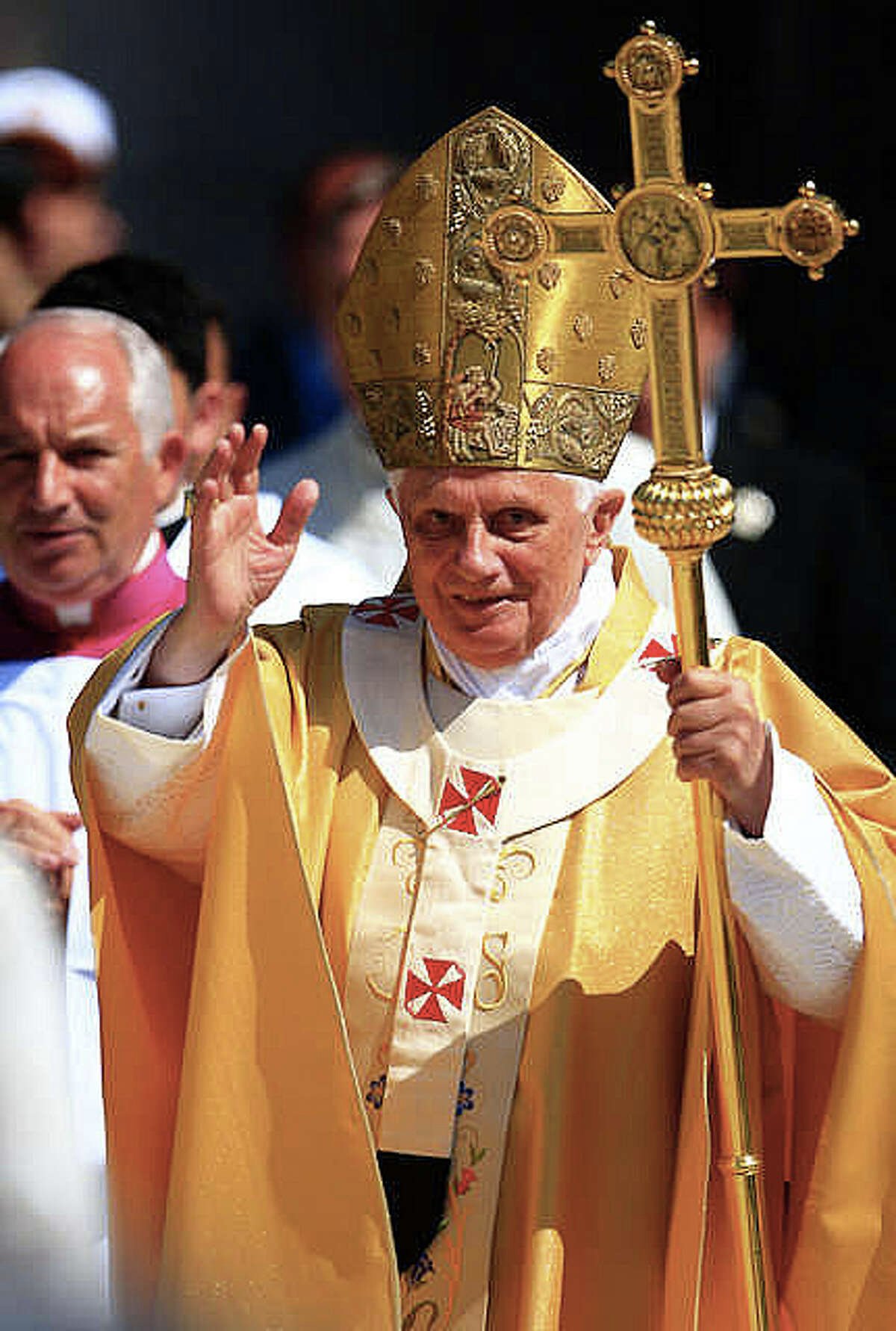
As we pray for the eternal repose of His Holiness Pope Benedict XVI, who died three years ago today, let us also remember with gratitude the gift of his papacy, his graciousness and good humor, his many wise and well-considered writings, his paternal love especially for priests and religious, but of course above all, his restoration to the Church of the incomparable treasure of the traditional Roman Rite, an act which will continue to bear great spiritual fruit and lead the way for much-needed reform. “What earlier generations held as sacred, remains sacred and great for us too, and it cannot be all of a sudden entirely forbidden or even considered harmful.”
Joseph Ratzinger serving an open-air solemn Mass in the town of Buchfelln in 1947, when he was 20. Tradition will always be for the young!

Tuesday, July 08, 2025

A Very Good Video from Brian Holdsworth on Liturgical Reform

I meant to share this video from the always-wise Brian Holdsworth yesterday, which was the 18th anniversary of Pope Benedict’s motu proprio Summorum Pontificum, but travel plans and an uncooperative router intervened. The title is “A Plea to Pope Leo For Reform”, and essentially, he lays out a very good case for why Summorum Pontificum needs to be restored, and likewise, some good food for thought as to what the future of liturgical reform in general should look like.

If I may be so bold as to summarize his argument, it basically runs as follows. Improvements in the human person do not happen at once; they require slow and steady work. If you are unhealthy and out of shape, you cannot simply decide to be healthy and in shape from one day to the next. You need to not just exercise and eat better, but get in the habit of exercising and eating better. Likewise, if you want to be smarter, you cannot simply decide to be smarter; you need to develop the habit of doing things that will make you smarter (read more good books, waste less time on scrolling through videos, etc.) And if you try to change your habits all at once, and go directly to he desired end-result, you will fail disastrously; he likens this to trying to get in shape by going from lifting 40 pounds in the gym one day to lifting 200 the next.
What this means (and this is the part which really made me take notice) is that even if the post-Conciliar liturgy were indeed a vast improvement on the traditional liturgy in every way, as some contend, it was nevertheless brought with it such an unprecedented amount of change, and was implemented at such an unprecedented speed, that it was never going to have the desired effect. Mr Holdsworth makes the analogy that it was like moving the pin in the weight machine from 40 to 200 from one day to the next, and the result has been a failure.
And here, by the way, he also makes a very wise cautionary note for those of us who love the traditional rite, and pray to see it restored to its rightful place in the Church, namely, that this cuts both ways. If, as we believe, it is the traditional Roman Rite that is superior, circumstances within the Church have nevertheless now changed in such a way imposing it all at once would be similarly imprudent, and lead to a similar failure.
This, in turn, is why Pope Benedict’s vision, that the liberation of the traditional Roman Rite, and his hope that it would gradually improve the general condition of the liturgy in the Church as a whole, were so wise. So I thank Mr Holdsworth for this very good observation, and urge all our readers to continue their prayers for the hastening of the day when the Summorum Pontificum regimen is restored as it should be.  

Saturday, April 19, 2025

The Twentieth Anniversary of Pope Benedict XVI’s Election

On this Holy Saturday, we also mark the 20th anniversary of the election of His Holiness Pope Benedict XVI. Let us remember with gratitude the gift of his papacy, his graciousness and good humor, his many wise and well-considered writings, his paternal love especially for priests and religious, but of course above all, his restoration to the Church of the incomparable treasure of the traditional Roman Rite, an act which will continue to bear great spiritual fruit and lead the way for much-needed reform. “What earlier generations held as sacred, remains sacred and great for us too, and it cannot be all of a sudden entirely forbidden or even considered harmful.”

Joseph Ratzinger serving an open-air solemn Mass in the town of Buchfelln in 1947, when he was 20. Tradition will always be for the young!

Tuesday, December 31, 2024

The Second Anniversary of Pope Benedict XVI’s Death

Deus, qui inter summos sacerdótes fámulum tuum Benedictum ineffábili tua dispositióne connumerári voluisti: praesta, quáesumus; ut, qui Unigéniti Filii tui vices in terris gerébat, sanctórum tuórum Pontíficum consortio perpétuo aggregétur. Per eundem Christum, Dóminum nostrum. Amen.

God, Who in Thy ineffable providence, did will that Thy servant Benedict should be numbered among the high priests, grant, we beseech Thee, that he, who on earth held the place of Thine Only-begotten Son, may be joined forevermore to the fellowship of Thy holy pontiffs. Through the same Christ, Our Lord. Amen.

As we pray for the eternal repose of His Holiness Pope Benedict XVI, who died two years ago today, let us also remember with gratitude the gift of his papacy, his graciousness and good humor, his many wise and well-considered writings, his paternal love especially for priests and religious, but of course above all, his restoration to the Church of the incomparable treasure of the traditional Roman Rite, an act which will continue to bear great spiritual fruit and lead the way for much-needed reform. “What earlier generations held as sacred, remains sacred and great for us too, and it cannot be all of a sudden entirely forbidden or even considered harmful.”
Joseph Ratzinger serving an open-air solemn Mass in the town of Buchfelln in 1947, when he was 20. Tradition will always be for the young!

Friday, November 08, 2024

My Interview with Dr Jan Bentz of The European Conservative

Earlier this year, on the feast of the Assumption, I had the great pleasure of giving an interview to an old friend, Dr Jan Bentz, who studied in Rome for many years. He is now teaching at Oxford University, and hosting an interview series called Reality Check on the YouTube channel of The European Conservative magazine. Our conversation ranged over a wide variety of topics related to the liturgy: a little bit about the station Masses; the current status of the traditional Roman Rite; the legacy of Pope Benedict XVI, and how it applies to the whole life of the Church; the non-reception of Vatican II; the lectionary; continuity and rupture in the post-Conciliar reform; prospects for future liturgical reform, etc. I hope you find it interesting.

Wednesday, October 09, 2024

The Legend of St Denis

October 9 has traditionally been kept as the feast of Ss Denis (“Dionysius” in Latin) and Companions, who were martyred at Paris in the 3rd century. St John Leonardi, the founder of a small congregation of clerks regular, died on this day in 1609; when he was added to the general calendar in 1940, his feast was placed on top of that of the martyrs, who were thus reduced to a commemoration. In the post-Conciliar reform, however, both feasts have been made optional memorials, which means that the martyrs may now be celebrated more freely in the Novus Ordo than in the Roman Rite. That they should be present at all in the modern liturgy is very surprising, since St Denis is the subject of one of the most famous hagiographical confusions, of exactly the sort that led to the suppression or downgrading of so many other feasts.
A statue of St Denis, from the treasury of the Basilica of Notre-Dame de Paris. One legend tells that St Denis was beheaded on the hill of Montmartre which overlooks Paris, after which he picked up his head and walked about 4 miles to the site where he is buried, the future location of the abbey which bears his name. (Photo courtesy of the Schola Sainte-Cécile.)
In his History of the Franks (I.30), St Gregory of Tours (538-94) lists Denis as one of seven men sent to Gaul as bishops to evangelize various cities during the reign of the Emperor Decius (249-51), and says that sometime after, he was “afflicted with various sufferings for the name of Christ, and ended the present life at the blow of a sword.” In the Martyrology incorrectly attributed to St Jerome, Denis is named on October 9th together with a priest and a deacon, Rusticus and Eleutherius, who are also mentioned in the prayer of their collective feast day. Their bodies were buried at a site a few miles to the north of Paris, and a church built over it, which Gregory of Tours mentions twice, once in connection with a miracle, and again when describing its profanation. Not long after his time, King Dagobert I (603-39) established a monastery under royal patronage at the site, and completely rebuilt the church; it was rebuilt again in the days of Pepin the Short and his son Charlemagne, the latter of whom attended its consecration in 775.

According to the revised Butler’s Lives of the Saints, even before the Carolingian period, St Denis of Paris had already been confused in some quarters with the Biblical figure of the same name (i.e. Dionysius), who was converted by the preaching of St Paul in Athens (Acts 17, 22-34). This preaching took place at the “Areopagus – the hill of Ares”, a large outcropping of the Athenian acropolis which was used as a place of judgment for serious crimes like murder; St Luke calls Dionysius “the Areopagite”, i.e., one of the judges who sat on the court held there. The Church historian Eusebius reports (3.4.11), on the witness of another Dionysius (a very common name in antiquity), bishop of Corinth in the later 2nd century, that the Areopagite was the first bishop of Athens; by the turn of the seventh century, he was believed to have died as a martyr, being burnt alive by the Emperor Domitian.
The Preaching of St Paul at Athens; a preparatory cartoon made by Raphael in the 1510s as part of a series of designs intended to be woven into tapestries; now at the Victoria and Albert Museum in London.
Sometime in the later 5th or early 6th century, an unknown Greek-speaking theologian produced a series of four treatises and ten letters, purporting to be works of Dionysius the Areopagite. This is not a case like those of Ss John Chrysostom or Augustine, among many others, to whom writings were very often mistakenly ascribed in later generations; the author clearly and deliberately intended to pass himself off as the contemporary of St Paul. To this end, he claims to have been present, along with Ss Peter and James, for the Dormition of the Virgin Mary (Div. Nom. 3, 2), and addresses letters to Ss John the Evangelist, Timothy and Polycarp. Scholars generally suppose him to have been a Syrian; the dating of his works depends in part on the obvious influence upon them of the neo-Platonic philosopher Proclus, who died in 485. Further attempts to glean information about the author from his writings remain speculative.
By the first decades of the sixth century, these writings were cited by authors on both sides of the debate over the Monophysite heresy, which the Ecumenical Council of Chalcedon had condemned in 451. Most notably, at a council held in Constantinople in 533, the Monophysites cited them in support of their teaching, to which the leader of the Catholic party replied that they were forgeries. Nevertheless, as the controversy continued, and as the heresy evolved into Monotheletism in the 7th century, they came to be gradually accepted as both genuine and orthodox by several important figures, the most significant being St Maximus the Confessor, who cited them at a council held in the Lateran Basilica in Rome in 649, under Pope St Martin I. They were further defended and cited to the same effect at the next two ecumenical councils, Third Constantinople in 680, and Second Nicea in 787. To this day, the Byzantine Rite’s liturgical texts for St Dionysius, “the Holy Martyr and Areopagite”, bishop of Athens, are filled with references to the writings, as for example, this hymn at Vespers: “Having made thy mind equal in honor to that of the Angels through virtue, o all-wise father Dionysius, thou didst write an account in (thy) holy books of the heavenly order of their hierarchy, and according to it, didst organize the orders of the Church’s government, likening them to the ranks of heaven.” (He is also the titular Saint of the Roman Catholic cathedral of Athens.)
An early 11th-century mosaic of St Dionysios the Areopagite, in the monastery of St Luke in Boeotia, Greece. (Public domain image from Wikimedia Commons.)
In the year 827, the Byzantine Emperor Michael II (820-29) sent a copy of the writings to Charlemagne’s son, King Louis the Pious, along with several other gifts. By coincidence, they happened to reach the king on the evening of October 8th, when he was at the royal abbey of St Denis for the vigil of the titular Saint’s feast day. The abbot, Hilduin, who was very close to the king, had them translated into Latin, although this translation was not very well done, and was replaced by another about 30 years later. At the king’s behest, he also wrote a life of St Denis, which definitively conflated the bishop of Paris with the Areopagite, ascribed his mission in Gaul to Pope St Clement I towards the end of the 1st century, and acknowledged the writings as his. This conflation was henceforth accepted, and remained the common legend of St Denis in western Europe for the next 700 years. The writings became extremely influential in the High Middle Ages; Hugh of St Victor, St Albert the Great, and yet another Denis, the great Carthusian theologian, wrote commentaries on them, and they are cited well over 2000 times in the works of St Thomas Aquinas.
In the Renaissance, when many of the certainties of the medieval tradition were being called into question, the authenticity of the writings, and the identification of the two Denises as the same person, were challenged by two of the most prominent among the great humanist scholars, Lorenzo Valla (1407-57), who also unmasked the forgery known as the Donation of Constantine, and later Erasmus. The question was the subject of much controversy and debate over the following centuries, with learned men, Catholic and Protestant, offering their opinions as both defenders and detractors of the tradition. The neo-Gallican revision of the Parisian liturgical books sided with the detractors by separating Denis into two persons, one of Athens, kept on his Byzantine date, October 3rd, and the other of Paris on the traditional date, without the title “Areopagite”, a change which was later harshly condemned by Dom Prosper Guéranger.
A leaf of a 15th century Missal according to the Use of Paris, with the Epistle of the Mass of St Denis, Acts 17, 22-34. (Bibliothèque nationale de France. Département des Manuscrits. Latin 859A)
However, this diffidence towards the traditional legend of St Denis was not a novelty of the neo-Gallicans. The pre-Tridentine Roman Breviary devotes only a single lesson of less than 70 words to St Denis and his companions, which makes no mention of the theological treatises. It also says that he was sent to Gaul “by the Roman Pontiff”, without specifying which one, a clear sign of doubt about the legend that it was St Clement.
Much more tellingly, the pre-Tridentine Parisian Breviary also pointedly does not refer to Denis as the author of the Areopagitic corpus, although it does accept him as the Athenian disciple of St Paul and the contemporary of St Clement. The Matins lessons for the feast day and the days of its octave are taken directly from Hilduin’s life of the Saint, but omit the chapters (9-17) which describe the theological writings, nor is there any reference to them in any of the proper antiphons or responsories of the Office, or in the Sequence of the Mass. (The Epistle of the latter is the passage from Acts 17 cited above.)
In point of fact, it was only with the Tridentine revision that the Roman Breviary accepted Hilduin’s conflation of the Athenian and Parisian Denis as the same person. Furthermore, a sentence is added to the effect that “He wrote wondrous and indeed heavenly books, on the divine names, on the celestial and ecclesiastical hierarchies, on mystical theology, and certain others.” This is perhaps the only case in the Breviary of St Pius V in which the legend of a Saint moves further away from the more skeptical view, almost certainly due to the influence of Cardinal Baronius, who defended the traditional legend in his notes on the revision of the Martyrology.
As late as 1857, when the Abbé Migne put together his great corpus of Patristic writings, the Patrologia Graeca, which is arranged in chronological order, he put the Areopagitic corpus and associated writings, including several defenses of its authenticity, between the works of St Clement I and those of St Ignatius of Antioch. However, in 1895, two Catholic scholars, Hugo Koch and Josef Stiglmayer, working quite separately from each other, demonstrated the dependence of the writings on the works of Proclus, and the question is now universally regarded as settled in the negative. This also explains what was, of course, the strongest objection to their authenticity all along, namely, the complete absence of any reference to them in the writings of earlier Church Fathers.
Part of the choir of the abbey of St Denys. Around the year 1135, the abbot Suger began the process of enlarging the Carolingian church, during which the choir was rebuilt from 1140-44. Inspired by the Areopagite’s theology of light as an expression and manifestation of God’s presence, Suger created the idea of having huge walls of windows which flood the church’s interior with light; this is the foundation of the architecture style which we now call Gothic, and this choir is the first example of it. (Image from Wikimedia Commons by Guilhem Vellut, CC BY 2.0)
As with the many controversies over the authorship of the books of the Bible, the assumption behind this debate was to a large degree that if a work is not genuinely by the author to whom it is attributed, it is therefore a forgery, and hence worthless. And likewise, as with the many controversies over the authorship of the books of the Bible, this assumption has more recently been to a large degree subsumed by an understanding that authenticity is principally an historical question, and one that need not always impinge on the value of a writing as a work of theology. In his series of Wednesday audiences on the Church Fathers, Pope Benedict XVI spoke about the author of these writings (May 14, 2008), and explicitly rejected the idea that he passed himself off as the Areopagite in order to vest his work with the authority of one close to the Apostles, but rather, did so “to make an act of humility; he did not want to glorify his own name, he did not want to build a monument to himself with his work but rather truly to serve the Gospel, to create an ecclesial theology, neither individual nor based on himself.”

Wednesday, July 10, 2024

The Father of the Romans and Joseph Ratzinger, His German Son

Virgil’s Aeneid is one of the modern world’s many illustrious victims. The gradual abandonment of Latin has turned this epic masterpiece, one of the literary cornerstones of Western Civilization, into something that only a minuscule group of inveterate Latinists can truly enjoy in the original language. I’m sad to say that I’m not in that group—Virgil’s Latin is so rich and dense, so intricate and elegant, that reading quickly becomes laborious to the point of exhaustion, and the translations on my bookshelf appear as an oasis in the desert of my own incompetence. I take comfort in the fact that John Dryden, a Latinist of the old stripe and one of the Aeneid’s most famous English-language translators, also strained under the weight of Virgil’s genius:

Virgil called upon me in every line for some new word, and I paid so long, that I was almost bankrupt, so that the latter end must needs be more burdensome than the beginning or the middle; and, consequently, the Twelfth Aeneid cost me double the time of the First and Second. What had become of me, if Virgil had taxed me with another book?

Aeneas builds a fleet after escaping Troy. Sixteenth century, painted enamel on copper.

Written in the first century BC, the Aeneid recounts the journey of Aeneas out of defeated Troy, around Greece, over to eastern Italy, down to Sicily, across the sea to Carthage, back to Sicily, and finally up to western Italy, where he founded Lavinium, a port city in Latium and an ancestor of Roman civilization. Saint Augustine knew the story well and adopted it as an allegorical framework for his own spiritual journey from pagan Rome to Christian Rome:

I was obliged to learn the wanderings of Aeneas, and yet I was forgetful of my own wanderings. I learned to weep for the death of Dido, because she killed herself for love, while in the midst of these things I was miserable and dying, separated from Thee, my God and my Life, and I shed no tears for myself. (Confessions I, 13)

The Aeneid is the story of the founding of Rome, but the poem is more about the people than the city. A central question at stake is the Roman character—what does it mean to be Roman? Virgil’s very long poem offers a very short answer: to be a Roman is to be a child, culturally speaking, of Aeneas. And what was Aeneas? He was, above all, pius.


Aeneas is Virgil’s epic hero, and his fundamental virtue—his renowned pietas—is an epic headache for translators. The classical Latin word pius doesn’t mean “pious,” and pietas doesn’t mean “piety.” In fact, these words have no adequate English equivalent. In his 2016 translation, the eminent classicist Barry Powell gave up and included the Latin terms in square brackets whenever they appeared, so that readers could form a better idea of what Virgil was actually saying. Powell’s attempt to convey the semantic field of classical pietas requires quite the bevy of English words: “sense of duty,” “religious behavior,” “loyalty,” “devotion,” “filial piety.” From Lewis and Short’s Latin–English dictionary we can add “affection,” “gratitude,” “love” (for one’s parents, benefactors, or homeland).

Dido weeps as Aeneas departs from Carthage.

Perhaps Virgil’s pius Aeneas is more easily understood through example than through explanation. Perhaps the best way for modern Catholics to really grasp the meaning of Roman pietas is to consider how the Roman Church treated (note the past tense) its liturgical tradition. We can reflect on the days when priests and prelates felt a sense of duty toward this tradition—the duty to preserve and reverentially enrich it as a sacred inheritance from the saints, scholars, sages, and heroes that preceded them in the great and perilous odyssey of human life. We can think of the devotion and loyalty of the faithful, who built the temples of Christendom with their labors and filled them with their prayers; who practiced and defended the Faith while humbly accepting that a layman is a layman and not a priest; who taught their children to savor the mysteries and silences and candlelit symbols of a ceremony whose object is the worship of the Triune God, not the exaltation of two-faced man with his long history of betraying himself, his friends, and his heavenly Father.

We can imagine a time when the liturgical rites of our fathers were received with gratitude and love, because they bring pleasure and beauty and divinity into the gritty, messy struggle to live as good Christians in this vale of tears. I dare say that we have our fill of utilitarian efficiency, experimental aesthetics, and prosaic banality from our earthly lives—and thus Catholics once cherished and honored a liturgy that gave them, if only for an hour or two, a vision and a foretaste of heaven.


Seventeen years ago, Joseph Ratzinger wrote that “what earlier generations held as sacred, remains sacred and great for us too.” Resolved to liberate western Christendom’s ancient Mass from humiliating shackles that it did nothing to deserve, he insisted that “the Church’s Latin liturgy in its various forms has inspired countless saints in their spiritual life, confirmed many peoples in the virtue of religion, and enriched their devotion.” Though a German by birth, this priest sat on a Roman throne, and he proved himself a man of pietas—a faithful son of Aeneas.

The funeral of Joseph Ratzinger. Photo courtesy of Quirinale.it.

In Book II of the Aeneid, Troy is conquered and burning, and Aeneas rescues his elderly father in a manner that gave Western culture one of its most enduring and emblematic scenes of filial piety:

“Come then, dear father! On my shoulders I
Will bear thee, nor will think the task severe.
Whatever lot awaits us, there shall be
One danger and one safety for us both.”

Pope Benedict XVI has, Deo volente, gone to his reward, and his successor has chosen a different path. We must be patient, then, until a new hero comes to carry our paternal liturgy out of the flames.


For thrice-weekly discussions of art, history, language, literature, Christian spirituality, and traditional Western liturgy, all seen through the lens of medieval culture, you can subscribe (for free!) to my Substack publication: Via Mediaevalis.

Thursday, June 20, 2024

On the Liturgical Wisdom of Pope Benedict XVI

Following up on what I wrote yesterday about the latest Grillo-gallop against the traditional Roman Rite, two more things have come up which I think are worth sharing. First, this simple observation by Mr Phillip Campbell at his blog Unam Sanctam Catholicam is very much worth noting.

“...if Pope Benedict was capable of making such a ‘completely wrong judgment’ about something as integral as the Church’s relationship to its liturgical heritage, there is no necessary reason why Pope Francis isn’t equally as capable of getting it wrong. If a theologian of the caliber of Joseph Ratzinger can operate for years from a premise that is ‘not theologically sound,’ are we supposed to have confidence that Francis will do better? Grillo’s argument that Benedict got the liturgy completely wrong only serves to establish that popes can be very wrong on their approach to the liturgy (my emphasis)—and is Francis a more or less trustworthy theologian and liturgist than Ratzinger?”

Indeed. Nor is it difficult to discern in the harshness of Prof Grillo’s rash judgments an awareness that recent official pronouncements on the liturgy have nothing to offer in place of Pope Benedict’s historical clarity, theological acumen and pastoral charity, and will remain influential long after the former have been repealed.

Second, and simili pacto, Dom Alcuin Reid has written a tour-de-force response to the Grillo-gallop for Rorate Caeli; as was the case with his response to the infamous Cavadini-Healy-Weinandy articles, no summary can do it justice, and I strongly encourage all of our readers to read the full article at https://rorate-caeli.blogspot.com/2024/06/exclusive-dom-alcuin-reids-response-to.html.

“...it is difficult to accept the pure positivism that underlines Professor Grillo’s idolising the post conciliar reforms. The previous liturgical forms were ‘sacred and great’ and can most certainly be ‘sacred and great’ today also. The fact that this terrifies those who have staked their reputations and careers on a questionable act of papal positivism (the imposition of new rites that are not that for which the Council called and that are not in organic continuity with liturgical tradition developed over the centuries) and that they are fueling the opportunistic imposition of their ideology whilst they have the political capacity to do so does not change the truth that whilst Tradition does indeed develop, it does so organically, by enrichment, not by root and branch reform or substitution.

Otherwise, nothing is true, nothing has value—everything is simply a matter of political expediency. That is why Pope Benedict did not err in teaching that ‘What earlier generations held as sacred, remains sacred and great for us too, and it cannot be all of a sudden entirely forbidden or even considered harmful,’ and that ‘It behooves all of us to preserve the riches which have developed in the Church’s faith and prayer, and to give them their proper place.’ ”

Tuesday, March 26, 2024

Workshops in June for Composers, Conductors and Choristers, with Sir James MacMillan

This June, the Catholic Sacred Music Project, run by Peter Carter, offers three separate residential workshops on the beautiful campus of Princeton University in New Jersey. They will be led by a stellar team of composers, conductors and composers: Sir James MacMillan, Gabriel Crouch, Paul Jernberg, Dr James Jordan and Dr Timothy McDonnell.

In the week of June 9-15, the CSMP Composition Institute and CSMP Choral Institute will occur simultaneously, culminating in the choristers singing the new works by the composers. The following week, the CSMP Conductors’ Institute will take place, June 16-21.

Details are given in the three posters below, one for each workshop; also see the Catholic Sacred Music Project website: sacredmusicproject.org.
The Catholic Sacred Music Project was founded in 2021 to provide spiritual and musical formation for Catholic musicians in order to effect a widespread renewal of sacred music in the Church. 

I will be present through my association (as Artist-in-Residence) with one of the co-sponsors, the Scala Foundation. Other co-sponsors are Paul Jernberg’s Magnificat Institute, the Benedict XVI Institute and the Aquinas Institute, which is the Catholic campus ministry for Princeton University.

Wednesday, March 13, 2024

The Root of the “Liturgical War”: Guest Essay by Mr Kevin Tierney

We are extremely grateful to Mr Kevin Tierney for his permission to republish this very insightful essay, which appeared yesterday on his Substack. He is also on Twitter at https://twitter.com/CatholicSmark

Back when he was the head for the Congregation of Divine Worship, Cardinal Robert Sarah thought long and hard about the role the liturgy played in forming Catholics. He spent time not only reflecting on the fruits of a proper liturgical formation, but how the liturgy, when approached wrongly, could form Catholics in an unintended way. At a 2017 liturgical conference in Cologne, the prefect warned of a liturgy that was

“an occasion for hateful divisions, for ideological confrontations, and for public humiliations of the weak by those who claim to hold authority, instead of being a place of our unity and our communion in the Lord.”

In this, Cardinal Sarah was discussing the dreaded “liturgical war” that has been going on, with differing degrees of intensity, in the Roman Rite since the promulgation of the Novus Ordo Missae by Paul VI in 1969. Among some of the most fervent Catholics, the liturgy became not a tool of worship of God, but a battle line in a larger battle over how the Church approaches the sacred. Like so much trench warfare, very little is accomplished by it other than casualties. Nobody likes the liturgical war. Yet despite this unending hatred of it, the liturgical war is as nasty in 2024 as it was in the 1990s and 2000s. Why?
In laying out such a theory, I am going to adopt a position that might annoy some traditionalists. I am going to take the position that most of the individuals involved in the creation of the Novus Ordo (with some exceptions) were well-meaning but misguided individuals. I am going to hold (with some exceptions) that actions by the Popes since the Council were sincere, but since they relied upon a flawed gamble, sincerely wrong. That might not be for you. So be it.
My theory of the liturgical war is based not on “which one is superior” but on something decidedly non-liturgical. Paul VI and others around him believed that the fruits of the new liturgy would be self-authenticating. The reform would be an obvious good that everyone would love, even if it took a few years. As part of encouraging that love, Paul VI ordered priests to burn their ships when they set foot on the new world. He functionally barred every priest in the Roman Rite (with some exceptions) from celebrating with the old missal. There would be no turning back, no introspection, no review of whether the reforms worked or didn’t. To even suggest that such reforms should be measured was to call into question the Pope’s ability to guide the Church on worship. The Pope did not formally suppress the Latin Mass. Why is anyone’s guess. I am of the position that it is a dicey canonical proposition to suppress, for everyone, something lawful and celebrated by the Church for centuries. To enter into that discussion stands the purpose of church law, and church discipline, on its head. So he tried other matters to obtain acceptance. To be clear, acceptance is what he got.
Pope Paul VI celebrates the first ever Papal Mass partly in the vernacular on Mar. 7, 1965, at the church of All Saints on the via Tiburtina in Rome.
The overwhelming majority of Catholics accepted the new mass. They understood it was now the Mass they would attend every Sunday. What they never did was embrace the New Mass. The liturgical reforms did not lead to a Catholic faithful participating in the Mass more deeply. It did not lead to a deeper understanding. It did not lead to greater fervency. In short, the things it claimed would be improved over the Latin Mass did not happen in substance. What was left was personal preference. The reforms became great not because of what they delivered, but because of what they allowed: greater personal expression, a crafting of a Mass towards the desires of the faithful. By “desires of the faithful”, I mean the desires of a liturgical bureaucracy who believed they were the holiest generation of Catholics ever, and the world must experience their brilliance. Whether they wanted to or not.
The New Mass survived solely based on papal fiat. To the revolutionary who wanted more change, such fiats meant little. For many Catholics who just wanted to find a moment of peace and solitude to encounter God on Sundays, that papal fiat didn’t mean much either. The New Mass existed. It wasn’t going away. Yet it was never loved. Since it was never loved, that also meant the Latin Mass was never going away either.
Faced with this reality (and it was a reality they encountered within a decade of 1969), the Church had struggled to deal with the fact that a prediction of the papal office, with the full might of canonical authority, didn’t happen. At this point, the Church played for time. They granted indults to a few in England and Wales. Individual arrangements were made. Priests in ambiguous canonical situations were frowned upon, but many times left alone. In 1984, Rome issued rules for indults, grounded in the firm belief that within a generation, those wanting the Latin Mass would be dead. By 1988 with the excommunication of Marcel Lefebvre, this situation became impossible. By this point, the status of the Latin Mass was no longer under the control of the Church and her bishops. Yet the Church also couldn’t admit that her gamble was wrong. If it was wrong, then the liturgical reform itself could be questioned in a fundamental manner.
They then tried addressing the aesthetical criticisms by advocating a “reform of the reform”, which tried to add back many of the things that for decades the pope, bishops and liturgical advisors had demonized as belonging in a museum or a graveyard. All reform of the reform did was bring up the fundamental question: if we can have Latin, ad orientem, and communion while kneeling at the rail, why can’t we just have the Traditional Latin Mass?
By the time Benedict XVI ascended the throne, he understood that the Church could not answer these questions, the Latin Mass wasn’t going away, and the number of faithful who turned to it was growing. Meanwhile with equal intensity the desire to ban the Latin Mass was evaporating. How to do this without admitting a mistake? Here the brilliant theologian stumbled upon a great loophole. Since Paul VI simply set aside the Traditional Latin Mass, he would unset it aside. It would exist alongside the Ordinary Form, and the faithful and priests could decide for themselves. He wanted to solve the discussion by walking away from it entirely. He declared victory, not for one form or the other, but for liturgical diversity, and then subsequently went home.
If I sound insincere, I do not intend it. It takes a remarkable man to admit that previous attempts by the papacy to solve this question have only made it worse, so I’m not going to do it. Joseph Ratzinger was easily the most gifted theologian of the 20th century, and that knowledge made him aware of the limitations of the Church, and of his person. While it was not a perfect decision, it was a ceasefire in the liturgical war, with a temporary peace negotiated. Let the world catch its breath, and then we’ll negotiate a further peace.
The problem with this approach is that there was a school of individuals in the Church who wanted to continue the offensive. All this talk of peace was misguided. If you make peace with the past, the past will return. If you allow the past as an acceptable option, it will always be there, waiting to be adapted to modern times, as an alternative to whatever it is the present is doing. While we do not know if he was always of this school, by 2019, it was clear that Jorge Bergoglio, now Pope Francis, was converted to this worldview. His generation was dying. He himself was dying. Their star was on the decline. What happens when they die, and that past which Paul VI tried to force people away from still exists? When Francis asked the bishops of the world if they understood the threat the Latin Mass presented to the unity of the Church, the majority shrugged. So he issued Traditionis Custodes, to try to force them to see the threat. When they still didn’t, he tried increasingly coercive measures to make bishops and the faithful see it. Yet the fundamental problem remained: nobody loves the alternative. They accept it. They build their lives around it. The New Mass is part of the 9-5 Catholic experience. Yet they don’t love it.
This is the real root of the liturgical wars. A generation of leaders (from the pope on down) operated on a gamble. They continued to raise the stakes, finally going all in. They lost, and now must come home and explain to the family why they no longer have a car or a house, and how they will just have to adapt to the family losing their shirt. Don’t worry, you’ll learn to like it. (Or as one popular Catholic author once said, we sinners deserve an ugly liturgy.)
Are you inspired?

Sunday, December 31, 2023

The First Anniversary of Pope Benedict XVI’s Death

Deus, qui inter summos sacerdótes fámulum tuum Benedictum ineffábili tua dispositióne connumerári voluisti: praesta, quáesumus; ut, qui Unigéniti Filii tui vices in terris gerébat, sanctórum tuórum Pontíficum consortio perpétuo aggregétur. Per eundem Christum, Dóminum nostrum. Amen.

God, Who in Thy ineffable providence, did will that Thy servant Benedict should be numbered among the high priests, grant, we beseech Thee, that he, who on earth held the place of Thine Only-begotten Son, may be joined forevermore to the fellowship of Thy holy pontiffs. Through the same Christ, Our Lord. Amen.

As we pray for the eternal repose of His Holiness Pope Benedict XVI, who died one year ago today, let us also remember with gratitude the gift of his papacy, his graciousness and good humor, his many wise and well-considered writings, his paternal love especially for priests and religious, but of course above all, his restoration to the Church of the incomparable treasure of the traditional Roman Rite, an act which will continue to bear great spiritual fruit and lead the way for much-needed reform. “What earlier generations held as sacred, remains sacred and great for us too, and it cannot be all of a sudden entirely forbidden or even considered harmful.”
Joseph Ratzinger serving an open-air solemn Mass in the town of Buchfelln in 1947, when he was 20. Tradition will always be for the young!

Monday, September 18, 2023

Cardinal Sarah on Joseph Ratzinger’s Liturgical Theology and Francis’ Departure from It

New Liturgical Movement has many times featured the name and writings of Cardinal Robert Sarah, whom Benedict XVI chose to be his close collaborator in the sacred liturgy, and who was sidelined during the early years of the present pontificate.

Cardinal Sarah has never ceased to bear clear witness to the priority of the liturgy in the life of the Church, and of the dire need for a return to sane liturgical praxis after the maelstrom of the Council. He has spoken with particular clarity since the release of Traditionis Custodes.

It is therefore of considerable interest to note that he has published a major article in the journal Communio entitled “The Inexhaustible Reality: Joseph Ratzinger and the Sacred Liturgy” (vol. 49, Winter 2022), which has been made available for free by the publication (here). Although the entire article is worth a read, I would like to draw particular attention to the following passages.

On pp. 639-40:

One of the “unnoticed” but important contributions of [Joseph Ratzinger’s] The Spirit of the Liturgy is its reflection on authority—specifically papal authority—and the sacred liturgy. Noting that the Western liturgy is something that (borrowing the words of J. A. Jungmann, SJ) “has come to be,” that is “an organic growth,” not “a specially contrived production,” “something organic that grows and whose laws of growth determine the possibilities of further development,” Cardinal Ratzinger observes that in modern times “the more vigorously the [Petrine] primacy was displayed, the more the question came up about the extent and limits of this authority, which of course had never been considered. After the Second Vatican Council, the impression arose that the pope really could do anything in liturgical matters, especially if he were acting on the mandate of an Ecumenical Council. Eventually, the idea of the givenness of the liturgy, the fact that one cannot do with it what one will, faded from the public consciousness of the West. In fact, the First Vatican Council had in no way defined the pope as an absolute monarch. On the contrary, it presented him as the guarantor of obedience to the revealed Word. The pope’s authority is bound to the Tradition of faith, and that also applies to the liturgy. It is not 'manufactured' by the authorities. Even the pope can only be a humble servant of its lawful development and abiding integrity and identity. . . . The authority of the pope is not unlimited; it is at the service of Sacred Tradition.” [1]

In this assertion of the objectivity of the sacred liturgy in its developed ritual forms, and of the duty of the highest authority in the Church to respect this reality, [2] Cardinal Ratzinger laid the theological foundations for the consideration of a reform of the liturgical reform, or even for legitimately leaving aside the reformed rites in favor of their predecessors. Uncritical obedience to papal authority—already something long since abandoned in many places, but clung to by others as the guarantee of orthodoxy in turbulent times—was dealt a blow, at least with respect to the liturgical reform, by one of the highest ranking prelates in the Church (albeit writing in a private capacity).
Again, on pp. 643-45:

Pope Benedict’s most famous act of liturgical governance was, of course, his motu proprio Summorum pontificum (2007), “On the Use of the Roman Liturgy Prior to the Reform of 1970,” establishing that the older liturgical rites were “never abrogated” (1) and could therefore be freely used, and indeed that the requests of groups of the faithful for their celebration must be accepted. Bishops could no longer a priori exclude their celebration. Pope Benedict’s regulation of these principles was permissive, marking a sharp change to the parsimonious approach of too many bishops up to that point.

His accompanying “Letter to the Bishops on the Occasion of the Publication of the Apostolic Letter ‘Motu Proprio Data’ Summorum Pontificum on the Use of the Roman Liturgy Prior to the Reform of 1970” of the same date, dealt deftly with the loud opposition that this measure had attracted even before it appeared; he noted the pastoral reality that “young persons too have discovered this liturgical form, felt its attraction and found in it a form of encounter with the mystery of the most holy Eucharist, particularly suited to them” [3], and appealed to the bishops: “Let us generously open our hearts and make room for everything that the faith itself allows.” The pope stated clearly,

“In the history of the liturgy there is growth and progress, but no rupture. What earlier generations held as sacred, remains sacred and great for us too, and it cannot be all of a sudden entirely forbidden or even considered harmful. It behooves all of us to preserve the riches which have developed in the Church’s faith and prayer, and to give them their proper place.”

Again, for those who knew the liturgical thought of Joseph Ratzinger, this stance is no surprise. His openness to the realities concerned—historical, theological, and pastoral—is clear. But for those who shared neither his vision nor his openness, these were retrograde acts calling into question the Second Vatican Council and its liturgical reform.

The argument, such as it was, was won over time by what has come to be known as “the liturgical peace of Benedict XVI,” wherein the “liturgy wars” of previous decades which had established “old rite” and “new rite” factions subsided and, certainly thanks to many of the younger generation of bishops, gave way to a peaceful coexistence, tolerance, and even a degree of mutual enrichment between the liturgical forms that lasted well beyond the end of his pontificate, repairing the unity of the Church to some extent and enhancing it while respecting legitimate differences of expression within the Church of God.

It is profoundly to be regretted that the motu proprio Traditionis custodes (July 16, 2021) and the related Responsa ad dubia (December 4, 2021), perceived as acts of liturgical aggression by many, seem to have damaged this peace and may even pose a threat to the Church’s unity. If there is a revival of the postconciliar “liturgy wars,” or if people simply go elsewhere to find the older liturgy, these measures will have backfired badly. It is too early to make a thorough assessment of the motivations behind them, or of their ultimate impact, but it is nevertheless difficult to conclude that Pope Benedict XVI was wrong in asserting that the older liturgical forms “cannot be all of a sudden entirely forbidden or even considered harmful,” particularly when their unfettered celebration has manifestly brought forth good fruits.
Notes (from the original Communio article)

[1] Ratzinger, The Spirit of the Liturgy, 165–66. As Pope Benedict XVI, he would develop this theme with respect to the wider Petrine ministry in his homily on the occasion of taking possession of the Chair of the Bishop of Rome at the Basilica of St. John Lateran, May 7, 2005.

[2] A reality taught by the Catechism of the Catholic Church, §§1124–25.

[3] Benedict XVI, Letter to the Bishops on the Occasion of the Publication of the Apostolic Letter “Motu Proprio Data” Summorum Pontificum on the Use of the Roman Liturgy Prior to the Reform of 1970 (Vatican City, 7 July 2007). I also can testify to this reality from many encounters with young people―lay men and women, religious, seminarians, and priests―whose vocations in the world either to Christian marriage or to the religious or the apostolic life are grounded in and nourished by the older liturgical forms in a truly life-giving way. In this respect, I can never forget my visit to the Paris-Chartres Pentecost pilgrimage in 2018: what hope these young people give to the Church of today and of the future!
Visit Dr. Kwasniewski’s Substack “Tradition & Sanity”; personal site; composer site; publishing house Os Justi Press and YouTube, SoundCloud, and Spotify pages.

Tuesday, August 22, 2023

The Enduring Mystique of the Mother of God

by Margarita Mooney Clayton

Here is a another guest post by Margarita Mooney Clayton, the founder and Executive Director of Scala Foundation, a non-profit which has the mission of promoting beauty in education and the transformation of American culture. This piece will appear in the Christian magazine Comment in September; a sign, perhaps, that as Protestants search for authentic tradition and their Christian roots in order to bolster their churches against the attacks of today, there is a greater openness to a traditional understanding of role of Mary in salvation.

I chose the images for this post, and what struck me is how simple it was to draw on the rich tradition of images of Mary to illustrate the aspects of Mary that Margarita Clayton discusses. This is undoubtedly because her thoughts are inspired by the writing of Benedict XVI, which is turn rooted in scripture and holy Tradition.

She writes:

Doctrine and devotion. Practices and experiences. Doing and being. Mystery and Identity. Seeing and knowing. How do doctrine, images, story, and identity all come together in the journey of Mary?

After reading Benedict XVI’s Chapter 4, “Hail Full of Grace: Elements of Marian Piety According to the Bible,” in Mary: The Church at the SourceI saw more clearly that we are called to know Mary in our hearts, not just our heads. Whether we are already familiar with Marian doctrine and piety, or this entire topic is new to us, many people are curious about Mary. They are drawn to her image and her life story. Much of the history of Marian piety undoubtedly has a deep mystical element—personal revelations, pilgrimage sites, a profound sense of need for a mothering, nurturing figure.

In previous chapters of Benedict XVI’s book, he characterizes an activist view of the Church as masculine and a feminine view of the Church as a home.

The verbs associated with Mary like listen and ponder convey deep, slow, intuitive movement. Nouns associated with Her like seed and soil also point to depth, humility and patience. Caryl Houselander writes that Mary is like fugue—a musical term for repetition, interweaving, and bringing together.
The Annunciation, by Fra Angelico, Italian 15th century. 
Mary is a woman of prayer, a woman who knows what it is to pray. She is a model of prayer, and a prophet, a visionary… but a prophet and visionary who can be in the dark and have faith, not a visionary who flees from this life’s troubles.
Mary of the miracles.
The image of Our Lady of Guadalupe, miraculously created, and through it, miracles of conversion occurred.
Mary of the sorrows.
Our Lady of Sorrows in the church of Vera Cruz, Salamanca, Spain, 17th century polychrome wood carving.
Mary at the cross.
Mary at the foot of the cross, with St John, to the left of the figure of Christ as we see it. Painting by David Clayton.
Mary slaying demons.
The Immaculate Conception, by Tiepolo. Italian 18th century
Mary encapsulates the paradoxical meanings of Christianity: the divine became human; matter can be made whole; suffering can free us; darkness contains light.

Studying Mary isn’t enough. We are called to know her, and through knowing her, to know her son, and therefore to know ourselves as God made us to be. How do we come to know Mary? One way is through prayer.

But studying Mary also has helped me to know her. As with any of the saints, Mary can seem distant, perfect, so close to God, so special to God. I can’t have that kind of intimacy with God, I often tell myself. Let me just use my head to learn the teachings of the church; let me just submit my body to the practices of the church and I’ll find peace and happiness.

More recent articles:

For more articles, see the NLM archives:



