My friend Fr Andrew Marlborough has contacted me recently to tell me about a conference he is helping to organize, which will take place June 25-26 in London, on “Deification and Sacraments: Perspectives East and West.” The line-up of speakers is strong; two names that caught my eye in particular are Dr. Matthew Levering and Fr Uwe Michael Lang, CO.
Fr Andrew is a priest based in England who has previously written for the New Liturgical Movement about items of interest that appear at auction houses throughout Britain and Europe. Before becoming a priest, he worked in the commercial art world.
See the poster and QR code below for more details.
After offering the host, the priest prepares the next gift by pouring wine into the chalice, and water into the wine. In addition to remaining faithful to the customs of the Jews in the Holy Land at the time of the Last Supper (not to mention the Romans and Greeks), the admixture of water and wine symbolizes the hypostatic union of the divine and human natures in the person of Jesus Christ. A backhanded confirmation of this interpretation of the custom is that the Armenian Apostolic Church, which is Monophysite (or, if you prefer, Miaphysite), refuses to do it: to them, at least, adding water to wine is a confession of the Chalcedonian formulation of Jesus Christ having two natures in one Divine Person. I once heard that the only liturgical change the Armenian Catholic Church was required to make when it reunited with Rome was to add water to its wine as a disavowal of monophysitism.
More specifically, the wine represents Christ and the water represents us, His disciples. As St. Cyprian of Carthage explains:
For because Christ bore us all in that He also bore our sins, we see that in the water is the people, but in the wine is showed the blood of Christ. But when the water is mingled in the cup with wine, the people is made one with Christ, and the assembly of believers is associated and conjoined with Him in whom it believes. [1]
Cyprian’s interpretation—which implies that we, like a few drops of water, are absorbed into the vast divinity of Jesus Christ—finds an interesting corroboration in the forensic science on miracles and sacred relics. The same blood type has been found in all Eucharistic miracles, as well as on the Shroud of Turin, the Sudarium (Head Shroud) of Oviedo, and the Holy Tunic (Jesus’ seamless garment). That blood type is AB, which is for universal receivers (O negative is for universal donors). It might appear counterintuitive that Christ would have the blood type for universal receivers since He gave or donated His blood for all, but it affirms the paradox that when we receive Christ in Holy Communion, He receives us into His Body and we become a part of His Body. Every Holy Communion is a heart transfer and a blood transfusion, but we are entering into Christ’s Blood and enfolded into His Heart, as well as vice versa.
Further confirming this symbolic interpretation of the admixture is what the priest says as he blesses the water and pours a few drops of it into the wine:
Deus, qui humánae substantiae dignitátem mirabíliter condidisti, et mirabilius reformasti: da nobis per hujus aquæ et vini mysterium, ejus divinitátis esse consortes, qui humanitátis nostrae fíeri dignátus est párticeps, Jesus Christus Filius tuus Dóminus noster: Qui tecum vivit et regnat in unitáte Spíritus Sancti Deus: per omnia saecula sæculórum. Amen.
Which I translate as:
O God, Who didst wonderfully create the dignity of human nature and didst more wonderfully reform it: grant to us that, through the mystery of this water and wine, we may be made sharers of the divinity of Him Who deigned to be made a partaker of our humanity, Jesus Christ our Lord, Thy Son, Who liveth and reigneth with Thee in the unity of the Holy Ghost, God, forever and ever. Amen.
This ancient and beautiful prayer was first used as a Collect for Christmas in the so-called Leonine Sacramentary (mid-sixth to early seventh century), and it may have been inspired by a line from Pope Leo the Great’s Sermon 27:
Expergiscere, o homo, et dignitatem tuae agnosce naturae. Recordare te factum ad imaginem Dei, quae, etsi in Adam corrupta, in Christo tamen est reformata.
Wake up then, O man, and acknowledge the dignity of your nature. Recall that you have been made according to the image of God. This nature, even though it has been corrupted in Adam, has nevertheless been reformed in Christ.
The prayer, which existed in four different forms in different sacramentaries, was added to the Offertory of the Gallican Rite during the eighth-century Carolingian Renaissance and entered the Missal of the Roman Curia in the thirteenth century. It remained a fixture of the Roman Offertory until the promulgation of the Novus Ordo in 1969, when it was uncoupled from the mixing of water and wine and moved to Christmas as a Collect.
The prayer’s petition is unusual—namely, that we participate in the Godhead, not through the mystery of the Incarnation or the Holy Eucharist, but through the mystery of this water and (unconsecrated) wine. The use of “mystery” rather than “admixture” can be explained in one of two ways. First, it is another example of what Adrian Fortescue calls “dramatic misplacement,” a keen anticipation of the consecration. Even while he is adding water to unconsecrated wine, the priest is mindful of the Precious Blood that it will soon be. And connecting the two events (the mixing and the consecration) is the word “mystery”—the hujus aquæ et vini mysterium of this prayer and the mysterium fidei of the Words of Institution over the chalice.
Or second, the mixing is itself a mystery insofar as it expresses a reality beyond our grasp, the union of Christ and His Church, which St. Paul calls not only a mystery but a “great mystery” (mustērion mega).[2] Moreover, the prayer refers to the mystery of this water and wine, yoking this Eucharistic liturgy to the prayer’s theology of dignity and divinization, to which we now turn.
Rather than cut to the chase and simply ask for participation in the divine, the petition reminds us of the marvelous trade-off that took place at the Incarnation. When God became man in the person of Jesus Christ, human nature was allowed to participate in the Godhead. Eastern Christian thought goes so far as to call this the theosis or the divinization of the believer. As St. Athanasius famously put it, “God became man so that man might become god.” Although the West has a tradition of talking about divinization as well, it tends to prefer either the language of divine adoption or, as we see here, the language of participation. “O wondrous exchange!” proclaims the first Antiphon during Vespers for the Feast of the Circumcision:
The Creator of the human race, assuming a living body, hath deigned to be born of a Virgin: and becoming man, from no human seed, hath bestowed upon us His divinity.
In the Deus qui humanae substantiae, the wording is: “may we be made sharers of the divinity of Him Who deigned to be made a partaker of our humanity.” It is noteworthy that different nouns are used for our participation in Christ’s divinity and for Christ’s participation in our humanity—consortes (sharers) for the former and particeps (partaker) for the latter. The prayer would arguably have been more eloquent if the same word had been used in both cases, which is perhaps why many translations ignore the extra diction and use the same word both times. [3] But I suspect that the author wishes to draw attention to the fact that the way in which Christ participates in our humanity is not the way in which we participate in His divinity. We do not enter in the womb of the Blessed Virgin Mary, we are not a Divine Person who assumes a different nature, etc. Rather, we are divinely adopted and “divinized” through our incorporation into the Mystical Body of Christ and through our reception of the sacraments.
The description of God as wonderfully creating and even more wonderfully reforming alludes to the three-act metanarrative of creation, fall, and redemption, for God would not have to reform us if we had somehow not become deformed. And deformed we are, thanks to the Fall of Adam and our own sins. Et placuit in conspectu tuo reformare deformia mea, writes Augustine in the Confessions: “And it was pleasing in Thy sight to reform my deformities.” [4]
Moreover, the prayer does not speak simply of human nature (or more literally, human substance) but of its dignity. God did a wonderful thing when He endowed mankind with its dignity, and He did an even more wonderful thing after that dignity was marred by sin, namely, He elevated it even more, deigning to be made a partaker of it. It is impossible here to capture the original connection in Latin between “deigned” (dignatus) and “dignity” (dignitas). In English, when something is beneath criticism, we say that we will not dignify that statement with a response. When God chose to become man, He did dignify our cry for help with a most dramatic response.
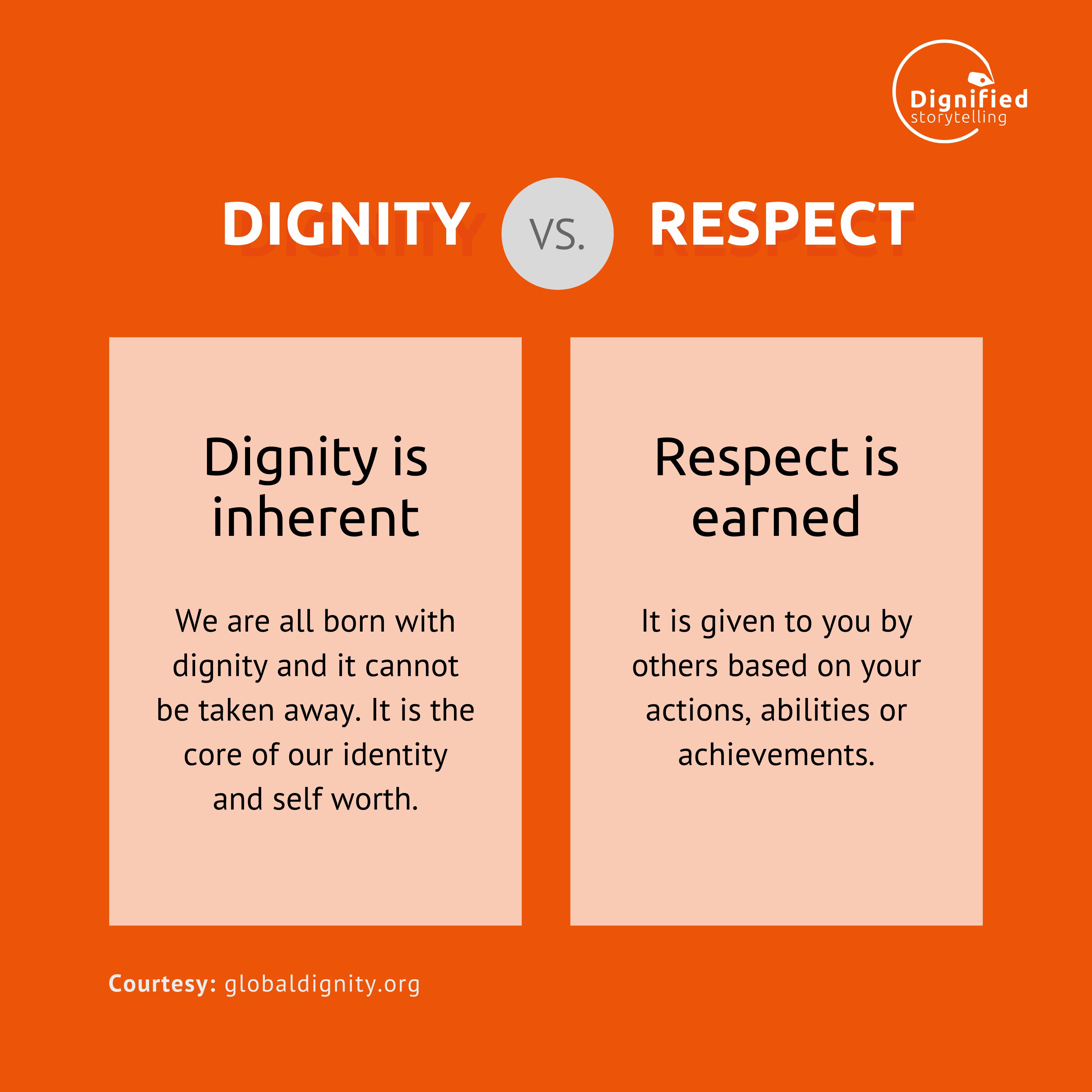
The dignity of the human person, which nowadays is a well-known concept , was rarely acknowledged prior to the birth of Our Lord. Although Cicero had pioneered a theory of the dignity of the human race, it was Christianity that spread the idea that all humans have a unique and equal dignity, and it had this idea because it was able to see human nature in light of the Incarnation.
And one of the chief ways that Christianity developed its concept of human dignity was through this prayer. Fr. James McEvoy and Dr. Mette Lebech argue that the Deus qui humanae substantiae made a significant contribution to the conceptualization of human dignity even before its use at the Offertory, and that after it was included in the Offertory, it created an association between human dignity and the holy exchange of gifts. “In this way,” McEvoy and Lebech conclude, “the prayer significantly shaped the Christian concept of human dignity as the holy ‘place’ of commerce with God.” [5] The authors (neither of whom, as far as I can tell, is a traditionalist) also expressed astonishment that
The liturgical reforms of the Second Vatican Council should have blurred that reference, given the rise to prominence of the concept of human dignity with the human rights tradition after the Second World War. An explanation for this seems not to be at hand, for example in the explanatory text by Antoine Dumas, who headed the study group that revised the sanctoral. [6]
They conclude:
Given the inconclusive reasons for uncoupling human dignity from the mystery at the heart of the liturgy, it may be hoped that the prayer will be restored in its Tridentine integrity to the liturgy at some point in the future. This would seem to be in accordance with the stated purposes of Sacrosanctum Concilium.[7]
Finally, we note that the Deus qui humanae substantiae is a celebrant’s private prayer said in a low voice, and yet an entire civilization’s concept of human dignity was shaped by it. Not everything needs to be said aloud at Mass in order for it to have an impact.
Notes
[1] Epistle 62.13.
[2] Ephesians 5, 32. Marriage, of course, is another symbol or sacramentum of this union.
[3] For example, see the Baronius Missal, p. 925: “...we may become partakers of His divine nature, who deigned to become partaker of our human nature...”
[4] Conf. 7.8.12.
[5] James McEvoy and Mette Lebech, “Deus qui humanae substantiae dignitatem: A Latin Liturgical Source Contributing to the Conceptualization History of Human Dignity,” Maynooth Philosophical Papers 10 (2020), 117-33, 117.
The Raising of the Daughter of Jairus, by Paolo Veronese, (1540s), the subject of this Sunday’s Gospel.
Lost in Translation #24
The Twenty-Third Sunday after Pentecost inaugurates, if you will, a season within a season within a season. The main season is the time after Pentecost, which corresponds to that period of human history stretching from the first Pentecost to the Last Day. Within that season, beginning around the Eighteenth Sunday, things take on a more eschatological or apocalyptic note. And within that season, beginning on the Twenty -Third Sunday, the antiphonary of the Mass (Introit, Gradual/Alleluia, Offertory and Communion) is frozen: however many Sundays of the Time after Pentecost remain, the Antiphonary stays the same while the rest of the Propers change.
The effect of this freezing is both reassuring and unsettling: reassuring because, as the Introit states, these selections from the Antiphonary emphasize that the Lord thinks thoughts of peace and not of affliction (Jer. 29, 11); unsettling because their repetition implicitly confirms the threat of a real danger. One does not feel the need to remind oneself of the Lord’s peaceful intentions when the birds are chirping and a warm sun is rising over the serene surface of a lake, but one may feel that need in the midst of a violent storm. And the Offertory, “From the depths I have cried out to Thee, O Lord,” (Ps. 129, 1), would suggest that we are not to imagine ourselves in an ideal situation right now.
Danger is the subject of the Postcommunion Prayer of the Twenty Third Sunday after Pentecost:
Quáesumus, omnípotens Deus: ut, quos divína tríbuis participatióne gaudére, humánis non sinas subjacére perículis. Per Dóminum.
Which I translate as:
We beseech Thee, almighty God, that Thou wouldst not permit us, whom Thou givest to rejoice in divine participation, to be subject to human dangers. Through our Lord.
Before the Church pleads for freedom from human dangers, she rejoices in divine participation. Since this is a Postcommunion prayer, “divine participation” first and foremost refers to the reception of Holy Communion, for the faithful have just received the Body, Blood, Soul, and Divinity of Jesus Christ--or to put it more simply, human persons have just received within the marrow of their being a Divine Person. That is quite a participation. And yet, divine participation begins not with the Eucharist but with the Incarnation. When the priest mixes water and wine during the Offertory rite he prays:
O God, who in creating human nature didst wonderfully dignify it and still more wonderfully restore it, grant that, by the mystery of this water and wine, may we be made partakers of His divinity who deigned to be made partaker of our humanity, Jesus Christ our Lord, Thy Son, Who liveth and reigneth with Thee in the unity of the Holy Ghost, God, forever and ever. Amen.
And it continues to the end of time. “Even at this moment He is, as man, making representation for my salvation, until He makes me divine by the power of His incarnate manhood,” writes St. Gregory of Nazianzus of Jesus Christ sitting at the right hand of God and ever making appeal for us. (Oration 30, 14)
It is therefore appropriate, especially during this apocalyptic leg of the liturgical year, to think of “divine participation” both in terms of the Eucharist as well as of the Resurrection of the dead (which is also the theme of the Gospel reading, Matt. 9, 18-26), when God will be all in all. But in between our current condition and our fully actualized participation in the Godhead lies a host of “human dangers.” In some respects, the expression is a pleonasm: any danger to a human is a human danger, and we are obviously more concerned in this prayer with dangers to us than dangers to, say, armadillos. Still, the addition of the adjective “human” forms a pleasing contrast to the “divine” in “divine participation.” It is an effective rhetorical antithesis.
What is dangerous to humans? We can start with ourselves. In the Collect for the First Sunday of Advent we pray for deliverance from the “imminent dangers of our sins.” Perhaps the old adage exaggerates when it states that we are our own worst enemy, but it is admittedly on to something. And, of course, the snares of the devil (which often exploit our sinful proclivities) would also qualify as dangers to us humans.
Finally, the verb that we have translated as to be “subject to” is subjacere, which literally means “to lie under.” It is a somewhat colorful image. Were we not mindful of liturgical propriety, we might be tempted to translate the petition as “Do not, O Lord, allow us to be thrown under the bus of human dangers.” At the very least it is worth noting that the verb choice is another antithesis; there is an implicit contrast between divine participation, which is a participation in the good that is above, and the perils of being under the thumb of what is bad. May our mingling with the high keep us from succumbing to the low, now and to the very end. Amen.



.jpg)