
Friday, July 05, 2024

A Review of Joseph Shaw’s “The Latin Mass and the Intellectuals” and “Sacred and Great: A Brief Introduction to the Traditional Latin Mass”

With a new Agatha Christie” letter published in the London Times on July 3, Joseph Shaw’s work on the first letter with that nickname and on other lay petitions defending the traditional Latin Mass is more timely than ever. The following review first appeared in The Latin Mass magazine 33:2 (Summer 2024), pp. 63-65. Many thanks to its editors for allowing its publication here.

Dr. Joseph Shaw is chairman of the Latin Mass Society in Great Britain, Fellow of the Royal Society of Arts, a former faculty member in Philosophy at Oxford University, and one of the most important scholarly voices on the plight of sacred liturgy to emerge in the past decade.
2023 was a particularly busy year for Shaw. In January, he published a thoughtful collection of essays on The Liturgy, the Family, and the Crisis of Modernity. In June, he published Sacred and Great: A Brief Introduction to the Traditional Latin Mass, and in the following month, he published two of history’s most eloquent defenses of the use of Latin in the liturgy, an essay by Pope Benedict XIV (1675–1758) and an essay by Hierotheus Confluentinus, provincial of the German Capuchins (1682–1766). In October, Shaw published The Latin Mass and the Intellectuals: Petitions to Save the Ancient Mass from 1966 to 2007, and in December, A Defence of Monarchy: Catholics under a Protestant King.
Shaw’s Latin Mass and the Intellectuals and his Sacred and Great testify to his range as a writer, for the former is a grand and impressive scholarly achievement while the latter is a humble and impressive pastoral achievement.
In the Foreword to Latin Mass and the Intellectuals, the renowned artist and friend of Pope Benedict XVI, Martin Mosebach, pulls no punches. For a Catholic, he writes, the battle for the Roman liturgy
is indeed more important than the fight against totalitarian ideologies, more important than the multifarious attempts to protect the natural world, because it was and still is about the continuity of the Christian religion, which had been damaged in a life-threatening way in its actual implementation (xi).
It is an astonishing, perhaps even outrageous, statement but worthy of further consideration.
Many of his statements are like that. Mosebach contrasts the humility, superior education, and intelligence of the lay petitioners with “the doltish impassibility of [the] opportunistic and ignorant prelates” who corresponded with them. He blames scholasticism for introducing the distinction between less and more important parts of the liturgy (a claim that requires qualification, in my opinion), and laments that the Fathers of Vatican II “were bereft of any historical or political sense” when they foolishly called for a deformation of the liturgy at precisely the same time that Western culture was experiencing a great aesthetic crisis due its abandonment of form (xiv).
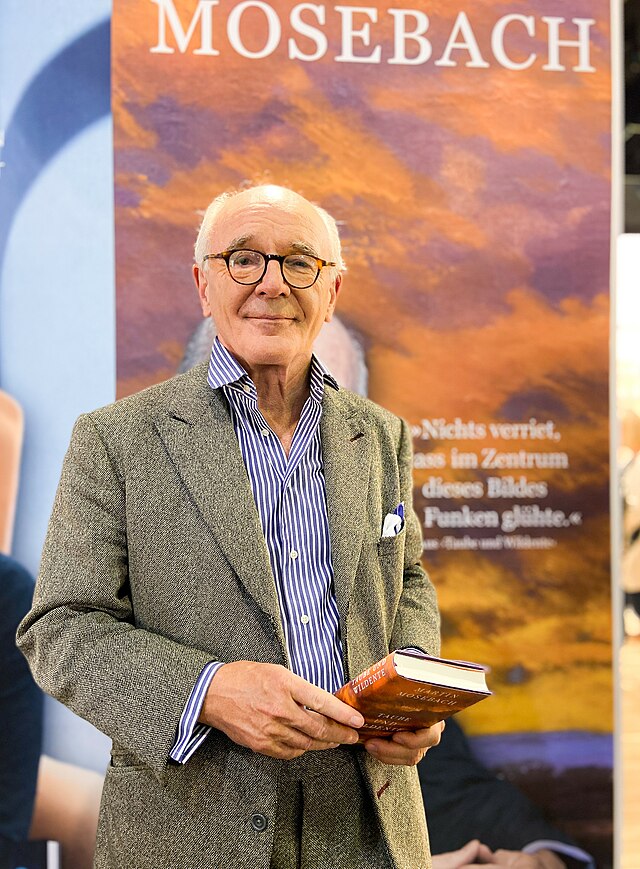
Seen against this backdrop, Mosebach contends, The Latin Mass and the Intellectuals is all the more needed, for it sheds light on a long historical record of lay resistance to “an aberration initiated by priests” that may “otherwise have remained unknown to a wider public.” (xi).
Shaw’s own writing is temperate in its diction and reticent in its judgments. His primary goal is to honor the memory of those lay gadflies whose civilized yet stubborn protests kept alive the traditional Latin Mass; his secondary goal is to contribute to the ongoing debate over the liturgy.
The Latin Mass and the Intellectuals could not possibly contain all of the communications sent to the Holy See over the past six decades defending or demanding the Roman liturgical tradition. Shaw focuses mainly on the petitions made in 1966 and 1971 (the latter of which led to the so-called Agatha Christie indult), as well as petitions made in 1995, 1998, 2006, and 2007. The bulk of the volume consists of commentary on the historical context, the petitioners, and their rationale for defending the old rite. Shaw himself has written most of these essays, but there are also contributions from six other authors. 
Cristina Campo (1923-77)
The story they tell is a fascinating one. One woman, the physically frail but spiritually indomitable Cristina Campo, was able to assemble a coalition of lay Catholics and non-Catholics (even non-believers) to convince the Holy See not to suppress the traditional Latin Mass on the perhaps paradoxical grounds that the Rite did not simply belong to the Roman Catholic Church but was a precious part of the world’s culture, that it was an invaluable cultural artefact of a living tradition, something akin to what UNESCO defined in 2003 as an “Intangible Cultural Heritage” worth safeguarding.
This “artefact” is cultural insofar as it has been the great progenitor of culture, inspiring a host of priceless achievements in the arts—not only mystical works, but works by poets, philosophers, musicians, architects, painters, and sculptors in all countries and epochs. Thus, it belongs to universal culture as well as to churchmen and formal Christians [from the 1971 petition].
An intangible cultural heritage
Further, if the Latin Mass is a living cultural artefact, it must be kept alive in order to be appreciated. A theatrical reenactment of a Solemn High Mass, for example, would not truly communicate or explain the Mass’s power to generate culture, any more than a tabernacle in a museum can convey the reality of the Blessed Sacrament.
This argument garnered the support of such disparate figures as Catholic authors Graham Greene and Malcolm Muggeridge, the agnostic philosopher Iris Murdoch, and of course, the mystery novelist Agatha Christie, all of whom signed the 1971 petition. Further, the motives differed considerably among the Catholic signatories. Shaw carefully traces the rationales animating the various Catholic signers, which include medievalism, artistic modernism (that was anti-modern!), perennialism, and anti-fascism.
One often hears the claim that there would be no celebration of the traditional Latin Mass were it not for the resistance of Archbishop Lefebvre and the SSPX. That may be true, but it is also fascinating to consider the hypothesis that there would be no celebration of the traditional Latin Mass were it not for an unlikely coalition of lay Catholics, Protestants, agnostics, and atheists. And it is equally fascinating to consider that the Mass was saved for cultural rather than theological reasons. Most traditionalist Catholics attend the old Mass because it clearly expresses the timeless dogma of the Church or draws them into the numinous realm of the sacred, and yet practically the reason they may have the Mass today is that it once inspired Mozart and Fauré to compose Requiems.
The Latin Mass and the Intellectuals admirably achieves its aims. It is the best collection of early traditionalist apologetics (to coin a new genre) on the market today. I highly recommend it to anyone interested in understanding the history of traditionalism and its surprising diversity and to anyone interested in intelligent and non-doctrinaire arguments on behalf of the Mass of the Ages. The chapter on Christopher Sykes, Evelyn Waugh, and Hugh Ross Williamson is alone worth the price of the book. 
Whereas The Latin Mass and the Intellectuals is almost monumental in scope, Sacred and Great, on the other hand, is diminutive. Measuring only 4” x 6” and comprised of 84 pages, it fits neatly into purse or pocket. But as the old cliché puts it, big things come in small packages. After an introductory paragraph, Shaw devotes a chapter each to answering one of four questions: 1) How Do I Participate in the Traditional Mass? 2) What Does It Mean? 3) Where Did It Come From? And 4) What Is It For? Shaw follows with a brief description on different reactions to the old Rite and concludes with a helpful chapter on “Further Reading and Resources.”
Shaw’s intended audience is a Catholic who is accustomed to the Novus Ordo and coming to the traditional Latin Mass for the first time. His tone throughout is measured and respectful, highlighting the unique genius of the latter without taking potshots at the former. Opponents of the Latin Mass may disagree with Shaw’s conclusions, but they will be hard pressed to accuse him of being polemical or snarky.
Sacred and Great contains practical advice on the different kinds of Latin Mass (Solemn High, High, Low, Requiem, etc.) and on how to participate, and it provides well-researched and balanced explanations of the use of Latin, the prevalence of silence, Mass ad orientem, male altar servers, etc. The advice on further reading and resources is divided into different topics and points the reader in the right direction for more in-depth treatments.
Sacred and Great retails for only $6.95, but the publisher Os Justi offers bulk discounts of up to 50% off (for more information, go here). The book is therefore ideal either as a gift to an inquiring friend or as a donation to a Latin Mass parish for distribution in the vestibule. In terms of how much bang there is per buck, Sacred and Great is the best succinct introduction to the Latin Mass on the market.

Wednesday, March 01, 2023

A Formidable Apologia for Traditional Catholicism, by Dr Joseph Shaw

In a time like ours, when ignorance, half-truths, and outright lies seem to dominate the airwaves, classrooms, halls of power, and even church pulpits, Catholics need access to the unvarnished truth of the Faith as it powerfully confronts the errors and misdirections of the modern age. But where are we to find such help?

Dr. Joseph Shaw, president of the International Federation Una Voce and Chairman of the Latin Mass Society of England & Wales, has distinguished himself as one of the finest writers today on a host of difficult and controversial questions. Os Justi Press is pleased to announce the release of Dr. Shaw's latest book: The Liturgy, the Family, and the Crisis of Modernity.

The book is divided into three parts.

The first part examines the place of the ancient Catholic liturgy in modernity, defending it, against the misunderstandings of modernists, as something supremely suited to engage our deepest instincts towards the worship of God. Chapter 1 tells what Shaw discovered about the Church along the path of discovering the ancient Roman rite; chapter 2 looks at the purpose of liturgy; chapter 3 gives an account of the history of liturgy, explaining how it is conceptually and practically possible for a heritage to be both received as a “changeless given” and also enhanced and developed over time; chapter 4 develops the role of Latin in fostering participation (yes, you read that correctly!); and chapters 5 and 6 delve into the ways in which rituality, contrary to a standard narrative, is a cause of freedom rather than of confinement.

The second part turns to the aftermath of the Second Vatican Council and addresses a series of lines of attack on those Catholics attached to the traditional Latin Mass—notably the attempt to link them to the crisis of clerical abuse. Here Dr. Shaw fearlessly probes what Vatican II actually accomplished “on the ground”; the intimate link between orthodoxy in doctrine and tradition in liturgy (and the contrary); true and false notions of diversity; the Freudian origins of the discourse about the “rigidity” of conservatives or backwardists; the need to assess rightly the meaning of “clericalism” and how it relates to abuse; and the damage done by means of so-called “sex education,” which has been allowed to take over unresisted by the postconciliar hierarchy.

In the third part Dr. Shaw addresses one of the most contested issues of our times, sexuality and gender roles, and asks what, if anything, the Church can still say about them. Partly agreeing with and partly correcting the theory of Leon Podles, Shaw explains the sense in which there has been a “feminization” of Christianity -- yet one that was to a large extent resisted in the Catholic Church by a patriarchal theology, liturgy, and structures until after the Council. He offers what is certainly one of the best expositions of male headship, natural and supernatural, in any available literature, and offers a powerful critique of the sexual revolution as a betrayal of women. Lastly, he looks at the family as the locus of culture and transmission of the faith, especially in an era when the hierarchy have largely abandoned both.

Your gut feeling that something has gone badly wrong in the Catholic Church is, in fact, correct; your intuition that it has something to do with our divine worship is right on target; your instinct that the response must come from deep within the family and deep within our bimillenial tradition is entirely accurate. Dr. Shaw's book explains just how all this is true; how we ought to evaluate the secularizing path the Church has trodden in recent decades; and what we, who wish to live the Faith, can do, here and now, to restore a healthy and sacred culture.

The Liturgy, the Family, and the Crisis of Modernity is available either directly from Os Justi Press (shipping within the USA) or from any Amazon outlet.

Here is a video about this book:


“Shaw doesn’t propose that we turn back the clock, but reveals a path ahead out of the current crisis through a mature dialectic with those modern ecclesiastical developments that allow for a recovery of the tradition that belongs to all Catholics by a claim of right.” – Dr Sebastian Morello, European Conservative

“I commend it very enthusiastically.” – Fr John Hunwicke, Mutual Enrichment Blog

“With this book, Joseph Shaw provides Traditionalist Catholics with an antidote to such madness when dealing with our own deepest concerns, showing how the problems of the liturgy, the family, and the crises brought about by Modernity's Original Sins must be tackled as a unit, and with respect for historical mistakes.” – Dr John Rao, Roman Forum

“For after all these years, it is rare to find something as fresh, as thought-provoking, as original as the exploration of the crisis in these pages—one that marries acute, up-to-the-minute observation of unfolding secular trends with a striking inquest into the deep, underlying reasons for these trends (or rather tragedies).” – Roger Buck, author of The Gentle Traditionalist

“These essays are marked not only by clarity of style and breadth of knowledge, but also by something even more welcome: fresh thinking.” – Fr Thomas Crean, O.P., author of The Mass and the Saints

* * *

N.B. For readers in the United Kingdom:
There will be an official book launch with a talk by the author, refreshments, and a chance to buy the book at a reduced price, on Thursday, March 9, at 6:30 pm, in St Wilfrid's Hall at the London Oratory.

Friday, May 27, 2022

Mass of the Ages: Episode 2

As I am sure many of you have already seen, the second part of the Mass of the Ages trilogy premiered yesterday. This part talks a good deal about what the Second Vatican Council asked for, and how its Constitution on the Sacred Liturgy Sacrosanctum Concilium was betrayed by the machinations of Abp Annibale Bugnini and the other members of the Consilium ad exsequendam. Among the speakers featured are our own Dr Peter Kwasniewski and Matthew Hazell, as well as Dom Alcuin Reid, and Joseph Shaw of the Latin Mass Society. Once again, our congratulations to Cameron O’Hearn and his many collaborators on a job very well done; we are definitely looking forward to part 3. Feliciter! You can find more information about the project at the website: https://latinmass.com/

Monday, August 31, 2020

Guest Review of Joseph Shaw’s How to Attend the Extraordinary Form

NLM is grateful to the Latin Mass Society of England and Wales for giving us permission to reprint the following review from their magazine Mass of Ages. I would like to add that I have read this booklet carefully and agree completely with Fr Finigan’s positive assessment. In fact, this is the first and only such booklet I could genuinely recommend for the public “pamphlet rack” at the back of the church. It it compact enough not to frighten a prospective reader, yet never superficial in its treatment of questions.


A Valuable Booklet on the Traditional Mass from the Catholic Truth Society
Fr Timothy Finigan
Long-standing members of the Latin Mass Society have had to change and adapt considerably over the decades as the Church has given greater freedom to the celebration of the traditional Mass, and most notably since Summorum Pontificum and the gradual establishment of the “Extraordinary Form” as a part of the mainstream life of the Church.

We are now fortunate to have an increasing number of parishes including it in their ordinary schedule, traditional societies being given responsibility for parishes, and several Bishops, who not only no longer need to give permission for the Mass, but now celebrate it themselves.

As I write this review, young priests all over the country are celebrating Mass privately during the lockdown. My telephone conversations lead me to suspect that more than one or two are taking the opportunity to become familiar with the old rite without the risk of any controversy.

The new booklet How to Attend the Extraordinary Form, intended for the general Catholic public and providing an explanatory introduction to the usus antiquior, is a helpful addition to the CTS list at this time. Dr Shaw has distinguished himself by writing copiously on questions related to the liturgical tradition, theology, law and practice. As an Oxford don, he is well used to dealing with controversial points without needing to start a row, and his reputation depends on accurate appraisal and intelligent comment. It would be hard to think of a better author for such an introductory treatment. The chapter on the organic development of the liturgy is a fine description of a complex subject which shows that mastery of material which is necessary in order to simplify it for a wide audience.

Traditionalists will not be disappointed by this measured and balanced account which deals gently but firmly with all the old objections about the priest “having his back to the people”, the barrier of supposedly incomprehensible language, the accusation of divisiveness and the subject on which we all have to tread on eggshells, the “reform of the reform.”

The pamphlet concisely explains the way the form of the liturgy “marks off the holiness of holy things” and has much in common with the ethos of the Eastern rites. The newcomer will learn how the personality of the priest is minimised, why the canon is said in silence, and what is gained in the traditional lectionary and calendar.

The treatment of the controversial topics of the reception of Holy Communion, head covering, and male altar servers will probably not convert a hardened liberal, but then who could? What it might well do is remove some of the obstacles for those who are genuinely enquiring but sceptical.

Many of Dr Shaw’s supporting quotations will be familiar to seasoned apologists for the Extraordinary Form and it is good to have a well-chosen selection for ready reference. The references to Pope Paul VI and even Pope Francis may raise a wry smile among some traditionalists, but they are so apposite that they simply cannot be dismissed as whataboutery.

It is no longer a newsworthy headline to proclaim that the traditional Latin Mass is attended by a high proportion of young people. Anyone not living under a stone since 2007 will have noticed by now, and during those 13 years new young people have been coming to the old Mass persistently year by year. Many of them will want a primer on the basics for themselves and, in the modern ecclesiastical zoomer vs. boomer phenomenon, so that they can answer the objections of the old folks.

How to Attend the Extraordinary Form is an excellent vademecum which is surprisingly comprehensive for its pamphlet format. Members of the Latin Mass Society would do well to get in a few copies to have on hand for interested enquirers. I would suggest having a good read yourself first: all but the most comprehensively informed are sure to find some nuggets they had not come across before.

How to Attend the Extraordinary Form is available from the LMS shop, £3.50 + £1.06 p&p., or directly from CTS.

The Latin Mass Society of England and Wales, founded in 1965, is an association of Catholic faithful dedicated to the promotion of the traditional Latin liturgy of the Catholic Church, the teachings and practices integral to it, the musical tradition which serves it, and the Latin language in which it is celebrated. Catholics anywhere in the world may become members and receive the quarterly magazine Mass of Ages. Visit the website for more information.

Thursday, July 16, 2020

“Catholicism in a Covid-19 World”: Latin Mass Society Online Conference, Saturday, July 18th

An online conference “Catholicism in a Covid-19 World” will be hosted by the Latin Mass Society this Saturday, 18th July, from 12 noon (GMT +1) until 4.45 pm (GMT +1), featuring speakers Bishop Athanasius Schneider, Fr Tim Finigan, Fr John Zuhlsdorf, Dr Joseph Shaw, Archbishop Thomas Gullickson and Mgr Gordon Read. The event will be hosted by Dr Shaw and Sebastian Morello and will begin with High Mass in the Traditional Rite from St Mary’s Warrington.

Joseph Shaw writes “I am delighted to be taking part in the Latin Mass Society’s first online conference with a wonderful selection of speakers. I hope that many people will be able to join us on the day.”

This event is being held online for free and can be viewed on the Latin Mass Society’s new YouTube channel. To bookmark the LMS YouTube channel go HERE.

The direct link for the Conference is HERE.

No registration is necessary, although to sign up for updates before and during the event, go to HERE.

A recording of the day will remain on our YouTube channel.

Programme (Subject to change)

12 noon Introduction from Dr Joseph Shaw, Chairman of the Latin Mass Society and Sebastian Morello, Formation Adviser for the Archdiocese of Southwark.

12.10pm High Mass Live from St Mary’s Warrington. Celebrant Fr Armand de Malleray FSSP

13.25 Archbishop Gullickson, Apostolic Nuncio to Switzerland and Liechtenstein and Bishop Athanasius Schneider, Auxiliary Bishop of Astana, Kazakhstan

13.45 Fr Tim Finigan, Priest of the Archdiocese of Southwark

14.15 Mgr Gordon Read, National Chaplain to the LMS

14.45 Fr John Zuhlsdorf, President of the Tridentine Mass Society of Madison and Blogger: Covid-19: What are the implications for Tradition?

15.45 Dr Joseph Shaw, Chairman of the LMS: After the Plague

16.15 Live Q & A with Dr Shaw, Fr Tim Finigan and Sebastian Morello

16.45 End

Wednesday, February 12, 2020

Two Recent Articles of Interest

Here are a couple of items which I am sure our readers will find interesting. The first comes from Dom Alcuin Reid, via the website of the Monastère Saint Benoit in La Garde-Freinet, France, of which he is prior, where it was originally published, and Catholic World Report’s reposting of it. The piece was written “to assist those considering whether Almighty God is calling them to a monastic vocation with us”, and contains some refections on the place of the liturgy within the Christian life which will certainly be useful more generally.

“...we are monks following the Rule of Saint Benedict in its classical observance. But that, of course, places us in the very heart of Catholic Tradition. A monk lives from the Church’s living Tradition, from her Sacred Liturgy and the Word of God alive and acting in it, from the Fathers, the teaching of the Councils, etc., not as a museum curator, but as one drawing ever new from these great riches in attending to the daily duty of the further conversion of his own life, in addressing the circumstances and times in which his monastery finds itself, and in providing the contribution God’s Providence has in store for it in the Church and in the world.

From our fourth Palm Sunday photopost of 2018, the blessing of aalms at the Monastère Saint Benoit.
... To be sure we celebrate the older forms of the Roman and Monastic rites, in Latin with Gregorian chant. We have received the Holy See’s permission to use the pre-Pius XII form of Holy Week and of the Pentecost Vigil. The use of these great riches of the Church’s Tradition is not a political statement, however. It is a conviction, certainly, which we will not compromise, that their full and integral celebration best sustains and nourishes monastic life, that they go hand in hand as it were. This is nothing at all extraordinary, but something quite natural and life-giving.

Of course, these rites have their place in the wider Church. They must not be confined to monasteries. Thanks be to Almighty God they are becoming more widely known and available. In 2007 Pope Benedict XVI wrote ‘It behooves all of us to preserve the riches which have developed in the Church’s faith and prayer, and to give them their proper place.’ What better place to do this fully, beautifully and fruitfully on a daily basis than in a monastery?”

At the website of the Homiletic and Pastoral Review, Dr Joseph Shaw, chairman of the Latin Mass Society of England and Wales, and Secretary of the International Federation Una Voce, has published an excellent article titled “The Novus Ordo at 50: Gain or Loss?” a response to an article published there last by Dr Mary Healy, Professor of Sacred Scripture at Sacred Heart Seminary in Detroit, titled “The Gift of the Liturgical Reform.” (Our own Dr Peter Kwasniewski published a response on One Peter Five, which we reproduced here.) Dr Shaw goes through her main points one by one, but his main argument can be summed up very simply in quoting a single sentence. “The weakness of her paper is in its characterization of the older Mass.” And so, to give just one concrete example:

“On celebration facing the people or the ambo, Prof. Healy writes: ‘Although in the earliest liturgies the celebrant faced the congregation, within a few centuries the practice changed so that, during the prayers, both the celebrant and congregation faced east, which meant the celebrant had his back to the people.’

Her footnote reference in this passages reveals she is basing her claim on scholarship dating from the 1940s (Josef Jungmann) and 1970s (Johannes H. Emminghaus). Scholarly fashion has moved on. While not universal in the earliest centuries, worship ad orientem was widespread. Nor is this surprising, given the tradition of praying towards Jerusalem found in the Old Testament (Dan. 6:10); the Synagogues of Our Lord’s time were sometimes oriented to Jerusalem. Again, the idea of a ‘shared meal,’ to which Prof. Healy appeals, does not suggest people facing each other over a table: in antiquity, dinner guests sat (or reclined) on one side of a table, to be served from the other side, just as they are depicted as doing in ancient representations of the Last Supper.”

Our congratulations to Dr Shaw for his valuable and charitable contribution to this debate.

Monday, November 11, 2019

The National Catholic Reporter’s New Resolve to Promote the Traditional Latin Mass

Which bespeaketh clericalism?
As many readers no doubt have seen or caught word of, Zita Ballinger Fletcher’s article at the National Catholic Reporter, “The Latin Mass becomes a cult of toxic tradition” — the title really captures her entire message about how terrible-awful-no good the TLM is, which she develops ad nauseam and with impressive though unintentional poetic license — has opened up a fountain of responses, both sober and humorous. It seems that the Reporter, not content to ignore usus antiquior enthusiasts, has decided to take the new editorial tack of promoting the cause of Summorum Pontificum.

To my knowledge, there have been five earnest replies and two satirical ones. I have enjoyed all of them. In the first category:
And in the second category:
In light of all this discussion (which, in general, seems to me a good thing: there are common misconceptions to be dismantled and now decades-old arguments that still need to be addressed for the ever-growing number who are awakening to the questions), I found myself thinking again about Fletcher’s claim that the old liturgy is clericalist, which was repeated as a mantra in the 60s and 70s, and is now being warmed up again in the microwave.

It seems to me really obvious, having attending both the NO and the TLM for decades, that the old Mass is far less clerico-centric, precisely because it is so ritualistic, formal, dictated, and prayerful. There is very little room at all for the “personality” of the priest.

Then I saw, while working on a book by Michael Fiedrowicz, a beautiful passage in Fr. Engelbert Recktenwald, FSSP. Now, Fr. Recktenwald and I have exchanged a few jabs on another aspect of the liturgy (namely, the use of the vernacular for readings and the postures to be observed in giving the readings at Mass), but here we are absolutely of one mind. He writes:
This retreat [into the ritual] serves to visualize the divine reality that comes from God—the earthly liturgy is the image of the heavenly liturgy—and to make way for the action of the main celebrant, namely, Christ himself—the priest acts in persona Christi. The celebrating priest becomes the more unimportant in his individual personality the more priestly his action is. In the heart of the Holy Mass, during the Canon, in which the transubstantiation and thus the descent of the one eternal High Priest occurs, the priest no longer has a face: he stands—yes!—with his back to the people, he speaks what every other priest speaks at this point, he becomes in his person completely unimportant and replaceable, because he makes room for the One for whose sake alone the believer takes part in the sacred liturgy. To emphasize eye contact with the priest at this point therefore means the utmost misunderstanding of the priestly function in its proper sense. In the highest priestly act, the priest is pure instrument and perviousness for the One.
Let’s have a look at a few contrasting photos and ask ourselves how the necessarily unique and irreducible function of the priest in Catholic worship (for there will never be a Mass without a priest) translates phenomenologically into a perception of his role within the Mystical Body.

In the following photos of the traditional High Mass, one sees, on the one hand, a certain separation of the priest from the people and a surrounding of his office with great solemnity and decorum, but on the other hand, the overall impression given is that of a whole community united in prayer, intently focused on worshiping God, each in his or her own way.


If I had to give a name to what I see in the foregoing photos, I would call it “hierarchically differentiated co-participation.”

In the following photos of the Novus Ordo Mass as celebrated nearly universally, one sees, in conjunction with the separate standing of the priest (which, as I mentioned, is unavoidable in any case), a sense of the clergy being over-against the people, in charge of their act of worship, and lording it over the faithful as if the faithful did not enjoy their own equal dignity versus Deum.

I regret to say that in this next photo of a Mass concelebrated by a bishop, newly-ordained priests, and presbyterate, the overwhelming impression is one of a bunch of concessionaires in the limelight, saying grace over the snackbar. If that last cluster of metaphors is jarring, I submit it’s no more jarring than the aesthetic reality we are dealing with. (I say this with no disrespect intended to individual persons, who may interiorly hold the Catholic faith in its integrity, but who are compelled to use ritual forms that do not express this faith.)


Due to the virtually obligatory versus populum stance and other ceremonial elements and lacunae, the overall impression given is that of a clerical caste intent on doing something in sight of the people and to them, while the people are focused on the clerical caste, because it catches the eye. The personal interaction has become the rite. If I had to give it a name, I would call it “hierarchically confrontational codependency.”

Thus there is a confused sense of what exactly the common action is or where it is directed: is it primarily to God? Or to one another? Or maybe we don’t know? In any case, there is a serious ambivalence and ambiguity about what exactly is being done, by whom, for whom, and why. This, of course, plays into the whole question of understanding the Mass as being primarily a sacrifice or primarily a meal (and, since it is both, how they relate to one another). A sacrifice can also be a meal, by way of the sacrificial victim being shared in by the ones offering; it is much harder to see how a meal, as such, would also be a sacrifice, except in the very generic sense that it costs something to put on a meal.

I’m perfectly well aware that a Novus Ordo Mass can be celebrated to look somewhat like the solemn Mass, as in this fine photo from a past CMAA Colloquium:


But three points must be made.

(1) This happens about as often as it snows in Jamaica, and every possible factor in the Church is against it at this time.

(2) If the new Mass can, due to its flexi-rubrics, be made to look somewhat like the old Mass, the old Mass, for its part, can never be celebrated to look like the jamboree version of the new Mass. This is the same objection that has been made many times to the ROTR at this blog and elsewhere: a liturgy that need not be celebrated properly, with the correct orientation and priorities, is a liturgy defective at its core. It is no surprise that the moral and institutional evil of clericalism, by which individual personalities abuse their offices, would find its corresponding lex orandi and external image in just such a liturgy. It is no surprise that the traditional lex orandi, though it cannot prevent moral and institutional evils, runs decisively against clericalism in the exacting humility, precision, and anonymity of its ritual form.

(3) The differences between the two are not only on the surface, as important as surface beauty is; they run much deeper. As a result, even if a new pope came along who suddenly declared that all Novus Ordo Masses had to be offered ad orientem, in Latin, with chant, starting the first Sunday of Advent, it would solve only the external problems — not the internal ones. It would be like repairing the face of a crash victim with plastic surgery while neglecting the more harmful damage to the internal organs.

Needless to say, this article is not the place to go further. We can, at least, be grateful to the National Catholic Reporter for stirring up such important discussions.

Visit www.peterkwasniewski.com for articles, sacred music, and classics reprinted by Os Justi Press (e.g., Newman, Benson, Scheeben, Parsch, Guardini, Chaignon, Leen).

Thursday, July 18, 2019

The Case for Liturgical Restoration: Book Review by Charles Coulombe

Our thanks to writer Charles Coulombe for sharing with NLM his review of The Case for Liturgical Restoration: Una Voce Studies on the Traditional Latin Mass; edited by Joseph Shaw, preface by Raymond Cardinal Burke. (Brooklyn: Angelico Press, 2019. 428 pp. Paper $19.95; cloth $30.00. See Angelico’s website to order. Table of contents given below.)


These are hard times for the Catholic Church, to be sure. Scandals of all sorts are daily reported, often rising up to the highest levels. In return, the leadership often seem arbitrary and tone-deaf – unsure of the Faith, but exacting in demands for blind obedience. This phenomenon repeats itself on many fronts – moral, liturgical, and doctrinal. The great temptation is to respond with exasperation and hysteria.

In the midst of that atmosphere appears this book. It is a collection of papers on various aspects of the so-called “Extraordinary Form” of the Roman Rite, which (save for calendar details) had remained essentially unchanged for centuries. Over a decade and half, commencing in 1955, it was subjected to various piecemeal changes and the abandonment of Latin, culminating in the promulgation of the so-called “Ordinary Form” of the Mass. In the interests of full disclosure, my own early life was lived against the background of the chaos unleashed by those changes, and like countless Catholics world-wide, I was marked by it.

But those looking for violent polemics against the New Mass would be well advised to look elsewhere. What we have instead are a series of anonymous position papers on different aspects of the usus antiquior. The tone is measured and scholarly, but the motivation both clear and something rarely considered by anyone in to-day’s Church: the salvation of souls. The very first sentence of the Preface is indicative of the approach taken by the whole: “God the Son Incarnate, Our Lord Jesus Christ, is ever alive and at work in the Church for the glory of God and the salvation of men.” A simple statement on the one hand; but in a day such as ours, so filled with darkness and confusion, a clarion call to contemplate the Truth.

The papers never argue – they rather explain the rationale behind every aspect of the Mass that might cause questions in the modern Catholic mind. The first major part (pp. 1–168) attempts to explain “Why the Ancient Mass Is as It Is.” This focuses primarily on areas wherein the rite differs from that of 1969 – in other words, what would immediately hit the practicing Catholic who had never experienced such a Mass before. The priest facing ad orientem, the head coverings on the ladies, communion in one kind, the periods of silence, lack of altar girls, and much else besides are examined in detail. But all this is done very much on its own terms; in other words, the point of the book is not to say expressly that these things are better than what is done in the Novus Ordo, but simply why they are done in this manner in the usus antiquior.

Had the authors gone no further, they would still have performed a signal service. But the second major part of the book (pp. 169–297) is a truly powerful and extraordinarily important contribution to liturgical literature: “The Ancient Mass and Evangelization.” The first portion of that section deals with what might be called “internal evangelization” – how things like the Eucharistic fast and Holy Days of Obligation reinforce the Faith among the faithful in a world that constantly denies it. The second is devoted to the utility of the “old Mass” as a means of external evangelization – or to be clear, drawing souls to Christ. This is handled both in a general way, against the backdrop of modern culture, and as regards bringing the Gospel to specific groups: children and youths, New Agers, Chinese, Africans, Jews, Muslims, etc. – all of whom have immortal souls that Christ died to redeem and bring to Himself for eternity. Again – simple home truths that we are often too sophisticated to remember.

One of the features I found particularly enlightening is the examination of the new (1955) rites of Holy Week. Having for many years followed along during that period with my old pre-1955 Missal, I was very much aware of the differences – and since St. Vitus in Los Angeles is one of the FSSP parishes that are now using the older version ad experimentum, I have at long last experienced it. The book makes use of Evelyn Waugh’s critique of the new version, which was fascinating. It was amusing to think my first experience of the rite Waugh preferred was in the city where he set one of his darkest satires, The Loved One!

In any case, the book is a refreshing antidote, and a reminder that – pace certain elderly persons – attachment to the traditional Mass is not about guarding ashes of the past. Nor is it about aesthetics or personal preferences. It is about using the best means we have available for the glorification of God and the salvation of souls. That, and that alone. In that sense, this book has something in common with Mary Queen of Scots’ motto and a line from Eliot: in its end is very truly its beginning.

Friday, November 16, 2018

Five Recent Articles about Funerals and Masses for the Dead

Photo courtesy of Liturgical Arts Journal
November, the month of the Holy Souls, always brings with it a number of articles concerning the current state, or plight, of Catholic funerals and Masses for the Dead. As the years pass, we are fortunate to see a double outcome of Summorum Pontificum: first, an always growing presence of the traditional Requiem Mass with its full panoply of symbols and chants (including the great Dies Irae), as can be seen in the photo albums published here; and second, an ever more widespread acknowledgment that something has gone drastically wrong with the way Catholics approach prayer for the dead.

I would like to mention here four recent articles of potential interest to NLM readers, and give a few excerpts.

The first is “The scandal of the modern Catholic funeral,” one of my daily columns at LifeSite.
Once upon a time, a very important person in my life died. I attended the funeral. It was a Novus Ordo canonization ceremony, conducted by a priest and three women in skirt-suits ministering in the sanctuary. Everyone at the funeral was dressed in black—except for the priest, who was wearing white. The disjunct was glaring and tasteless. The contrast between the deep human instinct of mourning, which can be said to be an ineradicable part of the sensus fidelium, and the crackpot liturgical reformers who introduced white as a color for Masses for the dead, was never so obvious to me.
          The day before, however, my family and I had gone to a traditional Requiem Mass, sung by a priest friend. The contrast was not just profound, but shocking. Between that day and the following, we were emotionally suspended between two radically different offerings for the dead: one that took death with deadly seriousness, that cared about the fate of the departed soul, and allowed us to suffer; another that shuffled death to the side with platitudes and empty promises. The contrast between Friday’s black vestments, Dies irae, and whispered suffrages and Saturday’s stole-surmounted white chasuble and amplified sentiments of universal goodwill seemed to epitomize the chasm that separates the faith of the saints from the prematurely ageing modernism of yesterday.
          I found myself thinking: The greatest miracle of our times is that the Catholic Faith has survived the liturgical reform.
A few weeks ago, Dr Joseph Shaw, the Chairman of the Latin Mass Society of England & Wales and a much-appreciated blogger at LMS Chairman, officially joined the bloggers writing for LifeSite. In this capacity he has given us two articles of note:

“Why Catholic funerals prior to Vatican II better expressed death’s gravity”
The chants of the traditional Mass for the Dead, called by the first word of the Mass proper, Requiem, include some of the Church’s most ancient, solemn, and moving. They express the seriousness, the gravity of death, and seek God’s mercy for those who have died. It was shocking to many when the Dies Irae and other chants were removed from the Mass for the Dead in the liturgical reform that followed the Second Vatican Council. Annibale Bugnini explained the reasoning of the reformers as follows (The Reform of the Liturgy p. 773):
          "They got rid of texts that smacked of a negative spirituality inherited from the Middle Ages. Thus they removed such familiar and even beloved texts as the Libera me, Domine, the Dies irae, and others that overemphasized judgment, fear, and despair. These they replaced with texts urging Christian hope and giving more effective expression to faith in the resurrection."
          The idea that the texts at issue “overemphasize” “despair” (how much should despair be emphasized, one wonders?) is a gross mischaracterization. The texts of the ancient Mass for the Dead speak of God’s mercy and the gift of salvation, in the context of human guilt and God’s justice.
And “Why Christians must honor those who have died in war”:
It is an unsurprising sociological fact that people are more willing to sacrifice themselves for their community if they see that such sacrifices in the past have been honored by the community. If we are not prepared to honor them when they fall, we should not expect our young people to put themselves in harm’s way for our protection.
(As a side-note: NLM readers might not expect to find liturgical commentary at LifeSiteNews, which has built its reputation as a pro-life, pro-family, general news source; but this expectation is not quite accurate anymore, now that Dr Shaw and I are writing on liturgical topics there with some regularity.)

Last but not least, Shawn Tribe, founding editor of NLM, continues to promote the best and most beautiful elements of the Catholic liturgical aesthetic at his site Liturgical Arts Journal, as we see in “The Value of Black as a Liturgical Colour” and “Constructing a Catafalque for the Requiem Mass.”

May each passing November, and indeed the passage of each one of Christ’s faithful into eternity, be accompanied by obsequies and orisons worthy of the dignity of Christian baptism, testifying to the reality of the Four Last Things and redolent of the piety, devotion, and earnest prayer of the ages.

Wednesday, January 03, 2018

Time for the Soul to Absorb the Mysteries — Part 5: Concluding Reflections

Looking back over our survey of the classical rite of Mass (Part 1, Part 2, Part 3, Part 4), we see that all of the elements we have considered produce the effect of a certain timelessness, of a floating in between matters of mere practicality or business. One is not checking items off of a list, but rather, ceasing to think just about getting things done; one is “setting aside all earthly cares” and letting oneself be carried along by an action that is so much vaster and deeper than oneself, a reality that shows its face only in response to our patience, attentiveness, and surrender. The more we talk, do stuff, make noise, and carry on, the less we see of that reality, the less we enter that cosmic and eternal action. When the liturgy is allowed to be itself and to do what is proper to it — slowly, repetitiously, carefully, and beautifully — we are pulled out of ourselves, our finite world and ticking time, and made to be partakers of the divine nature. This is when liturgy is a foretaste of the heavenly banquet and gives us the strength to persevere in the long pilgrimage towards it.

In fact, it would be no exaggeration to say that the Novus Ordo, in its very design and especially in its typical instantiation, stands in tension with interiority, recollection, self-awareness, and sensitivity to the divine — that keen sensus mysteriorum that is practically convertible with the traditional Roman Rite in any of its levels (Low, High, Solemn, Pontifical). The old rite, in contrast, forces us to develop habits of prayer — self-motivated prayer, since you are thrown, to a large extent, on your own resources. As a blogger once rather insightfully put it:
One can still hold the new rite to be integrally Catholic, and yet consider that the culture of the extraordinary form, where the people are supposedly passive, tends to teach people to pray independently, while the culture of the ordinary form often tends to create a dynamic in which people just chat to each other in church unless they are being actively animated by a minister.[1]
Fr. Chad Ripperger expands on this point:
St. Augustine said that no person can save his soul if he does not pray. Now it is a fact that mental prayer and prayer in general have collapsed among the laity (and the clergy, for that matter) in the past thirty years. It is my own impression that this development actually has to do with the ritual of the Mass. Now in the new rite, everything centers around vocal prayer, and the communal aspects of the prayer are heavily emphasized. This has led people to believe that only those forms of prayer that are vocal and communal have any real value…
        The ancient ritual, on the other hand, actually fosters a prayer life. The silence during the Mass actually teaches people that they must pray. Either one will get lost in distraction during the ancient ritual or one will pray. The silence and encouragement to pray during the Mass teach people to pray on their own. While, strictly speaking, they are not praying on their own insofar as they should be joining their prayers and sacrifices to the Sacrifice and prayer of the priest, these actions are done interiorly and mentally and so naturally dispose them toward that form of prayer. This is one of the reasons that, after the Mass is said according to the ancient ritual, people are naturally quieter and tend to pray afterwards. If everything is done vocally and out loud, then once the vocal stops, people think it is over. It is very difficult to get people who attend the new rite of Mass to make a proper thanksgiving by praying afterward because their appetites and faculties have habituated them toward talking out loud.
Fr. Ray Blake wonders aloud if the very emphasis on the spoken word has led us away from the interior spirit of worship, to such an extent that we might not be engaged in the supreme act of adoration or latria at all, but only filling the air with well-meaning verbiage, as if the church were a holy lecture hall.
True worship leads us to contemplate the God who is always beyond us, the God before whom Old Testament patriarchs and prophets fall on their faces in worship. Practically at every Mass I have celebrated over the thirty years I have been ordained I have felt the need “to break the bread of the word,” to preach — except at the Traditional Mass, where all I want to do is adore the Father through the Son, in the unity of the Holy Spirit. I am beginning to believe that if the Word of God does not lead us to the act of worship, there is something wrong in its presentation, and if the Mass does not lead us to fall on our knees to be fed by God, there is something wrong here, too. Contemplating the Mystery of the Trinity should lead us to be lost in the immensity and beauty of God, realising His greatness and our nothingness, desiring only to abandon ourselves to Him, crying out with Christ: “Father, into your hands I commend my Spirit.” If this realisation is not the result of worship, perhaps we are not worshipping at all![2]
Joseph Shaw contrasts the scripted, regimented participation of the new Mass with the freer “open worship” characteristic of the old liturgy, which generates a peculiar sense of togetherness by the intensity of each individual worshiping the same mystery, each in his own way:
What is quite out of the question, in this kind of liturgy [viz., the Novus Ordo], is that you should engage with it at your own pace, on your own level, in prayer. Prayerful contemplation is simply not allowed: it will be interrupted within a few minutes, and you’ll get funny looks. The opposite is the case with the Traditional Mass. You are, essentially, left alone, but left alone united with the community in the act of worship. You may have things given to you to help you follow the Mass, there may even be responses (especially at a sung Mass), but no one will think you odd if you just look at what is happening on the altar in prayerful silence. And for the Canon, that is what everyone is doing. You are drawn in: it may be to something unfamiliar, if contemplative prayer is unfamiliar, but it is something which you can do your own way. It is not a Procrustean bed; you can make of it what you will.
Thus, ironically, considering that the Catholic liturgy was practically turned upside-down and inside-out to promote “active participation,” the faithful who attend the old Mass today evince a superior personal engagement in what they are doing. Why is this the case? Dom Alcuin Reid suggests two reasons: first, that people who are drawn to traditional worship must make significant sacrifices to find it and have often invested seriously in forming their own understanding. But there is a second reason having to do with the rites themselves:
Perhaps also it is due to the very demands they place on the worshipper — one has to find ways of connecting with these rites, or indeed of allowing them to connect with us, because of their ritual complexity. Their multivalent nature has a particular value: it provides varying means of connection with Christ acting in the liturgy that perhaps better correspond to our differing temperaments and psyches.[3]
In my book Noble Beauty, Transcendent Holiness, I talk about the effort involved in carrying out a traditional Tenebrae service at Wyoming Catholic College, and how many hours of practice and years of iteration it has required to reach the stage we are now at: “The best and deepest things take time to assimilate, to understand, to perfect. When it comes to liturgy in particular, we have to fight tooth and nail against the modern spirit of immediate gratification and quick results” (p. 185). Nowadays, prayer and liturgical services are prone to being shortened (perhaps “short-circuited” would be a better term), since the participants are either in a hurry to get to other business, or their span of attention is just too short. For Holy Week, the very highpoint of the Church’s year, one may observe in many places that the customary procession of palms on Palm Sunday is omitted and the blessing is done after communion instead; the Reproaches on Good Friday are skipped, in spite of their immense antiquity, beauty, and spiritual power. The Novus Ordo liturgical books are characterized by the option of shortened versions of readings and prayers. The modern impatience with anything not immediately gratifying extends even to pious/liturgical activities. To this mentality, St. Josemaría Escrivá already replied, years before it reached its peak: “‘The Mass is long,’ you say, and I add: ‘Because your love is short’” (The Way, n. 529).

Let us give the last word to a priest who discovered the liturgical tradition and fell in love with it.
When you truly love God, you are not miserly in sharing your time with Him in prayer, in the Holy Mass, and other liturgical exercises, since He is constantly sharing His time with you, His beloved. Since youth, I had been accustomed to the Vatican II revisions of the liturgy. Thank God, through dear Pope Emeritus Benedict XVI’s Summorum Pontificum, I came to discover the solemn beauty of the traditional Latin Mass and other Catholic practices. Yes, these are more demanding of our time, but if one allows them time to penetrate the depth of the soul, one will exclaim joyfully: “Lord, it is good for us to be here.”
NOTES

[1] Unfortunately this site, The Sensible Bond, was disabled, so this text is available only in cache.

[2] Online here; text slightly modified.

[3] From Dom Alcuin Reid’s review of Andrea Grillo’s Beyond Pius V.

Friday, July 21, 2017

When Can Mutual Enrichment Begin?

Card. Robert Sarah, prefect of the Congregation for Divine Worship, recently had an article in the French magazine La Nef; in it, he discusses among other things the mutual enrichment of the two Forms of the Roman Rite which Pope Benedict proposed in the motu proprio Summorum Pontificum. The text has not yet been made available on their website, but someone provided Fr Zuhlsdorf with an English translation, which he reads (with an introduction) in a podcast posted here.

Yesterday, the Catholic Herald published a commentary on the La Nef article by Fr Raymond de Souza, “Cardinal Sarah’s challenge to traditionalists.”
(Quoting the Cardinal) “ ‘Reform of the reform’ has become synonymous with dominance of one clan over the other, … This expression may then become inappropriate, so I prefer to speak of liturgical reconciliation. In the Church, the Christian has no opponent!”
Reconciliation means movement from both “clans”, as it were. That is likely to encounter opposition from some, perhaps many, traditionalist quarters.
Sarah proposes that efforts be made to have a shared calendar and a shared lectionary, so that both the EF and OF would celebrate more feasts together and have the same Scripture readings at Mass.
That poses a twofold challenge. First, it requires the EF community to acknowledge that some aspects of the OF, particularly its reformed calendar and its lectionary – which includes far more Scripture than the EF one – are actual improvements and possible enrichments for the EF.
But others, not an insignificant part, consider the entire OF to be an impoverishment with little, if anything, enriching to offer. …
For example, EF devotees often speak about the simplified OF calendar as being too banal – “Ordinary Time” instead of Sundays after Pentecost – and consider it a mistake to have abandoned Passiontide and the octave of Pentecost. They are right about that, but thinning out the number of feast days of obscure saints and incorporating the more recently canonised is more controversial.
A shared lectionary would require a shared Sunday calendar at least, which could not be achieved without significant changes in both the current EF and OF calendars. And while there is wide consensus that the OF lectionary is superior, it is not universal, and any move towards it would encounter stiff opposition. Sarah knows of such positions, and warns us against treating the EF as a “museum object” locked forever in 1962.
The gist of this, therefore, is that the much of the discussion of “mutual enrichment” has really been about unilateral enrichment, the idea that the customs of the EF can obviously enrich the OF in a variety of ways, (he specifically cites ad orientem celebration, greater use of Latin, and more silence, a subject near and dear to His Eminence’s heart) but that the OF brings little or nothing to the table for enrichment of the EF. The challenge to traditionalists would therefore be to accept certain aspects of the OF that can indeed enrich the EF.

Today, Joseph Shaw of the Latin Mass Society published, also on the Catholic Herald, a reply, “Why Cardinal Sarah’s liturgical ‘reconciliation’ plan won’t work.” Painful as this is to write, I cannot help but agree with Shaw when he says:
(Card. Sarah’s) reasons are confusing, but his proposals are unworkable. … (he) explains: ‘ “Reform of the reform” has become synonymous with dominance of one clan over the other.’ He prefers the phrase ‘liturgical reconciliation’.
The ‘Reform of the Reform’ is a movement among practitioners of the Ordinary Form, who argue over Latin, chant, the direction of worship, altar girls, and so on. It is one of the advantages of the Extraordinary Form that we don’t have to get into these battles. Cardinal Sarah, however, seems to want to solve the endless squabbling by bringing the older Mass into the equation as well.
I would to add some observations of my own to what Dr Shaw goes on to say about the very real practical difficulties of “reconciling” the two features to which His Eminence and Fr de Souza refer. First, I must add that I wholeheartedly concur with him when he concludes by saying that “(a)bove all I would like to suggest that the Church has nothing to fear from a varied liturgical landscape ... Vatican II reassured us on this point (Unitatis redintegratio 17): ‘…from time to time one tradition has come nearer to a full appreciation of some aspects of a mystery of revelation than the other, or has expressed it to better advantage. In such cases, these various theological expressions are to be considered often as mutually complementary rather than conflicting.’ ”

In consideration of the calendar, an important distinction must first be made, one which Fr de Souza blurs in talking about the octave of Pentecost and “obscure Saints” at the same time. Both Forms of the Roman Rite have within them two calendars, the Temporal and the Sanctoral. The difference between the two calendars of Saints is far less important than the difference between the two Temporal cycles. The Church has always had varying calendars of the Saints; as I noted in this article from 2011, after Pope St Pius X’s Breviary reform, which also affected local calendars in many regards, St Peter’s Basilica still kept almost sixty feasts which were not on the General Calendar of the Roman Rite.

The Temporal cycle, on the other hand, was one of the stablest parts of the Roman Rite throughout its long and varied history. There are few notable differences between the features of it attested in the oldest Roman lectionaries and sacramentaries in the seventh and eighth centuries, and that of the Missal of St Pius V; those which do exist consist almost entirely of the addition of feasts such as Corpus Christi. It hardly needs repeating that the fathers of Vatican II did not in any way ask for or envision the drastic mutilation of the Temporal perpetrated by the post-Conciliar reformers.

This brings us to the second point, regarding the lectionary. Since very few feasts are allowed precedence over a Sunday, the average Sunday Mass goer encounters the Temporal part of it much more than the Sanctoral part. Joseph Shaw is also absolutely correct to note that because the two lectionaries are based on two different Temporal cycles, they are therefore incompatible. The integration of either one into the other is simply impossible without damaging it beyond repair; I cannot imagine that those who truly love either Form of the Roman Rite want that to happen. (This does not even begin to address the equally important questions of the number of readings and the three-year vs. one-year cycle.)

I also cannot imagine why Fr de Souza writes that “there is wide consensus that the OF lectionary is superior,” when almost every feature of it has been argued against and contested from every point of view. The new lectionary’s creators were thoroughly convinced that they were restoring an ancient custom of the Roman Rite when they introduced the three-reading system for Sundays and solemnities; this is now known to be completely untenable. Many years ago, I attended a lecture by the grand doyen of liberal Biblical scholars, Fr Raymond Brown, on the Epistles of St Paul. He pointed out that in Ordinary Time, the first reading is chosen in relation to the Gospel, while the Epistles run between them in broadly canonical order, and are not chosen in reference to them; the new lectionary therefore almost guarantees that priests will rarely preach on the writings of St Paul.

Even if one regards the new calendar and lectionary as unmitigated triumphs in every way, we simply cannot dismiss as mere partisanship the question of why the phrase “Reform of the Reform” came into existence in the first place. Pope Benedict XVI himself famously described the current state of the liturgy as a “sad ruin,” compared both to what it had been before the Council, and what the most recent ecumenical Council wanted it to be. A great deal of progress has been made to improving the liturgy, but much of it by way of eliminating abuses which ought never to have been inflicted on the faithful in the first place, much less tolerated for a single day. Exemplary celebrations of the OF Mass, such as those of St Agnes in Minneapolis-St Paul or the London Oratory, are extremely rare. It is pointless to deny that many bishops and religious superiors would not tolerate attempts by their clergy to emulate the practices of such churches. Whole nations remain untouched by this progress; model celebrations of the Ordinary Form of the Mass remain vanishingly rare in Italy, for example.

Fortunately, when Pope Benedict called for “mutual enrichment” of the two Forms, he established no criteria for determining the conditions under which it might take place. I hazard to suggest two such conditions. One would be to put the OF house in order by purging out its many scholarly falsehoods, and deleterious practices like allowing the celebrant to choose the Eucharistic prayer. The other would be to clock in a couple of centuries in which even a substantial minority of the faithful can attend a Mass celebrated according to the mind of the Fathers of Vatican II.

Wednesday, February 01, 2017

Second Issue of “ALTARE DEI” Now Available

NLM readers will remember the launch of the new magazine Altare Dei under the editorship of Aurelio Porfiri. The first issue came out at the end of October. I am happy to announce the appearance of the second issue, featuring an article by somebody or other on the organ postlude, but more importantly, a lot of fine articles and music by talented writers, including Dr. Fagerberg, Dr. Shaw, Fr. Kocik, Fr. Friel, Msgr. Miserachs, and Maestro Porfiri himself. I highly recommend it to your attention, and the price of 6 Euros is incredibly reasonable for 7 pieces of sheet music in the “Musical Insert,” a feature of each issue. Order online PDF here.

The Table of Contents follows.

ALTARE DEI N. 2 – JANUARY 2017
€6.00

EDITORIAL
Aurelio Porfiri

TOP STORY
In defense of the Organ Postlude
Peter A. Kwasniewski

LITURGICAL THEOLOGY
What is the Mystery of the Liturgy
David W. Fagerberg

LITURGY
Toward Holier Communions: A simple suggestion
Thomas M. Kocik

On Celebration Ad Orientem
Joseph Shaw

WITNESSES
Jean Nicolas Grou

MUSICAL INSERT
AVE MARIA (Solo, SATB and Organ) Mauro Visconti
MAGNIFICAT (SATB and Organ) Colin Mawby
EASTER ALLELUIA (SATB) Aurelio Porfiri
QUEM TERRA, PONTUS, SIDERA (2 Equal voices and Organ) Valentino Miserachs
INTERLUDE (Organ) Aurelio Porfiri
SALVASTI NOS, DOMINE (2 Equal voices and Organ)Aurelio Porfiri
EXULTATE IUSTI (Acclamation for the Rosary, SATB and Organ) Alberico Vitalini

CATECHISM
On the Mass, Part 2
Enrico Zoffoli

PROFILES
Priestly dignity according to Blessed Antonio Rosmini
Enrico Finotti

SACRED MUSIC
The earliest Catholic Choir school
David  M. Friel

Sacred Music from St. Pius X to our days
Valentino Miserachs
Gregorian Chant for the First Sunday of Lent: The Sunday of Temptation
Fulvio Rampi

CATHOLIC CULTURE
A Church on her knees (and not in a good sense)…
Aurelio Porfiri

“Only a blind man can deny that there’s now in the Church great confusion…”
Interview with Cardinal Carlo Caffarra (From Il Foglio)

EVENTS
“Miracle” in Trieste: Bach’s celebrated monumental B minor Mass after at least 50 years
Alberto Carosa

Order here.

Sunday, November 06, 2016

All Saints and All Souls Photopost 2016

As always, we wish to thank all of our readers who sent in these photos of liturgies celebrated on the Feast of All Saints and the Commemoration of All the Faithful Departed. There are a number of submissions from churches we have never featured before, a Pontifical Mass, and also, (for the first time, I believe,) images of Vespers of the Dead.

St Monica Catholic Church - Mishawaka, Indiana
This photo only looks like it came from a copy of Life magazine ca. 1955. The magic of filters!
Santissima Trinità dei Pellegrini - Rome (F.S.S.P.)
Church of St Agnes - St Paul, Minnesota
Every year, the Twin Cities Catholic Chorale sings the full Requiem Mass of Mozart on All Souls’ Day at the famous church of St Agnes. (I normally put photos in order, but this shot from the choir loft, with the score in the foreground, is, I think, particularly well done, and deserves to be highlighted.)

More recent articles:

For more articles, see the NLM archives:



