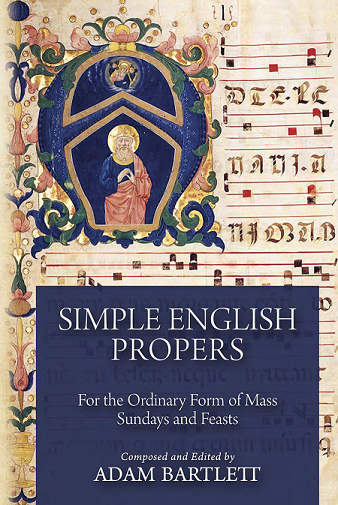
Today we have a guest post by the composer and editor of Simple English Propers, Adam Bartlett, who would like to share with us how his work with SEP led him to develop the Lumen Christi Series.
Many of you will remember when Jeffrey Tucker was posting videos with recordings of Simple English Propers here on a weekly basis a few years ago. Much has happened since then, and I have been asked by many to tell the story of how SEP came into being, and to describe how it led me to further develop the Lumen Christi Series, from Illuminare Publications.
As the composer and editor of Simple English Propers, I would like to share a bit of what surrounded the creation of what appears now to have been something of a seminal project, and, also, how it led me to develop its immediate successor—my most recent effort—the Lumen Christi Simple Gradual, which is now shipping (you can order it here).
 How Simple English Propers Came About
Simple English Propers grew out of a project that developed at
Chant Cafe. The Cafe began in the summer of 2010, amidst the excitement that surrounded the new translation of the Roman Missal. Jeffrey and I began to put our heads together a few months after the blog began, when he made the startling realization that no single book existed that simply contained the processional proper antiphons of the Mass, in English, that was readily accessible and available to parishes today. He was determined to fix this problem right away.
He decided that a book needed to be produced—a single, inexpensive volume—that contained nothing more than a collection of simple chant settings of the Entrance, Offertory and Communion antiphons from the Graduale Romanum for Sundays and Feasts, in English, with Psalm verses, that could be sung in any parish by cantors and choirs without much chant training.
SEP Text Translations
The first issue that we discussed was the issue of text translation. I recommended that we try to make use of the new translation of the Roman Missal as much as possible, and also the Revised Grail Psalms for the verses—both sources had just recently been approved as official sung texts by the Church. Being that the Roman Missal and Graduale Romanum are at times quite different (e.g. the Missal contains no Offertories, and many of the Entrance and Communion antiphons between the two books do not correspond), it was clear that at least some unofficial translations would be needed.

After much discussion, two factors led the CMAA to decide to use the text translation of the Solesmes Gregorian Missal for the entire book, instead of the antiphons of the Roman Missal, wherever this was possible:
Firstly, because Graduale Romanum technically has no “official” English translation, so any good translation of the antiphons can justifiably be used under the GIRM when the texts are sung in English.
And secondly, it was important for the entire book to be released under the
Creative Commons so that it could be posted online for free download and be used by anyone according to their wishes, in addition to being sold in print editions. At the time, the copyright on the Missal texts appeared to restrict this.
And so it was decided that unofficial translations would be used for the antiphons, and the project moved on.
SEP Musical Settings
Once this was settled, Jeffrey began considering a possible solution for the needed simple chant settings, with the English antiphon texts set to music using the Gregorian Psalm tones. Jeffrey and I and a few others considered this model briefly, but almost immediately ruled it out as a viable option, primarily because of the conflict between the Latinate melodic structure of the Gregorian tones and the characteristic accent patterns of the English language. We decided that a better and more satisfying solution was needed.
After some more discussion, I presented an alternative approach to Jeffrey, which we both soon began to realize might be the most viable solution to the problem at hand.
Developing SEP's Melodic Models
I had recently read the proceedings of the 11th International Colloquium of CIEL (edited by Uwe Michael Lang and
published by Hillenbrand Books in 2010) and began considering and experimenting with one of the proposals made there by Laszlo Dobszay (requiescat in pace). His proposal was that a small set of simple melodic formulas be used to set vernacular translations of the Proper of the Mass. In principle, this would allow for the many different texts of the Mass Proper to be sung to a handful of easily learned “tunes”, and make the sung proper accessible to parishes that have never sung it before.

His specific idea was to use the dozen or so formulaic Gregorian chant melodies that are found in the antiphons of the Divine Office, so as to form a substantial connection with the authentic chant tradition. Having been under the mentorship of Fr. Columba Kelly, OSB, for a few years, I was unsure of the extent that melodies that were written for Latin texts could effectively be used with the English language, but found the idea compelling and so I began to dig into it more deeply.
Before going any further in my compositional modeling and experimentation, however, I contacted Prof. Dobszay directly to discuss some points in his paper further. He responded right away, with great enthusiasm, and shared with me very generously some of his settings contained in his then-developing project, the
Graduale Parvum, in addition to some of his other concerns and possible solutions surrounding the issues at play.
I was very eager to study his settings, and saw the potential benefit of his approach. At the same time, many of my previous fears were confirmed. While most of his formulaic settings of Latin texts appeared to be done in a very beautiful and congruent way, a great deal of the settings of English texts were laden with incongruencies between the text and its melodic setting to such a degree that I began to wonder if the proposal could even yield reasonably satisfactory results.

I shared the settings with Dom Kelly, and he further articulated the concerns that I raised, repeating his long-held conviction that the melody of a chant must always be in service of the text, and, in some way, naturally grow out of it. He stressed that the melodic formulas of the Gregorian tradition were developed with the characteristics of the Latin language in mind, and he asserted firmly that if there is to be a satisfactory use of them with English texts, the melodic formulas themselves would have to be substantially adjusted, or even re-written.
Fr. Kelly encouraged me to explore this further, and he reviewed and oversaw the compositional models that I began to develop—at first, altering the pre-existing Gregorian formulas, and, eventually, composing new melodic formulas that anticipated the particular challenges that the English language presents. It’s beyond the scope of this essay to get into the details of this effort any further, but suffice it to say that the result was the development of 24 melodic models for use with English language texts, which would become the basis for the book Simple English Propers.
SEP is Born
As I began to apply the melodic formulas to the English antiphon texts, I also began sharing them with Jeffrey and others in the CMAA, and the response was overwhelmingly positive. Those who remember Jeffrey’s contagious enthusiasm and optimism, especially surrounding this project, realize that this is more than just a bit understated!
Effectively, all who were involved in this project almost immediately saw that the model that I had proposed was the right one, and so I proceeded to draft settings of the entire body of antiphons, Sunday by Sunday, with the weekly results being posted on Chant Cafe for review, feedback, and trial use.
I called the weekly postings “Simple English Propers for Name of Liturgy Here”. What was first a functional name soon became an identifying brand, and before long, “SEP” began to take flight, with parishes reporting on a weekly basis how these new settings were allowing them to introduce propers at their parish for the first time.
SEP Finances
Realizing the amount of work that laid ahead, Jeffrey decided to run a crowd-sourced funding campaign to raise $5000 to help see the project through. We were able, in a matter of weeks, to raise this money, and the proceeds helped see through the successful completion of the work. I was very grateful for the generosity of those who contributed to the fundraising effort, which helped me finish the project after 9 months of diligent work.
When the book was finally published, it was sold at cost, as the CMAA had promised it would be during the fund-raising effort. In other words, the CMAA intentionally chose not to profit from sales of the book—and still hasn’t to this day—and the digital files were posted on the CMAA website for free download. This certainly was a sign of the sacrifice and goodwill of all who were involved in the project from the outset.
SEP Practice Videos
Shortly after this, Jeffrey Ostrowski of
Corpus Christi Watershed began making recordings and YouTube videos of the antiphons of SEP on his own, at the request of Jeffrey Tucker. These videos were posted weekly at Chant Cafe, and, eventually, at the New Liturgical Movement. I am very grateful for this act of generosity on the part of Jeff Ostrowski, as I know that these videos were the gateway and introduction to the propers for many.
Resolving Certain Confusions

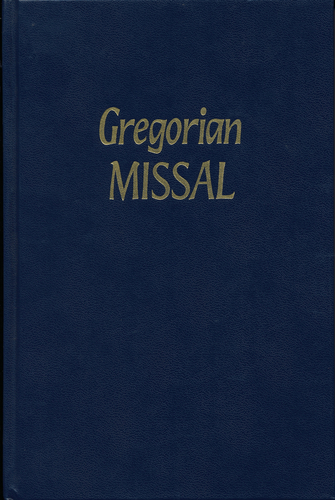
As grateful as I was, it came as a bit of a surprise to me when I began to see advertisements for Corpus Christi Watershed's Vatican II Hymnal in the videos. There has been some confusion over the years about this, with people assuming Simple English Propers was a project of Watershed's in particular. There have even been instances where high-profile individuals have directed people the CCW website for information about the Simple English Propers, assuming that it would in some way financially benefit its author.
Just to clear up any possible confusion: Simple English Propers is not a project of Corpus Christi Watershed. It was an open, intentionally non-profit project that I undertook with the Church Music Association of America. Neither the CMAA, nor Illuminare Publications, nor I myself are connected to CCW in any way or receive any financial benefit from CCW’s advertisements, or from the sale of their materials and resources.
I wish Jeff Ostrowski and Corpus Christi Watershed the best of luck and God’s blessings in their continuing efforts to promote the sung liturgy and the traditions of the Church. However, after discussing the matter privately with Jeff, I feel I must clearly and publicly state:
The views expressed by Corpus Christi Watershed are solely their own, and do not reflect the views of the composer and editor of Simple English Propers.
Regardless of how SEP has been used, whether for good or for ill, it was intended as and remains a free gift to the Church, and I remain grateful for the ways that the Lord has used it to help parishes begin singing the Proper of the Mass.
From SEP to the Lumen Christi Series
Simple English Propers, however, is not the end of this story—it is actually only the beginning. This one resource was imagined and developed as a means to fill a specific gap, and it appears to have done its job well.
Even before the book was completed and published, I began to imagine an organized effort that could take on the task of developing a complete program of sacred music resources for parishes—one that could make the riches of the Church’s chant tradition as accessible as any popular resources today. I had discussed and proposed this idea to Jeffrey Tucker, but it was clear that such a project was well beyond the scope of the CMAA, which is a volunteer organization without a single employee.

And so, I took a leap of faith and gathered the funding and support that would be needed to undertake and sustain this long-range effort and established
Illuminare Publications, where I have served as President and Editor since 2011. I began to develop the
Lumen Christi Series, which will soon be fully available to parishes, containing a comprehensive
Missal for the pew, a
Simple Gradual in both Choir and Assembly Editions, a
Hymnal for Mass and the Liturgy of the Hours, a complete
Gradual in English,
Accompaniment Editions, and so much more that lies on the horizon.

The
Lumen Christi Missal continues to make its way into the liturgical life of parishes and cathedrals across the country, and the
Lumen Christi Simple Gradual—the first true successor of Simple English Propers—is opening many of the doors that SEP had left closed, helping parishes sing the Mass in a way that will naturally develop and endure over time.
The
Lumen Christi Hymnal is due out in the Fall of 2014, in addition to accompaniment editions for the Lumen Christi Simple Gradual, and for Responsorial Psalms and Alleluias for Sundays and Feasts. The
Lumen Christi Gradual also continues to develop, and draft scores can already be downloaded weekly at the
Illuminare Score Library.
The Lumen Christi Simple Gradual
Before concluding, I would like to share some of the ways that the Lumen Christi Simple Gradual builds upon the experience gained from SEP, and how it opens up new possibilities for sung liturgy in ordinary parish life:
Translations

As I have noted before, SEP created great confusion for the faithful by choosing not to use the English translations of the antiphons as they are found in the Roman Missal, Third Edition, wherever this was possible. In order to lay the groundwork for the Lumen Christi Series, Illuminare Publications undertook an extensive project to translate the antiphons of the Graduale Romanum (e.g. the Offertory Antiphons), with professional translators, according to the principles and methods that were used to translate the antiphons of the Roman Missal itself. We worked in close consultation with those who actually made the translations in the Roman Missal, and took great pains to assure that the requirements of Liturgiam Authenticam were heeded. What resulted was a seamless translation between the new edition of the Roman Missal, and the Graduale Romanum, which is the Church’s primary source or the sung liturgy. These translations bear the episcopal imprimatur of Bp. Thomas J. Olmsted, and form the basis of the antiphon settings found in the Lumen Christi Simple Gradual, Lumen Christi Missal, and forthcoming Lumen Christi Gradual.
Lasting Musical Settings
At the outset of this essay, I described the process of experimentation that was undertaken with the musical settings found in Simple English Propers. The chant settings that resulted from this effort varied in quality. After living with these settings for a few years now, I feel that about a third of the antiphons have a high musical integrity, a third are satisfactory but less than inspiring, and another third clearly sound as though a square peg was being forced into a round hole. While these musical settings have certainly helped parishes sing the proper texts, week after week, it is becoming clear that the chant settings are not wearing well over time. In order to remedy this, the antiphon settings in the Lumen Christi Simple Gradual (and full Gradual) are composed with a musical quality that fully respects the integrity and character of the text, all while remaining just as accessible, if not more so, than SEP.
Completeness

The Lumen Christi Simple Gradual contains, in addition to a full repertoire of Entrance, Offertory and Communion Antiphons, the fully sung Order of Mass, and 18 chant Mass Settings, in English and Latin. The four English settings (from ICEL, Bartlett, and Kelly) contain great variety amidst their simplicity, while the five Ordinaries of the Kyriale Simplex and nine of the most commonly sung Ordinaries of the Kyriale Romanum form a series of progressive steps into the Church’s inestimable treasure. Also, the Simple Gradual includes simple chants for the Commons, various Votive Masses, Ritual Masses and the Mass for the Dead. It truly is a complete starting point for sung liturgy.
Flexibility
Simple English Propers was intentionally designed as a resource for parish choirs and cantors to sing the proper antiphons week after week. In a sense, a parish has to fully jump into the ocean of the propers and must either swim or sink. Some have been able to swim, while others have gone through the discouragement of being unable to sustain this weekly demand. The Lumen Christi Simple Gradual, on the other hand, is laid out with this reality in mind. It makes use of the permissions and guidelines in the GIRM, Musicam Sacram, and in the Introduction of the Graduale Romanum (Ordo Cantus Missae) for parishes to begin introducing new musical settings seasonally, if needed, so that they can slowly being developing a repertoire of sung antiphons that can be repeated enough to be properly learned. The antiphon settings in the Simple Gradual are indeed simple, but they are through-composed, not formulaic, so that each setting is uniquely beautiful and will continue to inspire the faithful for years, even for decades and generations.
Assembly Edition

Some well-meaning parishes assumed that Simple English Propers would be simple enough for the faithful in the pews to sing, and proceeded to purchase bulk quantities for their parish. Others understood that this would not be a viable solution for congregational singing, and have allowed the choir or a cantor to chant the propers before or after a congregational hymn. In either case, the desire of Musicam Sacram 33, “that the assembly of the faithful should participate in the songs of the Proper as much as possible, especially through simple responses and other suitable settings”, is not being satisfactorily met. This is why the Lumen Christi Simple Gradual is available not only in a Choir Edition, but also is available in a Assembly Edition, which is only a half of an inch thick. All of the antiphons are numbered, in keeping with the common convention of popular hymnals and song books, and only the antiphons are provided for the faithful, while the Choir Edition provides Psalm verses for the cantor or choir. In this way, the faithful have in their hands a complete repertoire of liturgical chant for the Order of Mass, Ordinary of the Mass, and Proper of the Mass, which can be sung in a variety of ways, even in combination with choral settings of the proper by the choir or schola cantorum, where this is possible. The Assembly Edition offers great flexibility and value, in a highly economical edition, that can help the assembly of the faithful sing the Mass.
Worthy Binding

One look at the cover of Simple English Propers can tell any casual observer that the edition is designed more as a textbook than as a book that is intended to be used and seen in a liturgical context. If it is used in a choir loft, it is out of sight, but, if it used anywhere else, the words “Composed and Edited by Adam Bartlett” on the cover seem highly out of place for use in a ritual context. The Lumen Christi Simple Gradual (in addition to the Lumen Christi Missal, and all parts of the Lumen Christi Series) is hardbound, with a gold-embossed cover, with a silk ribbon and high-quality paper. The binding is “round back”, so that the book opens easily and can lay flat in the palm of the hand, or even flat on a table, without having to break the binding first. The Assembly Edition is unbelievably thin and light, making it easy for anyone to comfortably hold. The books in the Lumen Christi Series take the beauty of the liturgy and the sacredness of the words of the Mass very seriously, and the high-quality production values directly reflect this.
Conclusion
I remain grateful for the Simple English Propers project, and am extremely honored to have been able to play a part of this movement in the life of the Church. I am happy that the modest work is able to be shared freely and used by anyone, even if it has created confusion in some cases. I am even more excited about what lies ahead, though, and there is much more that could be mentioned here, but that will be announced soon.
As it happens in life, so too it does in the Church: A tree must grow from a planted seed, and it will grow steadily and naturally, with the help of proper cultivation and care, even pruning when necessary. Also, the tree can only be judged by its fruit, and its yield is unknown until a certain point of maturity.
I am grateful to the CMAA for helping plant many of the seeds of liturgical renewal in our day, one of which was Simple English Propers, and also to the many who have helped cultivate and bring about buds of life in the sung liturgy around the globe. The mission of the Lumen Christi Series from
Illuminare Publications is to assist the renewal of the Church’s liturgy in the stages of growth that lie ahead in the coming years and decades, as these fruits continue to become readily visible and ripe for harvest. I would like to ask for your help in supporting this work, and especially ask you for your prayers. May the Lord bring to completion in our day the good work that he has begun.



.JPG)