
Wednesday, March 13, 2024

The Root of the “Liturgical War”: Guest Essay by Mr Kevin Tierney

We are extremely grateful to Mr Kevin Tierney for his permission to republish this very insightful essay, which appeared yesterday on his Substack. He is also on Twitter at https://twitter.com/CatholicSmark

Back when he was the head for the Congregation of Divine Worship, Cardinal Robert Sarah thought long and hard about the role the liturgy played in forming Catholics. He spent time not only reflecting on the fruits of a proper liturgical formation, but how the liturgy, when approached wrongly, could form Catholics in an unintended way. At a 2017 liturgical conference in Cologne, the prefect warned of a liturgy that was

“an occasion for hateful divisions, for ideological confrontations, and for public humiliations of the weak by those who claim to hold authority, instead of being a place of our unity and our communion in the Lord.”

In this, Cardinal Sarah was discussing the dreaded “liturgical war” that has been going on, with differing degrees of intensity, in the Roman Rite since the promulgation of the Novus Ordo Missae by Paul VI in 1969. Among some of the most fervent Catholics, the liturgy became not a tool of worship of God, but a battle line in a larger battle over how the Church approaches the sacred. Like so much trench warfare, very little is accomplished by it other than casualties. Nobody likes the liturgical war. Yet despite this unending hatred of it, the liturgical war is as nasty in 2024 as it was in the 1990s and 2000s. Why?
In laying out such a theory, I am going to adopt a position that might annoy some traditionalists. I am going to take the position that most of the individuals involved in the creation of the Novus Ordo (with some exceptions) were well-meaning but misguided individuals. I am going to hold (with some exceptions) that actions by the Popes since the Council were sincere, but since they relied upon a flawed gamble, sincerely wrong. That might not be for you. So be it.
My theory of the liturgical war is based not on “which one is superior” but on something decidedly non-liturgical. Paul VI and others around him believed that the fruits of the new liturgy would be self-authenticating. The reform would be an obvious good that everyone would love, even if it took a few years. As part of encouraging that love, Paul VI ordered priests to burn their ships when they set foot on the new world. He functionally barred every priest in the Roman Rite (with some exceptions) from celebrating with the old missal. There would be no turning back, no introspection, no review of whether the reforms worked or didn’t. To even suggest that such reforms should be measured was to call into question the Pope’s ability to guide the Church on worship. The Pope did not formally suppress the Latin Mass. Why is anyone’s guess. I am of the position that it is a dicey canonical proposition to suppress, for everyone, something lawful and celebrated by the Church for centuries. To enter into that discussion stands the purpose of church law, and church discipline, on its head. So he tried other matters to obtain acceptance. To be clear, acceptance is what he got.
Pope Paul VI celebrates the first ever Papal Mass partly in the vernacular on Mar. 7, 1965, at the church of All Saints on the via Tiburtina in Rome.
The overwhelming majority of Catholics accepted the new mass. They understood it was now the Mass they would attend every Sunday. What they never did was embrace the New Mass. The liturgical reforms did not lead to a Catholic faithful participating in the Mass more deeply. It did not lead to a deeper understanding. It did not lead to greater fervency. In short, the things it claimed would be improved over the Latin Mass did not happen in substance. What was left was personal preference. The reforms became great not because of what they delivered, but because of what they allowed: greater personal expression, a crafting of a Mass towards the desires of the faithful. By “desires of the faithful”, I mean the desires of a liturgical bureaucracy who believed they were the holiest generation of Catholics ever, and the world must experience their brilliance. Whether they wanted to or not.
The New Mass survived solely based on papal fiat. To the revolutionary who wanted more change, such fiats meant little. For many Catholics who just wanted to find a moment of peace and solitude to encounter God on Sundays, that papal fiat didn’t mean much either. The New Mass existed. It wasn’t going away. Yet it was never loved. Since it was never loved, that also meant the Latin Mass was never going away either.
Faced with this reality (and it was a reality they encountered within a decade of 1969), the Church had struggled to deal with the fact that a prediction of the papal office, with the full might of canonical authority, didn’t happen. At this point, the Church played for time. They granted indults to a few in England and Wales. Individual arrangements were made. Priests in ambiguous canonical situations were frowned upon, but many times left alone. In 1984, Rome issued rules for indults, grounded in the firm belief that within a generation, those wanting the Latin Mass would be dead. By 1988 with the excommunication of Marcel Lefebvre, this situation became impossible. By this point, the status of the Latin Mass was no longer under the control of the Church and her bishops. Yet the Church also couldn’t admit that her gamble was wrong. If it was wrong, then the liturgical reform itself could be questioned in a fundamental manner.
They then tried addressing the aesthetical criticisms by advocating a “reform of the reform”, which tried to add back many of the things that for decades the pope, bishops and liturgical advisors had demonized as belonging in a museum or a graveyard. All reform of the reform did was bring up the fundamental question: if we can have Latin, ad orientem, and communion while kneeling at the rail, why can’t we just have the Traditional Latin Mass?
By the time Benedict XVI ascended the throne, he understood that the Church could not answer these questions, the Latin Mass wasn’t going away, and the number of faithful who turned to it was growing. Meanwhile with equal intensity the desire to ban the Latin Mass was evaporating. How to do this without admitting a mistake? Here the brilliant theologian stumbled upon a great loophole. Since Paul VI simply set aside the Traditional Latin Mass, he would unset it aside. It would exist alongside the Ordinary Form, and the faithful and priests could decide for themselves. He wanted to solve the discussion by walking away from it entirely. He declared victory, not for one form or the other, but for liturgical diversity, and then subsequently went home.
If I sound insincere, I do not intend it. It takes a remarkable man to admit that previous attempts by the papacy to solve this question have only made it worse, so I’m not going to do it. Joseph Ratzinger was easily the most gifted theologian of the 20th century, and that knowledge made him aware of the limitations of the Church, and of his person. While it was not a perfect decision, it was a ceasefire in the liturgical war, with a temporary peace negotiated. Let the world catch its breath, and then we’ll negotiate a further peace.
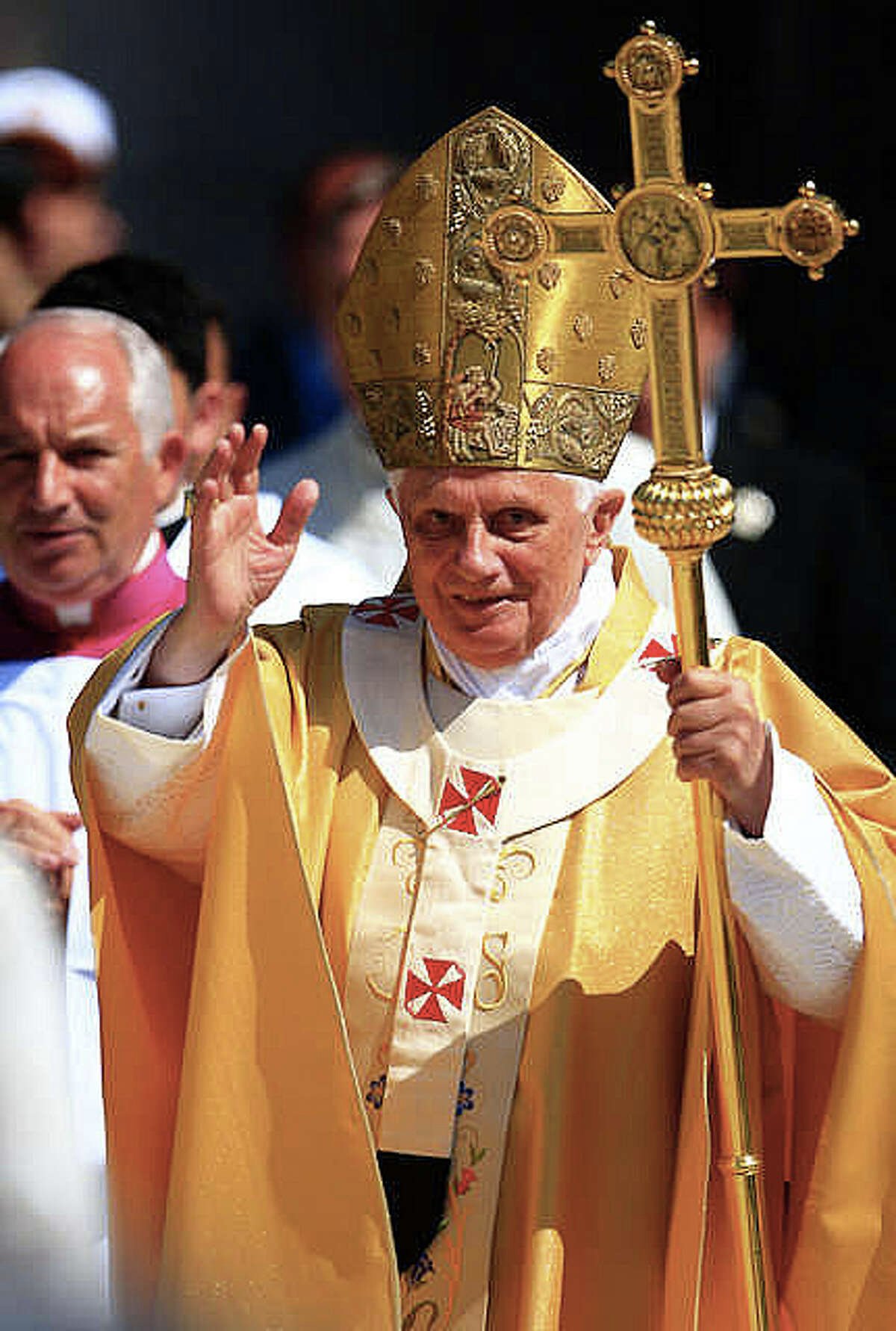
The problem with this approach is that there was a school of individuals in the Church who wanted to continue the offensive. All this talk of peace was misguided. If you make peace with the past, the past will return. If you allow the past as an acceptable option, it will always be there, waiting to be adapted to modern times, as an alternative to whatever it is the present is doing. While we do not know if he was always of this school, by 2019, it was clear that Jorge Bergoglio, now Pope Francis, was converted to this worldview. His generation was dying. He himself was dying. Their star was on the decline. What happens when they die, and that past which Paul VI tried to force people away from still exists? When Francis asked the bishops of the world if they understood the threat the Latin Mass presented to the unity of the Church, the majority shrugged. So he issued Traditionis Custodes, to try to force them to see the threat. When they still didn’t, he tried increasingly coercive measures to make bishops and the faithful see it. Yet the fundamental problem remained: nobody loves the alternative. They accept it. They build their lives around it. The New Mass is part of the 9-5 Catholic experience. Yet they don’t love it.
This is the real root of the liturgical wars. A generation of leaders (from the pope on down) operated on a gamble. They continued to raise the stakes, finally going all in. They lost, and now must come home and explain to the family why they no longer have a car or a house, and how they will just have to adapt to the family losing their shirt. Don’t worry, you’ll learn to like it. (Or as one popular Catholic author once said, we sinners deserve an ugly liturgy.)
Are you inspired?
Friday, February 18, 2022

Sacra Liturgia San Francisco: June 28 - July 1

This year’s Sacra Liturgia conference, sponsored by His Excellency Archbishop Salvatore Cordileone, will take place in his episcopal city of San Francisco from June 28 to July 1; registrations are now open via the conference website: https://www.sacraliturgiasf.com/

The Sacra Liturgia conference, founded by Dom Alcuin Reid, is an internationally recognized center of intellectual excellence in liturgical scholarship. Beautiful Masses are celebrated with excellent choirs so Catholics can experience the power of the Eucharist in a new way. The conference will take place from June 28 to July 1 at St Patrick’s Seminary in Menlo Park, close to Stanford University. Among this year’s roster of speakers features Cardinal Robert Sarah, Cardinal George Pell, Bishop Steven Lopes, Dom Alcuin Reid, Father Joseph Fessio, Jennifer Donelson-Nowicka, Msgr. Gerard O’Connor, Duncan Stroik and more. Renowned choral conductor Martin Baker, past president of the British Royal College of Organists and until recently Master of Music at Westminster Cathedral, will conduct singers from the Sacred Music Project in a Mass celebrated by Cardinal Pell. The final Mass will feature new music by Frank La Rocca, composed in honor of St Junipero Serra (Missa Sancti Juniperi Serra), and be celebrated by the conference host, Abp Cordileone, on St Junipero’s feast day, July 1, at the historic Mission Dolores which the Saint founded in 1776. Richard Sparks will conduct the Benedict Sixteen Choir and Orchestra.

The conference schedule can be found here: https://www.sacraliturgiasf.com/schedule
Options before and after the conference include: an tour of beautiful churches of San Francisco, available on the afternoon of the 28th; a reception with Kansas City Chief kicker Harrison Butker after the final Mass; a sacred music concert conducted by Martin Baker featuring the works of living Catholic composers. Ticket holders will be emailed information about these before and after events. Accommodation should be booked separately.

Saturday, July 10, 2021

Wisdom from Card. Sarah

Wise words from His Eminence Robert Cardinal Sarah, which should most certainly be taken to heart in regard to possible changes to the motu proprio Summorum Pontificum. (h/t Bree Dail)

Saturday, February 20, 2021

Cardinal Robert Sarah Resigns as Head of CDW

The Vatican Bolletino has published notice that Pope Francis has accepted the resignation of His Eminence Robert Cardinal Sarah as Prefect of the Congregation for Divine Worship and the Discipline of the Sacraments. Cardinal Sarah turned 75 last June. We take this opportunity to thank His Eminence for the wise guidance in liturgical matters which he has offered to the Church over the last six years in which he has served in this role, and to encourage our readers to prayer for his continued ministry in the Church.

Friday, May 08, 2020

Contempt for Communion and the Mechanization of Mass

Rube Goldberg, Professor Butts and the Self-Operating Napkin (1931)
On May 6, I published at OnePeterFive an article entitled “Bishops Cannot Mandate Communion on the Hand or Forbid Communion on the Tongue.” Taking up and augmenting material first published at NLM on February 29 and March 2, my goal was to compile in one convenient place testimonies to the universal law of the Church about the right of the (properly disposed) faithful to receive Holy Communion on the tongue, which is and remains the norm.

To this article, some have responded: “That’s all well and good, but we know that the bishops will go ahead and do this anyway, whether they have the authority to do so or not.” Indeed, contrary to the policy of the Thomistic Institute recommended by the USCCB, many dioceses have already published such illegal policies that are being forced on clergy and laity in the name of “obedience.” (Our situation is bringing home ever more clearly the utter lack of clear and sound thinking about what the virtue of obedience is and what it is not. I recommended this superlative article on the subject, as well as this shorter piece.)

My reply here would be that there is a benefit to knowing that certain policies are illegal: as the Catholic Church has always taught, an unjust law does not bind in conscience. That all too many bishops have grown accustomed to a “lawless” mode of operation — one in which they simply do not care what the Vatican says, or Canon Law for that matter — is not exactly breaking news. Tradition-loving Catholics have been dealing with it for a good half-century now, especially after 1984 (Quattuor Abhinc Annos), 1988 (Ecclesia Dei Adflicta), 2007 (Summorum Pontificum and Con Grande Fiducia), and 2011 (Universae Ecclesiae).

A video has been making the rounds of a young canon lawyer attempting to argue that bishops do have the right, in emergencies, to suspend universal law. Typically such justifications will breezily invoke “the common good” in order to wipe out anything and everything that stands in the way. It is precisely this kind of behavior that has made the expression “the common good” sound fascist, as if we’re ants in an anthill, lining up to be sacrificed for the good of the colony. Fr. Zuhlsdorf refutes the canonist tidily, and then moves into larger questions.

I was not surprised to hear from a German friend that the bishops of Germany have already moved to prohibit communion on the tongue in every diocese of their country. She speculates that if it is not possible for believers to receive on the tongue at traditional Latin Masses, they will peel off in large numbers to the SSPX if things are handled differently there. She then shared with me stunning photos of different “safe methods” proposed for distributing communion that indicate massive disrespect for Our Lord and for His people, a complete loss of the sense of the sacred, no awareness of fittingness, an utter lack of common sense or supernatural faith.

The “Alice Through the Plexiglass” Method
The “Stop and Drop” Method
The “Stretch and Catch” Method

Thursday, October 17, 2019

Season 2 of Square Notes - Two-Part Interview with Cardinal Sarah

Square Notes: The Sacred Music Podcast is back for season two! We begin this season with a two-part interview with His Eminence Robert Cardinal Sarah, Prefect of the Congregation for Divine Worship and the Discipline of the Sacraments.


Take a listen here:


We’ve got a great lineup for the upcoming weeks, too.
  • Episode 2 - Directing all to God: The Sacred Liturgy at the Heart of the Mission of the Church - part 2 with His Eminence, Robert Cardinal Sarah
  • Episode 3 - All about Saint Cecilia, Or: When in Rome - with Gregory DiPippo
  • Episode 4 - The Spiritual Fruits of Singing the Mass for Both Priests and the Laity - with Fr. Nathan Cromly, CSJ
  • Episode 5 - Musical Treasures of the Mozarabic (Hispanic) Rite - with Jim Monti
  • Episode 6 - Beauty, Happiness, and Whether It’s All in the Eye of the Beholder - with Dr. Alice von Hildebrand
  • Episode 7 - St. Elizabeth of the Trinity as Musician and Spiritual Friend - with Dr. Anthony Lilles
  • Episode 8 - The Catholic Traditions of Hymn Singing - with Jeffrey Ostrowski
  • Episode 9 - The Pipe Organ: King of the Instruments, and Splendor in the Roman Rite - with Dr. Nathan Knutson
  • Episode 10 - William Byrd: English Catholic Composer and Recusant - with Dr. Kerry McCarthy
  • Episode 11 - The Hows and Whys of Illuminated Chant Manuscripts - with Elizabeth Lemme
  • Episode 12 - Pope Pius X’s Motu Proprio on Sacred Music - with Dr. Susan Treacy
  • Episode 13 - From Ragas to Responsories: A Hindu Becomes a Catholic Priest - with Fr. Gaurav Shroff
  • Episode 14 - A Catholic Portrait of Abbé Franz Liszt - with Dr. Jay Hershberger
  • Episode 15 - Sacred Music, Liturgy, and Church Authority - with Dom Alcuin Reid, OSB
  • Episode 16 - Lectio Divina and Biblical Exegesis of Gregorian Chant - with Dom Mark Kirby, OSB
  • Episode 17 - Sacred Music as a Vital Part of Parish Life and Fellowship - roundtable with MaryAnn Carr Wilson, Charles Cole, and Fr. Robert Pasley
  • Episode 18 - Swimming the Thames and the Tiber - with Dr. Jay Hershberger
You can catch us on our website, YouTube, iTunes, Stitcher, or your favorite podcast app. Please note that we have discontinued publishing on SoundCloud.

Thursday, September 26, 2019

Card. Sarah Visits the Monastère Saint Benoît

This past weekend, the Monastère Saint Benoît in La Garde-Freinet, France (diocese of Fréjus-Toulon), welcomed Robert Card. Sarah, Prefect of the Congregation for Divine Worship, for the celebration of Pontifical Mass on the feast of St Matthew, and the presentation of his latest book, The Day is Now Far Spent. On Sunday, His Eminence attended and preached at a solemn Mass on the feast of the dedication of the cathedral of Fréjus, followed by solemn Vespers in the evening. Our thanks to the prior, Dom Alcuin Reid, for sharing these photographs with us; the complete set can be seen at the monastery’s Facebook page.

Saturday, October 20, 2018

Cardinal Sarah’s September Message to the Association Pro Liturgia

The following message was delivered on behalf of His Eminence Robert Cardinal Sarah this September at the General Assembly of the Association Pro Liturgia, a group founded in 1988 to promote the correct application of the decisions of the Second Vatican Council. It was first published in French by L’Homme Nouveau; this English version by the authors of Canticum Salomonis is translated and published with his Eminence’s permission.

From the Silence of the Soul United with Christ, to the Silence of God in His Glory
Dear friends of the Association Pro Liturgia,

I am happy to deliver this message of encouragement and gratitude to you on the occasion of your General Assembly. With assurance of my prayers for the intentions that are dear to your hearts, I would like to take this opportunity to express my profound gratitude to your president, M. Denis Crouan, and to each of you for your determination to defend and promote the liturgy of the ordinary form of the Roman Rite in the Latin language, even despite obstacles that stand in your way in this undertaking. This defense must not be mounted with weapons of war, or with hatred and anger in your hearts, but to the contrary, “Let us put on the breastplate of faith and love, and for a helmet the hope of salvation.” May God bless your meritorious efforts and ever make them more fruitful!

I would like us to reflect together on one of the essential elements of Gregorian chant, namely sacred silence. At first it might seem paradoxical, but we shall see that if Gregorian chant, which you defend and promote with so much zeal, has great importance, it is due to its indispensable capacity to draw us into the silence of contemplation, of listening to and adoring the living God. From the silence of the soul that is united to Jesus, to the silence of God in his glory: this is the title of this brief message that my friendship and support extends to you today. In fact, we shall see that Gregorian chant and its splendid visible raiment, the illuminated manuscript of the liturgical book, is born out of silence and leads back to silence.

Gregorian chant rests on two inseparable foundations: Sacred Scripture, which is the basis for its texts, and cantillation. It is well known that from the shadow of their cloisters and their silent meditation on the Word of God, Benedictine monks in the course of the centuries developed, for the needs of the prayer of the Divine Office chanted in common, a cantillatory phrasing for each verse of the Bible that had to be proclaimed, beginning with the Psalms. What they did was to cloth the most holy Word of God, so delicate and subtle to the ear and eye, those double doors of the soul, with the very humble dress of a modal melody at once simple, elegant, and refined, and that respects the rhythm of the prosody. The ear, and also the eye, I said. For in fact, the monk chants and contemplates what he sings: from the first medieval manuscripts to the incunabula of the early Renaissance before the advent of printing (the Gutenburg Bible appeared in 1455), Psalters and Antiphoners, then Lectionaries and Gospel Books were progressively covered with ornaments and illuminations. The ornate letters used for the titles of works and principal divisions took on a great variety of forms: Gothic ornaments, crests, initials in gold...They depict characters of that age as diverse as the laborer, the artisan, the minstrel, the lady of the manor spinning wool at her wheel, but also plants, fruits, and animals: birds of many colors soaring toward heaven, fish sporting in the nourishing tide of the river...The hall where the monk-copyists worked was called the “scriptorium.” Like Gregorian chant in the slow and patient course of its genesis, the work of the copyists was a fruit of their silent meditation, for they were required to work in silence and in intimate contact with God. This is why, lest they should be disturbed, only the abbot, the prior, the sub-prior, and the librarian had the right to enter their room. The librarian was charged with giving them what they had to transcribe and furnishing them with all the objects they might need.


And thus, to pray is to sing, to make the vocal cords of the heart speak: a monastic prayer that always begins in the privacy of the cell and continues unabated into the abbey sanctuary. Only the quality of each monk’s silence and personal prayer can make the community’s prayer deep and sublime. It is thus a prayer that has become eminently communitarian and unanimous, pronounced in a loud voice, with full lungs, during eight hours each day: an exhausting labor, but one that regenerates and sanctifies...This praise is the Gregorian chant that mounts up to the altar, to the stone of the Holy Sacrifice. The Catholic liturgy thus unfolds in a very slow dance, like that of King David before the Ark, throughout the whole interior space of the Abbatial Church, between the columns and down the length of the nave. It leads the chant to stroll as if in procession, making a majestic round about the altar...In front of the altar of the Holy Sacrifice, after the offices of Vigils or Compline, before returning to his cell where absolute silence reigns, the monk remains alone, on his knees near his stall, his hand sometimes placed on the misericord, as he contemplates the Cross. In fact, the Gregorian chant we find in the illuminated manuscripts is actually the heavenly liturgy, identical to the one that is represented, prefigured, accomplished, and actualized here below in the monastic liturgy, a genuine anticipation of the real presence, visible, tangible, and substantial, of the invisible Reality par excellence, of the Lamb standing as it were slain. A silence where God lets himself be seen in the flashing rays of his Glory through the beautiful rituals of the liturgy of the Church on the road toward her consummation. In fact, in a number of abbeys, such as Sénanque, Bonneval, or Quimperlé, the crucified Jesus appears sovereign even in his crucifixion. He is represented not as? dead but with his eyes open, not naked but clothed in a royal vestment, like Christ the Pantocrator in Byzantine art. The Crucified and Risen One embraces the whole universe in a grand gesture.

If I have taken the liberty of recalling briefly the origin of Gregorian chant and its visual medium, the illuminated manuscript, it is to allow us to observe the criteria par excellence of liturgical chant: it gushes out from the silent contemplation of the mysteries of Jesus on this earth, the Incarnation and the Redemption, and leads us into the silence of adoration of the living God, the Most Holy Trinity: the Father sitting on his Throne of Glory made of jasper—a shining and transparent color—and sardius—a purple color—, surrounded by the rainbow of God’s fidelity; the sacrificed lamb haloed with the uncreated Light, He who alone is worthy to receive power, wealth, wisdom, strength, honor, glory, and praise; and the Holy Spirit, spring and river of living water rushing from the Throne and the Heart of the Lamb unto eternal life. This criterion, which as we have seen prevailed during the slow, progressive elaboration of Gregorian chant, is the ultimate key that admits us into a profound understanding of the exceptional and incomparable place given to it by Sacrosanctum Concilium, Vatican II’s constitution on the sacred liturgy, in the often-lauded paragraph number 116: “The Church acknowledges Gregorian chant as specially suited to the Roman liturgy: therefore, other things being equal, it should be given pride of place in liturgical services.” This eminent, even primary place is not only due to its historical precedence, but above all to the Church’s recognition of the unequaled intrinsic value of this chant, inspired by the Holy Spirit, which constitutes the model for the development of other forms of music and liturgical chant. Later, the same number 116 speaks precisely on this subject: “But other kinds of sacred music, especially polyphony, are by no means excluded from liturgical celebrations, so long as they accord with the spirit of the liturgical action”.

Let us take one example: rhythm. It is clear that the syncopated rhythm—which consists of starting a note on the weak beat of a measure or on the weak part of a beat and continuing it on the strong beat of the following measure or on the strong part of the following beat— so typical of contemporary music, especially of commercial music, ever since the appearance of jazz, is little suited to meditation that leads from silence to adoration of the living God. Someone who does not perceive this is likely already tainted by this blindness and deafness that are a result of our immersion in a profane and secularized world, without God and without faith, saturated with noise, agitation, and barely-contained fury. Therefore, musical rhythm tends to disclose an undeniable reality: the presence or absence of contemplation. In other words, it is symptomatic of the manner in which liturgical singing flows or does not flow from silence and prayer.

In fact, there exists a “body language of silence” and the rhythm of liturgical song? is this body language: silence as a condition of the Word. The Word of God, that is, and not the loose verbiage produced by one who walks after the flesh, and thus silence is a condition for authentic liturgical singing: “In the beginning, God made the heaven and the earth…”: It is out of the interior of silence that God speaks, that he creates the heaven and the earth by the power of his Word. Further, the Word only takes on its own importance and power when it issues from silence...but the opposite is equally true in this case: in order for silence to have its fertility and effective power, the word must be spoken out loud. St. Ignatius of Antioch adds: “it is better to be silent and to be than to speak and not to be.” Hence the “sacred” silence prescribed by the Church during the holy liturgy. “At the proper times all should observe a reverent silence,” as Sacrosanctum Concilium affirms (no. 30).

Liturgical chant is there to make us pray, and in our day its primary objective, even before leading us to meditation and adoration, is to soothe the inner maelstrom of our passions, of the violence and divisions between the flesh and the spirit. Rhythm is therefore a very important, even essential element of our pacification, of this inner piece that we recover or acquire by hard labor, in tears and toil. Syncopated rhythm breaks the silence of the human soul; rising from a strident and discordant melody, it comes against us like an aggressor, to tear apart our soul with axe blows and leave its pieces scattered all about, panting, in tatters. This is the suffering that so many faithful express when they come out from certain Masses, using words like “scandal,” “boredom,” “suffering,” “desacralization,” “disrespect,” etc. Yes, it is a genuine assault, a violent intrusion, a break in to the house of the soul, the place where God entreats with his creature as a friends speaks with a friend. Our contemporaries are right to be concerned about human rights; they should also reflect on this violation of an essential right: the soul’s right to privacy and its unique and ineffable relation with its Creator and Redemptor.

Now, I affirm that certain forms of music and chant heard in our churches run counter to this elementary right of the human person to encounter his God, because it disturbs the interior silence of the soul, which breaks like a dike under the force of a mudslide. For this reason I do not hesitate to protest with insistence and humility; I beg you, if a form of singing breaks this interior silence, the soul’s silence, that you give it up now, and restore silence to its proper place! In this domain the responsibility of bishops, priests, and their collaborators, in particular in parishes and chaplaincies, is immense and crucial, both from the point of view of choice and selection of liturgical songs based on the criterion that we have presented, and with regard to the formation of seminarians, novices, and of course the faithful as well. Many of these people feel more and more the necessity of a strong liturgical formation, in particular choir directors, choristers, musicians, and members of liturgical groups that are often responsible for the choice of liturgical music under the direction of their parish priest. To tolerate just any sort of music or chant, to continue to debase the liturgy, is to demolish our faith, as I have often recalled: “Lex orandi, lex credendi.”

Paul Gaugin, Breton Girls Dancing, 1888
To illustrate my point in a positive way, let us take two examples of beautiful liturgical chants besides Gregorian chant in your country, France, and on the African continent. In France, I am thinking of the songs in the Breton language that I have heard at Christmas in some parishes in which the rector, outside the church and dressed in his soutane, teaches the dance of his Celtic ancestors to the young children. There was no hesitation in his genuine zeal to transmit this immemorial patrimony to young people, who are too often disinherited and deracinated, and thus become strangers to their own culture. This priest from the countryside of Vannes shows them that the rhythm of the Breton dance in triple-time, which has nothing impure about it, unlike the well-known Viennese waltz, but rather resembles the breathing of a farmer tilling a field, or the swaying of cattle as they saunter toward the fields after milking, or the gentle rocking of the young spouse bearing her newborn and singing him a lullaby she learned on her own mother’s knee. The rhythm is in triple time without syncopation, which corresponds to human nature in both its most ordinary and its most noble activities: the toil of plowing and pasture-work or the weaning and education of a child. For the third beat, which closes the ternary rhythm, come from the natural “trinity” deeply inscribed in the soul of every person like a seal. It accords with the foot grounded on the earth, in the soil of our world, and thus the reality of a glob of clay endowed with an immortal soul, of a person created in the image of the Trinitarian God. This is the same rhythm that, on Christmas night, punctuates the songs intoned by the whole people with unparalleled fervor, to the silence of the adoration of the newborn Jesus, the Incarnate Word, in the splendid creche of a Breton church, where the eyes of all the children, big and small, converge: “Kanomb Noel; Ganet eo Jesus hur salver - Sing Noël, Jesus our Savior is born.” Such is the authenticity of a rhythm that respects human nature, respects the soul in its silent, loving relation with God its Creator and Redeemer.

There is another example on the African continent in the liturgy of the monks of the Senegalese Abbey of Keur Moussa, founded by Solesmes in 1962, or, in my native land of Guinea, the Benedictines of the Monastery of Saint-Joseph of Séguéya, itself a daughter-house of Keur Moussa in 2003, whose chant is accompanied by a marvelous plucked string instrument, the kora, which is the African lute, and also the balafon, also called a balani, which is a sort of xylophone that usually has between sixteen and twenty-seven notes produced by keys of wood that are struck with sticks. For centuries the kora has been the sacred appanage of the griots, those musician heralds, storytellers, poets, historians, and chroniclers, repositories of the cultural memory of Africa and its oral tradition. When the African peasant works he sings following a natural ternary rhythm, with this third beat that recalls the foot firmly planted in the soil and dust of our earth.


Father Luc Bayle, a monk of Keur Moussa and successor of Brother Michel Meygniot in the direction of the workshop, where he was responsible for the making of koras until 2007, says that “the kora is not in the foreground of liturgy. It is like a tide that carries the voice, facilitates the chant, and deepens its relation to God.” And it is true that the kora’s ternary rhythm, which induces a light swaying motion, gives the psalms life, permits them to express joy or sorrow, creates the desire to sing, to praise...sounds of a crystalline purity, with a translucent lightness, which leads us to the silence of adoration. Ah, wonder of creation! Oh, the splendid variety in the unity in God of the cultures that the Gospel has penetrated and transfigured, in a chant of a million voices for the Glory of the Eternal! Yes, from the shores of Brittany to African Guinea, there is only one step, and only Christ can help us learn it, so that we may enter into this unbreakable and luminous communion that is the Catholic Church, a dwelling place for diverse peoples. It has nothing in common with the artificial assembly, that formless magma cleaving to the world and dominated by money and power, a result of the leveling so typical of the profane and secularized world.

In conclusion, let us recall the meeting between Jesus and Zachaeus. Our Lord never ceases to speak, in the depths of our soul, this word he addressed to that small man perched on the sycamore: “Zacchaeus, make haste and come down; for I must stay at your house today” (Lk. 19:5). This “coming down” that Jesus mentions, is it not the expression of his desire to join us in the intimacy of our soul, to scrap away all the dross of our sins, namely our refusal to love God and our neighbor? In silence, we can welcome God and have the ineffable experience of Heaven on earth. Yes, we carry heaven in our souls. And our singing, united to that of the angels and saints, gushes forth from a sacred silence that leads us into communion with the Most Holy Trinity.

Wednesday, September 05, 2018

Announcing Several Excellent New Books and Reprints


I have been remiss in reviewing good books sent to me by publishers. In fact, I am remiss even in announcing books that I have reprinted myself! So I will take some time now to recommend these works to NLM readers.

Ludwig Ott. Fundamentals of Catholic Dogma. Trans. Patrick Lynch. Ed. James Canon Bastible. Revised and updated by Robert Fastiggi. N.p.: Baronius Press, 2018. Hardcover, with gold ribbon, 568 + xxii pp. $59.95.

I shall begin with what is certainly one of the most impressive books to appear in a long time, and something that should be on everyone's shelf: a beautifully printed new edition of the classic Fundamentals of Catholic Dogma by Ludwig Ott, published by Baronius Press with the same exceptional quality that we have come to expect from all of their books.

Many will already be familiar with this brilliant summary of dogmatic theology, first published in 1952. It has a special place in my heart because it was the first book of serious theology ever placed into my hands in high school, at a time when I was awakening to my Catholic faith for the first time, and looking for meaty explanations, which I had never heard or seen in 16+ years of mainstream Catholicism. A teacher put me on to Ott, and I was riveted to it. I even prepared handouts from it for my youth group, not realizing that the text and the audience did not quite match up. But enough of reminiscing. The point is that Ott is the best comprehensive guide to Catholic dogma ever produced, laying out the Scriptural, patristic, liturgical, and magisterial sources of each Catholic doctrine, and indicating the level of authority attaching to it. This latter feature is particularly helpful, in that one can quickly see whether a teaching is de fide or is held with a greater or less certitude by the Church.

An indication of the usefulness, completeness, and reliability of Ott is the fact that the monastery of Le Barroux (and perhaps others, too, unbeknownst to me) has all of its monks studying for the priesthood read Fundamentals of Catholic Dogma in its entirety, chapter by chapter, as they proceed through their program of formation. Really, any Catholic who wants to know the actual content of the Catholic Faith, as well as which doctrines are matters of opinion or dispute (and to what degree), should consult Ott on a regular basis.

The original English translation of Ott by Dr Patrick Lynch, while it helped countless readers, was afflicted with numerous errors of translation. There has been an "errata sheet" floating around for a long time. The Baronius edition has been compared page for page to the definitive German edition (Bonn: nova & vetera, 2010) and corrected in hundreds of details by Dr Robert Fastiggi. The formatting is cleaner and easier to follow, and of course, being newly typeset and printed in hardcover with a sewn binding, is much nicer on the eyes and much more durable than the old TAN glued paperbacks that would split if you just looked at them too intently.

This edition features an eloquent little foreword by Bishop Athanasius Schneider and a preface by Dr Fastiggi giving examples of how the translation has been improved.

I simply cannot recommend this book and this new edition of it highly enough. If you do not have Ott, wait not a moment longer. If you already have an old Ott, replace it with the new Ott, which is handsomer and better translated. To order, visit its Baronius Press page.

Uwe Michael Lang, ed. Authentic Liturgical Renewal in Contemporary Perspective. Proceedings of the Sacra Liturgia Conference, London, 5-8  July 2016. London/New York: Bloomsbury T&T Clark, 2017. Paper, xii + 197 pp. $26.95.
I'm not sure why it is the case that this third Sacra Liturgia volume has been somewhat neglected or even forgotten in the world of liturgical studies and renewal. One might speculate that after two substantial volumes of Sacra Liturgia proceedings (both of which have been reviewed at NLM: the first here, the second here), there may be a market saturation phenomenon; but I think that this is not true, or at least not the main explanation. I believe that people are just not aware of this book and how valuable its contents are, and that the general ecclesial mayhem swirling around us, with seems to worsen with each passing year or even each passing month, is not a congenial atmosphere for the study of scholarly literature.

Yet this third volume is no less worthy than its predecessors of our careful attention. The book includes, needless to say, the definitive edition of Cardinal Sarah's plenary lecture in which he made his now-controversial recommendation that priests should begin celebrating the Ordinary Form ad orientem in Advent. This was not the first time the Cardinal had made this proposal, but it was the first time that he attracted the notice of hostile powers in high places. But the other papers in the volume, less notorious, are more intriguing: for example, Dom Charbel Pazat de Lys on "The Public Nature of Catholic Liturgy"; Stephen Bullivant on how confusion about the evangelistic needs of modern man not only dictated the liturgical reform but now require its reversal; Fr Uwe Michael Lang's precise and detailed account of the Tridentine liturgical reform, which nicely complements the study of the same subject by Anthony Chadwick in the T&T Clark Companion to Liturgy; and Alcuin Reid's fascinating account of the conciliar debate over what became article 50 of Sacrosanctum Concilium, namely, the demand that the Order of Mass be revised.

In short, if you have benefited from the earlier volumes, you will undoubtedly benefit from this one as well. The series, which I hope will soon be joined by a fourth containing the proceedings from Sacra Liturgia in Milan, truly sets a benchmark for current liturgical studies, which are submitting decades of ruling assumptions to penetrating critique and contributing to the recovery of lost elements of Catholic tradition.

Emile Mersch, S.J. The Whole Christ. The Historical Development of the Doctrine of the Mystical Body in Scripture and Tradition. Trans. John R. Kelly. First published 1938. N.p.: Ex Fontibus Company, 2018. Paperback, xvi + 623 pp. $21.77.

Emile Mersch was once among the most appreciated theologians, especially in regard to ecclesiology. Then the Second Vatican Council hit, and someone who is customarily depicted with cloven hoofs and a pointed tail pressed the "delete" button. Today, vast swaths of magnificent preconciliar theological work is totally forgotten. It would be more accurate to speak of "the Chernobyl" than of "the Council."

Happily, this is beginning to change as some of the old classics are rediscovered and reprinted. Ex Fontibus has played a vital role in this process, as one can see from consulting their now-extensive catalogue. The latest addition is Mersch's extraordinarily rich and illuminating study of the concept and reality of the Church as Mystical Body of Christ, as it was prefigured in the Old Testament, clearly shown forth in the New Testament (he has many chapters on St. Paul and St. John), powerfully proclaimed by the Greek Fathers (chapters on St Ignatius of Antioch, St Irenaeus, St Athanasius, St Hilary of Poitiers, St Gregory Nazianzen and St Gregory of Nyssa, St John Chrysostom, and St Cyril of Alexandria), and fully articulated in the Western tradition (chapters on Tertullian, St Cyprian, St Augustine, the early Middle Ages, the Scholastics, and the French school).

When I taught ecclesiology at the International Theological Institute, I always assigned the chapters on St Cyril of Alexandria and St Augustine out of this book, as there is no better synthesis of their theology of the Church. In general, I would place it in the top ten books on ecclesiology for any serious reader's shelf. The quality of the reprint is fine.

The last two books featured today are reprinted under my own reprint service, Os Justi Press. I do not yet have a website, but posts about other titles may be found here, here, here, and here.

Pius Parsch, The Breviary Explained. Trans. William Nayden and Carl Hoegerl. First published in 1952 by Herder in St. Louis. Reprinted by Os Justi Press, 2018. Paperback, viii + 459 pp. $19.95.

Does Pius Parsch require any introduction? Although one can see occasional touches of pastoralism and antiquarianism in his work, Parsch was in fact one of the finest writers of the original Liturgical Movement and his commentaries on the Mass and the Divine Office always make for worthwhile reading. His insights are copious and his style sparkles with his strong love of the Church's daily round of public worship.

This book is a particular masterpiece, and it surprises me greatly that it has been out of print for so long. The contents spell out the scope of the work: Fundamental Notions (e.g., Why pray the breviary?); The Constituent Parts (psalms, lessons, orations, verse and versicle, antiphons, responsory, hymns); The Spirit of the Breviary (structure, cursus, seasonal variations). It is, in fact, a compendious introduction to the Roman Breviary in Pius X's revision, and will immensely enhance the understanding and devotion of anyone, cleric or layman, who uses this edition of the breviary, which would be the vast majority of members of the traditionalist movement.

Anthology of Catholic Poets: 200 Years of Catholic Poetry in English. Compiled by Joyce Kilmer. First published in 1917; last edition 1939. Reprinted by Os Justi Press, 2018. Paperback, xxx + 389 pp. $19.95.

It has always been my intention to bring this fine anthology by Joyce Kilmer back into print, alongside a similar sort of volume (also from 1939) by Thomas Walsh, The Catholic Anthology: The World's Great Catholic Poetry. The difference is simply that Walsh's much larger book contains translations from all major languages and spans many more centuries, while Kilmer's focuses on English poets only, from the start of the 18th century onwards. As one would expect, it includes selections from such literary lights as Belloc, Benson, Faber, Hopkins, Lionel Johnson, Maynard, Meynell, Newman, Patmore, Thompson, and Wilde.


Tuesday, May 22, 2018

Cardinal Sarah’s Homily to the Chartres Pilgrims

With the kind permission of His Eminence Robert Cardinal Sarah, prefect of the Congregation for Divine Worship and the Discipline of the Sacraments, we here publish an English translation of the homily which he delivered yesterday in the cathedral of Chartres to the pilgrims present for the annual Notre-Dame de Chrétienté pilgrimage. Our deepest thanks to His Eminence, and to the organizers of the pilgrimage for the pictures, from the Notre-Dame de Chrétienté website.


Allow me first of all to warmly thank His Excellency Bishop Philippe Christory, Bishop of Chartres, for his fraternal welcome to this wonderful Cathedral.

Dear Chartres pilgrims,

“The light has come into the world,” Jesus tells us today in the Gospel (John 3, 16-21), “and men have preferred darkness.”

And you, dear pilgrims, have you welcomed the only light that does not deceive: that of God? You walked for three days, prayed, sang, suffered under the sun and in the rain: did you welcome the light in your hearts? Have you really given up darkness? Have you chosen to pursue the Way by following Jesus, who is the Light of the world? Dear friends, allow me to ask you this radical question, because if God is not our light, all the rest becomes useless. Without God all is darkness!

God came to us, he became man. He has revealed to us the only truth that saves, he died to redeem us from sin, and at Pentecost he gave us the Holy Spirit, he gave us the light of faith ... but we prefer darkness!

Let’s look around us! Western society has chosen to establish itself without God. Witness how it is now delivered to the flashy and deceptive lights of a consumer society: to profit at all costs, and frenzied individualism.

A world without God is a world of darkness, of lies and of selfishness!

Without the light of God, Western society has become like a drunken boat in the night! She does not have enough love to take in children, to protect them beginning from their mother’s womb, to protect them from the aggression of pornography.

Deprived of the light of God, Western society no longer knows how to respect its elderly, accompany unto death its sick, make room for the poorest and the weakest.

Society is abandoned to the darkness of fear, sadness and isolation. She has nothing to offer but emptiness and nothingness. It allows the proliferation of the maddest ideologies.

A Western society without God can become the cradle of an ethical and moral terrorism more virulent and more destructive than Islamist terrorism. Remember that Jesus told us, “And do not fear those who kill the body but cannot kill the soul; rather fear him who can destroy both soul and body in hell” (Matt. 10, 28).

Dear friends, forgive me this portrayal. But one must be clear and realistic.

If I speak to you in this way, it is because, in my priestly, pastoral heart, I feel compassion for so many wayward souls, lost, sad, worried and lonely! Who will lead them to the light? Who will show them the way to the truth, the only true path of freedom which is that of the Cross? Are we going to leave them to be delivered to error, to hopeless nihilism, or to aggressive Islamism?

We must proclaim to the world that our hope has a name: Jesus Christ, the only Savior of the world and of humanity! We can no longer be silent!

Dear Pilgrims of France, look upon this cathedral! Your ancestors built it to proclaim their faith! Everything, in its architecture, its sculpture, its windows, proclaims the joy of being saved and loved by God. Your ancestors were not perfect, they were not without sins. But they wanted to let the light of faith illuminate their darkness!

Today, you too, People of France, wake up! Choose the light! Renounce the darkness!

How can this be done? The Gospel tells us: “He who acts according to the truth comes to the light.” Let the light of the Holy Spirit illuminate our lives concretely, simply, and even in the most intimate parts of our deepest being. To act according to the truth is first to put God at the center of our lives, as the Cross is the center of this cathedral.

My brothers, choose to turn to Him every day! At this moment, make the commitment to keep a few minutes of silence every day in order to turn to God, to tell him “Lord reign in me! I give you all my life!”

Dear pilgrims, without silence, there is no light. Darkness feeds on the incessant noise of this world, which prevents us from turning to God.

Take the example of the liturgy of the Mass today. It brings us to adoration, filial fear and love in the presence of God’s greatness. It culminates in the Consecration where together, facing the altar, our gaze directed to the host, to the cross, we commune in silence in recollection and in adoration.

Dear friends, let us love these liturgies that enable us to taste the silent and transcendent presence of God, and turn us towards the Lord.

Dear brother priests, I want to address you specifically. The Holy Sacrifice of the Mass is the place where you will find the light for your ministry. The world we live in is constantly petitioning us. We are constantly in motion, without taking care to stop and take the time to go to a deserted place to rest a little, in solitude and silence, in the company of the Lord. There is the danger that we regard ourselves as “social workers”. Then, we would not bring the Light of God to the world, but our own light, which is not that which men expect from us. What the world expects of the priest is God and the Light of his Word proclaimed without ambiguity or falsification.

Let us know how to turn to God in a liturgical celebration, full of respect, silence and sacredness. Do not invent anything in the liturgy. Let us receive everything from God and from the Church. Do not look for show or success. The liturgy teaches us: To be a priest is not above all to do many things. It is to be with the Lord, on the Cross! The liturgy is the place where man meets God face to face. The liturgy is the most sublime moment when God teaches us to “ to be conformed to the image of his Son, in order that he might be the first-born among many brethren” (Rom. 8, 29). Liturgy is not and should not be an occasion for grief, struggle or strife. In the ordinary form, just as in the extraordinary form of the Roman rite, the essential thing is to turn to the Cross, to Christ, our East, our Everything and our only Horizon! Whether in the ordinary form or the extraordinary form, let us always celebrate, as on this day, according to what the Second Vatican Council teaches: with a noble simplicity, without useless additions, without factitious and theatrical aesthetic, but with the sense of the sacred, with the primary concern for the Glory of God, and with a true spirit of a son of the Church of today and of always!

Dear fellow priests, always keep this certainty: to be with Christ on the Cross is what priestly celibacy proclaims to the world! The plan, again advanced by some, to detach celibacy from the priesthood by conferring the sacrament of the Order on married men (“viri probati”) for, they say, “pastoral reasons or necessities”, would have serious consequences, in fact, to definitively break with the Apostolic Tradition. We would to manufacture a priesthood according to our human dimension, but without perpetuating, without extending the priesthood of Christ, obedient, poor and chaste. Indeed, the priest is not only an “alter Christus”, but he is truly “ipse Christus”, he is Christ himself! And that is why, following Christ and the Church, the priest will always be a sign of contradiction! ~ To you, dear Christians, lay people engaged in the life of the City, I want to say with force: “do not be afraid! Do not be afraid to bring the light of Christ to this world!

Your first witness must be your own example: act according to the Truth! In your family, in your profession, in your social, economic, political relations, may Christ be your Light! Do not be afraid to testify that your joy comes from Christ!

Please, do not hide the source of your hope! On the contrary, proclaim it! Testify to it! Evangelize! The Church needs you! Remind all that only “the crucified Christ reveals the true meaning of freedom! “ (Veritatis Splendor 85) with Christ, set free liberty that is today chained by false human rights, all oriented towards the self-destruction of man.

To you, dear parents, I want to send a special message. Being a father and mother in today’s world is an adventure full of suffering, obstacles and worries. The Church says to you: “Thank you”! Yes, thank you for the generous gift of yourselves! Have the courage to raise your children in the light of Christ. You will sometimes have to fight against the prevailing wind and endure the mockery and contempt of the world. But we are not here to please the world! “We proclaim a crucified Christ, scandal for the Jews and folly for the Gentiles” (1 Cor. 1, 23-24) Do not be afraid! Do not give up! The Church, through the voice of the Popes - especially since the encyclical Humanae Vitae - entrusts to you a prophetic mission: to testify before all of our joyful trust in God, who has made us intelligent guardians of the natural order. You announce what Jesus has revealed to us through his very life: “Freedom is accomplished in love, that is to say, the gift of oneself.” (Veritatis Splendor 87)

Dear Fathers and Mothers, the Church loves you! Love the Church! She is your Mother. Do not join those who laugh at her, because they only see the wrinkles of her face aged by centuries of suffering and hardship. Even today, she is beautiful and radiates holiness.


Finally, I want to address you, you the younger people who are numerous here!

However, I beg you first to listen to an “elder” who has more authority than me. This is the Evangelist St. John. Beyond the example of his life, St. John also left a written message to young people. In his First Letter, we read these moving words of an elder to the young people of the churches he had founded. Listen to his voice full of vigor, wisdom and warmth: “ I write to you, young men, because you are strong, and the word of God abides in you, and you have overcome the evil one. Do not love the world or the things in the world”(1 John 2, 14-15).

The world we must not love, as Fr. Raniero Cantalamessa commented in his homily on Good Friday 2018, to which we do not have to comply, is not, as we all know, the world created and loved by God, it is not the people of the world to whom, on the contrary, we must always go to, especially the poor and the poor of the poor, to love them and serve them humbly ... No! The world not to love is another world; it is the world as it became under the rule of Satan and sin. The world of ideologies that deny human nature and destroy the family ... structures from the UN, which impose a new global ethic, play a decisive role and have today become an overwhelming power, spreading through the airwaves through the unlimited possibilities of technology. In many Western countries, it is a crime today to refuse to submit to these horrible ideologies. This is what we call adaptation to the spirit of the times, conformism. A great British believer and poet of the last century, Thomas Stearns Eliot wrote a few verses that say more than whole books: “In a world of fugitives, the person taking the opposite direction will appear to run away”.

Dear young Christians, if it is permissible for an “elder,” as St. John, to speak directly to you, I also exhort you, and I say to you, you have overcome the Evil One! Fight any law against nature that would be imposed upon on you, oppose any law against life, against the family. Be of those who take the opposite direction! Dare to go against the grain! For us, Christians, the opposite direction is not a place, it is a Person, it is Jesus Christ, our Friend and our Redeemer. A task is especially entrusted to you: to save human love from the tragic drift into which it has fallen: love, which is no longer the gift of oneself, but only the possession of the other - a possession often violently tyrannical. On the Cross, God revealed himself as “agape”, that is to say as a love that is given to death. To really love is to die for the other. Like the young gendarme, Colonel Arnaud Beltrame!

Dear young people, you often, without doubt, suffer in your soul the struggle of darkness and light. You are sometimes seduced by the easy pleasures of the world. With all my heart of a priest, I say to you: do not hesitate! Jesus will give you everything! By following him to be Saints, you will not lose anything! You will win the only joy that never disappoints!

Dear young people, if today Christ calls you to follow him as a priest, as a religious, do not hesitate! Say to him: “fiat”, an enthusiastic and unconditional yes!

God wants you to have need of you, what grace! What a joy! The West has been evangelized by the Saints and the Martyrs. You, young people of today, will be the saints and the martyrs that the nations are waiting for in a New Evangelization! Your homelands are thirsty for Christ! Do not disappoint them! The Church trusts you!

I pray that many of you will answer today, during this Mass, the call of God to follow him, to leave everything for him, for his light. Dear young people, do not be afraid. God is the only friend who will never disappoint you! When God calls, he is radical. It means He goes all the way to the root. Dear friends, we are not called to be mediocre Christians! No, God calls us all to the total gift, to the martyrdom of the body or the heart!

Dear people of France, it is the monasteries that made the civilization of your country! It is men and women who have accepted to follow Jesus to the end, radically, who have built Christian Europe. Because they have sought God alone, they have built a beautiful and peaceful civilization, like this cathedral.

People of France, peoples of the West, you will find peace and joy only by seeking God alone! Return to the Source! Return to the monasteries! Yes, all of you, dare to spend a few days in a monastery! In this world of tumult, ugliness and sadness, monasteries are oases of beauty and joy. You will experience that it is possible to put concretely God in the center of his whole life. You will experience the only joy that will not pass.

Dear pilgrims, let us give up the darkness. Let’s choose the light! Let us ask the Blessed Virgin Mary to know how to say “fiat”, that is, yes, fully, like her, to know how to welcome the light of the Holy Spirit like she did. On this day when, thanks to the solicitude of the Holy Father Pope Francis, we celebrate Mary, Mother of the Church, let us ask this Most Holy Mother to have a heart like hers, a heart that refuses nothing to God, a heart burning with love for the glory of God, a heart ardent to announce to men the Good News, a generous heart, a heart as profuse as the heart of Mary, as abundant as that of the Church, and as rich as that of the Heart of Jesus ! So be it!

Monday, January 22, 2018

“Where Has God Gone?”: The Pressure of Horror Vacui

Horror Vacui (1980) by Anselm Kiefer (b. 1945)
In a famous passage in Joyous Wisdom, “the parable of the madman,” Friedrich Nietzsche writes:
“Where has God gone?” he cried. “I shall tell you. We have killed him — you and I. All of us are his murderers. But how have we done this? How were we able to drink up the sea? Who gave us the sponge to wipe away the entire horizon? What did we do when we unchained this earth from its sun? Whither is it moving now? Whither are we moving now? Away from all suns? Are we not perpetually falling? Backward, sideward, forward, in all directions? Is there any up or down left? … Do we not hear anything yet of the noise of the gravediggers who are burying God? … God is dead. God remains dead. And we have killed him. How shall we, murderers of all murderers, console ourselves?[1]
I was corresponding with a gentleman recently who wrote the following to me (and I reproduce it here with his permission):
Maybe I’m a babe in the woods, but last night I had the shock of my life. I went on YouTube and looked up an Orthodox monastery in Romania that I visited during communism. Some man had apparently been there and taken some pictures, and now he’s posted a slide show to YouTube. He wrote in the description that he’d used “Gregorian music” in the background, and as my dad used to say, I pretty near dropped my teeth. Someone had apparently had people sing Gregorian chant in a studio, added a drum track and a little bit of synthesizer, and had a woman’s voice intruding whispering little slogans about peace and other things. The biggest shock to me, though, was that the man who posted this — who was no spring chicken — actually thought this was Gregorian chant. There are probably lots of Catholics who think the same thing, but it’s Gregorian chant distorted for New Age purposes. I’d never heard anything like that before!
          It comes close to one of my universal laws about food: Anything that is beautiful and subtle will eventually have fruit flavoring or corn syrup added. People always feel a compulsion to add something. But they never take anything away.
          Recently I had to attend Mass at my neighborhood parish, and I discovered that what is really wrong — besides all the other things that are wrong — is what in art school we were taught to call horror vacui, fear of empty space. A typical amateur artist wants to fill every millimeter of space on a canvas with some kind of image, so the whole painting fights with itself. Good artists know how to use empty space. At this parish there’s not a second of silence from a half hour before Mass starts until after the crowd leaves. If you want quiet time to prepare for Mass, you have to arrive about two hours early. About ten minutes before Mass starts, the chatter has swelled to the volume of a pavilion at the state fair, and then once Mass starts, the musicians will not leave a second of quiet without twanging. Not even after communion. When I was a kid, the very same church was solemn and tranquil before Mass. No one breathed a word. Now people confuse church with a meetin’ hall and Mass with a TV show. Just the simple fact that the musicians don’t see the importance of receding at certain points during the liturgy is bothersome to me as someone with a visual arts background.
This colorful and all-too-true catalog of horrors, of the horror vacui sort, is one more indication of the unfathomable level of cultural regression and religious ignorance at this time in Western history. Apart from particular causes of regression and ignorance, there is a general cause, laid over all like a stifling blanket, that prevents us from recognizing our situation for the abysmal prodigy it is: the arrogance of modern man, who is supposed to be so “advanced” and to have progressed beyond all other ages. In reality, as Pope Pius XII once said, “the technical age will accomplish its monstrous masterpiece of transforming man into a giant of the physical world at the expense of his spirit, which is reduced to that of a pygmy in the supernatural and eternal world.”[2]

Pope Francis recently spoke in a general audience about the importance of observing moments of silence in the Mass, but he failed to show any awareness of two obvious facts.

First, silence in the new rite is artificial and barren of ritual significance. It does not arise because the priest is busy doing something else quietly, so that a natural span of silence results for everyone else, nor does it arise from the schola cantorum’s chanting of the Gradual and Alleluia. Inasmuch as this novum silentium is at the beck and call of the celebrant, it becomes a subtle mechanism for enhancing his “presidential status,” since he decides when to start and stop it. In that way, it is more like yoga meditation under the direction of a guru than it is Christian liturgical prayer.

Second, silence before, during, and after Mass has been killed, and its assassin is the liturgical reform in every decade of its implementation. For decades, the GIRM has been practically a dead letter when it comes to the actual liturgical life of most parishes. The progressives have been only too happy to push along countless practices that go explicitly against the GIRM, using the sponge of their hegemony to wipe away the entire horizon and unchain the earth from its sun, and no one has seriously attempted to correct them, even after Redemptionis Sacramentum, which did little or nothing to reverse the perpetual falling of liturgy “backward, sideward, forward, in all directions.” Pardon me, therefore, if I cough like Jeeves whenever someone with a Bertie Wooster grasp of liturgy invokes the GIRM as a reference point.

Before his humiliation by Pope Francis and his (voluntary or involuntary?) radio silence, Cardinal Sarah was constantly reminding people, like a voice crying in the wilderness, that nothing is more urgent than the serious protection and promotion of silence in our lives — not just in our liturgical worship, but in our personal prayer, even in our leisure and recreation. Without this empty space, there can be no interiority, no contemplation, no actual worship as opposed to “busy work,” the sort that substitute teachers give their fidgeting pupils while the real teachers are absent. We seem to be crushed by horror vacui, and it is only getting worse with the rapid inundation of all manner of pocketable or wearble devices, which fill every waking moment of our lives with the noise of information and entertainment . . . “the noise of the gravediggers who are burying God.”

At this strange moment in history, the new liturgical movement is also going to have to be a movement for natural, normal, face-to-face human interaction, sans distracting digital demons; for time spent making and repairing things with one’s own hands; for the stabilitas loci that comes from being quiet in a chair, at a table, in a room, by a window, with a book and nothing else. Such things are the natural analogues of the intimate contact with intangible beauty that comes from singing or hearing plainchant at Mass, smelling the incense, seeing the glittering gold on cope and chalice, becoming aware of one’s breathing or heartbeart in the silent Canon.

Some questions we must ask: What are the cultural preconditions — the personal prerequisites — for being able to respond from the depths of one’s soul to the needs and demands of the liturgy; for recognizing that in liturgy we walk fearfully on holy ground, as we enter a charged space filled with angels; for awakening to the sense of divine presence that would infallibly guide us back to our traditional modes of worship, abandoning with a sigh of relief all the modern claptrap that burdens us?

Photo by Fr. Lawrence Lew, O.P.
NOTES

[1] Cf. The Portable Nietzsche, ed. Walter Kaufmann (n.p.: Viking Press, 1968), 95.
[2] “…l’era tecnica compirà il suo mostruoso capolavoro di trasformare l’uomo in un gigante del mondo fisico a spese del suo spirito ridotto a pigmeo del mondo soprannaturale ed eterno.” Retrieved here.

More recent articles:

For more articles, see the NLM archives:



