Great sadness has descended upon the parishes in the Knoxville diocese where the Latin Mass has been celebrated for the past several years. At the end of this year, the Traditional Latin Mass (TLM) will be banned in the diocese altogether, with the Chattanooga parish changing over at the end of the liturgical year.
During Pope St. John Paul II’s reign, the possibility for the Catholic faithful to experience the liturgy of our forefathers once again became possible in certain places due to the possibility of an indult. This was how I first experienced a traditional (1962 Missal) Latin Mass at the age of 48. No doubt, I attended the Mass in that form when I was a young child, but I had no memory of any Mass except for the Novus Ordo until that time.
During my lifetime, I experienced in many locations the many varied ways the Mass is celebrated since Vatican II. I can say quite sincerely that none of them approached transcendence. Marked by the culture of the priest’s personality (which is hard to avoid with the versus populum liturgies - a Paul VI invention that is not prescribed in the GIRM), really poor music (many times performed by musicians who don’t read music), the faithful Catholics have suffered an insipid and uninspiring Mass all that time.
We could, perhaps, blame the poor music for these experiences in large part. Most parishes even today have only volunteer musicians, bringing their guitars, synthesizers, and other instruments, even such things as tambourines, rain sticks and drums finding a welcome at Novus Ordo liturgies. The skill level of the musicians varies wildly from one parish to another, but generally depends on the generosity of volunteers, since most pastors seem to think that musicians don’t deserve any remuneration for the vast amount of time required to plan, practice and sing for liturgies. Unlike parish secretaries or janitors, musicians are somehow considered greedy if they expect payment for their work.
But it is more than just the poor music that is responsible. The entire liturgy seems to have been designed to be inoffensive to Protestants in its language and the various inventions that were added (Prayers of the Faithful, Sign of Peace, various options to suit every personal taste in the various Eucharistic prayers).
Along with the addition of a second reading at Sunday Masses and a 3-year cycle of readings, the implementation of the new form of the Mass seemed to open the doors to all sorts of incorrect information provided to the faithful after the Vatican II documents were implemented. Somehow, the idea that Latin and Gregorian chant were no longer allowed came into general belief, despite the documents themselves saying quite the opposite. In the recent years, and particularly under Pope Francis’ reign, the traditional norm of ad orientem (the priest facing the altar) liturgy began to be disallowed by bishops around the US, despite that being the norm according to the General Instruction on the Roman Missal (GIRM).
The shoddy translation from the Latin that was implemented with the English vernacular liturgy included things that were not even close to the original Latin. For example: “The Lord be with you” answered by “And also with you” is completely inexplicable when the correct translation “And with your spirit” is so simple. Not until the new translation in 2010 was implemented were many of these clear errors corrected. Another obvious example is the completely fabricated English Memorial Acclamation (happily dropped with the newest translation) of “Christ has died; Christ is risen; Christ will come again.” There is nothing even close to that in the Latin version. It was completely made up. That lack of beauty in the text of the prayers and in the readings is also striking.
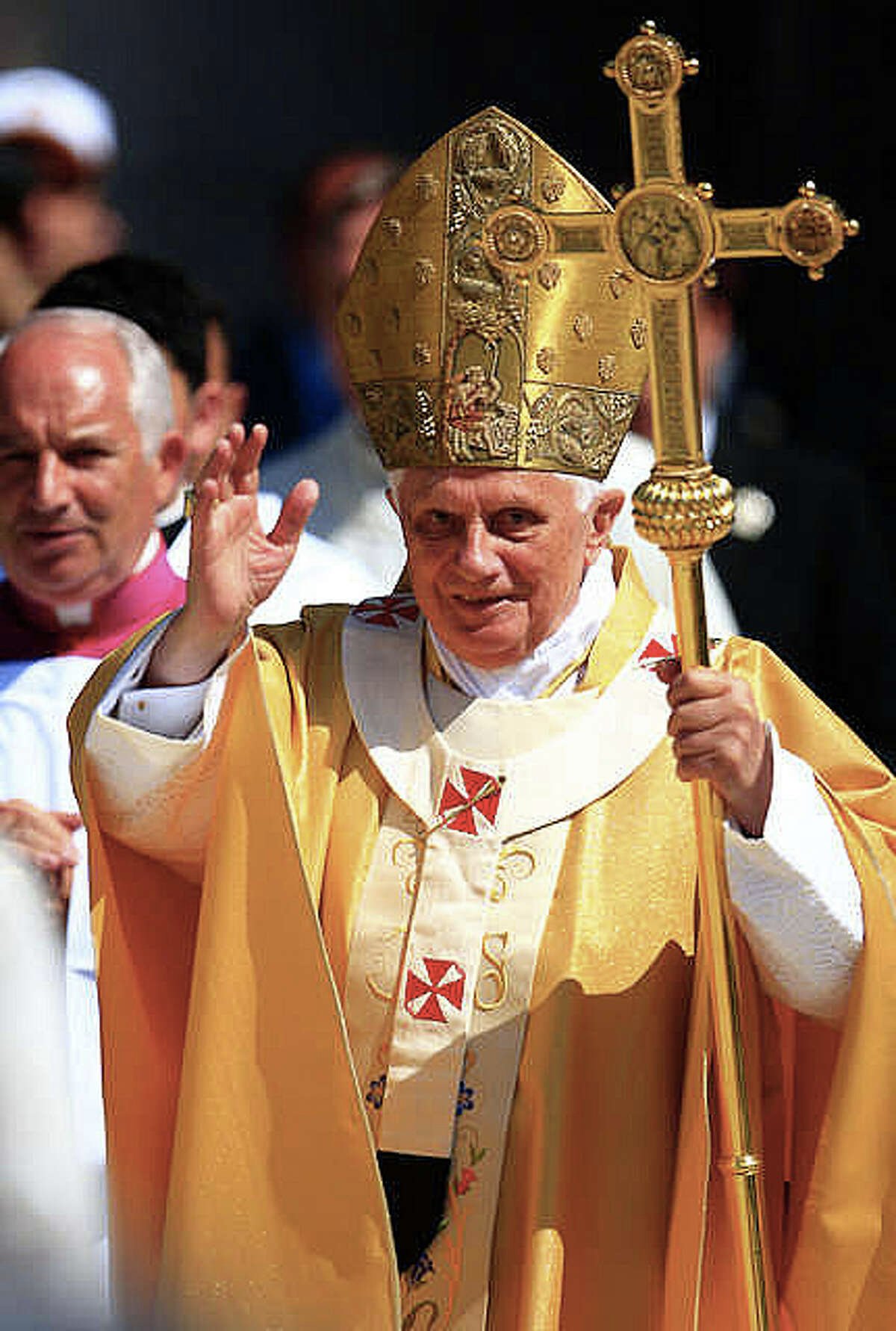
When Pope Benedict’s Summorum Pontificum was announced in 2007, the same summer I first attended an indult TLM in Washington, DC, I truly had no understanding of the differences between the Novus Ordo and the Traditional Latin Mass. It seemed obvious to me that it was far more beautiful and lovely than any Novus Ordo liturgy I had experienced, but at first I thought it was just the care in the music that was at the heart of it. I thought, incorrectly, that the Novus Ordo liturgy could also be as beautiful if the music were done as intended.
Over the next 15+ years of my life, I worked toward that end. I attended Colloquia planned by the Church Music Association of America (CMAA) every year, where we tried to make every liturgy lovely in all forms, English, Spanish, Latin Novus Ordo, and Traditional Latin Mass. It became clear that the very form of the Novus Ordo is incompatible with many of the traditional polyphonic Mass ordinaries. The traditional Latin Mass has the action on the altar continuing in parallel with the music sung by the choir, with the prayers offered on the altar by the priest happening concurrently with the singing of propers and ordinary. It is a perfect union of both integral parts of the liturgy.
When you try to use the same music at a Novus Ordo Mass, because of the way the rubrics are designed, it does not work as well. You’ll find the priest waiting around for the choir to finish singing before the next part of the liturgy can proceed, something that is not a problem in the TLM. Because of that, many priests do not want the choir to sing all the prescribed propers or the full chanted ordinary. It often makes the Mass much longer than it should be because all the various things must happen in sequence – not in parallel.
One thing that is particularly striking when attending a TLM such as the one at the Basilica of Sts. Peter and Paul in Chattanooga is the discipline, diligence and beauty of the work of the altar servers for the TLM. It is not unusual to have 18-20 altar servers at the Sunday Mass, with various tasks assigned to each in turn. Several of these young men have learned all the various jobs and take turns acting as Master of Ceremony (MC). The movement of the altar servers is carefully planned and executed with a sort of military precision that is beautiful to behold, with the older boys patiently teaching the younger ones. In the TLM, the altar servers not only carry candles, assist with incensation, and assist the priest at Mass. They also learn the Latin responses for the liturgy and make those responses on behalf of the faithful in the pews. There is nothing similar required of altar servers for the Novus Ordo Mass. The rubrics don’t allow for most of the altar server work currently done for the TLM. The sadness of this loss to those boys and young men is palpable, beyond the loss to the faithful who have watched and appreciated their work each week.
When the vernacular liturgy was implemented after the 2nd Vatican Council, there was no suitable vernacular substitute for the Gregorian chants that had been used in the TLM. And how could there have been? The glorious treasure of music built up over a thousand years cannot be replaced with suitable music in a few years’ time. In fact, the Church did not publish any books telling musicians what should be sung for those liturgies for years after the implementation of the vernacular Mass. So… left to their own devices, most parishes jettisoned the lovely Gregorian chant and polyphonic tradition in favor of such lovely pieces as Kumbayah, They’ll Know We are Christians, Morning Has Broken, etc. The idea that the Latin pieces were no longer allowed was common at parishes during that time, so many parishes thought they had no choice. Many places also started using Protestant hymns for the liturgy since at least they were in the apparently preferred language, despite the fact that hymns were not a part of Catholic liturgical tradition for the Mass. Hymns were typically reserved for the Divine Office or devotions outside the Mass.
Most Catholics are completely unaware of this and think that hymns are appropriate and even preferred for the Mass. They have not been taught that the Proper texts are actually prescribed for each Mass and that substituting hymns is the least desirable option. I’ve sometimes tried to describe this to people as equivalent to someone arbitrarily deciding that they don’t want the reading of the day and using some other Bible text of their own choosing. Somehow this knowledge is lacking among many faithful Catholics. The main difference in this analogy is that this substitution for the proper texts for music is actually allowed in the Novus Ordo, as the fourth option - alius cantus aptus (another appropriate song). I daresay many of the choices are not appropriate and that removing this option could greatly reduce the banality of the music that is so often experienced.
In the past 20 years or so, various lay people and a few priests have created Proper settings in the vernacular to try to alleviate the lack of suitable music for the Mass. I have personally worked to create Mass Proper settings in Spanish based on the Gregorian chants for the three-year cycle to try to offer something beyond the simple hymns and poor options we find in such books as Flor y Canto. These settings are made available for anyone to use at no cost.
But this was not at the behest of the Church leadership, but rather individual work taken on by people who saw a need and had the desire to somehow make the Novus Ordo liturgies beautiful. And, in order to not have to negotiate with the Church hierarchy over copyrights and royalties, we must keep the settings 100% free of charge, despite the fact that the texts that are used are those required to be used for the liturgies and the translation to produce those texts was ultimately already paid for by the faithful.
With the last translation of the Missals in English and in Spanish, chanted Mass ordinary settings were included to allow at least some dignity in the liturgies. The work done by ICEL and the USCCB (for the Spanish Misal) was long overdue and a definite improvement, even if 30 years too late.
Can you imagine the joy a person like me has felt when we were at long last able to attend a TLM regularly? Since moving to the Chattanooga area nearly two years ago, this has been the first time in my life I have had the opportunity. For these two years, my family has enjoyed this great gift and tried our best to contribute to the parish, through my participation in the parish choir, through our financial support, and, most recently as sponsors for candidates in OCIA. My husband has volunteered to assist in the Vocations Ministry, hoping that we can follow the diocesan program to build vocations among the young men to become future priests.
At other places over the years, I have served as a choir director, while my husband worked in the prison ministry and we both helped in other small ways at each location. We have tried to lend our time and treasure to the Church as much as we could. Our sons were altar servers and/or lectors at various parishes we attended. We had no option other than the Novus Ordo and we made the best of it.
As I sat in the choir loft listening to our pastor’s homily when he gave the news of the end of the TLM in our parish and in the diocese, tears came to my eyes. The message was a very hard one to hear, especially when the message of submission and obedience seemed so harsh. It was a warning against disobedience and schism rather than a message of shared suffering. Knowing Fr. Carter, I cannot believe that was what he intended. One thing I can say is that the Novus Ordo Latin liturgy that replaces the TLM in our parish will be as beautiful as it can be under his leadership.
None of this means that I do not accept the authority of the Church or that I want to leave communion with the Pope. Nor do I dispute the validity of Communion and the other sacraments in the Novus Ordo. When we cannot attend a TLM due to travel or other commitments, we always attend an alternate Novus Ordo Mass. I simply now understand the pain and confusion that must have been experienced by older generations when, after Vatican II, the long-held, familiar and lovely liturgy they had known their entire lives was banned. For 40 years or so they had no chance of attending Mass in the form they had grown up with and loved. They had no chance to explain the differences to their children or grandchildren.
And the bishops and cardinals who participated in the changes made during Vatican II must surely have had good reasons for making some reforms. I don’t deny that many of those bishops must have had good intentions, despite a few bad characters such as Bugnini, who seems to have had an outsized role in developing the Mass of Paul VI. They may have thought getting input about the liturgy from Protestants as they did might make it more attractive to potential converts. However, I think many, if not most, of the bishops who participated in the 2nd Vatican council must have felt completely blindsided by the liturgy that came after the completion of the council meetings. I don’t think this was what they intended at all.
After the Novus Ordo was introduced, post Vatican II, many people were very happy to have a more relaxed and informal liturgy in the vernacular. Some relished the chance to become church rock singers on Sunday, kicking off the shackles of the strict musical requirements of the TLM. You’ll find these are the people seen at the sparsely-attended Novus Ordo parishes that are on the verge of shutting down due to lack of interest. They are typically also the biggest complainers if any music is sung in Latin. When you visit a typical English Novus Ordo parish anywhere in the country, you’ll often find that most of the pews are uncrowded and the age demographics tilt heavily toward these people - the baby boomer generation (of which I am one). In many places the younger generations are simply absent or nearly so. The main exception to this in the past few years would be at the growing number of Spanish liturgies you’ll see in every city in the country. This group tends to be a younger demographic. This is due to the fact that we have had a huge influx of Spanish-speaking Catholics who have brought their guitars and mariachi-style music to many places. Let’s face it: however much any of us appreciate mariachi music, we have to agree that it is not Sacred Music and does not encourage contemplation or prayer.
A side note: If we want to speak of lack of unity, I dare you to see how much crossover there is at a typical Novus Ordo parish with a Spanish-speaking community and an English-speaking community. Ne’er the twain shall meet. It is a constant problem due to the lack of a common language. Some parishes are forced to have separate parish council meetings, separate Knights of Columbus meetings, etc. At the parish we previously attended before moving near to Chattanooga, the confirmation classes were only offered in Spanish, so the daughter of one of our friends did not receive that sacrament when she was in high school. No provision was made for English-speaking children at the parish.
The mish-mash of Spanish and English that must be used during the Triduum and Holy Days of Obligation is often a terrible thing. At least some portion of the attending faithful are always alternatively annoyed when their language is not the one being used and when the musical styles are so different as to be completely jarring, switching back and forth between Spanish and English. Wouldn’t a unified Latin be a huge improvement? But I digress.
At this point, most people in the world have never experienced a Traditional Latin Mass and think those who are attached to that liturgy are crazy “trads” if they are aware of them at all. Many are completely unaware and disinterested in the controversy. Some are quick to criticize TLM attendees as if we are denying the validity of the 2nd Vatican Council and the Novus Ordo liturgy. Speaking for myself, that is certainly not the case.
But, beauty is beauty. Truth is truth. After Pope Benedict XVI’s Summorum Pontificum, more and more priests, and in particular, the younger priests, began to learn how to offer the Mass in the old form. Little pockets of people began to ask for it and work to get it in their parishes around the country and around the world. They spent hours learning the correct way to do it, training young men and boys to serve at the altar, the choir working to learn to read the Gregorian chant notation and to sing it. While still a very small minority in total numbers, the people attending the traditional Latin Mass were sharing information about where they occurred and were often driving hours each week to attend them where they were offered.
This form of the liturgy is marked by the high percentage of young families with lots of children, large numbers of altar servers, many women who wear head-coverings and homeschool their children and have very regular Mass attendance. This is the group of Catholics most likely to believe in the True Presence in the Holy Eucharist, follow the Church teachings on birth control and abortion and receive the sacraments regularly. This group of people have been so appreciative of the availability of the Mass to them that they were generous financial supporters of the parishes and source of many new vocations.
This isn’t nostalgia. This form of the liturgy was never offered to these young parents when they were growing up. But, having experienced it, they could see the beauty of it and wanted it to continue. They were willing to sacrifice to make it available.
Until Pope Francis put forth the motu proprio Traditiones Custodes (TC), which was essentially a complete reversal of Pope Benedict’s Summorum Pontificum after only 14 years, the two forms of the Mass were, for the most part, happily coexisting in the Church. Those who preferred the guitar Mass could have it pretty much anywhere; those who wanted the TLM (if they were willing to drive a bit) could sometimes have that. Many people moved to locations where it was offered specifically with that in mind. This issue had no small impact on our family’s decision to move to the Chattanooga area.
If there is essentially no difference between the TLM and a Latin Novus Ordo, I have to wonder why the Latin Novus Ordo virtually disappeared once the TLM was allowed again. Could it be that the vast superiority of the form and the beauty was unmistakable?
Why it was determined that this form of the liturgy should be again stamped out is a complete mystery to me. And for Pope Francis to issue that motu proprio while Pope Benedict was still living was a rather shocking thing. Knowing he had no love for the traditional sentiments among the faithful, it was not unexpected that he would move to suppress it to some degree, but many (perhaps most) of us thought he would have the courtesy to wait until after Pope Benedict died.
And why did Pope Benedict choose to freely allow all ordained priests to learn to celebrate the “extraordinary form” of the liturgy without the permission of their bishops and to offer it wherever and whenever they wished? What about the argument about the Lefebvre followers and the SSPX and their disobedience? Would allowing the TLM cause faithful Catholics to join the SSPX somehow or to deny the validity of the Novus Ordo? I believe the reason Pope Benedict offered the option was because of the abuses that are so common in the Novus Ordo liturgies - everything from the “Clown Mass” to allowing lay people to preach homilies, to improper use of home-baked bread for Holy Communion (not the correct unleavened bread that is prescribed), the use of improper vessels in the Mass, priests using water pistols to spray Holy Water and so on. I think his hope was that the TLM would inspire and inform the Novus Ordo so that those liturgies could be uplifted in the “Reform of the Reform”.
The people who have grown to love the TLM are good and faithful Catholics. Taking this form of the Mass away is simply cruel. I understand that the TC restrictions on training other priests to offer the TLM has placed an unreasonable burden on those who are celebrating it currently. This, again, is completely unnecessary. If I understand correctly, the restrictions of TC also make it difficult for the records kept by parishes regarding baptism, confirmation, marriage, etc., since only non-parishes are allowed to offer the TLM. This seems to have been part of the rationale for deciding not to declare any shrines or chapels for the TLM in the diocese, although perhaps I misunderstood. All of this seems to just be a way of suppressing the TLM for no good reason.
The most recent letter from the bishop of Knoxville displays either a complete lack of understanding of the differences between the two forms of the Mass or a breathtakingly condescending attitude toward those faithful who are attached to the TLM. To think that simply allowing ad orientem Latin Novus Ordo liturgies is an indistinguishable substitute for the TLM is simply ignorant. Since this is the assumed norm in the Novus Ordo liturgy according to the GIRM, the idea that it would have to be “allowed” seems disingenuous.
Every year since 2007, I have attended conferences where we have endeavored to make the Novus Ordo liturgy as beautiful and transcendent as the TLM through the use of Sacred Music, careful adherence to the rubrics on the altar, lovely vestments, etc.
It never quite makes it.
Certainly, using the traditional chants and following the actual rubrics are a huge improvement on the typical parish Novus Ordo liturgy, but it is clearly not an equal substitute.
In the Knoxville diocese, as was the case in Charlotte, the new bishop seems to have taken the harshest tack possible on implementing TC, without offering a good justification. Even though the allowance for shrines and chapels to offer the TLM could have been allowed, no provision for that has been made. While dioceses more friendly to the TLM have planned for this, creating new shrines and chapels and making at least some provision for a transition, in our diocese, there will be no TLM available at all after the end of the Church year in Chattanooga and the end of the calendar year in Knoxville and Johnson City. Those of us who have been watching to see what would happen locally after Francis’ motu proprio (TC) were fearing it would be more difficult to get to a TLM, if not every week, then at least fairly frequently. We never dreamed it would be this bad.
We, the faithful, strongly suspect our new bishop didn’t really try to get any more extensions from Rome on the allowance of the TLM for a longer period in order to make new provisions. Since no realistic plan for its continuance was made, of course there is no logical place to move the liturgy in place of the current parishes. It is as if the bishop simply let the clock run out and then said there is no solution that allows the continuance of the TLM. I understand the difficulty for the priests who have been offering the TLM up to this point. It seems the bishop is fully in agreement with the late Pope Francis that the TLM has no place in the modern Church and the TLM-attending faithful must choose to either obey or become schismatics outside the Church.
But because those who attend a TLM are such a small minority, it probably seems relatively low-risk to the diocese as a whole. Perhaps the difficulty in dealing with some of the “trads” who have misconceptions about the validity of Novus Ordo sacraments is troubling to pastors and bishops. Our pastor gave a few examples of this in his recent homily including a related story about people from the Traditional Mass that have requested that leftover consecrated hosts from the TLM be stored separately from the Novus Ordo Masses. He also mentioned the fact that his desire to modernize the TLM liturgy with sung vernacular readings was met with rigid disapproval from the faithful. Perhaps this was the type of reform those bishops at Vatican II were actually hoping for and expecting. It was, perhaps, a sad lost opportunity to keep the beauty while offering a reform of the old.
We will remain Catholic. We will attend Mass, despite any lack of beauty, holiness and tradition. We were stuck with this situation for 40 years before the 2007 Summorum Pontificum, wandering in a liturgical desert. We will pray for our bishops and priests and offer up these sufferings, remembering that others have it worse. We will make home sanctuaries, where priests who want to celebrate private Masses in the old form will be made welcome. We will tell our children what they have lost and hope it won’t be another 40 years before we have freedom to have this form of the Mass reinstated again.
But bishops are not bringing peace and unity by doing these things. This is a choice they are making to inflict pain on members of their own flock when they don't try to find alternatives to fully abolishing the TLM. They are bringing bitterness and resentment into the diocese, where it didn't exist before. We have been made to understand that we who love the TLM are not as important as inflicting their will on the liturgical form. Our bishop is quite willing to risk the fact that some will be tempted toward schism. For the vast majority of us, however, that would never be the choice.
We were joyful and appreciative of the generosity of our priests who took the (not inconsequential) time to learn to offer the TLM and prepare different homilies because of the difference in Mass readings on many weeks due to changes in the Church calendar between old and new.
If peace and unity are attained (the stated goal of this by bishops), it will be in spite of their actions. May we all find the grace to forgive them.
Please pray for our priests, who are struggling as we are with these trials. If you are in a place where the TLM is still allowed, rejoice in it and let your pastor know that you appreciate him! And, above all, realize that your Catholic brothers and sisters who attend the Novus Ordo liturgies may not be able to have the good fortune you do. We are all still members of the Church who hope to share eternal life with our Father in heaven.