Sunday, January 25, 2026

The Gospels of the Epiphany (Part 3)

The introit of the Third Sunday after Epiphany begins with the same words as another antiphon from the Matins of that feast, “Adore God, all ye His Angels.” The reference to Epiphany is even more explicit in the Gradual, taken from the one-hundred-and-first psalm, “The nations will fear thy name, o Lord, and all the kings of the earth Thy glory.”


On the previous Sunday, the Church reads of the first miracle occurring in the Gospel of St John; on this Sunday are read the first two miracles in the Gospel of St Matthew (8, 1-13), namely, the healing of a leper, and of the servant of the centurion of Capharnaum. The Roman centurion, when asking for the cure of his gravely ill and beloved servant, declares himself the inferior of a provincial carpenter, unworthy to receive Him into his home. This Gospel is therefore not simply the story of a miracle, but also of the nations’ confession of the divinity of Christ; even the might of the Roman Empire humbles itself before Him, as the Magi did at His birth. The story of the centurion is one of the very few that is used more than once in the temporal cycle of readings, being also the Gospel of the Thursday after Ash Wednesday. In the liturgical rite which originated in Rome, and is now celebrated in every corner of the world, his confession of faith in Christ has been part of the rite of Holy Communion for many centuries.

Christ and the Centurion, by Paolo Veronese, ca. 1571
The remaining Sundays of the season after Epiphany have their own prayers and Scriptural readings, but their Gregorian antiphons are repeated from this third Sunday. On the fourth Sunday, the last which can occur before the Christmas season ends on the Purification, the Gospel recounts yet another manifestation of Christ, the calming of the waters of the Sea of Galilee. (Matt. 8, 23-27) Up to this point in St Matthew’s Gospel, the miracles he recounts have all been healings; this is the first miracle of dominion over inanimate creation. This Gospel was perhaps also chosen as a vague reminiscence of the Office of the Epiphany, in which the antiphon of the Benedicite reads, “Seas and rivers, bless the Lord, sing to the Lord a hymn, o fountains, alleluja.” The last two Sundays after Epiphany always fall after the Christmas season ends on February 2nd, and the Gospels chosen for them are no longer manifestations of Christ, but parables.

At most of the Masses associated with the Epiphany, (the vigil, the feast, the two Sundays after the feast), the text of the Communion antiphon is taken from the Gospel. On the third Sunday, however, it is taken from a Gospel text that is not read at all in the Missal of St Pius V. In the Tridentine missal, the ferial days of most seasons have no proper Scriptural readings, but simply repeat those of the previous Sunday, a custom well-established in Rome long before Trent. Many medieval missals, on the other hand, including those of Sarum, Liège and most of the churches of the German Empire, preserve an older custom of the Roman Rite, whereby proper readings were assigned to the Wednesdays and Fridays throughout the year. The story from St Luke’s Gospel of Christ in the synagogue at Capharnaum, (4, 14-22), is assigned by the very oldest surviving Roman lectionary, the seventh-century Wurzburg manuscript, to an unspecified day after the Sunday of the wedding at Cana. After Christ reads a passage from the book of Isaiah, He declares the words of the prophet to be fulfilled in by His coming to Israel; it is the Lord Himself who manifests to the world the true meaning of the words of sacred Scripture. This Gospel’s former presence in the corpus of Mass-lessons is the origin of the Communion antiphon which is sung until Septuagesima Sunday arrives; “All wondered at these things which proceeded from the mouth of God.”

The ancient lectionaries and medieval missals add a number of other Gospel episodes to the season, such as the arrival of Christ in Galilee (Matt. 4, 12-17), and several of the early healings performed by Him. The miraculous multiplication of the loaves and fishes, and the feeding of the five-thousand is also occasionally counted as part of the Epiphany story. The Ambrosian liturgy’s Epiphany hymn Illuminans altissime devotes three strophes to this event, more than it gives to the coming of the Magi, the Baptism of Christ or the Wedding at Cana; then, curiously no further reference to it is made until the Fifth Sunday after the Epiphany, when it is read from the Gospel of St Luke (9, 10-17). The same hymn is sung in the Mozarabic Rite, whose preface of the feast also dwells at length upon the event, but the Gospel itself is never read in the Epiphany season. The Wurzburg lectionary assigns the story to be read twice in the seventh week after Epiphany, first from St Mark and then from St Matthew, but these readings are not in the eighth-century Murbach lectionary, or the medieval missals.

The Crucifixion, by Ottaviano Nelli (1421-24), from the chapel of the Palazzo Trinci in Foligno, Italy; Blessed James of Voragine, who was archbishop of Genoa, Italy from 1292 until his death in 1298 or 99, is the bishop on the left. (Photograph by Georges Jansoone from Wikimedia CommonsCC BY-SA 4.0)
Blessed James of Voragine, the author of the much maligned (and unjustly so) Golden Legend, says that the feast commemorates four miracles, and, citing the authority of the Venerable Bede and of the aforementioned hymn, notes that the feast was also called Phagiphania, from the Greek word for eating. He also notes, with some of the critical spirit he is habitually attacked for lacking, “but concerning this fourth miracle, it is doubted whether it happened on this day, both because this is not read in the original text of Bede, and because it is said in the sixth chapter of John, where this miracle is dealt with, ‘Easter was nigh.’ ” (Legenda aurea cap. 14)

Sicard of Cremona agrees in rejecting this tradition as “not authentic”, and it is very likely that the prominent position of the story on Laetare Sunday is the reason why it was early on removed from the Epiphany season. As the church of Milan sings in an antiphon of Epiphany Matins, “Thou alone hast wrought many wonders, o Lord God,” and some must be saved for the rest of the Church’s year.

Sunday, January 18, 2026

The Wedding at Cana 2026

The Lord said, “Fill the jars with water and bring them to the chief steward.” When the chief steward had tasted the water made into wine, he said to the bridegroom, “You have kept the good wine until now.” This was the first miracle Jesus worked in the presence of His disciples. (The Communio of the Second Sunday after Epphany, taken from the day’s Gospel, the story of the wedding at Cana in Galilee, John 2, 1-11.)  

Communio, Jo. 2 Dicit Dóminus: Implete hydrias aqua et ferte architriclíno. Cum gustasset architriclínus aquam vinum factam, dicit sponso: Servasti bonum vinum usque adhuc. Hoc signum fecit Jesus primum coram discípulis suis.

The Wedding at Cana, 1641/60, by the Flemish painter Jan Cossiers, 1600-71. Public domain image from Wikimedia Commons.

Monday, January 12, 2026

Two Medieval Hymns for Epiphany

For brevity’s sake, the title of this post is slightly inexact: the first of these two hymns is for Epiphany, while the second was used for the whole period from Christmas to the octave of Epiphany.
The Baptism of Christ, 1471-79 by the Austrian painter Michael Pacher (1435 ca. - 1498). Image from Wikimedia Commons by Uoaei1, CC BY-SA 4.0)
The Roman Divine Office is traditionally much more conservative than other Uses in the adoption of new texts, and this is particularly true in regard to hymns. Seasons such as Advent and Lent have three hymns, one each for Matins, Lauds and Vespers, but many feasts, even some of the greatest and most ancient, have only two. And thus for the Epiphany, the hymn Crudelis Herodes (originally Hostis Herodes impie) is said at both Vespers and Matins, and O sola magnarum urbium at Lauds.
Many medieval Uses, however, added one to this repertoire, an anonymous composition of at least the 10th century, A Patre Unigenitus. (Dreves, Analecta hymnica medii aevi, vol. 2, p. 80 and vol. 27, p. 66) In the Use of Sarum, it was sung at Matins during the octave, since on the feast itself, Matins has no hymn; the Carmelites and Dominicans put it at Lauds. It is a slightly irregular alphabetic acrostic; A is used twice, and the not-very-well composed strophe that supplied the letters V, X, Y and Z dropped out of use. The C of “clarum” is written with a K, a common practice in acrostics, since K is hardly used in classical Latin. The original reading of the S line was “Sceptrum tuumque inclitum”; this is grammatically irregular, since the enclitic particle “-que” should be attached to the first word, and so it was often corrected to the reading given below, as in the Dominican and Carmelite Offices. The English translation is by the great John Mason Neale, from “Collected Hymns, Sequences and Carols of John Mason Neale” (Hodder and Stoughton London 1914.)

A Patre Unigenitus
Ad nos venit per Virginem,
Baptisma cruce consecrans,
Cunctos fideles generans.
From God the Father, Virgin-born
To us the only Son came down,
By death the font to consecrate,
The faithful to regenerate.
De caelo celsus prodiens
Excepit formam hominis,
Facturam morte redimens,
Gaudia vita rediens.
From highest heaven His course began,
He took the form of mortal man,
Creation by His death restored,
And shed new joys of life abroad.
Hoc te, Redemptor, quaesumus
Illabere propitius
Klarumque nostris cordibus
Lumen praebe fidelibus
Glide on, Thou glorious Sun, and bring
The gift of healing on Thy wing;
The clearness of Thy light dispense
Unto Thy people’s every sense.
Mane nobiscum, Domine,
Noctem obscuram remove,
Omne delictum ablue,
Piam medelam tribue.
Abide with us, o Lord, we pray,
The gloom of night remove away;
Thy work of healing, Lord, begin,
And do away the stain of sin.
Quem jam venisse novimus,
Redire item credimus,
Sub sceptro tuo inclito
Tuum defende clipeum.
We know that Thou didst come of yore;
Thou, we believe, shalt come once more:
Thy guardian shield o’er us extend,
Thine own dear sheepfold to defend.
Gloria tibi, Domine,
Qui apparuisti hodie,
Cum Patre et Sancto Spiritu,
In sempiterna saecula.
   Amen.
All glory, Lord, to Thee we pay,
For Thine Epiphany to-day;
All glory, as is ever meet,
To Father and to Paraclete.
   Amen.
In the Liturgy of the Hours, the hymn has been subjected to the usual cack-handed alterations by Fr Anselmo Lentini OSB, and assigned to First Vespers of the feast of Our Lord’s Baptism. On the basis of a minority manuscript tradition, the address is changed to the second person, and various other words altered to fit that (e.g. the vocative “Unigenite” in the first line.) The fifth strophe is replaced by a doxology invented by Lentini.

In the Roman Breviary, and in most medieval Uses, the hymns of Prime, Terce, Sext and None are completely invariable throughout the year, although their doxology often changes. However, there existed a minority tradition (e.g. at Liège in the Low Countries, and in England at York, but not in the much more widely diffused Use of Sarum), which assigned a proper hymn, Agnoscat omne saeculum, to these Hours, starting on Christmas day, and continuing through to the octave of Epiphany. The hymn was broken up into two strophes per Hour, plus the doxology of the current feast. When Fr Guido Dreves SJ (1854-1909) was publishing his monumental collection of medieval hymns, the Analecta hymnica, its attribution was apparently a matter of debate; Dreves himself says (vol. 50, pp. 85-6) only that it is certainly by the same author as the common hymn of the Virgin Mary Quem terra, on the grounds that it shares two lines with it. (This seems a weak line of argument; medievals valued originality far less than we do, and borrowing texts was extremely common.) Writing in 1984, Fr Lentini ascribed it to “an unknown author of the 7th or 8th century.” Several more recent scholars, however, accept the traditional attribution to St Venantius Fortunatus (ca. 530-600), the author of the great Passiontide hymns.
In the Liturgy of the Hours, it remains miraculously untouched; the first three strophes and the sixth are assigned to Vespers of the Annunciation, and the fourth, fifth, seventh and eighth to the Lauds of the newly invented Solemnity of Mary on January 1st. It is a tribute to the smashing success of the new Office that no recording of either is available on YouTube, but it would have been sung with the same melody used for the other Christmas hymns, according to local custom, so I have included here the original version of the Roman Vesper hymn of Christmas, Christe Redemptor omnium. The English translation is from the same volume of John Mason Neale cited above.
Ad Primam
Agnoscat omne saeculum
Venisse vitae praemium,
Post hostis asperi iugum
Apparuit redemptio.
At Prime
Let every age and nation own
That life’s reward at length is shown;
The foe’s hard yoke is cast away,
Redemption hath appeared to-day.
Isaias quae cecinit,
Completa sunt de Virgine:
Annuntiavit Angelus,
Sanctus replevit Spiritus
Isaiah’s strains fulfilment meet,
And in the Virgin are complete:
The Angel’s tongue hath called her blest ,
The Holy Ghost hath filled her breast.
Ad Tertiam
Maria ventre concipit
Verbi fidelis semine;
Quem totus orbis non capit,
Portant puellae viscera.
At Terce
The Virgin Mary hath conceived,
By that true word which she believed,
And Whom the wide world cannot hold,
A spotless maiden’s arms enfold.
Radix Jesse floruit
Et virga fructum edidit;
Fecunda partum protulit
Et virgo mater permanet
Now buds the flower of Jesse’s root,
Now Aaron’s rod puts out its fruit;
She sees her Offspring rise to view,
The Mother, yet the Virgin too.
Ad Sextam
Praesaepi poni pertulit,
Qui lucis auctor exstitit;
Cum Patre caelos condidit,
Sub Matre pannos induit.
At Sext
He, by Whose hand the light was made,
Deigns in a manger to be laid;
He with His Father made the skies,
And by His Mother swaddled lies.
Legem dedit qui saeculo,
Cuius decem praecepta sunt,
Dignando factus est homo
Sub legis esse vinculo
He that once gave the Law to men,
And wrote it in Commandments Ten,
Himself man’s nature deigns to share,
The fetters of the Law to wear.
Ad Nonam
Adam vetus quod polluit,
Adam novus hoc abluit,
Tumens quod ille deicit,
Humillimus hic erigit
At None
Now the Old Adam’s sinful stain
Doth the New Adam cleanse again;
And what the first by pride o’erthrew,
This lowliest One uprears anew.
Jam nata lux est et salus,
Fugata nox et victa mors;
Venite, gentes, credite,
Deum Maria protulit.
Now light is come, Salvation shewn,
And night repelled, and Death o’erthrown;
Approach, ye nations! own this morn,
That God of Mary hath been born.

Sunday, January 11, 2026

The Gospels of the Epiphany (Part 2)

As with the other solemnities of the Lord, the Sunday within the octave of the Epiphany has its own proper Mass, which begins with the introit In excelso throno; the Gospel of this Mass is that of the finding of the twelve-year old Jesus among the doctors in the temple. (St Luke 2, 42-52) The only canonical episode of the hidden years of Christ’s life has been an object of devotion as a mystery of the Rosary for centuries, and was formerly celebrated with a particular feast by the Dominican Order; it is fittingly placed by the sacred liturgy between His birth and the beginning of His public ministry. When Pope Benedict XV decided to extend the feast of the Holy Family to the universal calendar in 1921, it was fixed to the Sunday within the octave of the Epiphany, since the Gospel, which sets the key note of the whole Mass and Office, is the same as that of In excelso throno.

On the octave itself, the Church celebrates the public manifestation of Christ to the people of Israel in His Baptism, at which God proclaims, “This is my beloved Son; hear ye Him.” Sicard of Cremona comments that the second miracle celebrated by the Epiphany, the Baptism of the Lord, “is put off until the octave day, because (baptism) takes the place of circumcision, which was celebrated on the eighth day.” The public revelation of Christ to the nations, however, is deferred to Pentecost, when the Apostles begin the mission of the Church, which will last until the end of the world.

In the Missal and Breviary of St. Pius V, and subsequent revisions, the octave day of the Epiphany is textually identical to the Epiphany itself, with the exception of the three prayers of the Mass, the Gospel, which is Saint John’s account of the Baptism (1, 29-34), and the readings of Matins. Prior to the Tridentine reform, however, the Office also had a large number of proper antiphons for the psalms of Matins, Lauds and Vespers, all of them centered on the Baptism. These were entirely suppressed from the Roman Breviary in the Tridentine revision, a most uncharacteristic act of a reform that was generally very conservative. The reason would appear to be that these antiphons are clearly Greek in origin; indeed, they were even recognized to be such by the liturgical commentators of the medieval period. These were retained by several breviaries of the religious orders after Trent; the antiphons for the Gospel canticles are:

At the Magnificat of First Vespers The soldier baptizeth the king, the servant his Lord, John the Savior: the water of the Jordan is struck dumb, the dove beareth witness: the Father’s voice is heard: this is my beloved Son.
At the Benedictus John the Forerunner exsulteth, when, the Lord having been baptized in the Jordan, the cause of rejoicing to the word is made: remission of our sins is made. ‘O thou that sanctifieth the waters’, let us all cry out, ‘have mercy upon us!’
At the Magnificat of Second Vespers The fountains of the waters sare sanctified, as Christ appeareth in glory to the world: draw ye waters from the fountains of the Savior; for now Christ our God hath sanctified every creature.

The Baptism of Christ, from the Menologion of Basil II, ca. 985
In several medieval uses of the Roman Rite, white was the liturgical color of the season between the octave of the Epiphany and the Purification, where the Missal of St. Pius V prescribes green; this custom survived in much of France until the later part of the nineteenth century. It reflects the fact that the Masses of the first three Sundays of this period continue the solemnity of the Lord’s manifestation, extending the season of Christmas to include the entire forty days from the Nativity to the Purification. A similar custom existed in many places for the season after Pentecost, whereby red vestments were used instead of green; this is still the tradition of the Ambrosian Rite for all but the last four weeks before Advent.

The Office of the Epiphany itself refers to the conversion of water into wine at the wedding at Cana as one of the three miracles commemorated by the feast. (St John 2, 1-11) The fourth stanza of the principal hymn of the feast, Crudelis Herodes, reads:
Novum genus potentiae
Aquae rubescunt hydriae,
Vinumque jussa fundere,
Mutavit unda originem.
This is translated (in a somewhat archaic style) by the English Breviary of the Marquess of Bute:
A strange miraculous power is shown,
The water pots are ruddy grown,
Whose waters by command divine
Their nature change, and yield pure wine.
Although this is sung every day through the octave, the reading of the Gospel itself is delayed until the second Sunday after the feast. The tradition of commemorating this episode alongside the visit of the Magi and the Baptism of Christ is a very ancient one; St Maximus of Turin refers to it as “the tradition of our fathers” in the mid-fifth century, and the three events are mentioned together in the liturgical texts of many different rites. Of the various actions by which Christ manifests Himself as Our salvation, this one was undoubtedly chosen for such a prominent place because St John calls it the first of Christ’s miracles, whereby “he made manifest (ephanerose) His glory.”
The Wedding at Cana, painting in the Scrovegni Chapel in Padua, Italy, by Giotto, 1305.
The introit of this Mass is almost identical to the fifth antiphon of Epiphany Matins, taken from the sixty-fifth psalm: “Let all the earth adore Thee, o God, and sing to Thee; let it sing to Thy name, o Most High.” These words are sung on the feast because the three Magi were understood to represent all the ends of the known world, one from Asia, one from Africa and one from Europe. Although this tradition concerning their number and origin was almost universally accepted in the Middle Ages, and the connection with the Epiphany is fairly obvious, the liturgical writers of the era also knew of a curious story concerning the origin of this introit. It is recounted thus by Sicard of Cremona:
It is said that Augustus Caesar decreed for the glory of the Roman Empire, that from each city of the world someone should come to Rome, bearing as much earth as can be held in one hand, so that by this it might be clear that all were subject to the Roman Empire… and from this earth (terra) there arose a small mountain, upon which a church was later built, and dedicated on this Sunday. Therefore, on its dedication is sung “Let all the earth adore Thee.” (Mitrale V, 11)
The modern reader should be aware that medieval authors often use a phrase like “It is said…” to indicate a story which may not be altogether reliable. However, there is in fact an artificial mountain in Rome, the Mons Testaceus (“Monte Testaccio” in Italian), a heap of discarded potsherds near the location of some warehouses of the ancient city; it is well over a hundred feet high, probably even higher in antiquity, and more than half a mile around at the base. It is easily seen to be a man-made structure, and the medieval mind perhaps found it difficult to imagine that such an achievement of engineering could be anything so prosaic as a garbage dump; hence the story.

A view of the Mons Testaceus in the 19th century.

Friday, January 09, 2026

An Ambrosian Chant for Vespers of the Epiphany, “Omnes Patriarchae”

Although the Ambrosian Divine Office shares many features with that of the Roman Rite, its structure is different in almost every respect. Vespers begins not with psalmody, but with a Lucernarium, a responsory originally sung while the lamps of the church were being lit. This is often (but not always) followed by an antiphon called “in choro”, because it was originally sung by the cantors standing around the throne of the celebrant. At Second Vespers of the Epiphany, this antiphon is repeated four times; traditionally, the first repetition was followed by three Kyrie eleisons, the second by Gloria Patri, the third by Sicut erat, and the fourth by three more Kyrie eleisons.

The following recording of the antiphon in choro for Epiphany was taken on Tuesday at the church of Santa Maria della Consolazione in Milan, during the solemn celebration of Second Vespers. (The video track freezes early on.) The printed music and text are given below. Many chants of the Ambrosian Office are sung multiple times by different persons or groups within the choir, a custom which was followed by the cantors at this ceremony.

Nicola de’ Grandi took an old photo of the choir of the Duomo of Milan during the chanting of this antiphon, and colorized it; the result is very nice.

Tuesday, January 06, 2026

The Gospels of the Epiphany (Part 1)

The feast of the Epiphany is one of the richest of the Church’s liturgical year, commemorating several different events in the life of Our Lord. The Roman and other western rites have traditionally laid the strongest emphasis on the visit of the three Magi to the infant Jesus, which is recounted in the Gospel of the feast; the paintings and sarcophagi from the catacombs of Rome attest to the great antiquity of this tradition. In the Byzantine Rite, on the other hand, the visit to the Magi is read on Christmas Day, and the Epiphany is principally focused on the Baptism of the Lord, as may be seen in the icon of the feast. The Roman Rite traditionally assigns the celebration of this latter event to the octave day of the Epiphany, which was officially renamed “the Baptism of the Lord” in the 1961 rubrical reform; this change was carried over into the post-Conciliar liturgy. The Epiphany is also traditionally the day on which the date of Easter is announced to the faithful, and the feast and its vigil are the occasion of several blessings in the Rituale.

The Adoration of the Magi, depicted on a Christian sarcophagus of the 4th century, now in the Pio-Christian collection of the Vatican Museums.
At the first Mass of Christmas, the Church reads the revelation of the Incarnation to the people of the ancient covenant, represented by the shepherds; at the dawn Mass, these men of humble estate come to Bethlehem, and behold the Creator of the Universe as an infant sleeping in a manger. This private manifestation of God to the people of Israel on Christmas is complemented by a similarly private manifestation on Epiphany to the nations of the world, in the persons of the Magi. As St Fulgentius says in a sermon read during the octave of the Epiphany, “The shepherds were the first-fruits of the Jews; the Magi have become the first-fruits of the gentiles.” St Matthew does not say that the Wise Men found the Holy Family still at the stable in Bethlehem, where they had been found earlier by the shepherds, but the Church’s artistic tradition has depicted it thus, precisely to emphasize the connection between these two “epiphanies”.

The last antiphon of Christmas Matins is “God hath made known, alleluja, his salvation, alleluja,” words which are repeated at both Lauds and Vespers; the psalm from which they are taken, Psalm 97, has been associated with the Nativity of the Lord from very ancient times. A subsequent verse of the same psalm is sung as the communion antiphon of the third and most solemn of the three Christmas Masses, and is repeated several times during the octave: “All the ends of the earth have seen the salvation of our God.” These words are fulfilled in the Epiphany, when the representatives of the ends of the earth, the Magi, come to worship the Christ Child, God Incarnate for our salvation. Therefore, although the Gospel does not say how many they were, Christian art from the earliest times (and especially in Rome) has usually shown them as three, representing the three parts of the world known to ancient peoples, Asia, Africa and Europe, descendents of the three sons of Noah.

The Adoration of the Magi, by Flemish painter Gerard David, ca. 1490.
From the earliest times, the Roman Gospel of the third Mass of Christmas has been the Prologue of St John (1, 1-14); this is attested already in the middle of the seventh century in the very oldest lectionary of the Roman Rite, the Comes Romanus of Wurzburg. In the high Middle Ages, the custom emerged of reading this same text at the end of the Mass, as part of the celebrant’s thanksgiving. At the third Mass of Christmas, therefore, the Gospel of the Epiphany was read in its place, uniting the revelation of the Incarnate Word to Israel with His revelation to the nations. It is worth noting that the Gospels of both Christmas and Epiphany end with a genuflection, by which we imitate the Magi in kneeling before the Divine Infant, just as we honor the Incarnation every Sunday by genuflecting during the Creed at the words “Et incarnatus est.” (The 1961 rubrical reform of Pope St John XXIII prescribes that there be no last Gospel at this Mass.)

In the Middle Ages, another pair of Gospels was added to the liturgy to associate the feasts of Christmas and Epiphany. At Matins of Christmas, the Genealogy of Christ according to St Matthew (1, 1-16) was sung before the Te Deum and the Midnight Mass, at Epiphany Matins, the Genealogy according to St Luke (3, 21 – 4, 1). Both of these were normally sung with the same ceremonies that accompany the singing of the Gospel at Solemn Mass. Since these texts are fairly repetitive, musicians composed special and elaborate music for them; they were often set for two deacons or groups of deacons, who would alternate the verses.

St Matthew’ genealogy was clearly chosen for Christmas because it ends with St Joseph, “the husband of Mary, from whom was born Jesus, that is called Christ.” In German-speaking lands, it was usually follow by the antiphon “O mundi Domina”, a final O antiphon on the cusp between Advent and Christmas. That of St Luke was then assigned to Epiphany because it is preceded by an account of the Baptism of Christ (vs. 21-23), one of the principal events commemorated by the feast. This Gospel ends with Christ departing into the desert “lead by the Spirit”, a distant prelude to the coming Lenten fast. Commenting on the reason why these two Gospels are read on their respective feasts, Sicard of Cremona writes in about 1200, “Matthew reckons (the genealogy) by descending (from Abraham to Joseph), because he is describing the humanity of Christ, by which He descends to us. Luke recounts (the genealogy) ascending, since from the baptized One he ascends to God, showing the effects of baptism; because the baptized become sons of God.” (Mitrale, V, 6)

Folio 19r of the Schuttern Gospels, an early 9th century illuminated manuscript produced at the Abbey of Schuttern in Baden-Württemberg, Germany.
These texts occur in virtually every use of the Roman Rite except that of the Roman Curia itself, the ancestor of the Breviary of St. Pius V; they were retained after the Tridentine reform in the proper breviaries of certain religious orders, including the Premonstratensians, Dominicans, and Carmelites of the Ancient Observance.

Here is a marvelous recording of the Genealogy of Christ according to St Luke from Epiphany Matins.

An equally nice version of the Genealogy according to St Matthew from Christmas Matins, sung by the Schola Hungarica; brevitatis causa, the names between “the wife of Uriah” and Jacob, the father of St Joseph, are omitted in this recording. (There is small mistake at the very beginning; the word “autem” is incorrectly added after the name of Abraham.)

Also from the Schola Hungarica, the antiphon “O mundi Domina”; the music is very similar to that of the standard seven O antiphons of Advent.

Aña O mundi Domina, regio ex semine orta, ex tuo jam processit Christus alvo, tamquam sponsus de thalamo; hic jacet in praesepio, qui et sidera regit. ~ O Lady of the world, born of royal descent, Christ hath now come forth from Thy womb, as a bridegroom from his chamber; he lieth in a manger, that also ruleth the stars.

Sunday, January 04, 2026

Epiphany Celebrations in Bridgeport, Connecticut

The Oratory of Ss Cyril and Methodius, the ICRSP’s Apostolate in Bridgeport, Connecticut, will have the following special celebrations for the feast of the Epiphany tomorrow and on Tuesday. The church is located at 79 Church St. (See their Facebook page for the regularly scheduled Masses and other services.)

Monday, January 5th, starting at 6pm, Solemn First Vespers of the Epiphany, followed by the blessing of Epiphany water.

Tuesday, January 6th, starting at 6pm, Solemn Mass, with Victoria’s Missa Trahe me post te, and the proclamation of the movable feasts, followed by the blessing of chalk, and of frankincense and myrrh, then a potluck reception in the church hall.

Sunday, January 12, 2025

Durandus on the Sunday after Epiphany

The great liturgical scholar William Durandus (1230 ca. - 1296) comments on the Mass of the Sunday after Epiphany, which now yields to the feast of the Holy Family. (Rationale Divinorum Officiorum, 6, 19)

The introit “On a lofty throne, I saw a man sitting, whom the multitude of angels adoreth,” is taken from (Isaiah 6, 1) “I saw the Lord sitting upon a throne”, … and the “multitude of angels” spoken of here is that which is mentioned in Isaiah, “the Angels sang ‘Holy, Holy Holy.’ ” And indeed, the lofty throne is the Church, in which God sits, and instructs us to adore Christ as the true king. …

Introitus In excelso throno vidi sedére virum, quem adórat multitúdo Angelórum, psallentes in unum: Ecce, cujus imperii nomen est in aeternum. Ps 99 Jubiláte Deo, omnis terra: servíte Dómino in laetitia. Gloria Patri... In excelso throno...
Introit Upon a lofty throne I saw a man sitting, whom a multitude of angels adoreth, singing together: Behold Him, the name of Whose empire is forever. Ps 99 Sing joyfully to God, o all the earth; serve the Lord with gladness. Glory be... Upon a lofty throne...

And it can be said that in order for us to become a throne on which the Lord may sit, three things are necessary: purity of the flesh, humility of the mind, and exultation in the Lord. We are invited to the purity of the flesh in the Epistle (Romans 12, 1-6), which says “Brethren, I beseech you (by the mercy of God, that you present your bodies a living sacrifice, holy, pleasing unto God) etc. We are invited to humility of the mind in the Gospel by the example of Christ, of whom it is said therein that He was subject to His parents. We are invited to exultation in the Lord by the Gradual, in which we bless the Lord, who alone hath done wondrous things, and in the Alleluja and in the Offertory, in which we are ordered to rejoice unto the Lord.

Graduale Benedictus Dóminus, Deus Israël, qui facit mirabilia magna solus a sáeculo. V. Suscipiant montes pacem pópulo tuo, et colles justítiam.
Gradual Blessed be the Lord, the God of Israel, Who alone doth great and wondrous deeds forever. V. Let the mountains receive peace for the people, and the hills justice.

But there is this difference between the Alleluja and the Offertory, that that in the former, “Rejoice unto the Lord” is said only once, but in the Offertory, it is doubled, with a different melody, to signify that we must grow in the joy of the Lord, because we are the mystical body…

Saturday, January 11, 2025

The Relics of the Magi in Cologne and Milan

In some liturgical books of the Use of Cologne, Germany, today is noted in the calendar as “Obitus tertii regis – the death of the third king”, but it appears that this feast was never in general use within the archdiocese. (It is missing from many books altogether, especially the post-Tridentine editions, and in others is relegated to an appendix.) The kings to which this title refers are the three Magi, whose relics were taken from the basilica of St Eustorgio in Milan in 1162 by the German emperor Frederick Barbarossa, after his conquest of the city. The relics were given to the imperial chancellor for Italy, Rainald von Dassel, who was also archbishop of Cologne, and installed in his see’s cathedral; to this day, Cologne still celebrates the feast of the translation of the relics on July 23rd. The impetus to build the city’s gigantic “new” cathedral (begun in 1248, but not completed until 1880, with a hiatus of over 280 years, from 1560-1842) came in no small part from the desire to build a space that could accommodate the large crowds of pilgrims who came to venerate these relics. (Images of and related to the Cologne reliquary from Wikimedia Commons, CC BY-SA 4.0 unless otherwise noted.)

Image from Wikimedia Commons by Raimond Spekking
In 1190, von Dassel’s successor as archbishop, Philip von Heinsberg, commissioned a goldsmith from Verdun named Nicolas to make a new reliquary for the Magi. It was finished after 35 years of work, and is one of the largest medieval reliquaries that survives: more than 3’ 7” by 7’ 2” at the base, just over 5 feet tall, and weighing over 1100 pounds. The core is made of oak, covered over with gold, gilded copper and silver, and decorated with small golden statues, precious stones, gems, cameos and enamels. Over the centuries, it has been kept in various parts of the cathedral; since 1948, it has stood in a display case right behind the high altar.

by Arabsalam
The reliquary seen from the back, within the ambulatory of the apse.

by Joseacaraballo
The front has a plate which can be removed to expose a grill, behind which can be seen the skulls of the three kings. This is done every year on the Epiphany, and on special occasions.
by Elya
The lower part of the front is divided by highly decorated columns which form an arcade. In the middle sit the Virgin and Child, as the Magi approach from the left. Behind the Magi stands the Holy Roman Emperor Otto IV (1209-18), who donated three golden crowns for the three skulls in 1200. (These were stolen and melted down in 1803.) To the right is shown the Baptism of Christ, and above, Christ in majesty flanked by two angels. Above Him are the archangels Gabriel and Raphael in round medallions; St Michael was replaced by a jewel. (Obviously, the glass case in which the reliquary is kept for security purposes makes for less than optimal photography. The next four images are all by Velopilger, CC0 1.0.)
On the back are shown on the left the Flagellation of Christ, and on the right, the Crucifixion, with the Virgin Mary and the Apostle John. The prophet between them is labelled as Jeremiah, but the text on his scroll is from Isaiah. Above the prophet is a portrait of Rainald von Dassel, and in the upper section, the personification of the virtue of Patience, flanked by the Milanese martyrs Felix and Nabor, whose putative relics were also brought to Cologne, and formerly kept in this reliquary.

Wednesday, January 08, 2025

Pope St Gregory the Great on the Gifts of the Magi

The wise men brought gold, frankincense, and myrrh. Gold becometh a King, frankincense is offered in sacrifice to God, and with myrrh are embalmed the bodies of the dead. Therefore, by these mystical gifts did the wise men preach Him whom they adored; by the gold, that He was King; by the frankincense, that He was God; and by the myrrh, that He was to die.

The Meeting of the Magi with King Herod, and the Adoration of the Christ Child; from the Ingeborg Psalter, ca. 1195, now at the Musée Condé in Chantilly, France.
There are some heretics who believe Him to be God, but do not at all believe that He reigns everywhere; these offer unto Him frankincense, but refuse Him gold. There are some others who think that He is King, but deny that He is God; these offer Him gold, but refuse Him frankincense. There are some who profess that He is both God and King, but not deny that He took up mortal nature. These offer Him gold and frankincense, but not myrrh for the mortal nature which He assumed.

Let us, therefore, offer gold unto the new-born Lord, that we may confess His universal rule; let us offer unto Him frankincense, that we may believe that He Who hath appeared in time, was God before time was; let us offer Him myrrh, that, just as we believe Him not subject to suffering in His divinity, we may also believe that He was mortal in our flesh. (From Pope St Gregory the Great’s 10th Homily on the Gospels, read in the Breviary of St Pius V on the third day within the Octave of Epiphany.)

Monday, January 06, 2025

The Psalms of the Epiphany

In the traditional Roman Divine Office, the only Hours which change their Psalms according to the specific feast day are Matins and Vespers. [1] On the majority of feasts, the first four Psalms of Vespers (109-112) are taken from Sunday, but Psalm 113, the fifth and longest of Sunday, is substituted by another; on the feasts of martyrs, by Psalm 115, on those of bishops by 131, etc. There are, however, four occasions on which Psalm 113 is not replaced, three of which are very ancient indeed, and the fourth relatively recent in origin.

The three ancient feasts are Easter, Pentecost and Epiphany, on which it is said on the day itself and through the octave. (Some medieval Uses, however, vary this.) This custom reflects the traditional baptismal character of these celebrations, which goes back to the very earliest days of the Church.

The Psalm numbered 113 in the Septuagint and Vulgate is really two Psalms joined together, those numbered 114 and 115 in the Hebrew. [2] It is the first of these which speaks of the passage of the Jews out of Egypt, and then of the Crossing of the Jordan into the Holy Land.

The Crossing of the Red Sea, depicted on a Christian sarcophagus at the end of the 4th century from Arles, France. (Image from Wikimedia Commons by Marsyas, CC BY-SA 3.0; click to enlarge.)
“When Israel went out of Egypt, the house of Jacob from a barbarous people: Judea became his sanctuary, Israel his dominion. The sea saw and fled (i.e. the Red Sea): the Jordan was turned back. … What ailed thee, O sea, that thou didst flee: and thou, O Jordan, that thou wast turned back? … At the presence of the Lord the earth was moved, at the presence of the God of Jacob, who turned the rock into pools of water, and the stony hill into fountains of waters.”

The Church has always understood the story of the Exodus as a prefiguration of salvation in Christ, and specifically, the Crossing of the Red Sea as a prefiguration of the Sacrament of Baptism. The reading of the relevant passage from Exodus is attested in the very oldest surviving homily on the subject of Easter, the Paschal homily of St Melito of Sardis, from the mid-2nd century; it begins with the words “The Scripture about the Hebrew Exodus has been read”, and this custom continues into every historical Christian liturgy. Following the lead of St Paul, who says that the rock which provided water to the children of Israel in the desert was Christ (1 Cor. 10, 4), St Melito attributes all of the events of the Exodus directly to Him.

“This was the one who guided you into Egypt, and guarded you, and himself kept you well supplied there. This was the one who lighted your route with a column of fire, and provided shade for you by means of a cloud, the one who divided the Red Sea, and led you across it, and scattered your enemy abroad. This is the one who provided you with manna from heaven, the one who gave you water to drink from a rock, the one who established your laws in Horeb, the one who gave you an inheritance in the land, the one who sent out his prophets to you, the one who raised up your kings. This is the one who came to you, the one who healed your suffering ones and who resurrected your dead.”

Psalm 113, therefore, which speaks of the Red Sea fleeing to make passage for the children of Israel as they go out of Egypt, and the rock that becomes a pool of water, is perfectly suitable to the two most ancient feasts on which the Church celebrates the Sacrament of Baptism, Easter and Pentecost. Likewise, on Epiphany, the Church commemorates the Baptism of Christ in the waters of the Jordan, to which the Psalm also refers. On the fourth feast, that of the Holy Trinity, which was instituted much later, it reminds us that our Faith in the Trinity was first manifested on the occasion of Christ’s Baptism, when the Holy Spirit came upon Him in the form of a dove, and the Father spoke from heaven; and likewise, of the baptismal formula which Christ gave to the Church, as recounted in Matthew 28, 16-20, the Gospel of Easter Friday.

The Baptism of Christ, by Giusto de’ Menabuoi; fresco in the baptistery of Padua, ca. 1378.
The nine psalms of Epiphany Matins are 28, 45 and 46 in the first nocturn, 65, 71 and 85 in the second, and 94, 95 and 96 in the third. The antiphons with which they are sung, and which determine their meaning for the feast, are attested quite uniformly in the ancient antiphonaries. The choice of these psalms and antiphons reflects some very ancient interpretative traditions found in the writings of the Church Fathers.

Psalm 28 is sung with an antiphon taken from its first two verses: “Bring to the Lord, o ye children of God: adore ye the Lord in his holy court.” The full text of these verses is “Bring to the Lord, o ye children of God: bring to the Lord the offspring of rams. Bring to the Lord glory and honour: bring to the Lord glory to his name: adore ye the Lord in his holy court.” The antiphon removes the three objects from the verb “bring”; the act of bringing is in itself to sufficient indicate the gifts which the Magi brought to Christ at the Epiphany.

Although St Matthew does not specify how many Magi there were, the representation of three of them is one of the most ancient and consistent traditions of Christian art. It is commonly assumed that artists settled on three to correspond to their three gifts, which, in turn, have been read from very ancient times as symbols of Christ’s divinity, mortality and regality. This is undoubtedly true, but there is another, equally important reason for showing three. The Greeks, following the Babylonians, divided the world into three parts, Asia, Africa and Europe; this division predates Christianity, but was received by Christians and Jews as part of their sacred history. Each continent was believed to be populated by the descendants of one of the sons of Noah, Asians from Shem, Africans from Ham, and Europeans from Japheth. The three Magi are therefore the symbolic representatives of these three parts of world, coming to worship the Creator and Savior.

A third-century fresco in the Roman Catacomb of Priscilla, showing the three Magi each painted in a different color, to indicate that each one represents one of the three parts of the world.
Particularly in Rome, where people from every part of the Empire lived, an image of three Magi represents the revelation of Christ as the Redeemer of all men, and the coming of all peoples to salvation. The antiphon of Psalm 28 on Epiphany reflects the fact that the gentiles are also numbered among the “sons of God.” The antiphons of Psalms 65 and 85 are chosen on a similar theme. “Let all the earth adore thee, and sing to thee: let it sing a psalm to thy name, o Lord.” (Psalm 65, 4) “All the nations thou hast made shall come, and adore before thee, O Lord.” (Psalm 85, 9) Pope St Leo I quotes the second of these in his third sermon on the Epiphany. [3]

The Church Fathers also associate Psalm 28 with Christ’s Baptism. St Basil teaches that the words of verse 3, “the voice of the Lord is upon the waters” refer to St John the Baptist. (Homily 2 on Ps. 28) St Ambrose understands them to refer to the appearance of the Three Persons of the Trinity (De mysteriis 5.26), and likewise St Peter Chrysologus writes in a sermon on the Epiphany, “Today, as the prophet saith, the voice of the Lord is upon the waters. Which voice? ‘This is my beloved Son, in whom I am well pleased.” (Sermon 160)

A work known as the Breviarium in Psalmos, (traditionally but incorrectly attributed to St Jerome), explains the words of the antiphon of Psalm 45, “the stream of the river maketh joyful the city of God,” as a reference to both the waters of baptism and the outpouring of the Holy Spirit. “After the worship of demons is overthrown, the washing of baptism and the pouring fourth of the Holy Spirit maketh joyful the soul, the city of God, or else the Church which is the city of God that is set upon a mountain, and is not hidden.”

The Adoration of the Magi, from the Benedictional of St Aethelwold, ca. 975. By this point the tradition has emerged of showing the Magi with royal crowns, inspired by the words of Psalm 71 cited below, and a verse of the Epistle of the Mass of Epiphany, “And the Gentiles shall walk in thy light, and kings in the brightness of thy rising.” (Isaiah 60, 3)
A commentary on the Psalms of the later 4th century, formerly attributed to Rufinus of Aquileia (345-411), reads the antiphon of Psalm 71, “The kings of Tharsis and the islands shall offer presents: the kings of the Arabians and of Saba shall bring gifts” (verse 10), in reference to the Magi. “The Magi, led by a star, fulfilled this bodily, and the kings and princes of all the earth still do not cease to imitate them even daily. … by these gifts which are said to be brought to Lord, those faithful men are indicated, whom the authority of kings brings into the society of the Church.” It then refers the following verse, “And all the kings shall adore him”, to the end of the worship of the Roman emperors, for the sake of which Christians were so often persecuted before the reign of Constantine. “All the kings shall adore him, who were formerly wont to be adored, … and all nations that were formerly wont to serve earthly kings, will serve Him, that is our heavenly King.” (Commentarius in LXXV Psalmos; PL 21, 0939B). The mention of kings from three places in the East (Tharsis, Arabia, and Saba) also fits in with the traditional artistic representation of three mentioned above.

Psalm 94 was clearly chosen for the close similarity between its words “venite, adoremus, et procidamus ante Deum – come, let us worship, and fall down before God,” (verse 6 of the Old Latin version) and those of the Gospel, “venimus adorare eum. … et procidentes adoraverunt eum – we have come to worship him … and falling down they worshipped him. ” (Matt. 2, verses 2 and 11.) The antiphon with which it is sung on the Epiphany is therefore “Come, let us worship Him, for He is the Lord, our God.” This Psalm is normally said at the beginning of Matins every day with a refrain called an invitatory, which is repeated in whole or part between its verses. On the Epiphany, however, the invitatory and Psalm 94 are omitted from the beginning of Matins, and the psalm is said in the third nocturn, with the antiphon repeated between the verses in the manner of an invitatory.

In his Rationale Divinorum Officiorum (6.16.9), William Durandus also notes this prosaic explanation for omitting the invitatory on Epiphany, the mere avoidance of repetition. Before it, however, he explains that the invitatory is omitted “to show that the Church in its first fruits came from the gentiles to the Lord, not invited, or called by a herald, but with only the star to lead it, … so that shame might be inculcated on those who are late to believe, even though they have many preachers. For the Magi came to worship Christ, even though they were not called.” He then gives a second explanation, a more traditional one which dates back to his ninth-century predecessor, Amalarius of Metz: “Secondly, so that we who are daily invited and urged to worship and beseech God, may be seen to detest the deceitful invitation of Herod when he said to the Magi, ‘Go and inquire diligently concerning the Child.’ ”

A page of 1490 Breviary according to the Use of Passau, Germany. In the right column, the rubics just above the middle of the page begins “At Matins, we do not say the Invitatory, so that we may differ from Herod’s deceitful invitation.”
[1] The regular psalms of Sunday Lauds (92, 99, 62-66, the Benedicite, and 148-149-150) were traditionally said on all feast days in the Roman Rite. In the reform of St Pius X, psalms 66, 149 and 150 were removed, but the group thus reduced continued to be used on all major feasts, including Pentecost. The psalms of the day hours were likewise traditionally invariable for all feasts (53 and the eleven parts of 118), and those of Compline always invariable; this was also changed in the reform of St Pius X, but not in a way that applied to major feasts like Epiphany.

[2] There are four places where the Psalms are joined or divided one way in the Hebrew and another in the Greek. There are also psalms which both traditions have as a single text, but are generally believed to be two joined together, (e.g. 26), and others which both traditions have as two (41 and 42), which are generally believed to have originally been one, later divided. It is quite possible that these variations come from ancient liturgical usages of which all knowledge has long since been lost. Likewise, the meaning of many words and phrases in the titles of the Psalms had already been lost when the Septuagint translation was made in the 3rd century B.C.

[3] It is tempting to think of this as proof that the antiphon itself goes back to the time of St Leo, but it is of course just as possible that its unknown composer was inspired to choose this text by reading Pope Leo’s sermon.

Friday, January 03, 2025

Epiphany and Its Customs

The Adoration of the Magi, 1525-30, by Girolamo da Santacroce 

Epiphany is a great feast in both East and West, albeit with different inflections. In the Byzantine and other Eastern rites, Christmas begins a holy period that culminates with Epiphany; Epiphany, therefore, is the greatest feast of the Christmas season. In the Roman and other Western rites, Christmas begins a holy period that plateaus and ends with Epiphany. Christmas and Epiphany are on par with each other. The Western understanding is reflected in a rare word for Epiphany once used in Scotland. Uphalimass (pronounced up-HAL-ee-muss) designates the Mass that wraps up the holidays, for “up” can denote completion as well as what is above.

“Epiphany” is the Greek word for manifestation and refers to Christ’s manifestation of His divinity: understandably, then, the Byzantine Rite prefers the word “Theophany” or “Manifestation of God.” The feast celebrates three manifestations in particular: the manifestation of Christ to the Magi, the first manifestation of His miraculous power at the Wedding of Cana, and the manifestation of His sonship when He was baptized by St. John in the Jordan River. The Benedictus antiphon for Lauds is a marvelous fusion of these three miracles:
Hodie caelesti Sponso juncta est Ecclesia, quoniam in Jordane lavit Christus ejus crimina; currunt cum muneribus Magi ad regales nuptiales, et ex aqua facto vino laetantur convivae, alleluja.
Which I translate as:
Today the Church was joined to her heavenly Spouse, because her Anointed One washed away her sins in the Jordan; Magi run to the royal wedding with gifts, and the guests rejoice with wine made from water, alleluia.
Although all three miracles are honored by both East and West, for most Protestants and Western-rite Catholics, the manifestation to the Magi takes center stage on this day while among Eastern Christians it is Christ’s baptism. Several Roman Catholic cultures attest to this preference with the name they give Epiphany, such as “King’s Day” in Mexico.

Proclamation of Feasts
Today we take our calendars for granted, but in former ages it was not so. Early Christians relied on the calculations of scholars from Alexandria (considered the most competent) to determine the date of Easter, which falls on the first Sunday after the vernal equinox. Those calculations would be solemnly announced on the Epiphany, which was a sensible choice since the feast celebrates an astronomical event, and it is not far from the seasons of Lent and Easter. The chant used for the proclamation, which is the same as that of the Easter Vigil Exultet, is called the Noveritis.
Magi Plays
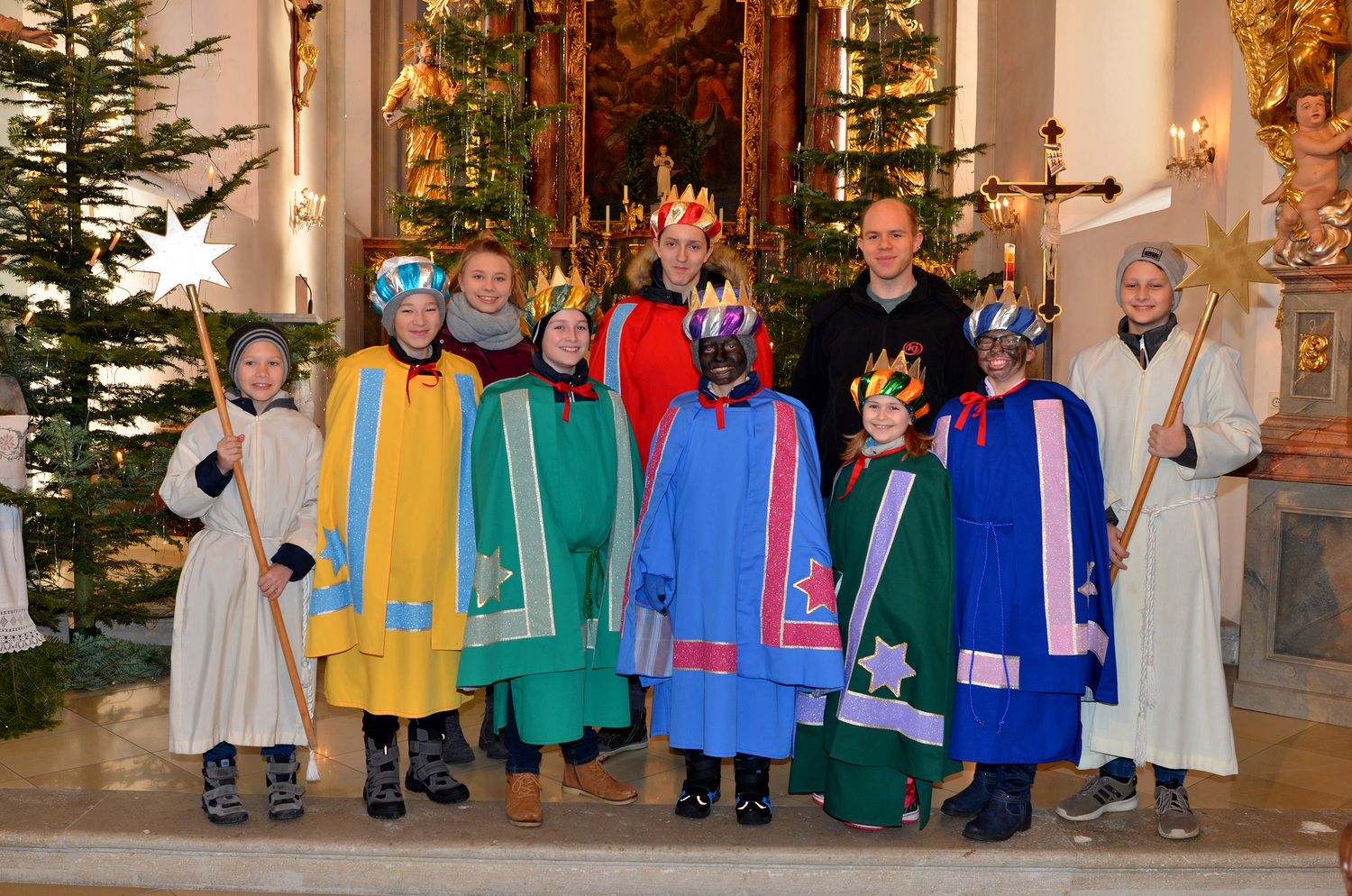
Did you know that the theater in the Western world, after it died out in ancient Greece and Rome, was brought back to life by the worship of the Church? The earliest medieval plays began as theatrical reenactments of Gospel passages of the day (Easter, Good Friday, etc). Epiphany had an “Office of the Star” tied to the liturgy of the feast and staged in the sanctuary of the church, but over time it grew out of hand. The character Herod was portrayed as a raging lunatic, overthrowing furniture and beating clergy and laity alike with a wooden stick. Church officials decided to ban the play from the sanctuary, at which point it moved outside and became a popular medieval entertainment. William Shakespeare remembered these plays from his childhood, before they were banned by England’s Protestant leaders. In Hamlet, the young prince declares that overacting “out-Herods Herod” (III.ii.13). Tamer versions of the medieval Epiphany play continue to exist in the German tradition of Sternsingen and the Spanish tradition of the festival of Los Tres Rejes.
Sternsingen 2019 (Blackface not recommended)
Blessing of Homes
An even older custom is the blessing of one’s home on the Epiphany. A priest comes to the house, sprinkles each room with holy water, and incenses them.
But the more common practice is the blessing of one’s house with chalk. At church the priest blesses chalk and sprinkles it with holy water, saying:
Bless, O Lord God, this creature chalk, that it may be salutary for mankind; and, through the invocation of Thy most holy name, grant that whoever obtains some of it or writes with it upon the doors of their home the names of Thy saints, Caspar, Melchior and Balthasar, may, through their intercession and merits, receive health of body and protection of soul. Through Christ our Lord. ℟. Amen.
The faithful then take the chalk home with them and write on the lintel of their doors the current year along with the letters C, M, and B, interspersed by crosses—e.g., 20+C+M+B+22.
Because it is a product of clay, chalk is a fitting symbol for the human nature assumed by the Word whose incarnation we celebrate this season. The year signifies the time that has elapsed since the Savior’s birth into human history, the crosses represent Christ Himself and the holiness of the Magi, and the letters represent the initials of the three kings: Caspar, Melchior, and Balthasar. These same letters can also stand for Christus mansionem benedicat—May Christ bless this house.
Blessing the home on Epiphany is appropriate. Just as the wise men visited the temporary home of the Infant Jesus and brought Him gifts of gold, frankincense, and myrrh (symbols of His kingship, divinity, and burial), so too do we pray that Christ may visit our temporary (earthly) home with gifts of grace and peace for ourselves and our guests.
Epiphany Carols
People are (or at least used to be) still in a caroling mood on Epiphany. One noteworthy custom is the star carol. From the fourteenth century to the Reformation, groups would go from house to house holding the Star of Bethlehem and announcing through song that they were the Magi telling of their adventures. The custom, which was a simplified form of the medieval Epiphany play, still exists in Austria and Bavaria (where it is called Sternsingen) and in Slavic countries.
We suspect that the author of the most popular Epiphany carol in the English language and perhaps the world was aware of this tradition. John Henry Hopkins, Jr. was rector of Christ Episcopal Church in Williamsport, Pennsylvania and the music teacher at the General Theological Seminary in New York City. For his final year of teaching at the seminary (1857), he wrote “We Three Kings” for a Christmas pageant they were having. Hopkins wrote both the music and the lyrics for the song which was rare: usually, the lyrics were written by one person and the tune by another. The carol also holds the honor of being the first Christmas-Epiphany carol from the United States achieving worldwide popularity: even the British and the French like it. The song aptly impersonates all three kings in the first verse, Melchior in the second, Balthasar in the third, and Caspar in the fourth, while the chorus praises the Christmas Star. By the time the carol is over, the singer or hearer knows who the three kings are, what gifts they brought, and what deeper meaning the gifts have. Written in the distinctive Aeolian mode, it smacks of music from the Middle Ages and Middle East. The first verse is:
We three kings of Orient are;
Bearing gifts we traverse afar,
Field and fountain,
Moor and mountain,
Following yonder star.
Gift-Giving
In Italy and Spanish-speaking countries, Epiphany rather than Christmas is the occasion for exchanging gifts. In Italy, the old woman Befana brings the presents; in Spanish-speaking countries, is the Magi.
Some cultures split the difference and exchange gifts on both Christmas and Epiphany. In French Canada, Epiphany was nicknamed “Little Christmas.” The practice of opening presents over a period of days makes sense, since children who open all their gifts in a mad frenzy on Christmas morning often become unappreciative and lethargic afterwards.
Befana, a corruption of the word “Epiphany,” gives gifts to children in Italy on her feast day
Blessing of Water
As we mentioned earlier, Epiphany also celebrates the Baptism of Jesus in the Jordan, which according to Catholic and Orthodox belief is the moment when Christ sanctified water, making it capable of communicating the grace of the sacrament of baptism. It is therefore customary to bless water on this day. The Roman Catholic Church has a traditional and elaborate blessing of water that takes place on the eve of Epiphany and requires, among other things, several exorcisms and infusing the water with a little salt.
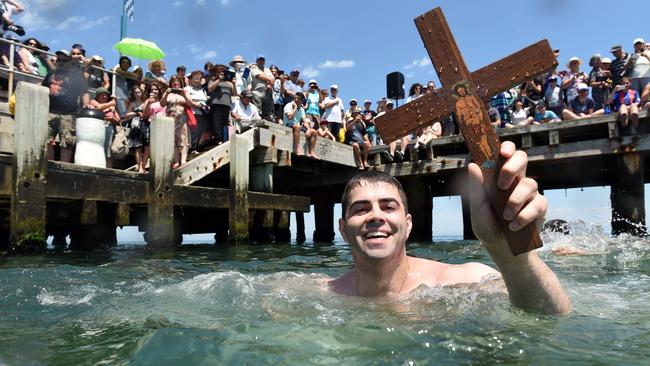
Other Christian churches use this occasion to bless natural bodies of water. In the Holy Land, after the River Jordan is blessed, thousands plunge themselves into the water three times to receive a blessing. In Egypt, the same thing traditionally happens in the Nile; locals also lead their domestic animals into the river for a blessing and dip their religious objects into the river for the same reason. After the priest blesses a body of water, he throws a cross into it. The men of the town then compete to retrieve it; the one who does has good luck for the year. And the blessing has the added advantage of driving away the Christmas demons. The Greeks also use occasion to bless their boats and ships.

Food and Drink
The signature food for Epiphany (or, sometimes, the night before) is King’s Cake. A small object is put in a cake. Traditionally, it was a coin; more recently, it is a small figurine of the Infant Jesus. Whoever finds the object in their piece of the cake is king of the merry party. In Austria, Germany, France, England, and Canada, the King’s Cake contained a bean and a pea; finding the bean made one a king while the pea made one a queen.
The custom was also tied to charity. In France a piece of cake was put aside “for our Lord” and given to a poor person. Another French tradition required each person to pay for his piece of cake. The money collected, called “the gold of the Magi,” would be given to the poor or to help pay for the education of a promising but disadvantaged youth.
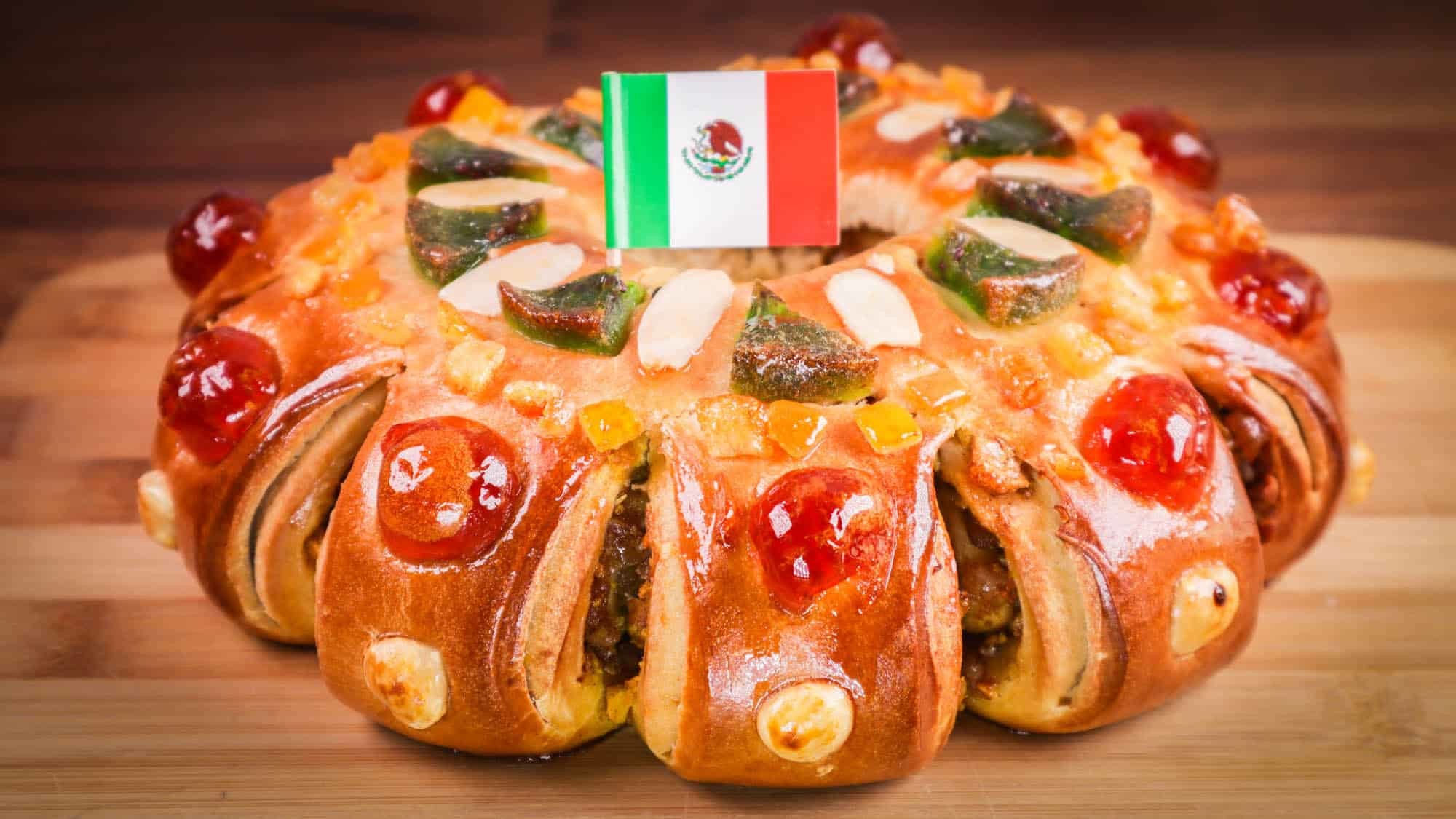
In Mexico, rosca de Reyes or Kings’ Day Bread is a wreath-shaped loaf with cinnamon, anise seed, vanilla extract, and dried fruit. The dinner guest who finds the Baby Jesus in his slice must make the tamales for the next gathering. A similar custom exists in Spain. Roscón de Reyes is a delicious oval, cream-filled pastry with a hidden bean and a surprise. Whoever finds the surprise gets good luck for the year; whoever finds the bean has to buy the next roscón.

More recent articles:

For more articles, see the NLM archives: