Tuesday, July 04, 2023

Book Recommendation: The Art Of Principled Entrepreneurship By Andreas Widmer

Aligning Business, Graced Creativity, Capitalism and the Common Good

Last week I wrote about the ‘graced imagination’ and its role in human supernatural creativity, based upon Thomas Aquinas’ description of the imagination. This week, I am discussing a book that describes one the most important human activities to which that supernatural creativity can contribute, the work of entrepreneurship.

The author of The Art of Principled Entrepreneurship, Andreas Widmer, teaches at the Catholic University of America business school, and is himself an experienced entrepreneur. This is not a dense book on business theory, but a readable description of a set of principles that govern good business, written to inspire entrepreneurs to follow their calling and contribute positively to society. It is well thought out and the writer clearly understands how what he describes is rooted in Catholic social teaching, and so, I suggest, a few open-minded intellectuals might learn something by reading this book.

This should be distinguished, incidentally, from the ESG (Environmental, Social and Governance) movement which is all the rage at the moment, and is presented a way of making business just, but in fact promotes the values of destructive revolutionary Marxism, destroying lives and the profitability of business. Principled entrepreneurship, in contrast, genuinely benefits all involved because it is directed to the common good.

Widmer first defines Principled Entrepreneurship, as that which maximizes the long term profitability of the business by creating superior value for customers while consuming fewer resources and always acting lawfully and with integrity. (Principled Entrepreneurship is a trade mark)

Then he sets out and explains the principles by which this ideal is achieved. These are his ‘Five Pillars’ :
  • The economy exists for people, not people for the economy
  • To work is to create, to create is to be human
  • Culture eats strategy for breakfast
  • Principled business creates win-win solutions
  • Always think like an entrepreneur.
These are understandable statements in themselves, but it is not apparent immediately to someone like myself who is not a natural businessman how they apply to business. Widmer does a good job of explaining their meanings and their application in real situations, so that we can relate the abstract principles to particular concrete situations. No one should be fooled, however, by the approachable, chatty style of writing that he is treating the subject superficially. On the contrary, his descriptions reflect a deep understanding of Catholic social teaching and years of experience in business.

The practice of doing business does not always receive good press (to put it mildly). While many recognise that without it we’d all be impoverished, those who are good at business are often assumed to be so because they are greedier than their competitors, and that their success is at the expense of others.

Consequently, the images that the words capitalism, business, industrialization, corporate culture, for example, conjure for many people are influenced by hundreds of years of Romantic, Socialist and Marxist critiques and false propaganda, which paints these activities as necessarily exploitative and destructive. So while the small-businessman, such as the street vendor, might be viewed positively, it is often assumed that the business executive or owner of a large business, must be resorting to exploitation and inducing misery for others, because they are assumed to be making more money. Bosses are by definition callous and smug crooks or fat cats, living comfortable lives separated from their workers or customers.

The Board Room, 1900, by Ferdinand Brutt
It is a human activity therefore that is intrinsically, at least partly evil. It must therefore be regulated by government, so the argument runs, to stop the more greedy and unprincipled from dominating the market, and from pushing competition from the principled and virtuous small businessman out of the market. If the businessman can redeem himself, it is only by being a philanthropist who gives his money to charity afterwards, or lowers prices out of charity to reduce profits.

This is a false picture. While it is certainly the case that there are bad people in business, the actual practice of creating and establishing a business is not an intrinsically evil pursuit, I would contend, and so would Andreas Widmer. Rather, it is more accurate to say that the ends to which it is directed reflect directly the intentions of those who run the business, for good or ill.

In that sense business is just like art - the artist can exercise his skill well or badly, but the practice of creating art does not naturally incline him in either direction. We might observe, for example, that most of the art schools in the country promote one or other iteration of Marxist ideology with their art, but that doesn’t make art intrinsically bad. It just makes for bad art. It is still worth becoming an artist and directing that calling to a Christian end.

Once we accept this premise, that doing business is an intrinsically good pursuit, this changes everything. Rather than being a necessary evil to be controlled by regulation, it becomes - as with any other natural human activity - one that might be a personal vocation and open to guidance by the grace of God. Supernatural creativity and the graced imagination can potentially guide its practice.

Considered in this way, the actual practice of doing business can be a virtue, just as the creation of fine art is a virtue. As a virtue, its practice can lead to joy and fulfillment in life as part of the Christian vocation. It is not a moral virtue, although it is a given that one cannot be virtuous if the moral law is broken. The principle of choice in this virtue is not the moral law, but rather the recognition of the greatest good, which is the most beautiful route forward. The more we become sensitive to the beauty around us and to beauty as a sign of the divine, the more we are inclined to take the more beautiful choices before us. This applies to businessmen as much as it does to fine artists, for all are called to the Way of Beauty.

This idea that the interests of business ( and capitalism in general) are in conflict with the good of society and ordinary people arises, it seems to me from what I would say are flawed conceptions of the common good and the love of self, that lead to the idea that the two are necessarily in conflict with each other. The question then is how to reconcile them in practice?. Some argue that the interests of the individual person must be subordinated to those of the common good, while others argue the reverse. Both are in error. Societies that are structured around these assumptions, I would argue, tend to either Godless tyranny or Godless anarchy (which in turn leads to tyranny) respectively.

A similar tension exists in the minds of many also between the right to private property and the common good, and this too is seen by some as two irreconcilable principles that require one to be compromised in order for any practical route forward to be attained. In this case private property is usually viewed as a necessary evil at best which must be restricted so that the common good is not compromised.

As a consequence of these errors of understanding, business is seen as an intrinsically selfish pursuit, at best a necessary evil and a bi-product of the Fall. The grasping businessman who is successful can only redeem himself by giving away his profits as a philanthropist.

Portrait of a Businessman, by Mikhael Vrubel; Russian, 19th century.
I hold to the view that there is no conflict between self interest, private property rights and the common good. In fact when each is understood properly (this is a topic too long for this blog today) all are perfectly aligned in God and for the good of all both collectively and personally. So in my understanding, what is in accord with the common good is best for me personally; and the right to private property is a necessary condition of a just society in which people are free to move to the common good. The common good, incidentally, is a metaphysical principle which is attained when we seek God.

This book by Andreas Widmer is grounded in what I believe is the correct understanding of the patterns of the relationships between private property rights, self-interest and the common good. The principled entrepreneur will, he explains, actually lead to a more successful business that is profitable and affects those who encounter it (whether as investor, worker or customer) spiritually and materially for the good.

It will, I hope, inspire those who have a vocation of work to adopt an entrepreneurial approach that is a graced, innovative and imaginative in their daily work. Even a cog in a corporate machine, can, in the vision of Widmer, become an entrepreneurially minded, creative influence for the good, inspired by God, who draws people to God.

One of the five pillars that he describes as being essential to the principled entrepreneurial mindset is: ‘to work is to create, and to create is to be human’. In the opening paragraph of the chapter he says:
When we work, we do not only make more, but we become more. The Principled Entrepreneur is primarily a creator - someone who pursues their excellence by creating value for others profitably. That value entails supporting others on the team in their pursuit of excellence and appropriately rewarding all stakeholders physically, mentally and spiritually. (p57)
Beautiful mass production! Wedgewood pottery in their factory in England
It is clear that for Widmer, being an entrepreneur is as much a creative pursuit for him as painting is for me. In fact, it might be even more so - I suspect that he is probably more successful as an entrepreneur than I am as an artist!
Port Sunlight in northern England. This is the workers village created for workers for the Lever Bros. Sunlight Soap factory, complete with the Lady Lever Art Gallery which contains the best collection of pre-Raphaelite art in the country.

Tuesday, December 13, 2022

The Beautiful Culture Speaks of Freedom, Love, and of Christ

The Christian connection between culture, conservative values, the common good and the natural law

In my post one week ago (entitled What is Culture), I described how a beautiful culture emerges through the loving interaction between the people in a society and their love of God. Now, love is by nature freely given (the moment we are compelled to love, it is no longer love!). Therefore, freedom - the freedom to love God and neighbor - is a necessary condition for a beautiful culture. 

What is freedom? Many feel that freedom is simply the absence of constraint and compulsion. That is part of it, but the traditional approach has a deeper understanding. We can define freedom in the traditional understanding as the capacity to choose the practicable best. For us to be in full possession of freedom and be able to choose the course that is best, therefore, three components must be present.

The first component is the absence of constraint or compulsion; the second is a full knowledge of what is best for us; and the third is the power to act in accordance with what is best. The good that is best for each of us in the context of a society is known as the ‘common good’. When we act in accordance with the common good, then we also do what is best for ourselves. In the proper order of things, the personal good and the common good are never in conflict with each other. The most obvious guides to seeking the common good are the moral law and the principles of justice as prescribed by Christ’s Church. All authentic and beautiful Christian cultures emerge from the freely taken actions of the members of a society toward the common good.

The Capitol Building, Washington DC. This building has become emblematic of America and American values

It is in the interest of a Christian society therefore, to promote freedom by a system of laws that are just, and so give security to the individual to act in accordance with the freedom to be moral and good. Such a system of laws would be directed to restraining people from interfering with the freedom of others. The state also encourages the formation of people through an education that will help them to know the common good. The state fulfils its role by enabling good teachers, and most especially parents as teachers of the children, to teach well. If these conditions are satisfied then I believe a culture of beauty will emerge organically from the bottom up. 

Analogously, and in regard to supporting the arts themselves, I believe that it is better to strive to create the conditions that promote the freedom to pursue art as a career, than to try to impose the elitist vision of what art ought to look like onto people from the top down. The freedom given to an artist in this context is understood as consisting of a knowledge of what sort of art might benefit society, and the skill and means to create it. A top down imposition of artistic standards almost always tends to restrict freedom, and so undermines the chance of creating an authentically beautiful culture.

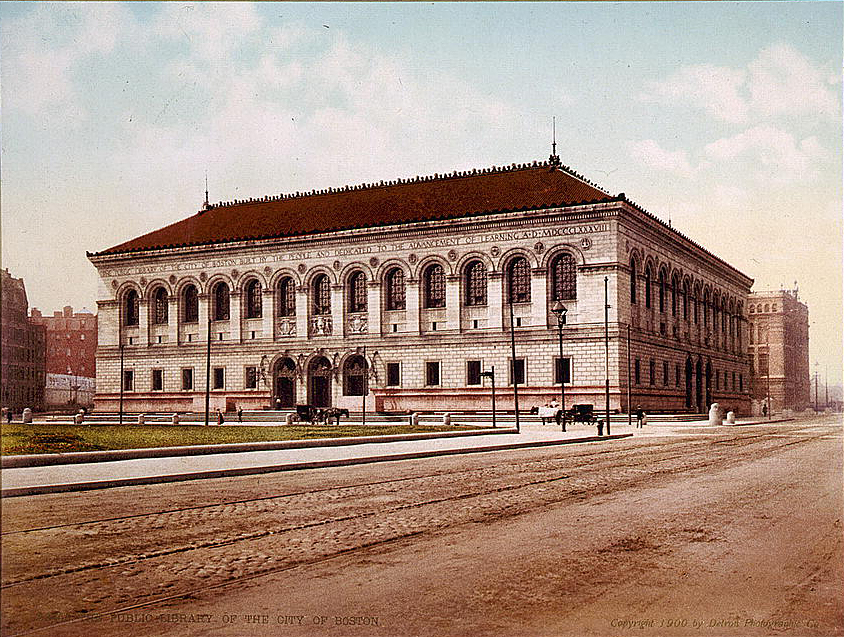
One might think that an exception to this rule would be those arts that are to be used directly by government, for example the design of civic buildings, for which government must, by necessity, be involved. However, even then the government ought to be mindful that it serves the people and does not direct them, and hence be aware both of tradition (the people of the past) and what most people want. Also, because architecture and public spaces have an impact on the whole community and not just those who occupy them, then the community that it will impact most immediately must have a say on the style of buildings. The authority that specifies such buildings must reflect the principle of subsidiarity as far as possible. A state Capitol building should reflect what the people of the state want and used to want, i.e. tradition, while the small city government would select the architecture for the town hall, reflecting what the neighborhood wants.

Boston public library

For example, the Hungarian government recently undertook a building program to replace the brutalist style of buildings built by communists in its capital Budapest with more elegant architecture. In the last 10 years, it has rebuilt or renovated in the style that is in accord with the traditional architecture of the city, and this has been a highly popular program. Furthermore, the level of tourism in the city has increased dramatically, with the new buildings being the attractions as much as the old.

Returning to our focus on the role of the state and its connection to culture: the pattern of positive law (those laws created by human government) of a society will inevitably be different from one nation to another, even for those nations that are seeking to create laws for all the right reasons. The truths of the natural law which inform positive law are eternal and universal principles; but this universality of the principles themselves does not mean that human society immediately and instantaneously comes to know and apply these principles universally, in all places, in exactly the same way. Human knowledge, like human society, must progress slowly, in stages, step-by-step, and organically, or else it is not a true “human society” at all. It does so through a process of trial and error, gradually seeing what works best. Therefore each society will take a different path towards this knowledge.

The good Christian society recognizes the difficulty of knowing fully, and applying well, the universal principles of the natural law, and thus the good Christian society seeks the aid of revelation, Tradition, and the experience of past laws to help guide reason. God revealed truths for two reasons, St Thomas Aquinas tells us, first because some truths are beyond the grasp of reason (for example, the Trinity, the Incarnation, the resurrection of the body); and second, God also revealed moral truths that, although part of the natural law and accessible to natural reason, would “only  be discovered by a few, and that after a long time, and with the admixture of errors.” (ST Ia Q1,1 co.) Arising from this there are two important reasons why the pattern of the exercise of freedom will be different from one Christian nation to another. First, principles that are understood well can still be applied in different ways by different societies without contravening those principles; and second, the knowledge or understanding of a principle is very likely not perfect or full and will vary from nation to nation, each thinking that it knows best.

Accordingly, different Christian nations are free to observe the experience of other nations, imitate  what is best in them, and adopt what is beautiful and good from them. This way, in the proper order of things, each nation is part of a family of distinct and autonomous nations, each helping each other to find what is best.

As mentioned in my earlier post, a culture is a sign of the core values of the society that produces it and as such it is beautiful to the degree that it is Christian. This is true even in those societies or countries that would not think of themselves as Christian. An Islamic nation, for example, has a beautiful culture to the degree that its culture is consistent with an expression of the Christian truths, even when those truths are communicated to them by the Koran.

Further, it is the Christian characteristics of different cultures that connect them to each other; and it is the different national expressions of that Christian faith manifested in characteristic patterns of loving interaction and free behaviour that distinguish different Christian cultures from each other.

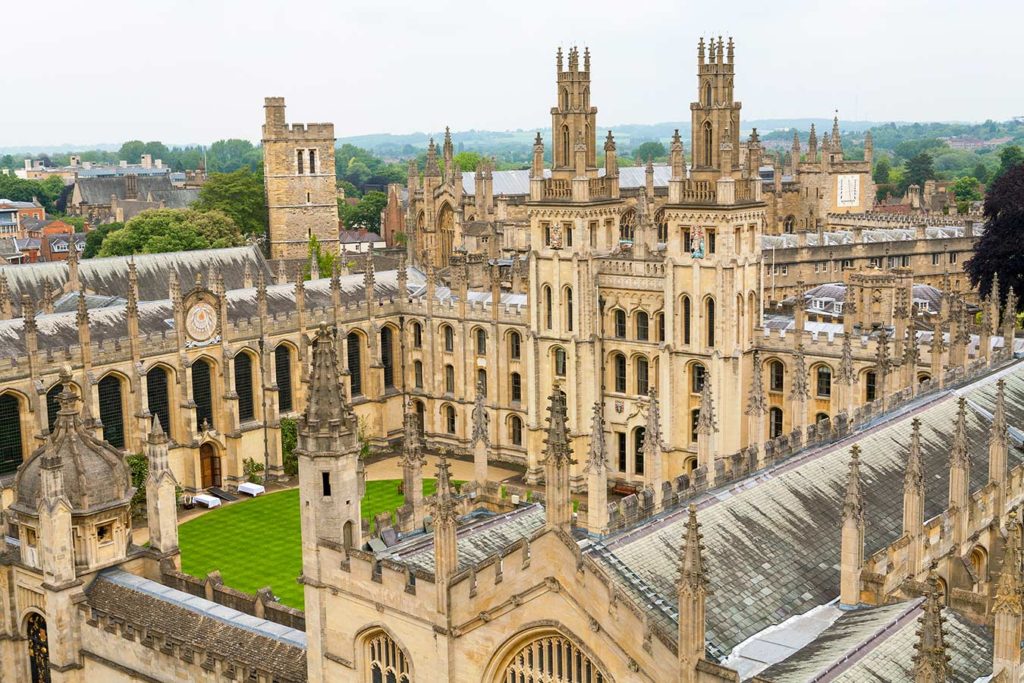
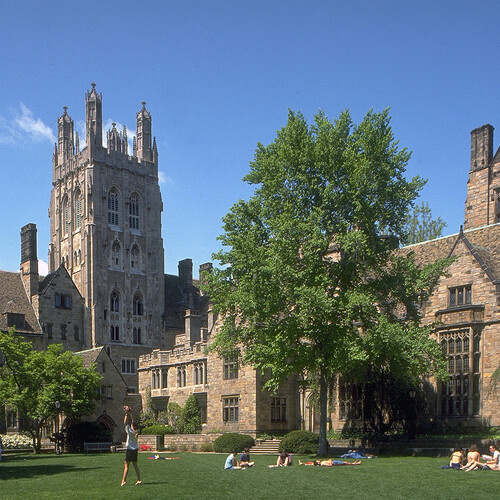
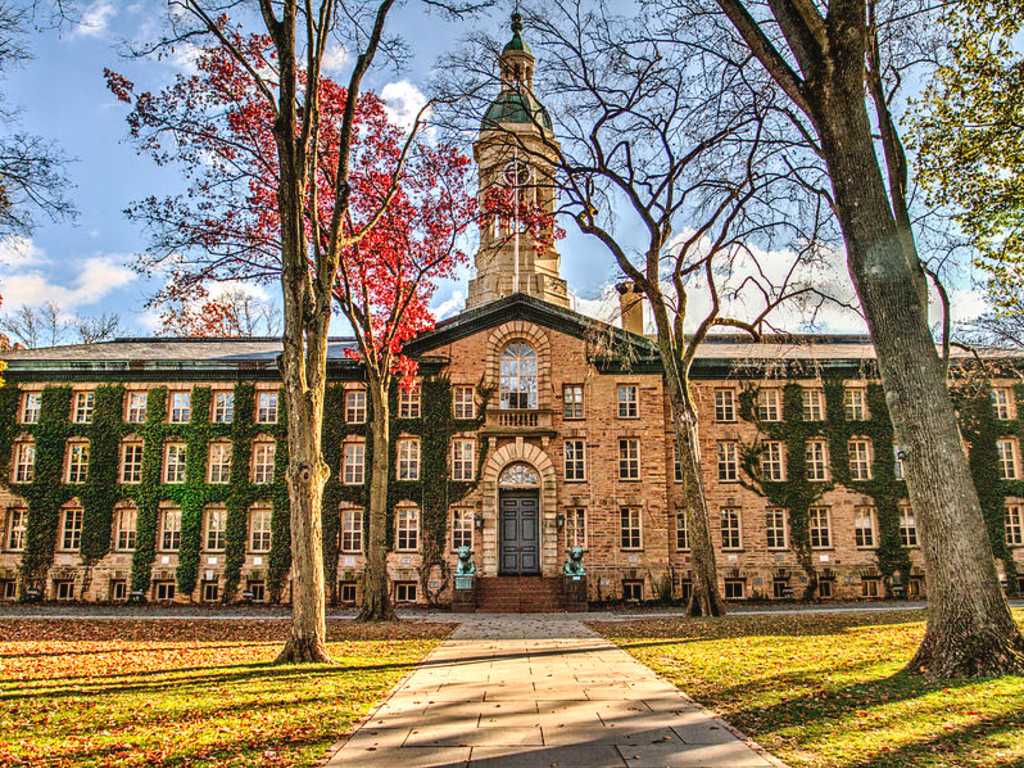
So for example, historically, the United States began as a nation that adopted and then adapted a system of law from the English constitutional tradition. The English constitutional tradition is a system of laws, rooted in Christian values, yet expressed in a characteristically English way that is quite different from, for example, that of its neighbor France. In time the American system of law developed its own national characteristics, while still owing much to its English beginnings, but now expressing it in a characteristically American way. If American culture is to be transformed into one of beauty it will be one that asserts the importance of America as a distinct nation with characteristic values that are simultaneously Christian and of a particular American-English expression. As such one would expect to see similarities to English culture in American culture. It is no accident for example, that in the latter part of the 19th century and early 20th century, American churches and universities were modeled on the English neo-gothic style. They even hired English architects to build them, but quickly an American character emerged from these, and so while we can see the similarities between Princeton and Oxford universities, one reflects America while the other reflects England. All this was before the decline of culture in both America and England, which took hold strongly after the Second World War, and by which both nations lost a sense of the importance of the Christian faith to the defining principles of their nations, and the principles of common law that underlay each.

Oxford
Yale
Princeton

The task of transforming the culture in our country, America, then, is clearly one of evangelization. We hope for and work towards a society in which the culture’s ordering principle is the transfigured Christ. And people must be aware again of what that looks like in America. This latter aspect requires more than an understanding of the principles of the American constitution. It requires an appreciation also of the cultural mileau from which it emerged and a love for it.

Tuesday, December 21, 2021

Scala Foundation - Playing a Crucial Role in the Evangelization of the Culture and Breaking the Mould of Education

Attend the spring conference: Art, the Sacred, and the Common Good, at Princeton, NJ, April 30th, 2022. Free to register and attend.

I want to highlight the work of Margarita Suarez Mooney who is the founder and CEO of the SCALA Foundation (named from the Latin word for ladder). The Scala Foundation’s mission is to renew American culture by restoring beauty and wisdom to the liberal arts. Scala’s seminars, reading groups, conferences, summer programs, and online resources help educators and culture creators engage the millennia-old tradition of liberal arts education and its power to form virtuous, purpose-driven citizens, form young leaders who are pivotal agents of cultural renewal, and build communities of like-minded cultural entrepreneurs and magnify their impact.

Some may remember that I recently spoke on the Scala webinar, listen here. She has also invited me to be on a panel for the SCALA 2022 conference - Art, the Sacred, and the Common Good - in Princeton NJ this April, which is free to attend.
The focus of Scala is in creating creative communities at a local level that are able to contribute to Catholic education locally and to the culture through the creation of art, music, literature etc (eg she organizes writers' workshops).
It occurs to me that Scala is offering programs that complement formal online education, such as that offered by www.Pontifex.University, where I work, and when the two approaches to student formation are combined offer a genuine opportunity. The zoom revolution that has happened as a result of Covid has opened up people’s minds to the idea of online education.
The advantages of this are that high-quality and standardized educational material can be delivered at a fraction of the cost of the traditional on-campus experience. However, I am conscious that providing community of learning - so important in education - is the weakness of online education and while things are improving, it is clear that Facebook pages and chatrooms don't fill the gap. This is where Scala comes in. They are guiding educators and artistic creatives who can contribute to a culture of beauty to form communities locally.

I am encouraging our Pontifex students to attend and participate the conferences and events and meet each other, (and me if they are interested!) so that they might be inspired to start to form communities with each other locally under Scala's guidance. It is these local communities, it occurs to me, which might be portals for grace and love that can transform the culture.

More recent articles:

For more articles, see the NLM archives: