
I am sure that by now, most of our readers have heard about the document circulated by His Eminence Arthur Cardinal Roche, prefect of the Dicastery for Divine Worship, during the recent consistory of all the cardinals called by Pope Leo. It was published yesterday on the Substack of Diane Montagna, who is also, I am sure, well-known to our readers as one of the best reporters on Church-related matters in Rome. Within a few hours of its publication, I had a message from Peter saying that it needs a thorough fisking; this was done immediately, and very ably, as always, by Fr Zuhlsdorf, and likewise, by Dr Gavin Ashenden and Dr Joseph Shaw. I thank them all for sparing me the necessity of doing it myself, and strongly recommend their commentary to all our readers.
But there are a few things about the text which I found striking, and on which I make bold to offer some commentary of my own.The document begins with the general premise that “the history of the Liturgy ... is the history of its continuous ‘reforming’ in a process of organic development.” This is the kind of statement for which the legal term “suppressio veri” (suppression, i.e. omission or concealment, of something which is true) was invented. Because while it is true that there have been many reforms in the history of the liturgy, it is also true that the history of the liturgy is a history of strong continuity, as His Holiness Benedict XVI reminded us time and time again. And it was precisely the savage rupture in this continuity within the Roman Rite, brought about by the post-Conciliar reform, that moved him to issue Summorum Pontificum as a necessary step towards healing that rupture.
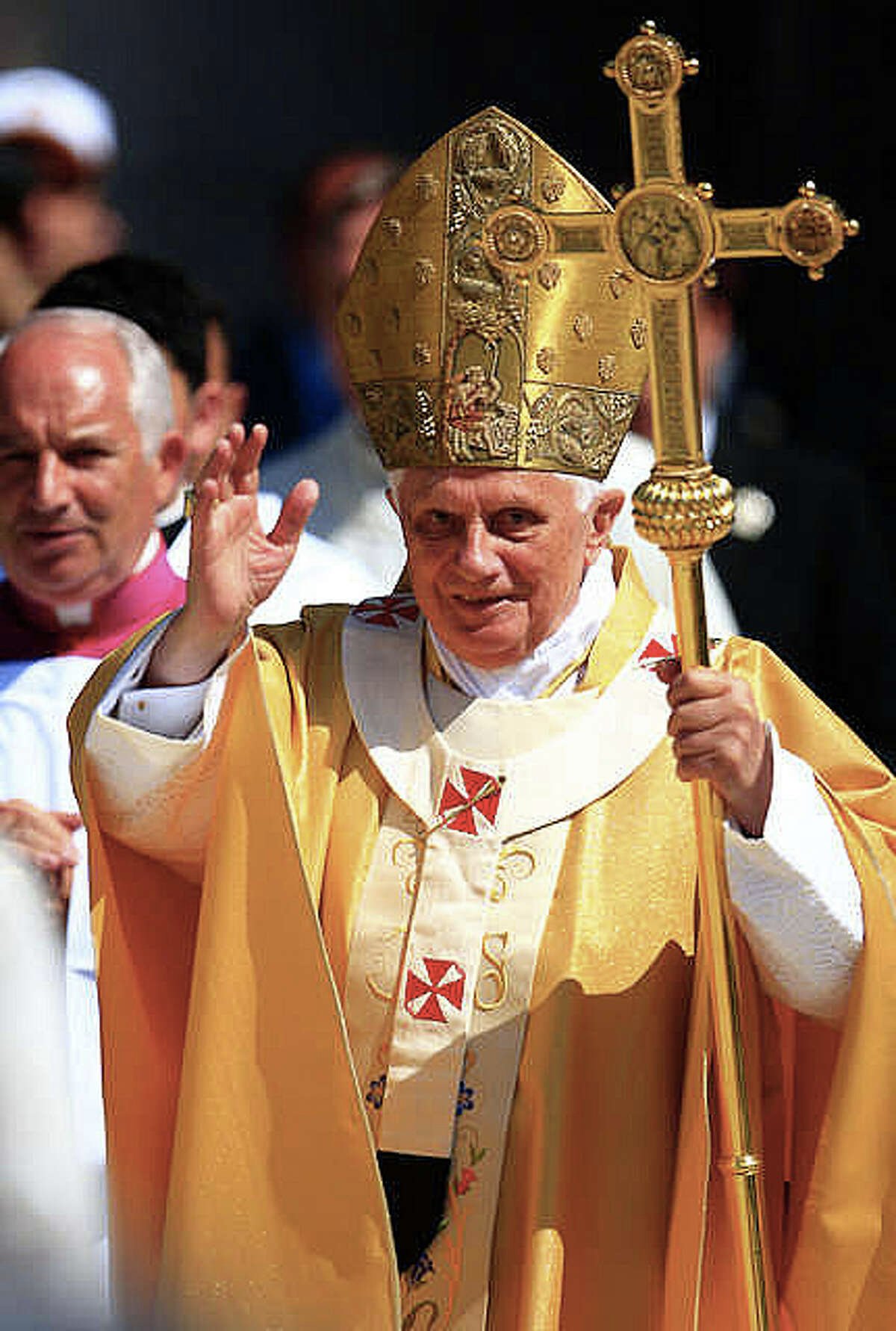
“(Summorum Pontificum) gives rights to the ordinary faithful and to priests which must be respected by those in authority. The Holy Father is aware that in different places around the world many requests from priests and lay faithful who desired to celebrate according to the ancient rites were often not acted upon. That is why he has now authoritatively established that to celebrate according to the more ancient form of the liturgy – the Holy Sacrifice of the Mass as well the sacraments and other liturgical rites – is a juridical right, and not just a privilege, accorded to all.
Certainly this must be done in harmony with both ecclesiastical law and ecclesiastical superiors, but superiors also must recognise that these rights are now firmly established in the law of the Church by the Vicar of Christ himself. It is a treasure that belongs to the whole Catholic Church and which should be widely available to all of Christ’s faithful. (my emphasis) This means that parish priests and bishops must accept the petitions and the requests of the faithful who ask for it and that priests and bishops must do all that they can to provide this great liturgical treasure of the Church’s tradition for the faithful.”
 |
| Cardinal Hoyos preaching during a Mass celebrated in the Sacrament chapel of St Peter’s Basilica in November of 2011. |
Can he have forgotten statements from Pope Benedict himself such as this one, that he issued Summorum Pontificum to favor “... the unity of the Church with itself, in its interior, with its past; that that which was holy for Her before should not be in any way an evil now”? How could this possibly be, if it were not his intention to promote the continued use of the traditional liturgy? Can he have forgotten that St John Paul II urged the bishops to a “wide and generous application” of the permission to celebrate the traditional liturgy under the Ecclesia Dei indult?
Perhaps he can, and far be it from me, of course, to suggest that His Eminence, in writing and circulating this document during a consistory, was trying to persuade his fellow Eminences of things he himself knows to be untrue. At the same time, as we pray that His Eminence recover from whatever injury or illness has compromised his memories of the previous pontificate but one, we may trust that such specific lapses of memory are rare, and it is unlikely that any other Eminences suffer from them.
This Ratzinger-specific lapse of memory would also explain how His Eminence has managed to forget the interview which he himself gave last year in which he repudiated TC, and admitted that Pope Benedict had been right all along. For example, he said (this is a direct quote), “There is nothing wrong with attending the Mass celebrated with the 1962 missal.” This was, of course, the very point which Pope Benedict himself made in his letter to the bishops of the world accompanying Summorum Pontificum, one of his most famous quotes, because one of his wisest: “What earlier generations held as sacred, remains sacred and great for us too.”
This repudiation of TC was, of course, hardly surprising, and not only because by March of last year, it was obvious that there would soon be a new sheriff in town. As His Eminence has cause to know better than most, from the day it came out, its apologists have struggled to explain why it was in any way necessary or beneficial to the Church. At the time of last year’s interview, he made no mention whatsoever of the original and unapologetically specious justification of it, the threat of a looming schism. In his telling, “(w)hat Pope Francis said in Traditionis Custodes is that (the traditional rite) is not the norm.” Again, this was the very same point that Pope Benedict himself had made by calling the traditional Roman Rite, “the Extraordinary Form.” And indeed, His Eminence downplayed the problem of the supposedly looming schism by stating that “The numbers devoted to the Traditional Latin Mass are, in reality, quite small, ...”
And yet, he is clearly back to being very, very worried about them. The post-Conciliar Rite holds a near total sway in the Roman part of the Catholic Church, the part which outnumbers all the other parts combined by well over 1¼ billion members. But as long as there are any faithful left who cling to the traditional rite, the unity of the Faith and of the Church are in mortal danger. And therefore, His Eminence reminds his fellow Eminences that “Pope Francis ... pointed the way to unity in the use of the liturgical books promulgated by the holy Popes Paul VI and John Paul II, in accordance (sic) with the decrees of the Second Vatican Council, the sole expression of the lex orandi of the Roman Rite.”
 |
| Dangerous counter-revolutionaries threatening the unity of the Faith! |
The Church has paid an appallingly steep price for this rejection. Earlier in his document, His Eminence quotes Pope Francis quoting the opening paragraph of SC, and calling them “words which do not cease to enthuse.” Paraphrasing slightly, the late Pope stated, “They are objectives that describe a precise desire to reform the Church in her fundamental dimensions: to make the Christian life of the faithful grow more and more every day; to adapt more suitably to the needs of our own times those institutions which are subject to change; to foster whatever can promote union among all who believe in Christ; to reinvigorate that which serves to call all to the bosom of the Church (cf. SC I).”
None of this has happened. The post-Conciliar revolution has not made the Christian life of the faithful grow more and more every day. It has not made the Church’s institutions more suitable to the needs of our times. It has not fostered whatever can promote union among all who believe in Christ. It has not reinvigorated that which serves to call all to the bosom of the Church.
 |
| When does this start? |
And sooner or later, some very hard questions will have to be asked at these events. There are now only four bishops alive who were at Vatican II; the youngest of them, Francis Cardinal Arinze (another of His Eminence’s predecessors at Divine Worship) is 93. So one of those questions might well be, “Whom does the opening paragraph of Sacrosanctum Concilium ‘still enthuse’?” Another might well be, “Whom does the statement ‘there must be no innovations (in the liturgy) unless the good of the Church genuinely and certainly requires them’ ‘still enthuse’?”, or, harder still, “Did it ever really enthuse anyone?”
The asking of such questions is a necessary first step to getting over the enthusiasms of the post-Conciliar revolution, and redressing its many failures. Let us pray unceasingly that the Holy Father and the cardinals have the courage to take it.




