
Friday, July 04, 2025

The Preface

Lost in Translation #130

The 1962 Missal contains twenty Prefaces (including the five so-called Gallican Prefaces added by Pope St. John XXIII in November of that year), but it may be more accurate to say with Abbé Claude Barthe that the Roman Rite has one Preface with twenty different options, just as there is one Roman Canon with different versions of the Communicantes and Hanc Igitur. [1]

The Opening
The opening of the Preface is almost always the same:
Vere dignum et justum est, aequum et salutáre, nos tibi semper et ubíque gratias ágere, Dómine sancte, Pater omnípotens, ætérne Deus:
Which I translate as:
It is truly meet and just, right and salutary, that we should at all times and in all places, give thanks unto Thee, O holy Lord, Father almighty, everlasting God;
The two exceptions are the Preface for Easter and the Preface for the Apostles or Evangelists. The former bespeaks the sheer exuberance of Paschaltide:
It is truly meet and just, right and salutary, that at all times, but more especially on this day [or in this season], we should extol your glory, Lord, when Christ our Pasch was sacrificed:
The Preface for the Apostles is more unusual in that it addresses God the Son rather than God the Father:
It is truly meet and just, right and salutary, to pray humbly to You, O Lord, eternal Shepherd, not to desert Your flock but to keep it in continual protection through Your blessed Apostles…
Together all the Prefaces declare that giving thanks to God everywhere and always, that extolling God’s glory, and that humbly praying to God have four qualities in common: they are dignum et justum, aequum et salutare. Since we discussed dignum et justum last week, let us now turn to aequum et salutare.
Aequus, which is etymologically related to “equality” and “equity,” originally referred to an area that was level or even, and because it was level or even (as opposed to steep or bumpy), it was considered favorable or advantageous. Applying this notion to the realm of morality, to be aequus was to be even-handed, fair, equitable, and impartial. From this understanding there developed the formula aequum est plus an infinitive verb, the meaning of which is “it is reasonable, proper, right, etc.” [2]
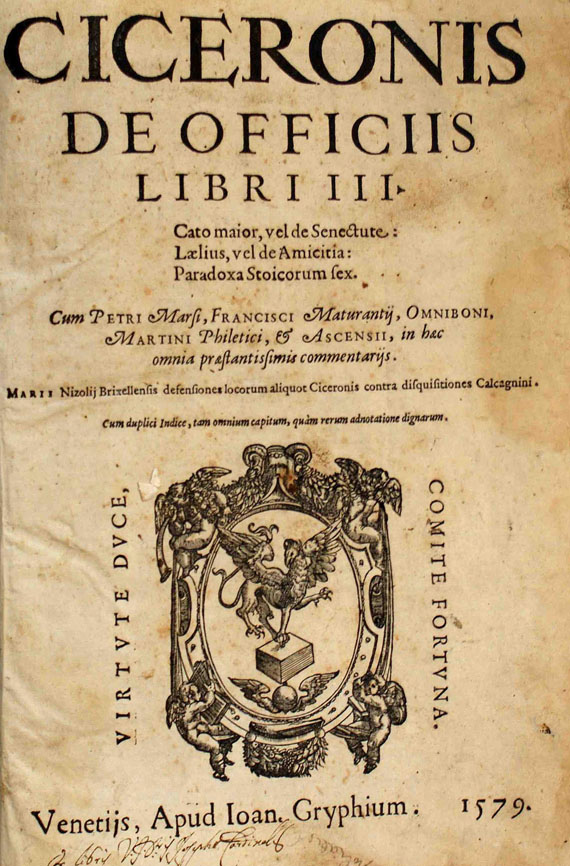
It seems that the claim of the Preface is that giving thanks to God is both morally correct and very much to our advantage. Of course, one can argue that the two are one and the same: to be just is to act to one’s true advantage and vice versa. Such is the thesis of Cicero’s classic De officiis, with which Catholic moral theology is in agreement. Nevertheless, the two ideas are distinct. It seems to me that the Preface uses two words to denote advantageousness and two words to denote moral correctness, and that it arranges these words chiastically:
To say that giving thanks to God is dignum is to say that it is worth our while; and to say that it is salutare is to say, as several preconciliar hand missals do, that it is “profitable for our salvation.” These concepts of advantage appeal to our enlightened self-interest, if you will.
Justum, on the other hand, clearly invokes justice, and I believe aequum plays a similar role in affirming the moral rectitude of thanksgiving. I therefore side again with the preconciliar hand missals when they translate aequum as “right.” The new Missal’s 2011 English translation of aequum also acknowledges the moral connotation of aequum here, but I believe it goes too far by translating it as “our duty,” for not everything that is right is a duty (it may be right for me to have a glass of wine with dinner, but it is not a duty). Similarly, I contend that the new translation of salutare as “our salvation” goes too far, for our salvation and something that contributes to our salvation are not the same thing.
The Ending
The majority of Prefaces end with sine fine dicentes (“saying without end”) while six, including the Gallican Preface for All Saints’ Day, end with supplici confessione dicentes (“saying with suppliant confession”). Only one, the Preface for the Holy Trinity, ends with una voce dicentes (“saying with one voice”), but since this Preface is used during the Time after Epiphany and the Time after Pentecost, it is the one heard the most by the average Latin Mass goer.
It is curious that the Preface, which was composed to be sung and which sometimes includes images of the congregation and the Angels singing together, ends with dicentes, speaking or saying. It is a reminder that the Latin verb dico can also mean “To describe, relate, sing, celebrate in writing.” [3] This usage is mostly found in poetry, which fits the lyrical quality of the Preface.
Claude-Marie Dubufe, La Suppliante, 1829
Of the various endings, supplici confessione dicentes, which I have slavishly rendered “saying with suppliant confession,” is the most difficult to translate. Most preconciliar hand missals have “with lowly praise” while the 2011 English translation of the new Missal has “in humble praise.” “Praise” is not wrong, but it is incomplete. For the early Church, confessio meant three things: praise of God, accusation of self, and profession of faith. There is, then, a slightly dolorous note to confessio insofar as it involves a recollection of our sinfulness, and this dolorous note, I believe, is reinforced by the adjective supplex: from sup-plico, bending the knees.
On the other hand, the dolorous note may not be the dominant one since supplici confessione dicentes is used on joyful occasions such as the feasts of the Blessed Virgin Mary and of Saint Joseph, and it is also found in the Common Preface. The phrase is not found in the Preface for the Dead (where one might expect it), but it is found in the Preface for Lent and the Preface for the Holy Cross, which is used during Passiontide. Liturgical context may therefore be the deciding factor as to which meaning of confessio should be in the foreground. For instance, on a feast of the Blessed Virgin Mary, it may be more proper to translate confessio as “praise,” while during the season of Lent it may be more proper to translate it as “confession.”
Notes
[1] Claude Barthe, Forest of Symbols: The Traditional Mass and Its Meaning, trans. David J. Critchley (Angelico Press, 2023), pp. 97-98.
[2] Lewis and Short Latin Dictionary (Clarendon Press, 1879), “aequus,” II.B.3, p. 58.
[3] Lewis and Short Latin Dictionary, “2. dico,” I.B.4, p. 571.
[4] The Roman Missal, 3rd edition (USCCB Publishing, 2011), p. 552.

Sunday, June 02, 2024

Other Readings for the Octave of Corpus Christi

The Roman Rite has various ways of arranging the Masses during an octave. That of Easter, for example, has a completely proper Mass for every day, that of Pentecost for every day but Thursday, which was originally an “aliturgical” day; when its Mass was instituted later, it was given proper readings, but everything else is repeated from Sunday. The feast of Ss Peter and Paul is continued with one Mass for the days within the octave, and another for the octave day itself, plus the special Commemoration of St Paul on June 30th. Some others, however, especially the relatively late ones like Ascension and All Saints, simply repeat the Mass of the day throughout the octave.

Folio 87r of the 9th century Lectionary of Alcuin, showing the Epistle then in use for the Octave of Ss Peter and Paul, Galatians 2, 6-10.
Corpus Christi, originally instituted in the mid-13th century, and slow to be received in many places, falls into the latter category, although the Mass of the Sunday within the octave, which is much older than the octave itself, is different. Octaves are for the contemplation of mysteries that are too great for a single day, and it is certainly true that “repetita juvant”, a proverb which the Roman Rite, with its habitual conservatism, historically took very much to heart.

In the mid-17th century, most of the churches of France began revising their liturgical books on their own initiative, and without reference to the authority of the Holy See, as part of the liturgical movement which we now often call “neo-Gallican.” Paris was, of course, one of the leaders of this trend, and the first See of importance to change the order of the Breviary Psalter, which would later become the model for the reformed Psalter of St Pius X.

When the first neo-Gallican Parisian Missal came out in 1685, the Mass of Corpus Christi remained unchanged. However, the Mass for the Sunday within the Octave was extensively revised to make it fit in more with the theme of the feast. (The neo-Gallican revisers were very fond of easily grasped themes.) The 1602 Paris Missal has the same Epistle as the Roman Rite, 1 John 3, 13-18; the 1685 Missal changes it to 1 Corinthians, 10, 16-21, principally because of the opening words, “The chalice of benediction, which we bless, is it not the communion of the blood of Christ? And the bread, which we break, is it not the partaking of the body of the Lord? For we, being many, are one bread, one body, all that partake of one bread.” This is clearly very suitable for Corpus Christi, and in fact provides the text for a responsory of the feast which was composed by St Thomas, and found in almost every liturgical Use apart from the Roman. The Gospel, Luke 14, 16-24, beginning with the words “A certain man made a great supper, and invited many,” is left unchanged for obvious reasons.

If one Archbishop of Paris could arrogate to his office the right to re-edit the liturgical books used in his See without reference to the Roman authorities, there was no particular reason why subsequent Archbishops should not avail themselves of the same right. Consequently, the liturgical books of Paris went through multiple revisions between 1680 and their definitive abolition in 1873. The most momentous of these were the editions of Abp Charles de Vintimille, the Breviary of 1736, and the Missal of 1738.

The frontispiece of the 1685 Parisian Missal; conspicuously absent are the words “ad formam sacrosancti concilii Tridentini emendatum – emended according to the form (laid down by) the sacred council of Trent.”
This newer revised Parisian Use is in many respects inspired by tradition, but did not shy away from innovations, which vary in quality; in regard to the Mass lectionary, it retained the traditional two-reading structure, while expanding the corpus of readings considerably. For the octave of Corpus Christi, a separate pair of readings is provided for each day; the Sunday readings of the 1685 Missal are retained as part of the series.

Friday: Genesis 14, 17-20 – Matthew 26, 26-29
Saturday: Exodus 12, 1-11 – Luke 22, 7-20
Sunday: 1 Corinthians 10, 12-21 – Luke 14, 16-24
Monday: Exodus 16, 13-18 – John 6, 27-35
Tuesday: Wisdom 16, 20-28 – John 6, 41-44
Wednesday: 2 Corinthians 6, 14 - 7, 1 – John 6, 51-55
Thursday: Hebrews 7, 18-28 – John 6, 58-70

The first two of the added Gospel readings are taken from Matthew’s and Luke’s accounts of the Institution of the Eucharist; a parallel passage from St Mark (14, 17-25) is added to the readings assigned for the Votive Mass of the Blessed Sacrament. The four Gospels from John 6 (Monday to Thursday) give a broader selection from the long passage known as the Eucharistic Discourse, ending with St John’s account of St Peter’s confession. “Then Jesus said to the twelve: Will you also go away? And Simon Peter answered him: Lord, to whom shall we go? thou hast the words of eternal life. And we have believed and have known, that thou art the Christ, the Son of God.”

Christ Giving the Keys to St Peter, by Perugino, 1482; Sistine Chapel, Vatican City. The background on the left represents Christ speaking to the people at Capharnaum in John 6; on the right, the figures that seem like they are dancing are actually trying to stone Him, in response to some of the sayings like “Except you eat the flesh of the Son of man, and drink his blood, you shall not have life in you.” In the foreground, St Peter is rewarded for his confession of Christ.
The passage from Genesis 14 tells of the bread and wine given to Abraham by Melchisedech, the king of Salem, after the defeat of the five kings. These have been taken from the most ancient times as a symbol of the elements of the Eucharist, as described by St Cyprian in the Matins readings of Tuesday within the octave. “In Genesis, therefore, in order that the blessing might in due order be pronounced upon Abraham through the priest Melchisedech, there was first offered the image of the sacrifice, consisting of bread and wine. And the Lord, completing this and perfecting it, offered bread and a cup of wine mingled with water; and He that is the fullness fulfilled the truth of that which was prefigured.” This is also, of course, why Melchisedech is mentioned in the Canon of the Mass.

Of the two readings from Exodus, the first is repeated from Good Friday, describing the preparation of the Paschal Lamb; the second is the instruction given to the children of Israel about collecting the manna in the desert. These were certainly inspired by the citation of the same passages in the first two Matins responsories of St Thomas’ Office for Corpus Christi.

The second half of the book of Wisdom (from verse 10, 16 to the end) is a long meditation on the events of the Exodus; the passage given above for Tuesday also refers to the manna with which God fed the children of Israel in the desert, and to which Christ and His interlocutors refer in John 6. The words of verse 20, “Thou gavest them bread from heaven ... having in it all that is delicious”, are the versicle of Vespers of the feast, and also sung at Benediction.

The Wednesday Epistle from St Paul is included here as an admonition on the proper disposition for reception of the Sacrament: “You are the temple of the living God... Having therefore these promises, dearly beloved, let us cleanse ourselves from all defilement of the flesh and of the spirit, perfecting sanctification in the fear of God.” That of the Octave day speaks of the worship of the New Covenant as “a setting aside of the former commandment.” This passage is perhaps also chosen for Corpus Christi as a deliberate rebuke or challenge to the Calvinists (by far the most prominent group of Protestants in France), who often cited the words of verse 27, “Who needeth not daily (as the other priests) to offer sacrifices first for his own sins, and then for the people’s, for this He did once, in offering Himself”, against the Catholic doctrine of the Sacrifice of the Mass.

The neo-Gallican revisions made a number of very bold changes to the Missal; it was a common preoccupation of the revisers that original liturgical compositions should be replaced with Scriptural quotes, but St Thomas’ Mass for Corpus Christi was already mostly Scriptural anyway, and was therefore left alone in 1685. (Their great enemy of the movement, Dom Prosper Guéranger, speaks of these changes, with classic French délicatesse, as “Honteuses et criminelles mutilations, témérités coupables – shameful and criminal mutilations, rash acts deserving of condemnation.”)

St. Thomas Aquinas in Glory among the Doctors of the Church, by Francisco de Zurbarán, 1631
One change was then made to it in the Missal of 1738, by replacing the original Communio, “As often as you shall eat this Bread and drink the cup, you proclaim the death of the Lord, until He comes. Therefore whoever eats this Bread or drinks the cup of the Lord unworthily, will be guilty of the Body and Blood of the Lord. Alleluia.” Anticipating one of the more inexcusable changes made by the Novus Ordo lectionary, this is replaced by an exact quote of Wisdom 16, 20, “Thou didst feed thy people with the food of angels, and gavest them bread from heaven prepared without labour; having in it all that is delicious, and the sweetness of every taste.”

The Missal of 1738 has a few other interesting things to note in regard to Corpus Christi. The first is that during the Sequence Lauda Sion, the verse “Ecce panis Angelorum” is sung three times on the feast day itself, and on the octave, but only once on the days within the octave. The celebrant and the major ministers kneel when it is sung, while the members of the choir “face the altar until the end of the Sequence.”

Abp de Ventimille also added to the Parisian Missal new prefaces for Advent, Holy Thursday (also said at votive Masses of the Sacrament), Corpus Christi, All Saints (also said on the feasts of Patron Saints), Saints Denys and Companions, and for Masses of the Dead. When the neo-Gallican Uses were gradually suppressed over the course of the 19th century, some of their features were retained by being incorporated into the French supplements “for certain places” in the Roman liturgical books, these prefaces among them. The 2020 decree Quo magis gives universal permission to use those of All Saints and Patron Saints, the Dedication of a Church, and Corpus Christi; the text of the last is as follows:
“VD: per Christum Dóminum nostrum. Qui, remótis carnalium victimárum inánibus umbris, Corpus et Sánguinem suum nobis in sacrificium commendávit: ut in omni loco offerátur nómini tuo, quae tibi sola complácuit, oblatio munda. In hoc ígitur inscrutábilis sapientiae, et immensae caritátis mysterio, idipsum quod semel in Cruce perfécit, non cessat mirabíliter operári, ipse ófferens, ipse et oblatio. Et nos, unam secum hostiam effectos, ad sacrum invítat convivium, in quo ipse cibus noster súmitur, recólitur memoria Passiónis eius, mens implétur grátia, et futúrae gloriae nobis pignus datur. Et ídeo... –

The high altar of the basilica of San Lorenzo in Lucina in Rome. In the magnificent painting over the high altar, The Crucifixion by Guido Reni (1575-1642), the body of Christ is pale and white against a much darker background, a reminder of the Elevation of the Host during the Mass. The effect can be seen even when one is standing outside the church in the piazza. (Image from Wikimedia Commons by Rabax63, CC BY-SA 4.0)
Truly it is worthy... through Christ our Lord. Who, the vain shadows of carnal sacrifices being removed, entrusted to us His Body and Blood as a sacrifice; that in every place there may be offered to Thy name that pure sacrifice that alone hath pleased Thee. Therefore, in this mystery of unsearchable wisdom and boundless charity, that very thing which He completed once in the Cross ceaseth not wondrously to have effect, He himself being the one who offers and the offering. And He inviteth us, who are made one victim with Him, to the sacred banquet, in which He himself is received as our food, the memory of His passion is recalled, the mind is filled with grace, and the pledge of future glory is given to us. And therefore with the angels and archangels ...”

When the Parisian Missal of 1738 was issued, the feast of the Sacred Heart had not yet been formally approved by Rome, or accepted outside a few religious orders; however, this Missal did fulfill one aspect of the requests made by the Lord to St Margaret Mary Alacoque in His appearances to her. Among the collection of votive Masses is a special Mass “for the reparation of injuries done to Christ in the Most Holy Sacrament”, placed between the votive Mass of the Sacrament and that of the Passion. A rubric after the Octave of Corpus Christi prescribes this Mass be said on the following day, which is now kept everywhere as the feast of the Sacred Heart. The proper texts of this Mass can be read in Latin and English here.

Friday, June 04, 2021

Other Readings for the Octave of Corpus Christi

The Roman Rite has various ways of arranging the Masses during an octave. That of Easter, for example, has a completely proper Mass for every day, that of Pentecost for every day but Thursday, which was originally an “aliturgical” day; when its Mass was instituted later, it was given proper readings, but everything else is repeated from Sunday. The feast of Ss Peter and Paul is continued with one Mass for the days within the octave, and another for the octave day itself, plus the special Commemoration of St Paul on June 30th. Some others, however, especially the relatively late ones like Ascension and All Saints, simply repeat the Mass of the day throughout the octave.

Folio 87r of the 9th century Lectionary of Alcuin, showing the Epistle then in use for the Octave of Ss Peter and Paul, Galatians 2, 6-10.
Corpus Christi, originally instituted in the mid-13th century, and slow to be received in many places, falls into the latter category, although the Mass of the Sunday within the octave, which is much older than the octave itself, is different. Octaves are for the contemplation of mysteries that are too great for a single day, and it is certainly true that “repetita juvant”, a proverb which the Roman Rite, with its habitual conservatism, historically took very much to heart.

In the mid-17th century, most of the churches of France began revising their liturgical books on their own initiative, and without reference to the authority of the Holy See, as part of the liturgical movement which we now often call “neo-Gallican.” Paris was, of course, one of the leaders of this trend, and the first See of importance to change the order of the Breviary Psalter, which would later become the model for the reformed Psalter of St Pius X.

When the first neo-Gallican Parisian Missal came out in 1685, the Mass of Corpus Christi remained unchanged. However, the Mass for the Sunday within the Octave was extensively revised to make it fit in more with the theme of the feast. (The neo-Gallican revisers were very fond of easily grasped themes.) The 1602 Paris Missal has the same Epistle as the Roman Rite, 1 John 3, 13-18; the 1685 Missal changes it to 1 Corinthians, 10, 16-21, principally because of the opening words, “The chalice of benediction, which we bless, is it not the communion of the blood of Christ? And the bread, which we break, is it not the partaking of the body of the Lord? For we, being many, are one bread, one body, all that partake of one bread.” This is clearly very suitable for Corpus Christi, and in fact provides the text for a responsory of the feast which was composed by St Thomas, and found in almost every liturgical Use apart from the Roman. The Gospel, Luke 14, 16-24, beginning with the words “A certain man made a great supper, and invited many,” is left unchanged for obvious reasons.

If one Archbishop of Paris could arrogate to his office the right to re-edit the liturgical books used in his See without reference to the Roman authorities, there was no particular reason why subsequent Archbishops should not avail themselves of the same right. Consequently, the liturgical books of Paris went through multiple revisions between 1680 and their definitive abolition in 1873. The most momentous of these were the editions of Abp Charles de Vintimille, the Breviary of 1736, and the Missal of 1738.

The frontispiece of the 1685 Parisian Missal; conspicuously absent are the words “ad formam sacrosancti concilii Tridentini emendatum – emended according to the form (laid down by) the sacred council of Trent.”
This newer revised Parisian Use is in many respects inspired by tradition, but did not shy away from innovations, which vary in quality; in regard to the Mass lectionary, it retained the traditional two-reading structure, while expanding the corpus of readings considerably. For the octave of Corpus Christi, a separate pair of readings is provided for each day; the Sunday readings of the 1685 Missal are retained as part of the series.

Friday: Genesis 14, 17-20 – Matthew 26, 26-29
Saturday: Exodus 12, 1-11 – Luke 22, 7-20
Sunday: 1 Corinthians 10, 12-21 – Luke 14, 16-24
Monday: Exodus 16, 13-18 – John 6, 27-35
Tuesday: Wisdom 16, 20-28 – John 6, 41-44
Wednesday: 2 Corinthians 6, 14 - 7, 1 – John 6, 51-55
Thursday: Hebrews 7, 18-28 – John 6, 58-70

The first two of the added Gospel readings are taken from Matthew’s and Luke’s accounts of the Institution of the Eucharist; a parallel passage from St Mark (14, 17-25) is added to the readings assigned for the Votive Mass of the Blessed Sacrament. The four Gospels from John 6 (Monday to Thursday) give a broader selection from the long passage known as the Eucharistic Discourse, ending with St John’s account of St Peter’s confession. “Then Jesus said to the twelve: Will you also go away? And Simon Peter answered him: Lord, to whom shall we go? thou hast the words of eternal life. And we have believed and have known, that thou art the Christ, the Son of God.”

Christ Giving the Keys to St Peter, by Perugino, 1482; Sistine Chapel, Vatican City. The background on the left represents Christ speaking to the people at Capharnaum in John 6; on the right, the figures that seem like they are dancing are actually trying to stone Him, in response to some of the sayings like “Except you eat the flesh of the Son of man, and drink his blood, you shall not have life in you.” In the foreground, St Peter is rewarded for his confession of Christ.
The passage from Genesis 14 tells of the bread and wine given to Abraham by Melchisedech, the king of Salem, after the defeat of the five kings. These have been taken from the most ancient times as a symbol of the elements of the Eucharist, as described by St Cyprian in the Matins readings of Tuesday within the octave. “In Genesis, therefore, in order that the blessing might in due order be pronounced upon Abraham through the priest Melchisedech, there was first offered the image of the sacrifice, consisting of bread and wine. And the Lord, completing this and perfecting it, offered bread and a cup of wine mingled with water; and He that is the fullness fulfilled the truth of that which was prefigured.” This is also, of course, why Melchisedech is mentioned in the Canon of the Mass.

Of the two readings from Exodus, the first is repeated from Good Friday, describing the preparation of the Paschal Lamb; the second is the instruction given to the children of Israel about collecting the manna in the desert. These were certainly inspired by the citation of the same passages in the first two Matins responsories of St Thomas’ Office for Corpus Christi.

The second half of the book of Wisdom (from verse 10, 16 to the end) is a long meditation on the events of the Exodus; the passage given above for Tuesday also refers to the manna with which God fed the children of Israel in the desert, and to which Christ and His interlocutors refer in John 6. The words of verse 20, “Thou gavest them bread from heaven ... having in it all that is delicious”, are the versicle of Vespers of the feast, and also sung at Benediction.

The Wednesday Epistle from St Paul is included here as an admonition on the proper disposition for reception of the Sacrament: “You are the temple of the living God... Having therefore these promises, dearly beloved, let us cleanse ourselves from all defilement of the flesh and of the spirit, perfecting sanctification in the fear of God.” That of the Octave day speaks of the worship of the New Covenant as “a setting aside of the former commandment.” This passage is perhaps also chosen for Corpus Christi as a deliberate rebuke or challenge to the Calvinists (by far the most prominent group of Protestants in France), who often cited the words of verse 27, “Who needeth not daily (as the other priests) to offer sacrifices first for his own sins, and then for the people’s, for this He did once, in offering Himself”, against the Catholic doctrine of the Sacrifice of the Mass.

The neo-Gallican revisions made a number of very bold changes to the Missal; it was a common preoccupation of the revisers that original liturgical compositions should be replaced with Scriptural quotes, but St Thomas’ Mass for Corpus Christi was already mostly Scriptural anyway, and was therefore left alone in 1685. (Their great enemy of the movement, Dom Prosper Guéranger, speaks of these changes, with classic French délicatesse, as “Honteuses et criminelles mutilations, témérités coupables – shameful and criminal mutilations, rash acts deserving of condemnation.”)

St. Thomas Aquinas in Glory among the Doctors of the Church, by Francisco de Zurbarán, 1631
One change was then made to it in the Missal of 1738, by replacing the original Communio, “As often as you shall eat this Bread and drink the cup, you proclaim the death of the Lord, until He comes. Therefore whoever eats this Bread or drinks the cup of the Lord unworthily, will be guilty of the Body and Blood of the Lord. Alleluia.” Anticipating one of the more inexcusable changes made by the Novus Ordo lectionary, this is replaced by an exact quote of Wisdom 16, 20, “Thou didst feed thy people with the food of angels, and gavest them bread from heaven prepared without labour; having in it all that is delicious, and the sweetness of every taste.”

The Missal of 1738 has a few other interesting things to note in regard to Corpus Christi. The first is that during the Sequence Lauda Sion, the verse “Ecce panis Angelorum” is sung three times on the feast day itself, and on the octave, but only once on the days within the octave. The celebrant and the major ministers kneel when it is sung, while the members of the choir “face the altar until the end of the Sequence.”

Abp de Ventimille also added to the Parisian Missal new prefaces for Advent, Holy Thursday (also said at votive Masses of the Sacrament), Corpus Christi, All Saints (also said on the feasts of Patron Saints), Saints Denys and Companions, and for Masses of the Dead. When the neo-Gallican Uses were gradually suppressed over the course of the 19th century, some of their features were retained by being incorporated into the French supplements “for certain places” in the Roman liturgical books, these prefaces among them. Last year’s decree Quo magis gives universal permission to use those of All Saints and Patron Saints, the Dedication of a Church, and Corpus Christi; the text of the last is as follows:
“VD: per Christum Dóminum nostrum. Qui, remótis carnalium victimárum inánibus umbris, Corpus et Sánguinem suum nobis in sacrificium commendávit: ut in omni loco offerátur nómini tuo, quae tibi sola complácuit, oblatio munda. In hoc ígitur inscrutábilis sapientiae, et immensae caritátis mysterio, idipsum quod semel in Cruce perfécit, non cessat mirabíliter operári, ipse ófferens, ipse et oblatio. Et nos, unam secum hostiam effectos, ad sacrum invítat convivium, in quo ipse cibus noster súmitur, recólitur memoria Passiónis eius, mens implétur grátia, et futúrae gloriae nobis pignus datur. Et ídeo... –
The high altar of the basilica of San Lorenzo in Lucina in Rome. In the magnificent painting over the high altar, The Crucifixion by Guido Reni (1575-1642), the body of Christ is pale and white against a much darker background, a reminder of the Elevation of the Host during the Mass. The effect can be seen even when one is standing outside the church in the piazza. (Image from Wikimedia Commons by Rabax63, CC BY-SA 4.0)
Truly it is worthy... through Christ our Lord. Who, the vain shadows of carnal sacrifices being removed, entrusted to us His Body and Blood as a sacrifice; that in every place there may be offered to Thy name that pure sacrifice that alone hath pleased Thee. Therefore, in this mystery of unsearchable wisdom and boundless charity, that very thing which He completed once in the Cross ceaseth not wondrously to have effect, He himself being the one who offers and the offering. And He inviteth us, who are made one victim with Him, to the sacred banquet, in which He himself is received as our food, the memory of His passion is recalled, the mind is filled with grace, and the pledge of future glory is given to us. And therefore with the angels and archangels ...”

When the Parisian Missal of 1738 was issued, the feast of the Sacred Heart had not yet been formally approved by Rome, or accepted outside a few religious orders; however, this Missal did fulfill one aspect of the requests made by the Lord to St Margaret Mary Alacoque in His appearances to her. Among the collection of votive Masses is a special Mass “for the reparation of injuries done to Christ in the Most Holy Sacrament”, placed between the votive Mass of the Sacrament and that of the Passion. A rubric after the Octave of Corpus Christi prescribes this Mass be said on the following day, which is now kept everywhere as the feast of the Sacred Heart. The proper texts of this Mass can be read in Latin and English here.

Monday, July 13, 2020

Roundup on the CDF Decrees on New Saints and New Prefaces for the TLM

St Andrew Kim Tae-gŏn (martyred 1845); St Charles Lwanga (martyred 1886)
The decrees from the Congregation for the Doctrine of the Faith Cum Sanctissima and Quo Magis — the former opening up the possibility of celebrating saints canonized post-1960 with the traditional Roman Missal, the latter introducing into that missal seven prefaces, of varying degrees of authenticity — have generated a fair amount of discussion.

For the convenience of NLM readers, here is a roundup of all of the articles I have noticed, with an attempt to categorize them across the spectrum of opinion. If I have missed anything at other blogs, please let me know in the comments.

Decrees and Official Commentaries

Decree Cum Sanctissima [Latin] (February 22, 2020; released March 25)
Decree Quo Magis [Latin] (February 22, 2020; released March 25)
Vatican Presentation of Cum Sanctissima [English]
Vatican Presentation of Quo Magis [English]
(Curiously, there seems to be no English translation yet of either decree.)

Texts of the New Prefaces

These may be found in various places; Rorate’s post is probably the most useful.

(Unfortunately, I have not yet seen the Prefaces set to chant notation. If there is an enterprising Gregorio programmer out there who has mastery of how the Preface tones work, it would be immensely helpful to produce sheets with at least the common and solemn tones, in a format that would allow their ready insertion into altar missals. Please send PDF and JPG to Gregory DiPippo or me, and we will post them at NLM.)

News

Christopher Wells, “Recent Saints and new Prefaces added to 1962 Roman Missal
Hannah Brockhaus, “CDF issues new Eucharistic prefaces, optional saint feasts for extraordinary form of Roman rite

(There are other news reports, but they all say basically the same things.)

Canonical Commentary

Fr. Albert P. Marcello, III, “Canonical Commentary on the New Pontifical Decrees On Saints’ Days and New Prefaces in the Traditional Missal

Enthusiasm for the Decrees

Fr. John Hunwicke, “‘New’ Saints in the Old Calendar
Idem, “Old Mass: New Decrees: Prefaces (1)
Idem, “Old Mass: New Decrees: Prefaces (2)
Idem, “Old Mass: New Decrees: (3) The Calendar

Acceptance with “let’s wait and see”

Peter Kwasniewski, “Vatican Issues Two Decrees: More Prefaces and Recent Saints in the TLM
Dom Alcuin Reid, “The older form of the Roman rite is alive and well
Anonymous (FSSP), “Bede, Augustine, and Gregory on 21st Century Liturgy

Concern / skepticism

The International Federation “Una Voce” Press Release

Hostility

Brian McCall, “Vatican’s New Attack on the Old Mass: Take Your Hands Off Our Liturgical Lifeboat
Andrea Grillo, “Open Letter on the ‘State of Liturgical Exception’
Concerning Grillo: Peter Kwasniewski, “‘Cancel the Decrees!’: High Dudgeon from Progressive Liturgists”; idem, “Limericks on Liberal Liturgists

Analysis of Seven Prefaces

NLM’s editor Gregory DiPippo has recently completed a series of in-depth analyses of the seven new prefaces:

The New Prefaces of the EF Mass, Part 1: The Preface of the Angels
The New Prefaces of the EF Mass, Part 2: The Preface of St John the Baptist
The New Prefaces of the EF Mass, Part 3: The Preface of the Martyrs
The New Prefaces of the EF Mass, Part 4: The Preface of the Nuptial Mass
The New Prefaces of the EF Mass, Part 5: The Preface of the Blessed Sacrament
The New Prefaces of the EF Mass, Part 6: The Preface of All Saints and Patron Saints
The New Prefaces of the EF Mass, Part 7: The Preface of the Dedication of a Church

See also Sharon Kabel, “How New Is the New Traditional Wedding Preface?

Tentative Judgments

I think it is fair to say that the decree allowing the celebration of saints canonized after 1960 has been widely accepted in the traditional world as rectifying a truly strange situation where it was not possible to celebrate Mass in honor of many saints who spent their entire lives worshiping with the old Roman rite or some analogous traditional use or rite, and, if priests, celebrated it themselves — and I include in this category not just saints who lived more recently, such as Padre Pio, but also those from centuries ago whose canonizations were not completed until recently.

There is, needless to say, anxiety that either a well-intentioned but clueless celebrant or a clever and subversive cleric might try to use this provision as a “Trojan Horse” by which to force upon traditional congregations the veneration of putatively canonized individuals whose sanctity is surrounded by controversy and scandal. Only time will tell whether or not this is a real threat and how it will be dealt with “in the wild.”

Reception of the decree allowing seven more prefaces has been decidedly more ambivalent. While no one questions the legitimacy of adding a preface from time to time, in practice the Roman rite has been characterized for many centuries by a limited number of prefaces and an extremely conservative mind when it comes to expanding the repertoire. Adding seven at once is an upward bump with no historical parallel. Moreover, the sources of the texts have been tampered with, as compared with their actual ancient precedents — some more so than others, as Gregory DiPippo demonstrates in his article series.

It seems to me that the use of the prefaces will have to be a matter of ongoing theological and pastoral discernment. In any case, the utmost caution may be recommended: it would not do to take all of the prefaces on board at once, and whenever any such preface is to be used, it seems advisable to make the Latin text with a translation available as a handout, incorporate it into a worship aid, or print it in the bulletin.

A more refined objection to the two decrees concerns their “ad libitum” status. It is often said, and indeed I have said it frequently, that the old Mass is characterized by a stability, fixity, and objectivity that leaves no room for sacerdotal arbitrariness or subjectivism. This is quite true, but we should not forget that there is a tightly-defined sphere within which choices are allowed and indeed required. The old liturgy is a foe to creativity or spontaneity, but not a foe to ordered liberty. As this matter is of some importance, I will be dedicating next Monday’s article to it.


Visit Dr. Kwasniewski’s website, SoundCloud page, and YouTube channel.

Thursday, June 25, 2020

The New Prefaces of the EF Mass, Part 7: The Preface of the Dedication of a Church

The first article in this series contains a history of the preface as a feature of the Roman Mass to which the reader may find it useful to refer.

The final preface of the seven recently permitted for optional use in the Mass of the Extraordinary Form, that for the Dedication of a Church, is one of the group originally composed for the neo-Gallican use of Paris and promulgated by the reform of Abp. Charles de Ventimille in 1738. As noted previously, when the neo-Gallican Uses were gradually suppressed over the course of the 19th century, some of their features were retained by being incorporated into the French supplements “for certain places” in the Roman liturgical books, this preface among them.

His Excellency Fabian Bruskewitz, then bishop of Lincoln, Nebraska (emeritus since 2012), draws the Latin and Greek alphabets on the floor of the chapel of the FSSP seminary of Our Lady of Guadalupe during its dedication in 2010.
VD: Qui hanc oratiónis domum, quam aedificávimus, bonórum omnium largítor inhábitas, et Ecclesiam, quam ipse fundasti, incessábili operatióne sanctíficas. Haec est enim vere domus oratiónis, visibílibus aedificiis adumbráta, templum habitatiónis gloriae tuae, sedes incommutábilis veritátis, sanctuarium aeternae caritátis. Haec est arca, quae nos a mundi ereptos diluvio, in portum salútis indúcit. Haec est dilecta et única sponsa, quam acquisívit Christus sánguine suo, quam vivíficat Spíritu suo, cuius in sinu renáti per gratiam tuam, lacte verbi páscimur, pane vitae roborámur, misericordiae tuae subsidiis confovémur. Haec fidéliter in terris, sponso adiuvante, mílitat, et perénniter in caelis, ipso coronante, triumphat. Et ídeo…

Who being the giver of all good things, dwellest in this house of prayer which we have built, and sanctifiest the Church, which Thou didst found Thyself, with unceasing work. For this is truly the house of prayer, represented by visible buildings, the temple wherein dwelleth Thy glory, the seat of unchanging truth, the sanctuary of eternal charity. This is the ark, which rescueth us from the flood of the world, and bringeth us unto the port of salvation. This is the beloved and only spouse, which Christ got with His own blood, even she whom he quickeneth with His Spirit, in whose bosom we, being reborn through Thy grace, are fed with the milk of the word, strengthened with the bread of life, and fostered with the aid of Thy mercy. Faithful doth she strive upon the earth with the help of Her Spouse, and triumpheth forever in heaven as He crowns Her. And therefore...

It is not difficult to see why this particular preface was not taken into the post-Conciliar Missal. The “negative” image of the world as a flood, and of the Church as an ark which delivers us from it, hardly fits in with the naive optimism about the modern world so much in vogue in the 1960s. In passing, we may note that the story of Noah’s ark and the flood was deleted from the Easter vigil in 1955, and not restored in the post-Conciliar reform. (It is read on two days in the sixth week of Ordinary time, year 1.) Likewise, the words “we renounced ... the world, which is the enemy of God”, originally included in the renewal of baptismal promises added to the vigil in 1955, were deleted in 1969. Expressions like “unchanging truth”, “only Spouse”, “strive” (“militat”, as in “the Church militant”), and above all “triumph”, clash mightily with the much-vaunted “Spirit of Vatican II”, even that Spirit that killeth, where the letter giveth life. I remember a pastor of mine, who had lived and suffered through the very worst of the post-Conciliar crazy days, once saying, “Back in the ’70s, the very worst sin you could commit was to triumph over something, and you could get away with almost anything if you could label its opposite ‘triumphalism!’ ”

Friday, June 19, 2020

The Sequence Veni Sancte Spiritus (Part 4)

Lost in Translation, #4
“Thou… art glorified in the assembly of the Saints… By crowning their merits, Thou crownest Thy own gifts” (Gallican Preface, All Saints’ Day)
In the realm of study, the mind is in “focused mode” when it concentrates and learns new information; only afterwards, when it is at leisure, does the mind goes into “diffuse mode” to ruminate on the data and connect it to the larger framework of what it already knows.  Diffuse mode may sound like the less important, but it is not. As we see in the classical case of Archimedes and the baths, it is in diffuse mode that new breakthroughs occur, and it is in diffuse mode that a mystery is infused more deeply into the soul.
Unlike Ordinary Time in the new calendar (which, as I point out here and here, has a different rationale), the traditional Time after Pentecost functions as a diffuse mode for the focused mode that is Paschaltide, when we have the opportunity after the intensity of Easter and Pentecost to ruminate quietly on the mysteries we have just encountered. And so we unabashedly continue (and conclude) our reflection on the Pentecost sequence Veni Sancte Spiritus by examining its last two stanzas.

Da tuis fidélibus,
In te confidéntibus,
Sacrum septenárium.
Grant to Thy faithful,
Who confess to Thee,
The sacred sevenfold [gift].

The last line of this stanza is particularly intriguing. Septenarius in Latin is an adjective for sevenfold, and sacrum (sacer is the adjective for “sacred”) is used here as a noun. “Give us your sevenfold sacred thing,” the poet implores. The reference, of course, is to the seven gifts of the Holy Spirit, with a focus on their unity. As Augustine explains, “The Spirit is sevenfold (septenarius) and the Spirit is one, one by a sevenfold operation” (Sermon 8.11.13).
But why does the author say sacrum septenarium (“sevenfold sacred thing”) and not something clearer like septiformis munere (“by the sevenfold gift”), as does that other great hymn to the Holy Spirit, Veni Creator Spiritus? The answer may be that he has in mind a wry word play.
Septenarius in Latin can also refer to a line in poetry that consists of seven feet, and indeed this is the definition of the English word “septenarius, n.” Further, word order is not as important in Latin as it is in English. Putting these pieces together, sacrum septenarium can just as easily be translated “sacred septenarius.”
But what on earth is a sacred septenarius? Perhaps it is a sacred poem that only consists of seven-syllable verses, a poem like (you guessed it) Veni Sancte Spiritus. By asking the Holy Spirit for a poem that he has already written, the poet may be alluding to the paradoxical nature of prayer. Sometimes, our very petition to God contains the answer.
Da virtútis méritum
Da salútis éxitum,
Da perénne gáudium.
Amen. Allelúja.
Grant the reward of virtue,
Grant an exit with salvation,
Grant joy unending.
Amen. Alleluia.
The last stanza of this remarkable sequence marvelously encapsulates in just three lines 1) a good Christian life, 2) a good Christian death, and 3) a good Christian afterlife.
A good Christian life involves moral, intellectual, and religious excellence, that is, it is resplendent with moral, intellectual, and theological virtues. Our sacred poet is asking for the reward of virtue, but because he knows that such a reward is a consequence of virtue, he is essentially asking for a lifetime of virtue. And he needs to ask because man cannot become virtuous without God. It is a lovely if paradoxical arrangement: God helps us grow virtuous and then gives a reward for being virtuous! As the Gallican Preface for All Saints’ Day puts it, when God crowns the merits of His saints, He is crowning His own gifts. Unfortunately, many a Protestant brother does not understand this paradox and falsely accuses Catholicism of having a “works righteousness” doctrine of salvation, as if the Church had never condemned Pelagianism in all its forms early on.
A good Christian death is one that overcomes the final assaults of the Devil, who often makes a last-ditch effort at the dying by inducing fear or despair or even defiance. And how does one exit with salvation? By persevering with the Holy Spirit who, as we learned from the Collect on the Ember Friday after Pentecost (when the Veni Sancte Spiritus was still being used liturgically), keeps us from being disturbed by every assault of the Enemy. “He that shall persevere to the end, he shall be saved” (Mt. 24:13).
Finally, a good Christian afterlife is one that consists of union with God the Father, Son, and Holy Spirit in the Beatific Vision. St. Augustine defines happiness as “joy in truth” (Confessions 10.23.33-34), but the truth only brings joy when you are in love with it. Seeing the truth causes the damned in Hell pain, for they hated the truth in life, and they hate the truth when it exposes their wicked lives. But when the saints in Heaven see the Truth, they experience pure joy, for they have at last attained what they have loved. As we learned in the Gospel reading on Pentecost Monday (likewise when the Veni Sancte Spiritus was being used in the Mass): “For every one that doth evil hateth the light, and cometh not to the light, that his works may not be reproved; but he that doth truth cometh to the light, that his works may be made manifest, because they are done in God” (Jn. 3:20-21).

More recent articles:

For more articles, see the NLM archives:



