
Most of the debates about the post-conciliar liturgical reforms have centered around the new order of the Mass. The Consilium in charge of implementing the directives of the Second Vatican Council, however, instituted sweeping changes across the entire liturgical spectrum, including all seven sacraments, the Rituale Romanum, etc. And not surprisingly, all the changes bespeak a similar mentality.
To introduce the reader to how extensive these changes were, Rev. Claude Barthe, author of a dozen books on theology or liturgy, wrote in 2025 Les sept sacrements d’hier à aujourd’hui: Bref examen critique des nouveaux rituels, which has now been translated by Karen Darantière under the title, The Seven Sacraments, Past and Present: A Short Critical Study of the New Rituals and published by Os Justi Press.
In an Appendix on page 100, Barthe summarizes his critique. For this review, I take each relevant sentence from this paragraph and expand upon them.
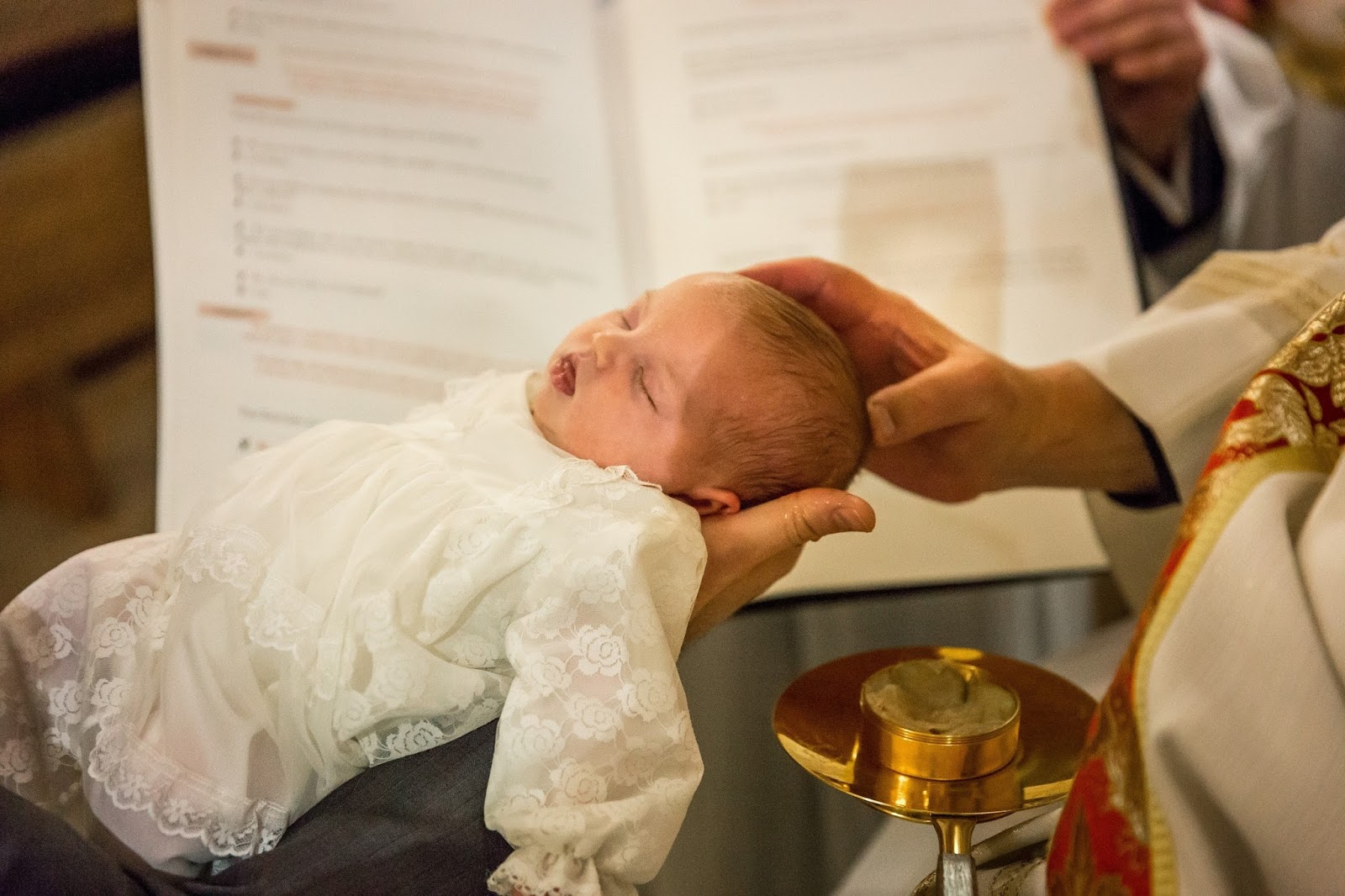
Baptism
The new baptismal ritual, taken as a whole, weakens the notion of Christ’s battle against the devil who enslaves the soul due to the original sin that defiles it.
Barthe sees the new rite as bloated in quantity, anemic in quality. The lengthier rite includes its own Liturgy of the Word and homily, yet it has little to say, especially where original sin and the devil are concerned. It has a less sacred, less urgent tone; and instead of ensuring that the catechumen wins the battle against Satan, it is more concerned about welcoming him into the community.
Confirmation
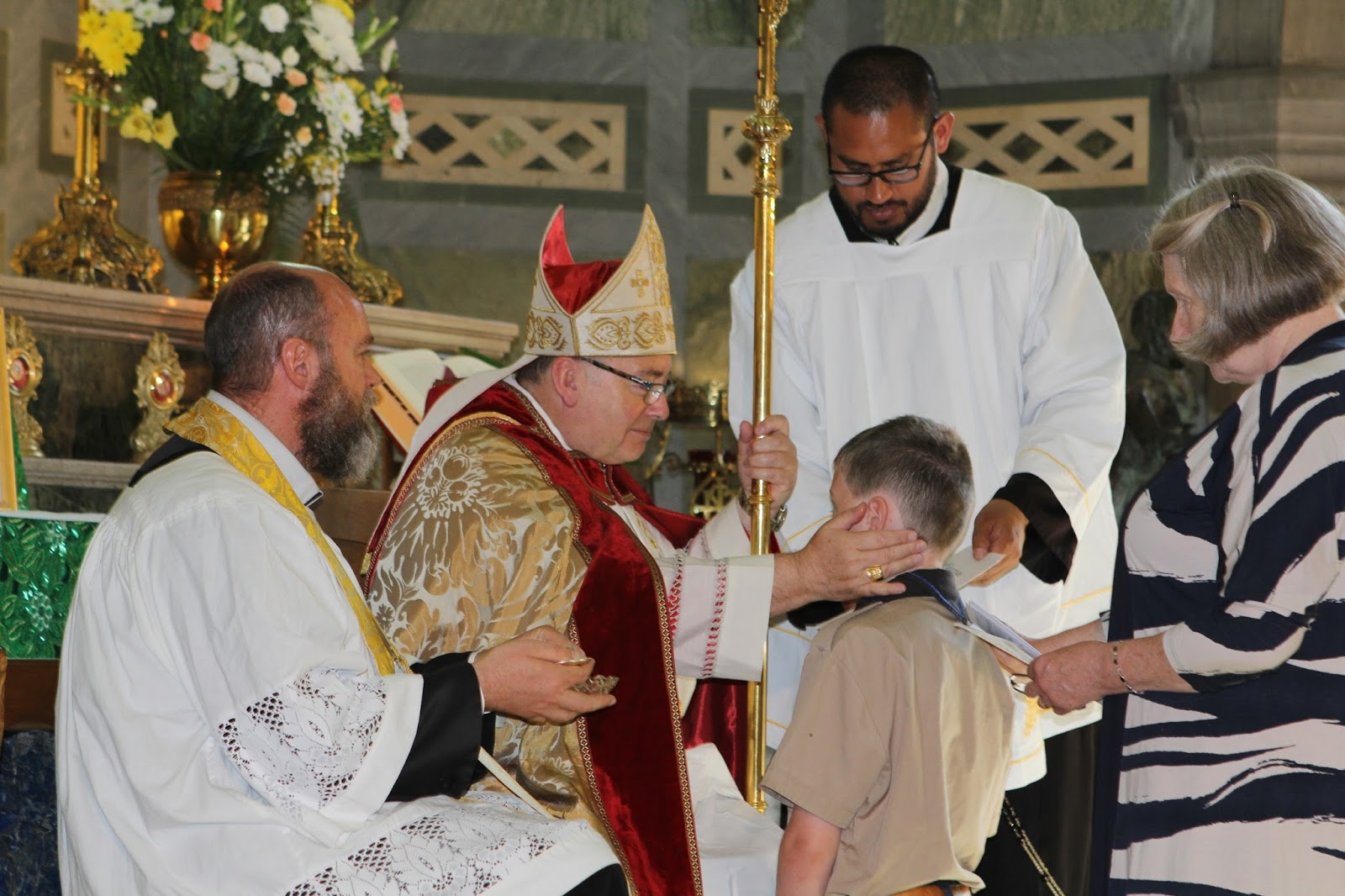
The traditional sacrament of confirmation is characterized by a ritual at once sober and solemn, due to the presence of the bishop, who ‘speaks’ in his own right with great eloquence. The new ritual for confirmation, on the other hand, presents itself as a joyful celebration” (22).
The old rite focuses on the fact that an indelible mark is being conferred on the soul, thereby confirming the mark made at Baptism, and that this confirmation enlarges the soul and helps it attain spiritual adulthood. But everything about the new rite panders to “the state of mind of today’s children and adolescents.” The new rite is beset with “optionitis” (to borrow Peter K’s term) and a wide latitude for adaptation along with rubrical language encouraging joy, as if all liturgies should be happy-clappy. And the bishop is allowed to replace the ritual of gently striking the candidate’s cheek (a substitute for the Kiss of peace and a symbol of the candidate’s becoming a soldier of Christ) with a wimpy “gesture of friendship.”
The Eucharist
The flaw of the new missal is that it expresses more weakly, in comparison with the missal it was intended to replace, not only the sacrificial character of the Eucharist but also the distinctive nature of the hierarchical priesthood, the transcendence of the action that takes place within this rite, and the adoration due to the Real Presence.
Barthe expands:
It is obvious that a significant number of elements of the traditional missal were removed or replaced, resulting in a profound transformation: the abandonment of a prescriptive ritual, a multiplication of options (for example, there are now fourteen official Eucharistic prayers), celebration in most cases facing the people, the general use of vernacular languages, freedom to issue instructions and comments, an increased emphasis on words (almost always spoken aloud) to the detriment of ritual and sacral secrecy, a weakened reverence for the Eucharist, a feebler expression of the hierarchical priesthood, desacralization through the adoption of a number of gestures and customs from everyday life, and above all, a diminished manifestation of the reality of the sacramental sacrifice. All of this has led to a shift in appearances from a memorial to a mere memorial and nothing more.
.jpg)
Ordination
The new ritual of ordination impoverishes the symbolism of the ceremony concerning priests and eliminates the minor orders and the subdiaconate.
If the rite of the Mass is impoverished, it is not surprising that the rite of ordination, to which the priesthood is ordered, should follow suit. The new rite is missing several symbolic actions and prayers, including the injunction: “Receive the power to offer sacrifice to God and to celebrate Mass for the living as well as for the dead.”
Moreover, in 1972 Pope Paul VI called for the abolition of five of the six traditional orders leading to the priesthood: tonsure (not an order per se but an initiation into the clerical state); the four minor orders of porter, lector, exorcist, and acolyte; and the major order, the subdiaconate, which has been around since before the Council of Nicaea in A.D. 325. These the Pope replaced with the “instituted ministries” of acolyte and lector. The Pope, in an Orwellian turn, secularized sacred orders.

Matrimony
The new ritual of marriage lapses into overly verbose formulas and eliminates the great consecratory blessing of the bride.
For Barthe, the new rite is too prolix, the effect of which is to make “the exchange of consent less straight-forward and more sentimental. And the Solemn Nuptial Blessing, “the oldest in the entire wedding ceremony,” was the “equivalent to the consecratory prefaces for bishops, priests, abbots, and virgins.” But this consecration was all but eliminated in the new rite.

Penance
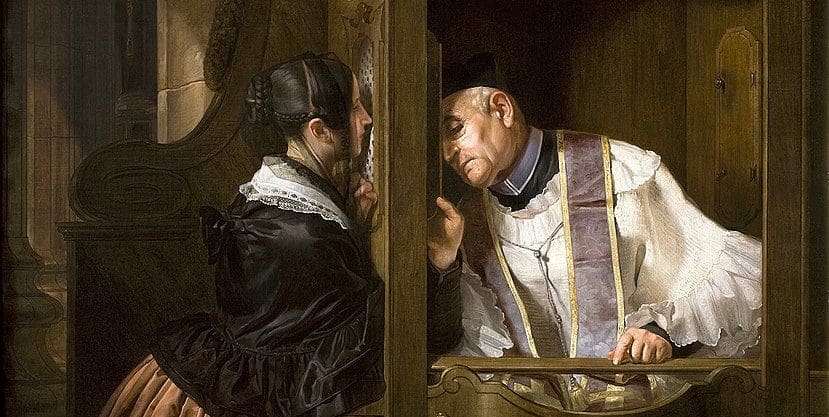
Barthe notes that the old rite was designed for an age in which there were long confession lines, with an emphasis on the priest’s rendering a judgment before issuing mercy. The new rite, on the other hand, is more “leisurely”; in the French version of the Ordo paenitentiae, the penitent is encouraged to pick a reading from Holy Scripture. “Based on this text, he will say what calling he has perceived, and the priest will then be able to initiate the dialogue.” Barthe also criticizes vernacular translations for watering down the sense of satisfaction and of absolution.
As for the new normative Latin text, Barthe has two criticisms: first, that the prayer for absolution was changed from a crystal-clear formula to something less forceful; and second, that they omitted a beautiful prayer preceding the absolution.
Of all the rites reviewed, penance seems to have fared the best, for Barthe’s major criticisms concern the rite’s adaptation and other circumstantial developments, such as a penchant for abusing collective reconciliation ceremonies.
Extreme Unction
The new ritual of the anointing of the sick devalues the sacramentum extremae unctionis into a celebration for the elderly.
Barthe argues that this sacrament underwent the greatest change and with the least controversy. By the Carolingian era (and subsequently affirmed by the Council of Trent), the sacrament was “to eliminate the penalties for sins already forgiven and even mortal sins themselves” under certain conditions, and was especially for the dying. Following Vatican II, the sacrament was now for anyone who was sick; any vegetable oil rather than olive oil could be used for the anointing; and these “anointings were now performed only on the head and hands, which removed the symbolism of recalling sins committed through the various senses and through bodily activity.” The formula was drastically abridged so that the exorcism/sanctification of the five bodily senses was eliminated, and likewise, all allusions to the devil and Hell were removed from the prayers for the soul’s commendation.
The result is a sacrament that “deritualizes” and “desacralizes” death and reflects the modern avoidance of death, which “medicalizes” our passage to the next life and relegates it to hospitals at precisely the moment when modern man needs to be shaken out of his utopian delusions for the sake of his immortal soul.

The Seven Sacraments also includes an Introduction in which Barthe argues that one cannot pick-and-choose but must either accept the new liturgy or reject it in its entirety; a Foreword by Bishop Athanasius Schneider that, among other things, marvels at how the postconciliar reformers ignored all the warnings of the Church Fathers and Roman Pontiffs and carried out “in an incomprehensible manner” a break with the rites of the previous era; and an Afterword by Peter A. Kwasniewski advancing the claim that the traditional rites are needed now more than ever because they are more honest about, and efficacious against, Satan and all his pomps, which are running rampant in this post-modern world.
Conclusion
The liturgical reform was total, refashioning the Mass, all the sacraments, all the sacramentals, and all the Divine Office from a combination of redacted ancient elements and novel inventions.
Regardless of whether you agree with every one of his conclusions or not, we owe Fr. Barthe a debt of gratitude for a concise and well-written summary of the issues regarding the entire ‘liturgical reform’ and not just the Novus Ordo Missae. The Seven Sacraments is a valuable resource that joins a long and illustrious line of “loyal dissent.”
This review originally appeared in The Latin Mass magazine 35:3 (Fall 2026), pp. 72-73. Many thanks to its editors for allowing its publication here.




