
Wednesday, January 14, 2026

Cardinal Roche is Very, Very Worried

I am sure that by now, most of our readers have heard about the document circulated by His Eminence Arthur Cardinal Roche, prefect of the Dicastery for Divine Worship, during the recent consistory of all the cardinals called by Pope Leo. It was published yesterday on the Substack of Diane Montagna, who is also, I am sure, well-known to our readers as one of the best reporters on Church-related matters in Rome. Within a few hours of its publication, I had a message from Peter saying that it needs a thorough fisking; this was done immediately, and very ably, as always, by Fr Zuhlsdorf, and likewise, by Dr Gavin Ashenden and Dr Joseph Shaw. I thank them all for sparing me the necessity of doing it myself, and strongly recommend their commentary to all our readers.

But there are a few things about the text which I found striking, and on which I make bold to offer some commentary of my own.

The document begins with the general premise that “the history of the Liturgy ... is the history of its continuous ‘reforming’ in a process of organic development.” This is the kind of statement for which the legal term “suppressio veri” (suppression, i.e. omission or concealment, of something which is true) was invented. Because while it is true that there have been many reforms in the history of the liturgy, it is also true that the history of the liturgy is a history of strong continuity, as His Holiness Benedict XVI reminded us time and time again. And it was precisely the savage rupture in this continuity within the Roman Rite, brought about by the post-Conciliar reform, that moved him to issue Summorum Pontificum as a necessary step towards healing that rupture.
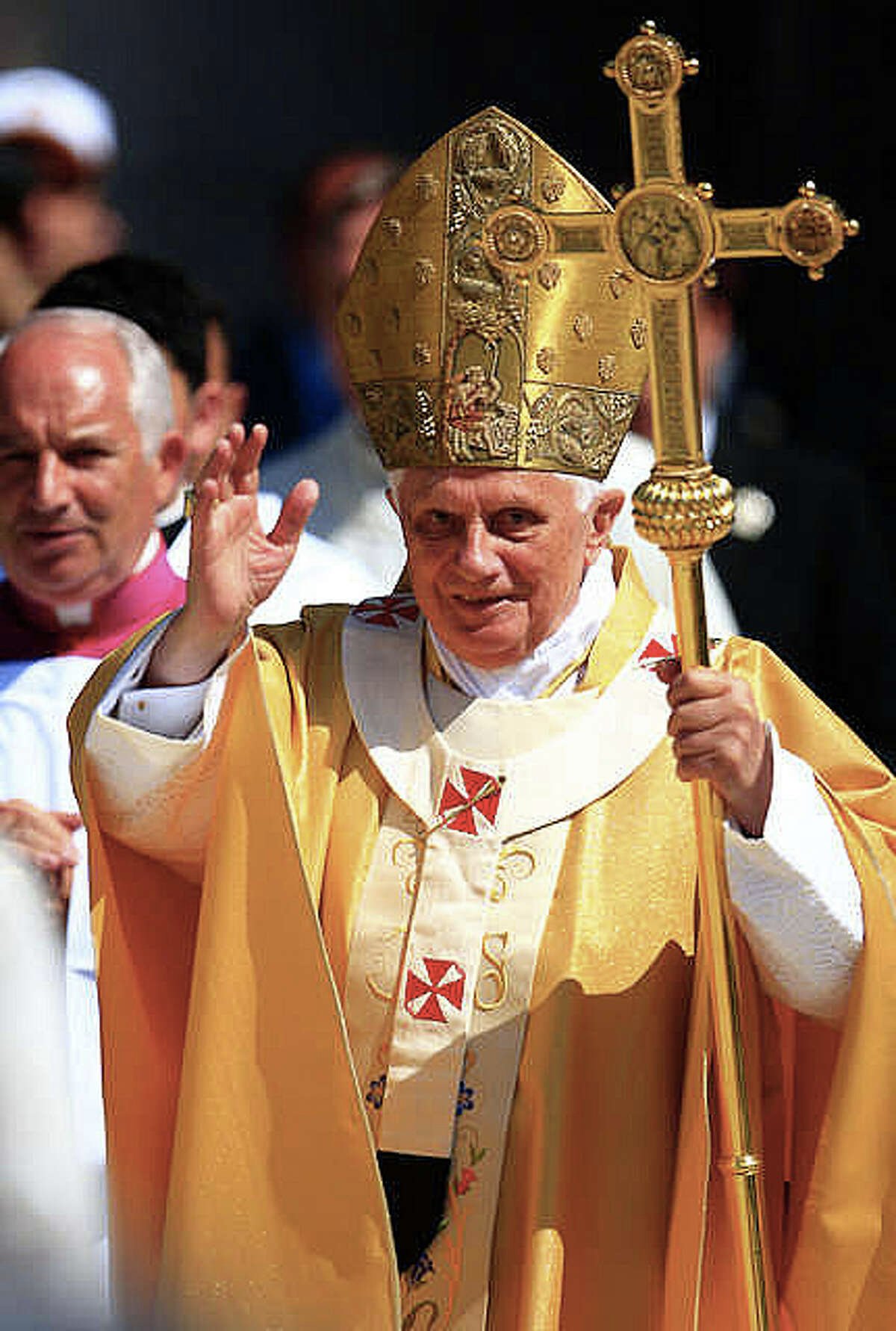
This, in turn, makes it very difficult to see how His Eminence can be correct when he states that “the use of the liturgical books that the Council sought to reform was, from St John Paul II to Francis, a concession that in no way envisaged their promotion.” Is it possible that His Eminence has wholly forgotten the reign of Pope Benedict XVI? (Prima facie, this seems unlikely, since it was the latter who appointed him to the Congregation, as it was then called, for Divine Worship.) Can he have wholly forgotten statements such as this one made by His Eminence Dario Cardinal Castrillon-Hoyos? who, as President of the Ecclesia Dei Commission, said in an address to the Latin Mass Society of England and Wales:

“(Summorum Pontificum) gives rights to the ordinary faithful and to priests which must be respected by those in authority. The Holy Father is aware that in different places around the world many requests from priests and lay faithful who desired to celebrate according to the ancient rites were often not acted upon. That is why he has now authoritatively established that to celebrate according to the more ancient form of the liturgy – the Holy Sacrifice of the Mass as well the sacraments and other liturgical rites – is a juridical right, and not just a privilege, accorded to all.

Certainly this must be done in harmony with both ecclesiastical law and ecclesiastical superiors, but superiors also must recognise that these rights are now firmly established in the law of the Church by the Vicar of Christ himself. It is a treasure that belongs to the whole Catholic Church and which should be widely available to all of Christ’s faithful. (my emphasis) This means that parish priests and bishops must accept the petitions and the requests of the faithful who ask for it and that priests and bishops must do all that they can to provide this great liturgical treasure of the Church’s tradition for the faithful.”

Cardinal Hoyos preaching during a Mass celebrated in the Sacrament chapel of St Peter’s Basilica in November of 2011.
Can His Eminence also have forgotten his predecessor-but-one in his current job, Antonio Cardinal Cañizares? who said, “Summorum Pontificum is of great value which we should all appreciate; it has not only to do with the liturgy, but with the whole of the Church’s being and what it means to tradition, without which the Church is converted into a changing human institution, and of course, also has an application to the reading and interpretation that is made of Vatican II.”

Can he have forgotten statements from Pope Benedict himself such as this one, that he issued Summorum Pontificum to favor “... the unity of the Church with itself, in its interior, with its past; that that which was holy for Her before should not be in any way an evil now”? How could this possibly be, if it were not his intention to promote the continued use of the traditional liturgy? Can he have forgotten that St John Paul II urged the bishops to a “wide and generous application” of the permission to celebrate the traditional liturgy under the Ecclesia Dei indult?

Perhaps he can, and far be it from me, of course, to suggest that His Eminence, in writing and circulating this document during a consistory, was trying to persuade his fellow Eminences of things he himself knows to be untrue. At the same time, as we pray that His Eminence recover from whatever injury or illness has compromised his memories of the previous pontificate but one, we may trust that such specific lapses of memory are rare, and it is unlikely that any other Eminences suffer from them.

This Ratzinger-specific lapse of memory would also explain how His Eminence has managed to forget the interview which he himself gave last year in which he repudiated TC, and admitted that Pope Benedict had been right all along. For example, he said (this is a direct quote), “There is nothing wrong with attending the Mass celebrated with the 1962 missal.” This was, of course, the very point which Pope Benedict himself made in his letter to the bishops of the world accompanying Summorum Pontificum, one of his most famous quotes, because one of his wisest: “What earlier generations held as sacred, remains sacred and great for us too.”

This repudiation of TC was, of course, hardly surprising, and not only because by March of last year, it was obvious that there would soon be a new sheriff in town. As His Eminence has cause to know better than most, from the day it came out, its apologists have struggled to explain why it was in any way necessary or beneficial to the Church. At the time of last year’s interview, he made no mention whatsoever of the original and unapologetically specious justification of it, the threat of a looming schism. In his telling, “(w)hat Pope Francis said in Traditionis Custodes is that (the traditional rite) is not the norm.” Again, this was the very same point that Pope Benedict himself had made by calling the traditional Roman Rite, “the Extraordinary Form.” And indeed, His Eminence downplayed the problem of the supposedly looming schism by stating that “The numbers devoted to the Traditional Latin Mass are, in reality, quite small, ...”

And yet, he is clearly back to being very, very worried about them. The post-Conciliar Rite holds a near total sway in the Roman part of the Catholic Church, the part which outnumbers all the other parts combined by well over 1¼ billion members. But as long as there are any faithful left who cling to the traditional rite, the unity of the Faith and of the Church are in mortal danger. And therefore, His Eminence reminds his fellow Eminences that “Pope Francis ... pointed the way to unity in the use of the liturgical books promulgated by the holy Popes Paul VI and John Paul II, in accordance (sic) with the decrees of the Second Vatican Council, the sole expression of the lex orandi of the Roman Rite.”

Dangerous counter-revolutionaries threatening the unity of the Faith!
His Eminence ends by quoting Pope Francis again, from the apostolic letter Desiderio desideravi: “I do not see how it is possible to say that one recognizes the validity of the Council ... and at the same time not accept the liturgical reform born out of Sacrosanctum Concilium.” And here lies the crux of the matter. It is in point of fact perfectly easy to see how this is possible, for those who have eyes to see. One simply has to be willing to recognize the obvious truth, that the liturgical reform was not born out of Sacrosanctum Concilium. It was born out of the rejection of Sacrosanctum Concilium.

The Church has paid an appallingly steep price for this rejection. Earlier in his document, His Eminence quotes Pope Francis quoting the opening paragraph of SC, and calling them “words which do not cease to enthuse.” Paraphrasing slightly, the late Pope stated, “They are objectives that describe a precise desire to reform the Church in her fundamental dimensions: to make the Christian life of the faithful grow more and more every day; to adapt more suitably to the needs of our own times those institutions which are subject to change; to foster whatever can promote union among all who believe in Christ; to reinvigorate that which serves to call all to the bosom of the Church (cf. SC I).”

None of this has happened. The post-Conciliar revolution has not made the Christian life of the faithful grow more and more every day. It has not made the Church’s institutions more suitable to the needs of our times. It has not fostered whatever can promote union among all who believe in Christ. It has not reinvigorated that which serves to call all to the bosom of the Church.

When does this start?
At the consistory, the cardinals were given four topics for discussion, and asked to choose two. Liturgy was one of the four, and was not chosen, but Pope Leo has determined not only that there will be another consistory in June, but that they will be, for the time at least, annual events. Presumably, it will be brought up at the next one.

And sooner or later, some very hard questions will have to be asked at these events. There are now only four bishops alive who were at Vatican II; the youngest of them, Francis Cardinal Arinze (another of His Eminence’s predecessors at Divine Worship) is 93. So one of those questions might well be, “Whom does the opening paragraph of Sacrosanctum Concilium ‘still enthuse’?” Another might well be, “Whom does the statement ‘there must be no innovations (in the liturgy) unless the good of the Church genuinely and certainly requires them’ ‘still enthuse’?”, or, harder still, “Did it ever really enthuse anyone?”

The asking of such questions is a necessary first step to getting over the enthusiasms of the post-Conciliar revolution, and redressing its many failures. Let us pray unceasingly that the Holy Father and the cardinals have the courage to take it.

Saturday, March 22, 2025

Pictures of Montecassino Abbey

Following up on yesterday’s post of pictures of the crypt of Montecassino Abbey, here are some of the main church and some of the things around it, starting with the most important part of it, the burial site of St Benedict and his sister St Scholastica, behind the high altar.

As I am sure our readers know, Montecassino Abbey was heavily bombed during World War II, and painstakingly restored afterwards. The magnificent baroque architectural decorations were very well restored, but the fresco work within parts of it is new - not ugly, and not exactly incongruous with the style of the rest of the building, but somehow lacking.  
The abbatial cathedra. Many abbeys have very nice thrones for the abbot, but in this case, it is set up like that of a bishop because until quite recently, Montecassino was a territorial abbey, meaning that the abbot functioned as the ordinary of the region around it. (For things that only a bishop can do, such as priestly ordinations, a bishop would visit from elsewhere.)

A very nice marble intarsia of the stem of Pope Benedict XVI, recently added to the base of one of the pillars.

Sunday, July 07, 2024

What Does Opposition to the Traditional Mass Really Signify?

Editor’s note: on this day in the year 2007, Pope Benedict XVI promulgated the motu proprio Summorum Pontificum, one of the most important acts of his pontificate, the fruit of his long and thoughtful consideration of the theological and pastoral problems which arose from the post-Conciliar liturgical revolution. This column on the opposition to it was originally published ten years ago, and although the landscape has changed since then, very much for the worse, its analysis of that opposition remains just as pertinent as it was a decade ago. Let us not allow this day to pass without a prayer of thanksgiving to God for the many benefits that have accrued to the Church from Summorum Pontificum, asking Him to hasten the day of its restoration; and likewise, pray for the eternal repose of His good and faithful servant, Pope Benedict XVI.

At the ordination of priests dedicated to the
usus antiquior: Bp. Marc Aillet, June 28, 2014
In the post-Summorum world, the ancient Roman Rite can no longer be considered forbidden, dubious, marginal, or obsolete. It enjoys equal rights of citizenship with the Novus Ordo: two forms of the Roman Rite—one called Ordinary because most recently promulgated and more widely used, the other called Extraordinary, the usus antiquior, deserving respect for its venerable use—with each able to be freely celebrated by any priest of the Roman Rite, no special permission needed. One would think that, as a gesture of reconciliation at the heart of the Church, the two forms would be flourishing side by side, with Catholics everywhere privileged to experience both of them offered reverently and beautifully.

But this is still far from the reality, and, sadly, there are still far too many bishops and priests who oppose the traditional Mass, tether it with burdensome conditions, or resort to power politics to ensure that its supporters are duly warned and penalized for their rash embrace of our Catholic heritage.

As we commemorate today the seventh anniversary of the implementation of Summorum Pontificum, whose provisions went into effect on September 14, 2007, it will be both edifying and sobering to consider the meaning Joseph Ratzinger himself attached to opposition to the traditional Mass. What does it mean when someone opposes this Mass, or those who celebrate it, or those who cherish it as a form of prayer dear to them?

In the book-length interview Salt of the Earth, published in 1997, Ratzinger said:
I am of the opinion, to be sure, that the old rite should be granted much more generously to all those who desire it. It’s impossible to see what could be dangerous or unacceptable about that. A community is calling its very being into question when it suddenly declares that what until now was its holiest and highest possession is strictly forbidden, and when it makes the longing for it seem downright indecent. Can it be trusted any more about anything else? Won’t it proscribe tomorrow what it prescribes today?  (176-77)
Ten years prior to Summorum, he was placing his finger on the crux of the matter. If the liturgy that was the Church’s holiest and highest possession for centuries, the object of total reverence and honor, the means of sanctification for countless Catholics, is suddenly forbidden, and if the desire to worship as our forefathers did is treated as wrong, what does that say about the Church herself, about her past, her tradition, her very saints? Truly, her credibility vanishes entirely, her proclamations become arbitrary diktats. Was there something fatally flawed, all this time, with our central act of worship? Were all the popes of the past who lovingly cultivated this liturgy mistaken, were all the missionaries who brought it around the globe misguided? Could they say, in the words of Gatherer, son of Vomiter, “I have not learned wisdom, and have not known the science of saints”? (Prov 30:1, 3, Douay).

In God and the World (2002), another of those splendidly insightful and doctrinally robust interviews which now, in retrospect, make for such wistful reading, Ratzinger returned to the point:
For fostering a true consciousness in liturgical matters, it is also important that the proscription against the form of liturgy in valid use up to 1970 should be lifted. Anyone who nowadays advocates the continuing existence of this liturgy or takes part in it is treated like a leper; all tolerance ends here. There has never been anything like this in history; in doing this we are despising and proscribing the Church’s whole past. How can one trust her present if things are that way? I must say, quite openly, that I don’t understand why so many of my episcopal brethren have to a great extent submitted to this rule of intolerance, which for no apparent reason is opposed to making the necessary inner reconciliations within the Church.  (416)
Here we have language strikingly akin to what we will find five years later in Pope Benedict’s Letter to the Bishops that accompanied Summorum Pontificum. Once again, we find the telltale insistence on possessing the right attitude towards the undying and life-giving heritage of the Church. The liturgical rites that arise from apostolic seeds in the Church’s sojourn through history are the fruits of Him who is the Lord and Giver of Life, and they cannot, in themselves, either die or bring death—nor can they be legitimately prohibited.

This would explain why Pope Benedict XVI, in Summorum Pontificum, says that the traditional Latin Mass “must be given due honor for its venerable and ancient usage” and, in the Letter to the Bishops, adds:
What earlier generations held as sacred remains sacred and great for us too, and it cannot be all of a sudden entirely forbidden or even considered harmful. It behooves all of us to preserve the riches which have developed in the Church’s faith and prayer, and to give them their proper place.
The giving of due honor, which translates into the actual celebration of the rite, is not an optional matter, and this is why we should politely refuse to allow ourselves or our fellow Catholics to be categorized as people with certain “preferences”: “Oh, you prefer the old and I prefer the new.” No, it goes beyond preferences to the very structure of the Catholic Faith: those things that are venerable and ancient must be given due honor; what earlier generations held as sacred must be sacred—and great!—for us, too; it is incumbent on us to preserve these riches and to make sure that they occupy their proper place in the life of the Church today.

Again, a sign that we are reading Pope Benedict correctly is that the clarifying instruction Universae Ecclesiae goes out of its way to emphasize these points. In fact, section 8 of this document is striking in its uncompromising simplicity, its total lack of hedging qualifications or loopholes:
The Motu Proprio Summorum Pontificum constitutes an important expression of the Magisterium of the Roman Pontiff and of his munus of regulating and ordering the Church’s Sacred Liturgy. The Motu Proprio manifests his solicitude as Vicar of Christ and Supreme Pastor of the Universal Church, and has the aim of: (a) offering to all the faithful the Roman Liturgy in the Usus Antiquior, considered as a precious treasure to be preserved; (b) effectively guaranteeing and ensuring the use of the forma extraordinaria for all who ask for it, given that the use of the 1962 Roman Liturgy is a faculty generously granted for the good of the faithful and therefore is to be interpreted in a sense favorable to the faithful who are its principal addressees; (c) promoting reconciliation at the heart of the Church.
*            *            *
At the ordination of priests dedicated to the usus antiquior:
Bishop James Conley, June 14, 2014
With these points established, we can readily see why any move to obstruct or diminish the presence of the usus antiquior in the Church today would only cause great harm and long-term damage.

First, it would be an act and a symptom of disobedience, which is never blessed by God and always punished by Him. More specifically, it would constitute disobedience to Pope Benedict XVI’s legal provisions in Summorum Pontificum (and their clarifications in Universae Ecclesiae), as well as to St. John Paul II’s well-known statement that “respect must everywhere be shown for the feelings of all those who are attached to the Latin liturgical tradition, by a wide and generous application of the directives already issued some time ago by the Apostolic See for the use of the Roman Missal according to the typical edition of 1962.” As has been demonstrated above, it is not enough to refrain from bad mouthing the traditional sacramental rites; they must be known and loved, re-introduced and promoted, studied in seminaries, offered generously to the faithful as a precious treasure.

Second, and more profoundly, divine worship goes to the heart of a person’s spiritual life, that which is most intimate and cherished. Any refusal to share the treasures of the Church, any heavy-handed restrictions on what is already available (or should be available), can only provoke anger, disappointment, and mistrust, hurting the Church’s unity, which is a fragile good of enormous value. Certain bishops, priests, and laymen may have no great love for the Extraordinary Form themselves, but they ought to recognize and respect the sizeable minority of Catholics who do, and appreciate that depriving them of it, or begrudging it to them, is pretty nearly the most offensive thing that could be done—rather like slapping a man’s wife, mother, or grandmother. To be blunt, those who sincerely want peace and mutual understanding had better act generously or they may end up with another ecclesiastical Cold War on their hands. Who wants that?

It does not require a degree in nuclear physics to see that a significant and growing number of Catholics are flocking to parishes and chapels where the traditional Mass is being celebrated, and with their (on average) very large families and strong commitment to homeschooling, the future belongs to them. In 1988 there were about 20 weekly Sunday TLMs; today there are over 500. There is no reason to fight this movement, and every reason to support it.

In spite of the anxieties of some who find it difficult to give peace and mutual coexistence a chance, the Extraordinary Form is not a problem for the Church, and, as Ratzinger/Benedict helps us to see, never could be a problem in and of itself. Instead, one may encounter unfortunate traditionalist attitudes that alienate or provoke—and, to be quite fair, this cuts both ways, since the promoters of the Novus Ordo frequently exhibit offensive attitudes of their own, such as a peculiar fusion of theoretical liberalism and practical totalitarianism. The thing to do is not jealously to limit and control the usus antiquior as if it were a dangerous addictive substance, an approach that only fuels those unfortunate attitudes, but to teach and model a right attitude, receiving with open arms, with humility and childlike simplicity, all that the Church herself gives, so that it becomes something normal and natural, not something forbidden (and thus, perhaps, more alluring?), controversial, or divisive.

Let us give the final word to Pope Benedict, from his Letter to the Bishops of July 7, 2007:
I think of a sentence in the Second Letter to the Corinthians, where Paul writes: “Our mouth is open to you, Corinthians; our heart is wide. You are not restricted by us, but you are restricted in your own affections. In return … widen your hearts also!” (2 Cor 6:11-13). Paul was certainly speaking in another context, but his exhortation can and must touch us too, precisely on this subject. Let us generously open our hearts and make room for everything that the faith itself allows.

Thursday, March 07, 2024

The Feast of St Thomas Aquinas 2024

Today is the feast of St Thomas Aquinas, who died on this day in the year 1274 at the Cistercian Abbey of Fossanova, while traveling to attend the Second General Council of Lyons. (Thomas was born at the castle of Roccasecca in 1225; one of my Latin teachers, the great Fr Reginald Foster, was fond of pointing out that Thomas was born on Dry Rock, and died in New Ditch.) On the General Calendar of the post-Conciliar Rite, his feast was moved to January 28, the day on which his relics were translated to the French city of Toulouse, the cradle of the Order of Friars Preachers. Some places, however, still keep the feast on the older day even in the new rite, one of them being the Dominicans’ Roman University, officially named for St Thomas, but commonly called the Angelicum, as he is commonly called the Angelic Doctor.

The Vision of Saint Thomas, by Santi di Tito; in the church of San Marco, one of the two Dominican churches in Florence.
We are also in the middle of the 3rd week of Lent, a season in which the Dominican Use brings forth some its best treasures for the singing of the Hour of Compline. (Like many medieval Uses, Dominican Compline is far more variable than that of the traditional Roman Use, often changing the antiphon of the psalms, the hymn, and the antiphon of the Nunc dimittis.) The most famous of these is certainly the Media vita, a piece which will always be associated with the Angelic Doctor, whose biographers note that he would always weep copiously when it was sung. Although written as a responsory, with verses and the repetition of the second part of the beginning, it was sung in many uses as an antiphon for the Nunc dimittis. As Father Thompson has noted previously, the Media vita may now be used by the Dominicans as a responsory, rather than as an antiphon, and it is thus that we can hear it sung by the Dominican students at Blackfriars.


R. In the midst of life, we are in death; whom shall we seek to help us, but Thee, o Lord, who for our sins art justly wroth? Holy God, holy mighty one, holy and merciful Savior, hand us not over to bitter death. V. Cast us not away in the time of our old age, when our strength shall fail, forsake us not, o Lord. Holy God, holy mighty one etc.
The Use of Sarum appointed Media vita to be sung at the same time as the Dominicans, during the third and fourth weeks of Lent, but with more verses, and the division of the refrain as follows:
Aña In the midst of life, we are in death; whom shall we seek to help us, but Thee, o Lord, who for our sins art justly wroth? Holy God, holy mighty one, holy and merciful Savior, hand us not over to bitter death.
V. Cast us not way in the time of our old age, when our strength shall fail, forsake us not, o Lord. Holy God.
V. Close not Thy ears to our prayers. Holy mighty one.
V. Who knowest the secrets of the heart, show mercy to our sins. Holy and merciful Savior, hand us not over to bitter death.

Many composers have put their hand to this text; one of the finest versions of it is the setting by the Franco-flemish composer Nicolas Gombert. (1495-1560 ca.)

St. Thomas’ great contribution to the liturgy of the Church is of course the Office and Mass of Corpus Christi, which he composed at the behest of Pope Urban IV in 1264, when the feast was formally promulgated by the Pope for the entire Latin Church. If I may indulge in a personal reminiscence: although I am normally pretty averse to large crowds, on June 2, 2010, the day before Corpus Christi of that year, I decided to attend the Pope’s general audience for the first time in quite a while, for no particular reason that I can recall. I knew that the Pope was in the midst of his series of audiences on great theologians and other important figures in the history of the church, but I did not know when I went to the audience that he had reached the thirteenth-century, and would be talking about St Thomas. I was joyfully surprised when I realized whom he was talking about, not only for the sake of the topic, but also because my father, who had passed away the previous December, was born on St Thomas’ day, and given his name in baptism for that reason. Pope Benedict spoke like the kind of professor whose lectures people remember 20 years after they graduate, learned and passionate about his subject, and eager to share that passion with his listeners. The most beautiful moment, though, was at the end, when the Pope told the following story.
The life and teaching of St Thomas Aquinas could be summed up in an episode passed down by his ancient biographers. While, as was his wont, the Saint was praying before the Crucifix in the early morning in the chapel of St Nicholas in Naples, Domenico da Caserta, the church sacristan, overheard a conversation. Thomas was anxiously asking whether what he had written on the mysteries of the Christian faith was correct. And the Crucified One answered him: “You have spoken well of me, Thomas. What is your reward to be?” And the answer Thomas gave him was what we too, friends and disciples of Jesus, always want to tell him: “Nothing but Yourself, Lord!”
As he delivered these words, Pope Benedict himself seemed moved to tears. In view of his later resignation of the papacy, I wonder whether His Holiness was perhaps also thinking of the end of St. Thomas’ life, which he recounted thus, (in the paragraph preceding the one cited above.)
The last months of Thomas’ earthly life remain surrounded by a particular, I would say, mysterious atmosphere. In December 1273, he summoned his friend and secretary Reginald to inform him of his decision to discontinue all work because he had realized, during the celebration of Mass subsequent to a supernatural revelation, that everything he had written until then “was worthless”. This is a mysterious episode that helps us to understand not only Thomas’ personal humility, but also the fact that, however lofty and pure it may be, all we manage to think and say about the faith is infinitely exceeded by God's greatness and beauty which will be fully revealed to us in Heaven. A few months later, more and more absorbed in thoughtful meditation, Thomas died while on his way to Lyons to take part in the Ecumenical Council convoked by Pope Gregory X … after receiving the Viaticum with deeply devout sentiments.
In his book “St. Thomas Aquinas”, Jean-Pierre Torrell O.P. writes that Thomas was particularly moved by the versicle of the Media vita, “Cast us not way in the time of our old age, when our strength shall fail, forsake us not, o Lord.”

Friday, February 24, 2023

Singing for Pope Benedict XVI

In 2019 the London Oratory Schola — which sings the 6pm Mass at the Oratory Church on Saturday evenings — was invited to Rome to sing at the canonisation of John Henry Newman. During the days we spent in Rome, we sang on a number of occasions, including the canonisation itself. However, the most memorable highlight was a private recital for the Pope Emeritus, Benedict XVI.

The London Oratory Schola, Fr George Bowen, Charles Cole, Daniel Wright (headmaster) and Dominic Lynch with Pope Emeritus Benedict XVI
The night before the recital, the Schola gave a concert at the Collegio Urbano, where Newman himself studied. This seminary sends missionary priests into some of the most challenging and even dangerous parts of the world. Its students are a thriving group of young men who are incredibly committed to their faith. After the concert in the college chapel, the forty boys of the Schola were ushered into the large refectory for dinner with over a hundred seminarians. The boys sat amongst the seminarians and some of the stories they learned during the course of the meal were very striking indeed.

I particularly remember two boys telling me later that they had been speaking to a young seminarian whose uncle, a priest, had been sent to Pakistan where he was executed for baptising a Muslim. His nephew was absolutely frank about the fact that it was very likely the same could happen to him when he, too, returned to Pakistan, yet he was absolutely at peace with the path he had chosen. It brought to mind the words of Saint Philip Neri to the newly ordained priests of the English College in Rome as they were sent back to an almost certain death in Tudor England: ‘Salvete Flores Martyrum’ (Hail, flowers of the martyrs).

At the end of dinner, the Rector of the Seminary gave a wonderful speech and invited the Schola Prefect and the Student Prefect of the Seminary to come forward and shake hands together as a sign of friendship between us. He went on to tell the boys that as they had some spare rooms, any of them who wished to remain and begin life as seminarians immediately were most welcome to do so — to much laughter. Finally, he announced to his students that the following day, the boys were going to be singing for Pope Benedict. The words were barely out of his mouth before the seminarians erupted with huge applause and cheering. As we all walked back down the Janiculum to our hotel, I remember one of the Oratory school staff remarking to me “It’s going to be hard to top that experience.”
Walking from the Sistine Courtyard to the Vatican Garden
The following day we arrived at the Porta Sant’Anna, the entrance to the Vatican, and we were led through a courtyard and up a staircase into the imposing San Damaso courtyard, right at the heart of the papal palace. We were asked to wait there for a moment, during which a Swiss guard, in full regalia, came over to the boys and started asking them which football teams they supported. The boys were of course delighted, oblivious to the surreal nature of the scene, as they discussed the merits of Chelsea, Fulham et al with a Swiss Guard in bright blue, yellow and red plumage, complete with halberd in hand. We were then led up to the Sistine courtyard, where the director of the Sistine Choir had very kindly given us permission to use the Sistine vestry to robe in readiness for our recital. Anita Morrison, our vocal trainer, gave the boys a warm-up in the vestry after which we lined up in single file to be led up into the Vatican Gardens. Walking in silence, we climbed the path which wound its way upwards behind St. Peter’s, the sound of Roman traffic and bustling life melting away to be replaced by a beautiful stillness and birds singing in the trees. As we reached the upper part of the garden, I heard excited whispers from the boys behind me as one exclaimed “there he is!“ Looking to my left, at the far end of an avenue, two figures were seated on a bench, one wearing white, unmistakably papal, and the other in black.
The Schola warming up in the Sistine Vestry
As we were a few minutes early, our guide led us past the avenue to the Vatican’s replica of the Lourdes Grotto where we waited for the Pope Emeritus to finish his daily rosary. Moments later we were asked to walk down towards the bench. As we did so, the figure in black, Benedict’s personal secretary, Archbishop Georg Gänswein, walked towards me, holding out his hand to greet me with a warm smile, “I am Father George, thank you for coming!” He asked us to line up in front of the bench where Benedict sat looking up with great wide eyes of wonderment. We sang Victoria’s Ave Maria, then Salvator mundi (I) by Tallis.

It is never easy to sing outdoors as there is usually a lack of acoustic or resonance. However, we could feel the sound lifting upwards and carrying far across the garden. I wondered what the tourists high up on the dome of St Peter’s would make of it, as we were out of sight underneath the trees. Benedict turned to Father George Bowen, our school chaplain who was seated beside him, and repeated in wonder “Tutti ragazzi!“, they are all boys, amazed that even the Tenors and Basses were schoolboys, with no professional men. After these two pieces and wary of tiring the Pope Emeritus, I turned to Archbishop Gänswein and asked if we should sing more or draw to a close. Turning to Benedict he said “Holy Father, would you like to give the boys your blessing now?” “No!” came the surprising response, “I want to hear more singing!“ So we sang Byrd’s Haec dies.

The Schola singing for Pope Emeritus Benedict XVI
Afterwards, Pope Benedict blessed us and presented us with medals with his image upon them. Some of us spoke to him, and I took the opportunity to thank him for everything he has done for the liturgy. I was quite taken aback by how tightly he held my hand and the intensity of his gaze. I told him that I had been conductor of the brass for MacMillan’s Tu es Petrus as he entered Westminster Cathedral during his Papal visit in 2010. “Oh yes!” His eyes lit up even more as he recalled the moment, and Archbishop Gänswein leant in, saying, “Of course, we remember that don’t we! What an amazing occasion!”

We bade him farewell and Archbishop Gänswein thanked me once again for bringing the choir. We walked back down the hill, elated, yet with a sense of sublime calm, leaving the small man in white sitting on the bench, gazing out serenely over the garden.

Charles Cole is Director of the London Oratory Schola (www.londonoratoryschola.com) This article was originally published in the February 2023 edition of the London Oratory Parish Magazine.

Thursday, February 09, 2023

Pope Benedict and the Original and New Liturgical Movement: Some Personal Reflections

The following is written by the Rev. Richard Gennaro Cipolla, a convert from Anglicanism, who was ordained a priest in 1984.

I was in Rome a good number of years ago and had made a breakfast appointment with a priest friend of mine who was living there and completing advanced studies. I told him that we would meet at the obelisk in St. Peter’s Square at 7 a.m. I arrived a bit early and stood there watching for my friend. Suddenly I saw a priest in a plain black cassock walking from the Borgo side of the piazza towards me. As he approached, I recognized him with his shock of white hair. It was Cardinal Ratzinger. I tried to quickly figure out what I should do—play it cool and just offer a nod and a “Buon giorno, Eminenza,” or whether I should express my deep appreciation for his presence in my life through his writings in beautifully phrased Italian or even English, in which he was fluent. As he approached the obelisk I became choked up and could not speak. I knelt on the paving stones of the piazza, looked up to him, and asked for his blessing. He smiled and gave me the blessing, and then proceeded through the piazza on his way to his office in the Palazzo del Sant’ Uffizio.

Why was I choked up and unable to speak? Because it was Joseph Ratzinger’s writings—at whose heart, no matter what was the topic at hand, was the person of Jesus Christ—that were my comfort and solace for my first fifteen years as a Catholic priest, at a time when I tried to fit in with those who had deliberately turned their back on Catholic Tradition and had embraced the gross misunderstanding of human freedom that flourished in the ‘70s and ‘80s, a misunderstanding which is still with us in the Church today. I failed in that attempt to fit in and that failure was a great grace for me. And I finally understood God’s words to St. Paul: “My grace is sufficient for thee.”

As Pope, Benedict XVI never celebrated the ancient rite, but his many writings, and his later Motu Proprio, Summorum Pontificum, underscored the need for liturgical practice in line with Catholic Tradition.
After Pope Benedict’s death a month ago, there were many who said that he was among the greatest theologians ever to sit in the Chair of Peter. And that may be true, but not merely because of his intellect. It was true because at the very heart of his theology was not a system or a comprehensive explanation of the development of dogma: at the heart of everything he wrote was the person of Jesus Christ as his Lord and Savior.

There is a photo of Ratzinger and the theologian Karl Rahner at the first session of the Second Vatican Council. Both were in coat and tie, no cassock, no clerical collar. Those were the heady times of a promise of a new springtime for the Church, the jettisoning of the baggage of the past that seemed to prevent her from fulfilling her mission to a world that was undergoing, at least in the West, a radical transformation seen to be opening to a future of freedom and hope, unfettered by the past marked by two terrible World Wars that seemed to have destroyed the heart of what was known as Western civilization. It took only one more session of the Council for Ratzinger and other theologians to realize that the strong theme of openness to the world that gained momentum at the Council was in real danger of leading to a break with Catholic Tradition. We must be always reminded Catholic Tradition has nothing to do with traditions within the Church. Certain prayers, customs, foods associated with certain feasts, processions, local feasts and devotions, even the Rosary: all good and part of the richness of the practice of the Catholic faith, these traditions. But the Catholic Tradition is the foundation of the faith, in the witness of the Apostles first of all, then the witness of Scripture, then the reality of the presence of the Holy Spirit guiding the faith of the Church and its development through two millennia. In breaking away from Tradition, there was and still is the danger of forgetting that the center of the Christian faith is the person of Jesus Christ who is the same, yesterday, today and forever.

Many young priests and new generations of faithful found the beauty and awe-inspiring wonder of Tradition.

The rest, as they say, is history. Ratzinger became the defender of the Tradition of the Church for the rest of his life, as Prefect of the Sacred Congregation for the Faith, and then, as Pope. For that he was despised by many of those in the Church hierarchy and in theological faculties who lusted after accommodation to the world, the world as understood by the Gospel of John. And through this he always understood that the worship of the Church lay at the very heart of Tradition and that to attack the liturgical Tradition of the Church is like cancer cells attacking the human body. He saw clearly in his writings on the liturgy that something bad had happened in the liturgical life of the Church after the imposition of the Mass of Paul VI. Worship was in danger of becoming a closed circle: the priest and people staring at each other amidst a barrage of words, making no room for the verticality of the Mass that links heaven and earth, and denying the necessary role of beauty in Catholic worship of God.

But writing is not enough. The greatest achievement of his papacy was and still is and always will be his Motu Proprio Summorum Pontificum, which broke the spell of the noxiously false idea that what was sacred yesterday is no longer sacred today. In freeing the Mass of Catholic Tradition from its bondage imposed by the very hierarchy of the Church, he not only opened the way to the discovery of the Traditional Mass by so many people who have found therein the beauty of Catholic worship in the offering of the Holy Sacrifice of the Son to the Father in the power of the Holy Spirit and thereby deepened their faith in the Risen Lord. He also laid the foundation for a generation of young priests who have found the pearl of great price and will never forget what they have found, despite all attempts of those in power who have turned their back on the liturgical beauty and power of the Catholic Tradition and who have tried to use the ugly means of force to stamp out the Traditional Roman Mass.

Pope Benedict never celebrated the Traditional Mass himself. He believed he should not do so. It is not for us to judge him on this matter. It is for us to thank him for his courage and love in making possible the beginning of the true Liturgical Movement whose original purpose was not to invent a new rite. But rather, after many years of rote routine and rubrical mentality that scandalously gave us the 17-minute Low Mass as a norm of Sunday worship, to re-introduce to the people of the Church the power and beauty and meaning of the Mass of Catholic Tradition. It is now up to us work to fulfill that task with faith and love.

Thursday, July 07, 2022

Roundup of Articles on Desiderio Desideravi

Today is the fifteenth anniversary of the promulgation of Summorum Pontificum. Perhaps there are some for whom the memory of Pope Benedict XVI’s pastoral goodness and love for the Church’s liturgical tradition has become rather bittersweet, given the developments of the past year. And indeed, another anniversary, a most baleful one, looms very close. I urge all our readers who feel this way to read our colleague Matthew Hazell’s piece published on Rorate Caeli on the same day as the recent Apostolic letter on the liturgy, subtitled, “An Admission of Failure.” I have placed it first on this roundup not just as an act of in-house nepotism, but as a useful reminder that Traditionis Custodes, the supposed dubia, and certain assertions in that letter are above all an admission that the post-Conciliar reform (and of course, this means far more than just the liturgical reform) has failed, and borne none of the fruits that Sacrosanctum Concilium looked for in its first paragraph. This is why its partisans now do by force what they cannot do by persuasion, and their failure to persuade is made painfully evident by the letter itself. I doubt there will be any need for a second such round-up, but if we have missed anything of significance here, please let us know in the combox. (My thanks to Peter who did almost all the work of collecting these.)

Matthew Hazell, “Apostolic Letter Desiderio desideravi: An Admission of Failure”, Rorate Caeli, June 29
https://rorate-caeli.blogspot.com/2022/06/apostolic-letter-desiderio-desideravi.html

Fr Hugh Somerville-Knapman, OSB, “The unintended consequences of Desiderio desideravi”, Catholic Herald, June 30
https://catholicherald.co.uk/the-unintended-consequences-of-desiderio-desideravi/

Gregory DiPippo, “We Don’t Need No Re-Education”, NLM, June 30
https://www.newliturgicalmovement.org/2022/06/we-dont-need-no-re-education.html

Fr. John Zuhlsdorf, “Francis’ NEW ‘Desiderio desideravi’ an Apostolic Letter ‘on the liturgical formation of the people of God’ – an attempt to explain Traditionis custodes, to calm the storm” Fr. Z’s Blog, June 29
https://wdtprs.com/2022/06/francis-new-desiderium-desideravi-an-apostolic-letter-on-the-liturgical-formation-of-the-people-of-god-an-attempt-to-explain-traditionis-custodes-to-calm-the-storm/
“Look at more of ‘Desiderio desideravi’ ”, June 30
https://wdtprs.com/2022/06/look-at-more-of-desiderio-desideravi/
“Look at even more of ‘Desiderio desideravi’ ”, July 5
https://wdtprs.com/2022/07/look-at-even-more-of-desiderio-desideravi/

Luisella Scrosati, “The Motu Proprio cut off the head of Benedict’s line, and Desiderio buries its corpse”, Rorate Caeli, June 30
https://rorate-caeli.blogspot.com/2022/06/the-motu-proprio-cut-off-head-of.html

Christopher R. Altieri, “Pelosi’s reception of Holy Communion upstages the Holy Father’s liturgical reflections”, Catholic World Report, June 29
https://www.catholicworldreport.com/2022/06/29/pelosis-reception-of-holy-communion-upstages-the-holy-fathers-liturgical-reflections/

Peter Kwasniewski, “Daringly Balanced on One Point: The New Papal Letter on Liturgy” ~ OnePeterFive, June 29, 2022
https://onepeterfive.com/new-papal-letter-liturgy/

Phil Lawler, “The Pope’s liturgical non sequitur”, Catholic Culture, June 29, 2022
https://www.catholicculture.org/commentary/popes-liturgical-non-sequitur/

Joseph Shaw, “Pope Francis’ Liturgical Longing”, OnePeterFive, July 5
https://onepeterfive.com/pope-francis-liturgical-longing/

Anonymous, “The Old Liturgy and the New Despisers of the Council” Rorate Caeli, July 5
https://rorate-caeli.blogspot.com/2022/07/guest-article-old-liturgy-and-new.html

Peter Kwasniewski, “Further thoughts on ‘inculturation’: Why ignore the liturgy that sustained the evangelization of the entire globe?”, Rorate Caeli, July 5
https://rorate-caeli.blogspot.com/2022/07/further-thoughts-on-inculturation-why.html

Peter Kwasniewski, “Pope presides over Zairean rite ‘marked by drum music, dancing, shouts of jubilation’ — and the Traditional Latin Mass is to be abolished?”, Rorate Caeli, July 4
https://rorate-caeli.blogspot.com/2022/07/pope-presides-over-zairean-rite-marked.html

Fr. Raymond J. de Souza, “‘Desiderio Desideravi’: Initial Impressions of Pope Francis’ New Document on the Mass”, National Catholic Register, June 29
https://www.ncregister.com/news/desiderio-desideravi-initial-impressions-of-pope-francis-new-document-on-the-mass

Clare Johnson, “Why the whole Church should embrace Desiderio Desideravi”, The Catholic Weekly, July 1
https://www.catholicweekly.com.au/why-the-whole-church-should-embrace-desiderio-desideravi/

Anthony Esolen, “The Lost Symbolism of the Liturgy”, Crisis Magazine
https://www.crisismagazine.com/2022/the-lost-symbolism-of-the-liturgy

Michael Charlier, “The amorphous ‘Roman rite’ and the authentic Roman Rite”, Rorate Caeli, July 6
https://rorate-caeli.blogspot.com/2022/07/the-amorphous-roman-rite-and-authentic.html

Tuesday, August 03, 2021

Peace-Builder or Pacifier? Some Considerations of Traditionis Custodes and Pope Francis

The following essay by Prof. Ruben Peretó Rivas was published on his blog Caminante Wanderer on July 31st, and is here given in a translation from the original Spanish which he has reviewed. Dr. Peretó Rivas is a member of the Faculty of Philosophy and Literature at the National University of Cuyo in Mendoza, Argentina. We are very grateful to him for his kind permission to share this with our readers.

Political theory in the Anglo-Saxon world makes an interesting distinction between the concepts of “peace-building” and “pacification”. The first, “the building of peace”, refers to a process by which peace is sought through dialog between the parties in a conflict. In the second, on the other hand, peace is achieved by coercive military action which forces the parties to keep silent about their complaints under pain of violent reprisals.
This schema can also be applied to the reading of what has happened in the Church in the last several years in regard to the traditional Mass. The conflict which dragged on from the very moment of the promulgation of the new Missal by Paul VI was previously almost resolved with Benedict XVI’s motu proprio Summorum Pontificum, who in this way became a “builder of peace.” With the sudden appearance a few weeks ago of Traditionis Custodes, Pope Francis has not only dynamited the dialog and peace reached in liturgical matters, but has also established himself as a “pacifier” in the Anglo-Saxon sense of the term: one who imposes peace by force, while threatening the punishment of those who do not accept his designs.
The trial-by-fire of the liturgical books of the Mozarabic Rite. “Both books were thrown into the fire.The Roman one leapt out of the fire. The Gothic one was unharmed in the flames.” (From an NLM quiz in 2011.)
This is the reading which the majority of analysts of the ecclesiastical and liturgy situation have made, such as Cardinal Mueller, Cardinal Burke, Mons. Rob Mutsaerts and Fr Guillaume de Tanoüarn, reaching the conclusion that Traditionis Custodes (TC) is, fundamentally, a profoundly anti-pastoral document, one which generates division and reopens a painful conflict, causing enormous damage to many of the faithful. Undoubtedly, this is the most important characteristic of the most recent motu proprio, but it may not be the most grave, since from the theological point of view, it dismantles the construction which Benedict XVI had achieved, and creates a thorny problem which becomes unresolvable.
Pope Francis bases part of what little argumentation he provides to justify his draconian measures in regard to the traditional Mass on the assertion that it was permitted by Pope John Paul II, and afterwards regulated by Pope Benedict XVI, with the “desire to favor the healing of the schism with the movement of Mons. Lefebvre.” Although it is certainly true that both Popes wished to resolve the problem posed by the SSPX, as all good Catholics should want to do, they also wanted to maintain continuity with the traditional liturgy. In the book The Last Testament. In his own words, Pope Benedict responded to the claim that the reauthorization of the Tridentine Mass was a concession to the Society of St Pius X, with these clear and conclusive words. “That is absolutely false! For me, what is important is the unity of the Church with itself, in its interior, with its past; that that which was holy for Her before should not be in any way an evil now.” (Pope Benedict XVI with Peter Seewald, London: Bloomsbury, 216, pp. 201-202).
And there are many other witnesses who can be cited in support of this. Card. Antonio Cañizares, as prefect of the Congregation for Divine Worship, one with privileged knowledge of the thought and intention of Pope Benedict in Summorum Pontificum, wrote: “The will of the Pope was not only to satisfy the followers of Mons. Lefebvre, nor to limit himself to answering the just wishes of the faithful who feel attached, for various reasons, to the liturgical inheritance represented by the Roman Rite, but also and especially to open the Church’s liturgical riches to all the faithful, making possible in this way the discovery of the treasures of the Church’s liturgical patrimony to those who still do not know them.” (Prologue to the book The Reform of Benedict XVI, by Nicola Bux.)
His Eminence Antonio Card. Cañizares celebrates a Pontifical Mass in the traditional Rite at the high altar of the Pope’s cathedral, St John in the Lateran, in 2009.
The website of the now defunct Pontifical Commission Ecclesia Dei, which can still be visited, and which, according to the introduction by Cardinal Dario Castrillon Hoyos, then president of the Commission, is not an opinion site, but a site that includes “information and material in absolute fidelity to the thought of the Holy Father”, affirms that “the legitimacy of the Church’s liturgy resides in continuity with tradition.” Therefore, the usus antiquior certainly has legitimacy; it has hundreds of years of history behind it, and the other rites both eastern and western recognized by the Church alongside it. It has the Tradition to defend it. The idea that brought Pope Benedict to hold this position is that a rite which was a sure path to sanctity over the ages cannot suddenly become a threat, “if the Faith which is expressed in it is still considered valid”, says one of the documents on the aforementioned site. To present an opposition of missals – one good and one bad, and therefore prohibited – as Pope Francis does in TC, although it may on the practical level go to the detriment of the old one, on the level of principles, reveals the weak foundation of the new one.
In this theological perspective, what is left weakened is the Missal of Paul VI, since it is clearly a construction hastily put together in a laboratory by a group of specialists, as the protagonists of its creation bear witness in their memoires. (E.g., those of Louis Bouyer, Bernard Botte, or Annibale Bugnini).
Joseph Ratzinger, while he was still a priest, wrote in 1976 to Prof. Wolfgang Waldstein, “The problem of the new Missal lies in its abandonment of a historical process that was always continual, before and after St Pius V, and in the creation of a completely new book, although it was compiled of old material, the publication of which was accompanied by a prohibition of all that came before it, which, besides, is unheard of in the history of both law and liturgy. And I can say with certainty, based on my knowledge of the conciliar debates and my repeated reading of the speeches made by the Council Fathers, that this does not correspond to the intentions of the Second Vatican Council. (Wolfgang Waldstein, “Zum motuproprio Summorum Pontificum”, in Una Voce Korrespondenz 38/3 (2008), 201-214).
This worry has accompanied Pope Benedict all his life – how to theologically save the Missal of Paul VI, which lacks the continuity with tradition that always existed in the Church’s liturgy. Since it was impossible to demonstrate this continuity as a matter of history, the only way to do so was, and is, through an act of the will, without further proof that this continuity existed. And this is precisely what he did in Summorum Pontificum. Pope Francis has just dynamited this theological assemblage, which saved the two missals and re-established the pax liturgica, thereby not only rekindling the conflicts of the ’70s and ’80s, but also, and more importantly, aborting the solution which was found in the theological field to justify the liturgical reform of the late ’60s.
Certainly, the theology which is hidden behind TC is not an original creation of Pope Francis. It is in fact no more than a by-product of the rupturist position developed by the School of Bologna, and curiously, coincides with the theories which of one of the lesser representatives of that school, Andrea Grillo, has published in recent years.
TC also shows the concepts of authority and obedience to which Pope Francis holds, nearer to perinde ac cadaver [note] than to the tradition and theology of the Church. His authoritarian and absolutist reflections bring to my mind a passage of Lewis Carroll’s Through the Looking-Glass.
‘When I use a word,’ Humpty Dumpty said in rather a scornful tone, ‘it means just what I choose it to mean — neither more nor less.’
‘The question is,’ said Alice, ‘whether you can make words mean so many different things.’
‘The question is,’ said Humpty Dumpty, ‘which is to be master — that’s all.”
Public domain image from Wikimedia Commons
With TC, Pope Francis seeks to impose on the Church the mentality of Humpty Dumpty, and govern it as a despot: the question is, which is to be master?
We must recognize one success of TC: its title, Traditionis custodes, the opening words which gives the document its name, is perfectly true, since the bishops are the “guardians of the tradition”, which is to say, they are obliged to know it, contemplate it, and protect it. And for this reason, it is the tradition as something objective which ought to determine their actions as bishops. However, we must here note a certain nuance: the motu proprio seems to understand the expression in the sense that the tradition is what the bishops – and especially the bishop of Rome – decide it is: La tradition, c’est moi.
editor’s note: The Latin words “perinde ac cadaver – just like a corpse” are often used to describe a notion of religious obedience introduced by the Jesuits. A trenchant essay by Dr John RT Lamont, published on Rorate Caeli in 2018, describes it very well as one open to “tyrannical understanding of authority in general as based on the arbitrary will of the possessor of power, rather than on law.” Law here may also be replaced by “tradition” or “custom.”

Friday, July 09, 2021

The Legal Achievement of Summorum Pontificum : Reprint from 2017

In recent days, with the rumors of a possible suppression or rollback of Summorum Pontificum, there has been a great deal of discussion about its status and meaning. I therefore thought it might be useful to reprint this consideration of the matter, originally published on the tenth anniversary. The short version is that the motu proprio is not a document about the history of the liturgy, but a legal provision, and should be read and understood as such.

UPDATE: I also happened to remember today this statement on the subject by a French Dominican, Fr Thierry-Dominique Humbrecht, which is very well worth considering. “The liturgical pluralism of the two states of the Roman Rite is perhaps harmful, but it is the consequence of a savage rupture in the liturgy, which is even more damaging, and the official light which has been put on it is still too timid.” (Le pluralisme liturgique des deux états du rite romain est peut-être dommageable, mais il est la conséquence d’un éclatement liturgique sauvage, plus dommageable encore, sur lequel la lumière officielle est encore trop timidement faite.)”

I propose here to consider what Pope Benedict XVI meant, and what he achieved, by categorizing the traditional Roman Mass and the post-conciliar reform of it as two Forms of the same Rite, the one Extraordinary and the other Ordinary. Before doing that, I believe it is necessary to establish a distinction between the terms which have historically been used to describe variations within a liturgy or liturgical family, namely, Rite and Use.

To the best of my knowledge, the distinction between Rite and Use has not been officially laid out anywhere in law by the Church; this is therefore purely my take on the matter.

For clarity’s sake, the variants of the same Rite should properly be called Uses, like the Sarum Use or Carmelite Use; this is what they were most commonly called before the Tridentine reform. For example, the frontispiece of the Sarum Missal says “Missale ad usum insignis ecclesiae Sarisburiensis – the Missal according to the Use of the famous church of Salisbury.”
The frontispiece of a Sarum Missal printed at Paris in 1555.
It is true that even before Trent, there was some confusion between these terms, and Rite was occasionally said instead of Use; after Trent, the term Use became rare. The terminology was certainly never uniform, and many liturgical books do not use either term, and have just an adjective modifying the words Missale, Breviarium etc. The Dominicans said either “according to the Sacred Order of Preachers,” or “according to the Rite of the Sacred Order of Preachers.”

On the left, the beginning of the pre-Tridentine Missal “according to the Use of the renowned church of Liège. On the right, the frontispiece of a post-Tridentine edition of the “Breviarium Leodiense - Breviary of Liège”; Leodiensis” is the adjectival form of the city’s name in Latin, Leodium. In French, this could be translated more literally as “Bréviaire Liégeois.” 
However, if we wish to establish a distinction between different liturgies on the one hand, and variants within a given liturgy on the other, while still keeping to some kind of historical terminology, it seems obvious that Rite is the more appropriate for the former, and Use for the latter. It would be absurd to describe the liturgies of the Eastern churches as “the Byzantine Use, the Coptic Use etc.,” when comparing them to “the Roman Use”; they are clearly and entirely different Rites. “Use”, on the other hand, was the predominant term for variants of the Roman Rite when there were many such variants celebrated throughout Western Europe.

All of the essential characteristics of the Roman Rite, such as the Ordo Missae and the structure of the Office, are the same from one Use to the other. They are not the same in other Rites. This applies not just to the Canon, but the whole structure of the Mass: Introit, Kyrie, Gloria, Collect(s), Epistle, Gradual, Alleluia etc. With minor variations, which are more variations of order than of wording, the bulk of the liturgical texts is the same as well. Searching through every missal or antiphonary of every Use of the Roman Rite, one will find the Introit Ad te levavi on the First Sunday of Advent, Populus Sion on the Second, etc. It is true that some of the later features of the Rite, mostly notably the Offertory prayers and the Sequences, differ considerably from one Use to another. These variations are nevertheless confined within certain clearly recognizable limits, have much in common with one another, and can therefore be grouped into families.

Furthermore, any proper Mass or Office written for one Use can be transposed into any of the others with no difficulty at all. (The same is true for any set of Offertory prayers or any Sequence.) For example, St Thomas Aquinas was a Dominican, and wrote the Office and Mass of Corpus Christi according to the medieval French Use followed by his order. (The Office had nine responsories at Matins, rather than eight as in the Roman Use, a versicle between Matins and Lauds, etc.) Almost nothing needed to be done to adjust these texts for the Missal and Breviary according to the “Use of the Roman Curia”, which in the Tridentine reform became the Missal and Breviary of St Pius V.

However, when the Mass of Corpus Christi was added to the Ambrosian Rite, all kinds of adjustments had to be made: the addition of a first reading, the antiphon after the Gospel, the Oratio super sindonem, and the Transitorium, none of which exist in the Roman Rite, and the removal of the Sequence, which has never existed in the Ambrosian Rite. Vice versa, if one wanted to take the Ambrosian Mass of St Ambrose, for example, and transpose it into the Roman Rite, one would need to change it very considerably, adding a psalm verse and Gloria to the Ingressa to make an Introit, and removing the first reading, the antiphon after the Gospel, the Oratio super sindonem, and the Transitorium.

If we accept these definitions of Rite and Use, it seems to me very clear that neither of them is appropriate to describe the relationship between what we now call the two Forms of the Roman Rite. On the very basic level of what we usually see and hear in a Mass of the Ordinary Form and a Mass of the Extraordinary Form, they immediately appear to be two different Rites. The liturgist Fr Joseph Gelineau SJ famously declared à propos of the reformed Mass, “This needs to be said without ambiguity: the Roman Rite as we knew it no longer exists. It has been destroyed.” A statement of this sort cannot be glossed over as just the opinion of a single man; Fr Gelineau was a prominent figure in the liturgical reform, and highly esteemed by its most famous architect, Archbishop Annibale Bugnini. Similar statements, pro and con, have been made by many others. I cannot imagine any serious liturgical scholar applying similar language to any previous change within the Roman Rite.

On the basis of my transposition argument given above, (texts can easily be moved from one Use to another, but can be moved from one Rite to another much less easily, or not at all), it can be said that the EF and OF do share a certain identity. Most of any given block of Mass texts can be moved from one to the other fairly easily, or at least, much more easily than they could be moved between the Byzantine and Ambrosian Rites. However, considering that the post-conciliar reform was a far greater displacement of liturgical texts than had ever taken place before in the Roman Rite, and the significant ritual differences, it is much harder to argue that the EF and OF share an identity. Historically, this is an absolutely anomalous situation; there has never been a case of two Rites or Uses which shared so much and yet were so radically different.

Because of this, the identity of the two Forms of a single Rite as established by Summorum Pontificum has sometimes been described as a “legal fiction.” I submit that this is a wholly appropriate way of describing the situation, that the identity of the two Forms as a single Rite IS a legal fiction, and that this is a good thing.

A legal fiction is not the same thing as a lie. Adoption, for example, is a legal fiction, which states that in terms of law, this person is the child of that person. This is most emphatically not a false statement, even though the adopted child is not the natural offspring of the parent. The law’s recognition of the bond between a parent and child is perhaps the least significant thing about it, precisely because it does not create such a bond and cannot dissolve it. In this sense, adoption simply declares that the absence of a genetic relationship between two specific people is legally irrelevant, and that a parent-child relationship exists between them.

In a similar way, Pope Benedict’s action in creating two “Forms” was not intended to speak to the relationship between the EF and OF as a matter of liturgical or historical scholarship, but solely as a description of the relationship between them in law. It simply declares that the tenuous relationship between the two Forms is legally irrelevant.

As a matter of law, a priest of one Rite needs special faculties to celebrate Mass in another. This is a useful and perfectly sensible legal provision for a variety of reasons, and a long-standing one, but hardly a moral necessity per se; where deemed pastorally useful, the Church has been fairly flexible in granting such faculties. However, the whole point of Summorum Pontificum was to establish that a priest of the Roman Rite does not need any special faculty or permission to say the Mass according to the traditional Missal, as was the case under the indult Ecclesia Dei. I believe that Pope Benedict acted very wisely and conscientiously in adopting a completely different category from any other previously used, Form instead of Use or Rite, to get around an important legal problem, namely, that by any other solution, he would have made the vast majority of Catholic priests “bi-ritual.” That would have been a legal abomination without precedent.

More recent articles:

For more articles, see the NLM archives:



