
Saturday, July 23, 2022

The Post-Vatican II Reform of the Proper of Saints in the Missale Romanum – As Told by Fr Carlo Braga, C.M. (Part 5)

This is the final part of my translation of Fr Carlo Braga's 1970 article in Ephemerides Liturgicae about the reform of the Proper of Saints in the post-Vatican II Missal. The previous four parts, published over the last few days, can be found here: part one, part two, part three, part four

In this part, Braga writes about the "recovery" of various texts and parts of texts that were considered "sound", i.e. good, solid texts, which were "still capable of offering a starting point for the prayer of today", from saints that had been removed from the General Roman Calendar.
Braga then concludes his article with the claim that the reformed Proper of Saints is "one of the most successful parts of the [reformed] Missal... faithful to the best tradition", and that the the prayers in various diocesan and religious Propers, because they were "created or revised in truly unhappy times as far as liturgical literature is concerned", should also be revised using the same criteria the Consilium used in their reform. I will leave the reader to judge whether or not these concluding remarks are accurate, or desirable.


*    *    *    *    *

[p. 425] Recovery of Sound Liturgical Texts 

In the various aspects of this work of restoration or creation in the sanctoral repertoire, we must not forget a last note on all the labours, one which we could define as a “recovery operation”, which consists in reusing, in place of those texts derived from the Commons and therefore greatly exploited, other texts that following the disappearance of some feasts from the universal calendar would otherwise have disappeared from the Proper of Saints. Generally speaking, these are ancient texts which date back to the tradition of the Roman Sacramentaries, and that deserved to be saved due to their euchological, liturgical and literary value. Alongside these prayers recovered in their entirety, we should also mention that parts of prayers, also from feasts suppressed from the universal calendar, have served to correct or improve others.
    [p. 426] a) Among the texts recovered in full, the following seem worthy of mention: [29]
    Saint Blaise uses the collect of Saints Marius, Martha, Audifax and Abachum (January 19):

Exaudi, Domine, populum tuum cum beati Blasii martyris patrocinio supplicantem, ut et temporalis vitae nos tribuas gaudere pace, et aeternae reperire subsidium.

[Hear, O Lord, the supplications your people make under the patronage of the Martyr Saint Blaise, and grant that they may rejoice in peace in this present life, and find help for life eternal.]

Until now, his Mass used the collect from the Common: Deus, qui nos… annua solemnitate laetificas.
    For Saints Nereus and Achilleus, the collect of the Forty Holy Martyrs (10 March) is recovered:

Praesta, quaesumus, omnipotens Deus, ut, qui gloriosos martyres Nereum et Achilleum fortes in sua confessione cognovimus, pios apud te in nostra intercessione sentiamus.

[Grant, we pray, almighty God, that we, who know the great courage of the glorious Martyrs Nereus and Achilleus in confessing you, may experience their loving intercession for us in your presence.]

Saint Pancras, on the same day but with a separate celebration, reuses the collect of Saint Agapitus (18 August):

Laetetur Ecclesia tua, Deus, beati Pancratii martyris confìsa suffragiis, atque, eius precibus gloriosis, et devota permaneat, et secura consistat.

[May your Church rejoice, O God, confident in the intercession of the Martyr Saint Pancras, and by his glorious prayers may she persevere in devotion to you and stand ever firm.]

Until now, these three martyrs, to whom Domitilla was also joined, enjoyed a more generic text than the ones now attributed to them.
    Saint John I (pope) adopts, with a short introduction derived from the collect of Saint Apollinaris (23 July), the conclusion of the collect for Saint Venantius (18 May):

Deus, fìdelium remunerator animarum, qui hunc diem beati Ioannis papae martyrio consecrasti, exaudi preces populi tui, et praesta, ut, qui eius merita veneramur, fìdei constantiam imitemur.

[O God, who reward faithful souls and who have consecrated this day by the martyrdom of Pope Saint John the First, graciously hear the prayers of your people and grant that we, who venerate his merits, may imitate his constancy in the faith.]

[p. 427] Saints Marcellinus and Peter receive the collect of St Theodore (9 November):

Deus, qui nos sanctorum martyrum Marcellini et Petri confessione gloriosa circumdas et protegis, praesta nobis ex eorum imitatione proficere, et oratione fulciri.

[O God, who surround us with protection through the glorious confession of the Martyrs Saints Marcellinus and Peter, grant that we may profit by imitating them and be upheld by their prayer.]
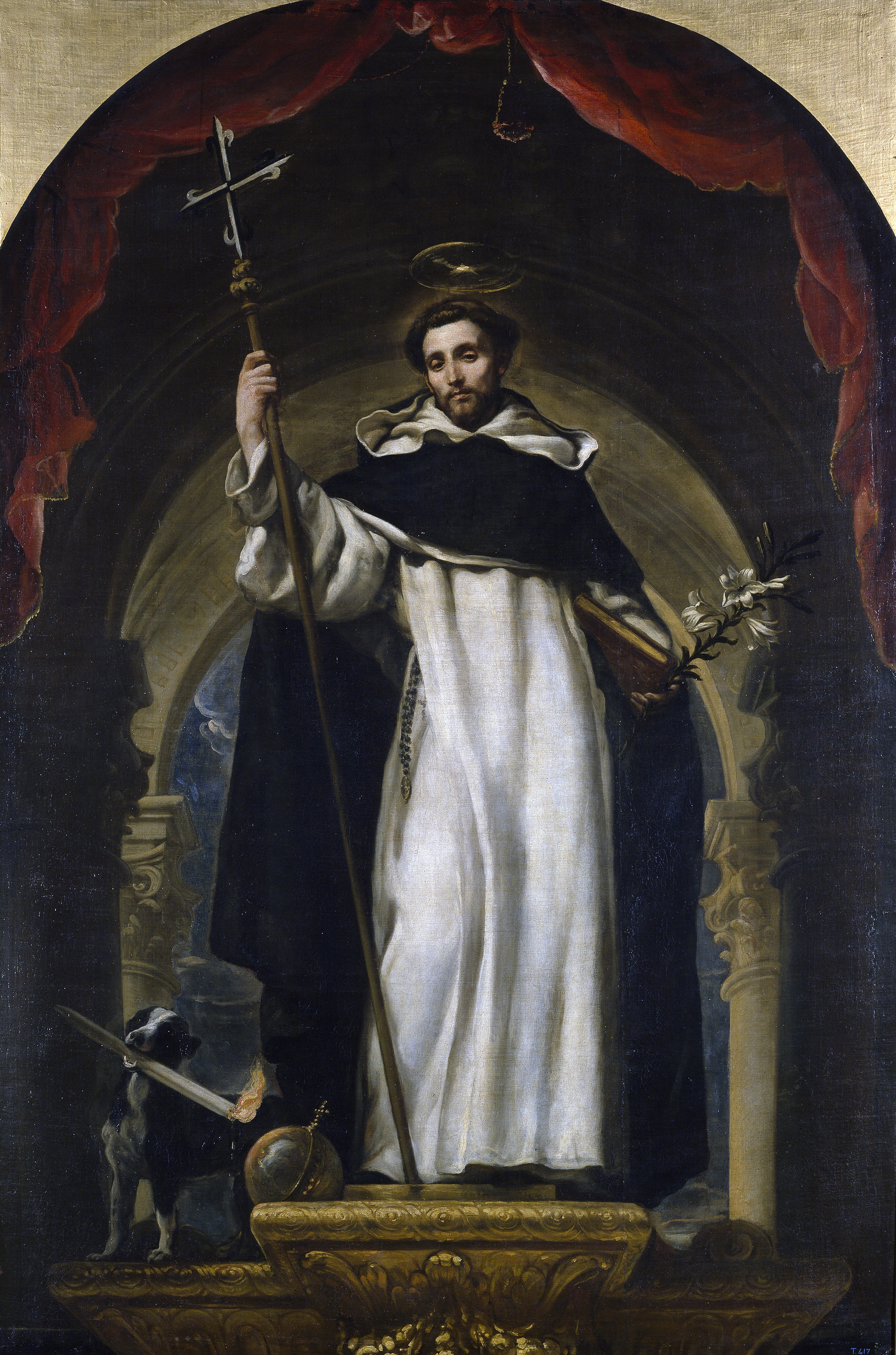
Saint Dominic takes up, with some slight corrections, the super oblata of Saint Peter of Verona (29 April), in which mention is made of the work of preaching:

Preces, quas tibi, Domine, offerimus, intercedente beato Dominico, clementer intende, et, huius sacrificii virtute potenti, propugnatores fidei gratiae tuae protectione confirma.

[Attend mercifully to the prayers we offer you, O Lord, by the intercession of Saint Dominic, and through the great power of this sacrifice strengthen by the protection of your grace those who champion the faith.]

Saint Januarius reuses the collect assigned up until now to Saint Symphrosa (18 July) and Saint Sixtus II (pope) and companions (martyrs) (6 August): 

Deus, qui nos concedes beati Ianuarii martyris memoriam venerari, da nobis in aeterna beatitudine de eius societate gaudere.

[O God, who grant us to venerate the memory of the Martyr Saint Januarius, give us, we pray, the joy of his company in blessed happiness for all eternity.]

Saints Cosmas and Damian are given the prayers that until now were used on Thursday in Week 3 of Lent, when the Lenten station gathered in their basilica:

C: Magnificet te, Domine, sanctorum tuorum Cosmae et Damiani veneranda memoria, quia et illis gloriam sempiternam, et opem nobis ineffabili providentia contulisti.

[May you be magnified, O Lord, by the revered memory of your Saints Cosmas and Damian, for with providence beyond words you have conferred on them everlasting glory, and on us, your unfailing help.]

SO: In tuorum, Domine, pretiosa morte iustorum, sacrificium illud offerimus de quo martyrium sumpsit omne principium.

[In honour of the precious death of your just ones, O Lord, we come to offer that sacrifice from which all martyrdom draws its origin.]

Saint Callistus I takes up the text of the collect for Saint Marcellus (16 January):

Preces populi tui, quaesumus, Domine, clementer exaudi, ut beati Callisti papae meritis adiuvemur, cuius passione laetamur. [*]

[Graciously hear the prayers of your people, O Lord, we pray, that we may be aided by the merits of Pope Saint Callistus, in whose passion we rejoice.]

[p. 428] A text from the Gregorian Sacramentary (Lietzman, 198) has been attributed to Saint Gregory the Great: one of the orations In natali papae, in which the expression regimen disciplinae recalls his Regula pastoralis.

Deus, qui populis tuis indulgentia consulis et amore dominaris, da spiritum sapientiae, intercedente beato Gregorio papa, quibus dedisti regimen disciplinae, ut de profectu sanctarum ovium fiant gaudia aeterna pastorum.

[O God, who care for your people with gentleness and rule them in love, through the intercession of Pope Saint Gregory, endow, we pray, with a spirit of wisdom those to whom you have given authority to govern, that the flourishing of a holy flock may become the eternal joy of the shepherds.]

On the other hand, Saint Leo the Great, the major commentator of Tu es Petrus, is attributed a text from the Leonine Sacramentary (cf. n. 975), also In natali papae, but the appropriate adjustments so that the invocation is directed to the Father:

Deus, qui adversus Ecclesiam tuam, in apostolicae petrae soliditate fundatam, portas inferi numquam praevalere permittis, da ei, quaesumus, ut, intercedente beato Leone papa, in veritate tua consistens, pace continua muniatur.

[O God, who never allow the gates of hell to prevail against your Church, firmly founded on the apostolic rock, grant her, we pray, that through the intercession of Pope Saint Leo, she may stand firm in your truth and know the protection of lasting peace.]

This text had already been used in the previous Missal, for the second prayer in the Common of Popes.
    b) Among the parts of prayers used to a greater or lesser extent in centonisation, in order to construct new texts, we mention the following:
    Saint Fabian has a collect built from the fusion of the collect and postcommunion for the Mass of Saint Donatus (7 August):

C: Deus, tuorum gloria sacerdotum, praesta, quaesumus... [O God, glory of your Priests, grant, we pray...]

PC: ... ut, intercedente beato Donato... eiusdem proficiamus et fidei consortio et digno servitio. [... that by the intercession of Saint Donatus... we may make progress both by communion in the faith and by worthy service.]

1970 MR: Deus, tuorum gloria sacerdotum, praesta, quaesumus, ut, beati Fabiani martyris tui interveniente suffragio, eiusdem proficiamus fidei consortio dignoque servitio.

[O God, glory of your Priests, grant, we pray, that, helped by the intercession of your Martyr Saint Fabian, we may make progress by communion in the faith and by worthy service.]

Saint Paulinus of Nola is well characterised in his action of love for the poor with the use of the collect for Saint Gregory Barbarigo (17 June):

Deus, qui beatum Gregorium, confessorem tuum atque pontificem, pastorali sollicitudine et pauperum miseratione clarescere voluisti, concede propitius, ut, cuius merita celebramus, caritatis imitemur exempla.

[O God, who made Saint Gregory, your Confessor and Bishop, outstanding in poverty and pastoral care, graciously grant that, as we celebrate his merits, we may imitate the example of his charity.]

Deus, qui beatum Paulinum episcopum paupertatis amore et pastorali sollicitudine clarescere voluisti, concede propitius, ut, cuius merita celebramus, caritatis imitemur exempla.

[O God, who made the Bishop Saint Paulinus of Nola outstanding for love of poverty and for pastoral care, graciously grant that, as we celebrate his merits, we may imitate the example of his charity.]

[p. 429] The previous text [for Saint Paulinus], insistent on abandoning everything in the world to follow Christ, is more suited for religious than for the imitation of the faithful in general. Furthermore, the final part (terrena despicere) needed to be corrected in light of the new vision of earthy things.
    Another text applied well to a new figure, with the effect of stating it better than the previous text that was rather verbose and full of strong expressions, is the collect for Saint John of Sahagun (12 June), now attributed to Saint Elizabeth of Portugal, and which specifies her role as peacemaker:

Deus, auctor pacis et amator caritatis, qui beatum Ioannem confessorem tuum mirifica dissidentes componendi gratia decorasti, eius meritis et intercessione concede, ut, in tua caritate firmati, nullis a te tentationibus separemur.

[O God, author of peace and lover of charity, who adorned Saint John your Confessor with a marvellous grace for reconciling those in conflict, grant, through his merits and intercession, that firmly rooted in your charity, no temptations may ever separate us from you.]

Deus, auctor pacis et amator caritatis, qui beatam Elisabeth mira dissidentes componendi gratia decorasti, da nobis, eius intercessione, pacis opera exercere, ut filii Dei nominari possimus.

[O God, author of peace and lover of charity, who adorned Saint Elizabeth of Portugal with a marvellous grace for reconciling those in conflict, grant, through her intercession, that we may become peacemakers, and so be called children of God.]

As can be seen, the conclusion is modified in order to better apply it to the works of charity performed by the Saint: not, therefore, a static vision of charity, which inseparably unites it to God, but a dynamic vision which, by performing good works, allows us to truly be children of God.
    Saint Alphonsus Maria de’ Liguori, presented in the previous Missal above all else as the founder of a religious community, now appears in the light of a zealous pastor for the salvation of those entrusted to him. This is due to the recovery of part of the collect for Saint Andrew Corsini (4 February), from which some elements have been inserted that give more colour and better define the text and figure of the Saint.

Deus, qui in Ecclesia tua nova semper instauras exempla virtutum, da populo tuo beati Andreae confessoris tui atque pontificis ita sequi vestigia, ut assequatur et praemia.

[O God, who constantly raise up in your Church new examples of virtue, grant that your people may follow in the footsteps of Saint Andrew your Confessor and Bishop, so as to attain his rewards.]

Deus, qui in Ecclesia tua nova semper instauras exempla virtutum, da nobis in zelo animarum beati Alphonsi ita vestigiis inhaerere, ut eius in caelis assequamur et praemia.

[O God, who constantly raise up in your Church new examples of virtue, grant that we may follow so closely in the footsteps of the Bishop Saint Alphonsus in his zeal for souls as to attain the same rewards that are his in heaven.]

The collect of one holy prince who has disappeared from the universal calendar provides the text of the oration for another prince, himself a martyr. This is the case for Saint Hermenegild (13 April), who gives the text of his collect to Saint Wenceslaus.

[p. 430] Deus, qui beatum Hermenegildum martyrem tuum caelesti regno terrenum postponere docuisti, da, quaesumus, nobis, eius exemplo caduca despicere atque aeterna sectari.

[O God, who taught your Martyr Saint Hermenegild to place the heavenly Kingdom before an earthly one, grant us, we pray, after his example to despise transitory things and pursue the things of heaven.]

Deus, qui beatum Venceslaum martyrem caelesti regno terrenum postponere docuisti, eius precibus concede, ut, nosmetipsos abnegantes, tibi toto corde adhaerere valeamus.

[O God, who taught the Martyr Saint Wenceslaus to place the heavenly Kingdom before an earthly one, grant through his prayers that, denying ourselves, we may hold fast to you with all our heart.] 

It should be noted, however, that the ending is much more positive and concrete than the previous text. It is always a question of corrections that lead to an evangelical plan, and thereby underline the attainment of holiness in a more accessible form, rather than a generic phrase valid for every type of holiness.
    As a final example of the centonisation of texts, we refer to the collect of Saint Raymond of Penyafort, constructed using elements derived from the collects of three Saints who have disappeared from the universal calendar: Saint Thomas of Villanova (22 September), Saint Peter Nolasco (28 January), and Saint Raymond Nonnatus (31 August). Of these, the last two belong to the Mercedarian family, also associated with Saint Raymond of Penyafort.

1962 MR: Deus, qui beatum Thomam pontificem insignis in pauperes misericordiae virtute decorasti … ipsius (Petri Nolasci) nobis intercessione concede, a peccati servitude solutis … ut, a peccatorum vinculis absoluti, quae tibi sunt placita, liberis mentibus exsequamur.

[O God, who adorned the Bishop Saint Thomas with the virtue of outstanding mercy for the poor ... grant us, through his (Saint Peter's) intercession, released from slavery to sin  that, released from the bonds of sin, we may carry out in freedom of spirit what is pleasing to you.]

1970 MR: Deus, qui beatum Raymundum presbyterum insignis in peccatores et captivos misericordiae virtute decorasti, eius nobis intercessione concede, ut, a peccati servitute soluti, quae tibi sunt placita liberis mentibus exsequamur.

[O God, who adorned the Priest Saint Raymond with the virtue of outstanding mercy and compassion for sinners and for captives, grant us, through his intercession, that, released from slavery to sin, we may carry out in freedom of spirit what is pleasing to you.]

These are examples of how an attempt has been made to gather what the tradition has produced, making use of the elements that are still usable and, albeit in another context, still capable of offering a starting point for the prayer of today.


Conclusion

We have sufficiently reviewed the most interesting parts of the Proper of Saints that exists in the new Missal. And, in conclusion, we can say that it is also one of the newest and most successful parts of the Missal. A comparison between the style of texts typical of the preceding Missal, many of which are generic and common, [p. 431] and the [new] series of texts characterised with regard to both the figure of the Saint and the actual petition, can only be favourable. The result is a new page in the history of Roman euchology, built with the care of the evangelical paterfamilias, and that “brings out of his treasure what is old and what is new” [Matthew 13:52].
    In fact, although fundamentally renewed, the Proper of Saints is faithful to the best tradition, both in its concept and form: it is a new chapter, which continues the history of its age-old formation.
    One desire remains to be expressed: that a similar work of research, revision and, when necessary, new composition should also be done with regard to the Propers of the various dioceses and religious families. It is in them, above all, that texts even less sound than those of the previous Roman Missal have been handed down, because they were, for the most part, created or revised in truly unhappy times as far as liturgical literature is concerned.
    And these texts thus renewed may, in turn, also rejuvenate the spirituality and prayer of the People of God, giving them a new impetus towards that holiness offered to them as their goal, difficult and often distant, but still possible to reach.


NOTES

[29] Of the texts referred to in this section, as we said at the beginning, we do not indicate the sources. They are all in the previous Missal. The research and inspection of their sources is easy, using the work of Bruylants, in which the various prayers are listed in alphabetical order.

[*] This prayer was changed in 2002 MR to the following: Deus, qui beátum Callístum papam, ad Ecclésiæ servítium et pietátem erga christifidéles defúnctos suscitásti, eius fídei testimónio, quǽsumus, nos róbora, ut a servitúte corruptiónis erépti, incorruptíbilem hereditátem cónsequi mereámur — O God, who raised up Pope Saint Callistus the First to serve the Church and attend devoutly to Christ’s faithful departed, strengthen us, we pray, by his witness to the faith, so that, rescued from the slavery of corruption, we may merit an incorruptible inheritance.
Friday, July 22, 2022

The Post-Vatican II Reform of the Proper of Saints in the Missale Romanum – As Told by Fr Carlo Braga, C.M. (Part 4)

This is the fourth part of my translation of Fr Carlo Braga's 1970 article in Ephemerides Liturgicae about the reform of the Proper of Saints in the post-Vatican II Missal. The previous three parts, published over the last few days, can be found here: part one, part two, part three

Here, Braga writes about the "aggiornamento" ("updating") of the prayers in the Proper of Saints, apparently demanded by Vatican II, which entailed changing various prayers for theological and ecumenical reasons, for the supposed benefit of modern man and his "new spiritual situation".  
Likewise, he then gives some examples of the suppression of "secondary elements" in the Proper of Saints, such as references to historical and "legendary" elements, as well as literary features such as wordplay, imagery and symbolism. As Braga writes, rather revealingly, "Poetry is perhaps a little too much for our rather practical spirit" (p. 424).


*    *    *    *    *

[p. 419] Updating [Aggiornamento] of Theological Language

The revision of pre-existing texts becomes more delicate when it comes to the need for an update of their content or language, and when all this affects not only the form, but the doctrinal reality. We have already mentioned the new perspective of human values considered in relation with and almost as a way to supernatural goods: Vatican II clearly proposes this, and it was kept in mind for the revision of the Proper of Time. It could not be ignored in the revision of the Proper of Saints. At other points, the opportunity for a revision of language is dictated by ecumenical needs: expressions that recall positions or struggles of the past are no longer in harmony with the new positions of the Church. Devotional aspects, or particular ways of venerating and invoking the Saints, have been superseded by a whole new approach to Eucharistic theology: here, too, it was necessary to retouch the text to highlight new values and new perspectives.
    a) A classic example of the different evaluation of human things in relation to God and to eternal things, is the oration for Saint Albert the Great, the illustrious scholar of the human sciences as well as the theological ones:

1962 MR: Deus, qui beatum Albertum pontificem tuum atque doctorem in humana sapientia divinae fidei subicienda magnum effecisti, da nobis, quaesumus, ita eius magisterii inhaerere vestigiis, ut luce perfecta fruamur in caelis.

[O God, who made the Bishop and Doctor Saint Albert great by his setting of divine faith above human wisdom, grant, we pray, that we may closely follow the truths he taught, and thus come to enjoy perfect enlightenment in heaven.]

1970 MR: Deus, qui beatum Albertum episcopum in humana sapientia cum divina fide componenda magnum effecisti, da nobis, quaesumus, ita eius magisterii inhaerere doctrinis, ut per scientiarum progressus ad profundiorem tui cognitionem et amorem perveniamus.

[O God, who made the Bishop Saint Albert great by his joining of human wisdom to divine faith, grant, we pray, that we may so adhere to the truths he taught, that through progress in learning we may come to a deeper knowledge and love of you.]

Two substantial changes are evident. First, it is not a question of simply submitting human science to faith, but of coordinating these two fields, so that together they lead to an ever-greater knowledge of the truth. Then the sciences, in each field, can and must lead man to God, that is, to the knowledge and love of him. Creation is the way by which one can and must reach God.
    b) Another example, rather significant, can be seen from the orations of the ‘lay’ Saints, those engaged more directly in temporal matters, such as kings. While the previous texts [p. 420] tried to highlight the detachment of the Saint from the regales delicias or illecebras mundi, to seek despicere terrena (Saint Casimir) or to blandimenta huius mundi vitare et ad te puris mentibus pervenire (Saint Henry), or simply spoke of the exaltation from the passing glory of the world to the eternal glory of heaven, asking to be consortes Regis regnum Iesu Christi Filii tui (Saint Louis of France) or eiusdem gaudere consortio (Saint Wenceslaus), the new Missal is more positive, even if, in reality, the texts do not differ much from each other. The new texts offer a vision of the earthly office occupied by these Saints as a basis for the elevation to the supernatural, and, in comparison, view the various states of earthly life as ways to reach God and build his kingdom on earth.
    Let us compare, by way of example, the old and new collects for Saint Henry:

1962 MR: Deus, qui hodierna die beatum Henricum, confessorem tuum, e terreni culmine imperii ad regnum aeternum transtulisti, te supplices exoramus, ut, sicut illum, gratiae tuae ubertate praeventum, illecebras saeculi superare fecisti, ita nos facias, eius imitatione, mundi huius blandimenta vitare, et ad te puris mentibus pervenire.

[O God, who on this day transferred Saint Henry your Confessor from the summit of earthly empire to an eternal kingdom, we humbly beseech you that just as, by the abundance of your grace, you gave him strength to withstand the enticements of the world, so after his example you will make us shun the pleasures of this life and come to you in purity of mind.]

1970 MR: Deus, qui beatum Henricum, gratiae tuae ubertate praeventum, e terreni cura regiminis ad superna mirabiliter erexisti, eius nobis intercessione largire, ut inter mundanas varietates puris ad te mentibus festinemus.

[O God, whose abundant grace prepared Saint Henry to be raised by you in a wonderful way from the cares of earthly rule to heavenly realms, grant, we pray, through his intercession, that amid the uncertainties of this world we may hasten towards you with minds made pure.]

The oration for Saint Louis takes up almost the same initial elements, with a variation at the end, which underlines the search for the kingdom of God in the exercise of one’s human activities:

1970 MR: ... per munera temporalia quae gerimus, regnum tuum quaeramus aeternum.

[… by fulfilling our duties on earth, we may seek out your eternal Kingdom.]

c) Equally interesting is the comparison between texts, even quite recent ones, of the previous Missal and the new one, when it comes to ecumenism. The different mentality emerges from the comparison of the texts of Saint Robert Bellarmine and Saint Peter Canisius: two doctors of the Church, strong in the defence of the faith in their time, characterised particularly by strictness and a spirit of conquest. The new texts certainly do not intend to be guilty of false irenicism, but they do reflect a new approach and new spiritual situation.

    [p. 421] Here is the oration for Saint Robert Bellarmine:

1962 MR: Deus, qui, ad errorum insidias repellendas et Apostolicae Sedis iura propugnanda, beatum Robertum, pontificem tuum atque doctorem, mira eruditione et virtute decorasti, eius meritis et intercessione concede, ut nos in veritatis amore crescamus, et errantium corda ad Ecclesiae tuae redeant unitatem.

[O God, who adorned Saint Robert, your Bishop and Doctor, with wonderful learning and virtue to repel the snares of error and defend the rights of the Apostolic See, grant by his merits and intercession that we may grow in love of truth, and the hearts of those who stray may return to the unity of your Church.] 

1970 MR: Deus, qui, ad tuae fidem Ecclesiae vindicandam, beatum Robertum episcopum mira eruditione et virtute decorasti, eius intercessione concede, ut populus tuus eiusdem fidei semper integritate laetetur.

[O God, who adorned the Bishop Saint Robert Bellarmine with wonderful learning and virtue to vindicate the faith of your Church, grant, through his intercession, that in the integrity of that same faith your people may always find joy.]

And the one for St Peter Canisius:

1962 MR: Deus, qui ad tuendam catholicam fidem beatum Petrum, confessorem tuum, virtute et doctrina roborasti, concede propitius, ut eius exemplis et monitis, errantes ad salutem resipiscant, et fideles in veritatis confessione perseverent.

[O God, who for the defence of the Catholic faith made Saint Peter, your Confessor, strong in virtue and in learning, mercifully grant that, by his example and teaching, those who have gone astray may return to salvation, and the faithful may persevere in confessing the truth.]

1970 MR: Deus, qui ad tuendam catholicam fidem virtute et doctrina beatum Petrum presbyterum roborasti, eius intercession concede, ut, qui veritatem quaerunt, te Deum gaudenter inveniant, et in tua confessione populus credentium perseveret.

[O God, who for the defence of the Catholic faith made the Priest Saint Peter Canisius strong in virtue and in learning, grant, through his intercession, that those who seek the truth may joyfully find you, their God, and that your faithful people may persevere in confessing you.]

d) If we wish to continue illustrating the enrichment of language and concepts that comes from the replacement of some expressions, even those that had nothing to reproach them, it is enough to re-read the text of the oration for Saint Cyril of Alexandria, the great defender of the divine motherhood of Mary. The text remains unchanged, except in the last line, which has been given a much fuller and deeper meaning:

1962 MR: … qui vere eam Genetricem Dei credimus, materna eiusdem protectione salvemur.

[… who believe she is truly the Mother of God, may be saved by her maternal protection.]

1970 MR: … qui vere eam Genetricem Dei credimus, per incarnationem Christi Filii tui salvemur.

[… who believe she is truly the Mother of God, may be saved through the Incarnation of Christ your Son.]

It is not that we want to ignore or diminish the value of Mary’s intercession and protection, but it is certainly more effective to directly express the source of our salvation: the incarnation of the Word, in which Mary has her part of primary importance.

    e) And, as an example of a different perspective and different language with regard to the efficacy of the Eucharistic celebration in which we take part, let us look at the super oblata for the feast of Saint Vincent de Paul. This transformation is illustrative for many other cases. [p. 422] Placing the remembrance of the Saint in an indirect way, not in the function of intercessor but almost as the first of those who offer, is an opportunity to give greater prominence to the sanctifying value of the Eucharist. Also, in these cases, to avoid misunderstandings it must be specified that we do not intend to deny the intercession of the Saint, but at the moment of mentioning the value of the offering about to be made through the remembrance of the Lord’s memorial it seemed more important to emphasise this aspect, and to leave the direct invocation of the Saint in the collect, thereby resulting in a more balanced distribution of elements among the three euchological formulas of the Mass.

1962 MR: Deus, qui beato Vincentio, divina cotidie celebranti mysteria, tribuisti quod tractabat imitari, eius nobis precibus indulge, ut; immaculatam hostiam offerentes, ipsi quoque in holocaustum tibi acceptum transeamus.

[O God, who enabled Saint Vincent to imitate what he celebrated daily in the divine mysteries, bestow on us by his prayers that, in offering this spotless sacrifice, we, too, may be transformed into a holocaust acceptable to you.]

1970 MR: Deus, qui beato Vincentio, divina celebranti mysteria, tribuisti quod tractabat imitari, concede, ut, huius sacrificii virtute, ipsi quoque in oblationem tibi acceptabilem transeamus.

[O God, who enabled Saint Vincent to imitate what he celebrated in the divine mysteries, grant that by the power of this sacrifice we, too, may be transformed into an oblation acceptable to you.]

Another example of this same style, which highlights the value of the Eucharist in the life of the Saint as well as our own, is the correction made to the super oblata for the feast of Saint Charles Borromeo, derived from the Ambrosian Missal. In this correction, the revision of style is also evident, which differs between a collect and super oblata:

1962 MR: Deus, qui sanctum Carolum, confessorem tuum atque pontificem, pastoralis officii vigilantia et praeclaris omnium virtutum meritis sublimasti, praesta, quaesumus, ut, ipsum sinceris operum fructibus imitantes, tibi digne munera deferamus.

[O God, who made Saint Charles your Confessor and Bishop an attentive pastor and outstanding in the merits of all his virtues, grant, we pray, that imitating his works and good fruit, we may worthily offer you these gifts.]

1970 MR: Intende munera, Domine, altaribus tuis pro beati Caroli commemoratione proposita, et huius sacrificii virtute concede, ut, sicut illum pastoralis officii vigilantia et praeclaris virtutum meritis sublimasti, ita nos facias sinceris operum fructibus abundare.

[Look, O Lord, upon the offering placed on your altar in commemoration of Saint Charles, and grant by the power of this sacrifice that, as you made him an attentive pastor, outstanding in the merit of his virtues, so you may make us abound in good fruit by our works.]


Suppression of Secondary Elements of the Life of the Saint

Anyone who systematically scans the corpus of prayers in the new Missal will easily notice, as well as the strong characterisation of the Saints as shown in the new texts, the disappearance of references to many historical and more or less legendary elements, which appeared in the [p. 423] orations. One will also notice the disappearance of phrases or texts based on wordplay or imagery, beloved of other times.

    a) It will certainly be noticed that no Saint is said to have been the founder of one or more religious families any more. The number of this type of Saint after the Council of Trent had greatly increased, with no sign of a decrease in their number, and the repetition of this privilege during the year ended up being monotonous and devoid of interest. The presence of this element in the orations is certainly because the texts were taken from the propers of the respective religious families. In these propers, this remembrance may very well remain, with appropriate adaptations, but for the Church as a whole this is certainly of lesser importance. Nor can it be objected that this aspect will completely disappear from the memory of priests and faithful: in the biographical information introduced to each feast in the Breviary, mention will be made of this activity of the Saint when necessary. At times, it almost seemed as if this reference was made into the primary qualification of the Saint. An example of this, and of the correction made, can be seen in the oration for Saint Antony Mary Zaccaria:

1962 MR: Fac nos, Domine Deus, supereminentem Iesu Christi scientiam spiritu Pauli apostoli ediscere, qua beatus Antonius Maria mirabiliter eruditus, novas in Ecclesia tua clericorum et virginum familias congregavit.

[Enable us, O Lord God, in the spirit of the Apostle Paul, to learn by heart the surpassing knowledge of Jesus Christ, for, having wonderfully learned it, Saint Antony Maria gathered together in your Church new religious families of men and women.]

1970 MR: Da nobis, Domine, ut supereminentem Iesu Christi scientiam spiritu Pauli apostoli prosequamur, qua beatus Antonius Maria eruditus, verbum salutis in Ecclesia tua iugiter praedicavit.

[Grant, O Lord, that in the spirit of the Apostle Paul we may pursue the surpassing knowledge of Jesus Christ, for, having learned it, Saint Anthony Zaccaria constantly preached your saving word in the Church.]

b) Some celebrations have been retrieved from a commemoration of the historical fact to the celebration of the content of the fact itself. We have already mentioned, when speaking of the Marian texts, the memorial of Our Lady of Lourdes, which for the universal Church has become a commemoration of the privilege of her Immaculate Conception. The anniversary of the dedication of the basilicas of Saints Peter (in the Vatican) and Paul (‘outside the walls’) in Rome takes on, in the general calendar, the aspect of celebration of the two titular apostles, as was already the case for the anniversary of the dedication of the basilica of Saint Mary Major.
    These local facts retain their importance as historical events where they took place: outside this context, they have value only if they are elevated to a less contingent significance.
    [p. 424] c) Historical events, even those for which no serious critical objections can be raised, but that are secondary in the general economy of the celebration, are dropped to make way for elements of greater importance.
    As a first example, we can cite the collect for Our Lady of Mount Carmel. For the Church as a whole, it is devotion to the Virgin under this title that has value, not her relationship to the Carmelite order. We have already mentioned the correction of this text above, in connection with the Marian texts.
    The figure of Saint Raymond of Penyafort is characterised by his apostolic works in favour of penitents and slaves. The mention of the miracle of his having sailed on the sea using his cloak is secondary to the effects of the prayers inspired by the salient events of his life.
    Saint Frances of Rome was celebrated for the familiarity of her conversations with her Guardian Angel. This is certainly a privilege and a singular grace. But we cannot, without an equally particular grace, imitate it in this way, nor can we ask the Lord to grant us the same favour without a hint of presumptuousness. It is more important, and more achievable, to concentrate our admiration and prayer into asking God for the ability to discover him and to follow him in the various expressions of the daily journey of our life, like Saint Frances in the various conditions of her existence. 

1962 MR: Deus, qui beatam Franciscam, famulam tuam, inter cetera gratiae tuae dona, familiari Angeli consuetudine decorasti, concede, quaesumus, ut intercessionis eius auxilio, Angelorum consortium consequi mereamur.

[O God, who, among other gifts of your grace, honoured your servant Saint Frances with the friendly companionship of an Angel, grant, we pray, that by the help of her intercession we may merit to obtain the fellowship of Angels.]

1970 MR: Deus, qui nobis in beata Francisca singulare dedisti coniugalis et monasticae conversationis exemplar, fac nos tibi perseveranter deservire, ut in omnibus vitae adiunctis te conspicere et sequi valeamus.

[O God, who have given us in Saint Frances of Rome a singular model of both married and monastic life, grant us perseverance in your service, that in every circumstance of life we may see and follow you.]

d) One example, among others, of a certain play on words and images, can be found in the text of the previous Missal for the oration of Saint Rose of Lima. There is a reference to the legend that gave Rose her name, and to the scent of the rose, which then recalls the Pauline image of the sweet odour of Christ. Poetry is perhaps a little too much for our rather practical spirit. And so the new text limits itself to emphasising the power of love that led Rose to separate herself from the world and live in the austerity of penance. The petition is thus that we too may know how to discover the path of true life, which leads to God.

[p. 425] 1962 MR: Bonorum omnium largitor, omnipotens Deus, qui beatam Rosam, caelestis gratiae rore praeventam, virginitatis et patientiae decore Indis florescere voluisti, da nobis famulis tuis, ut, in odorem suavitatis eius currentes, Christi bonus odor effici mereamur.

[Almighty God, giver of all good things, who willed that Saint Rose, imbued with the dew of heavenly grace, should bloom in the Indies with the beauty of virginity and patience, grant to us your servants that, following her sweet fragrance, we may merit to become a pleasant fragrance of Christ.]

1970 MR: Deus, qui beatam Rosam, tuo amore succensam, mundum relinquere et tibi soli in austeritate paenitentiae vacare fecisti, da nobis, eius intercessione, ut, vias vitae sectantes in terris, torrente deliciarum tuarum perfruamur in caelis.

[O God, you set Saint Rose of Lima on fire with your love, so that, secluded from the world in the austerity of a life of penance, she might give herself to you alone; grant, we pray, that through her intercession, we may tread the paths of life on earth and drink at the stream of your delights in heaven.]

Another example of texts corrected in order to avoid the accumulation of images, even ones beautiful and biblically-inspired but that are not always easy and immediately comprehensible, can be seen in the super oblata for the feast of Saint Aloysius Gonzaga:

1962 MR: Caelesti convivio fac nos, Domine, nuptiali veste indutos accumbere: quam beati Aloisii pia praeparatio et iuges lacrimae inaestimabilibus ornabant margaritis.

[Grant us, O Lord, to take our place at the heavenly banquet, clothed in our wedding garment, which the loving care and constant tears of Saint Aloysius has adorned with priceless pearls.]

1970 MR: Caelesti convivio fac nos, Domine, exemplo sancti Aloisii, nuptiali veste semper indutos accumbere, et ex huius participatione mysterii gratia tua divites efficiamur.

[Grant us, O Lord, that by the example of Saint Aloysius, we may take our place at the heavenly banquet, clothed always in our wedding garment, so that, by participation in this mystery, we may possess the riches of your grace.]

Such texts could be abundantly cited in order to multiply the examples. We have limited ourselves to these only, noting how in such forms a translation of such abstract terms and concepts presents many difficulties, and can only be understood if there is a more explicit allusion to the whole background to which we wish to refer.


Thursday, July 21, 2022

The Post-Vatican II Reform of the Proper of Saints in the Missale Romanum – As Told by Fr Carlo Braga, C.M. (Part 3)

This is the third part of my translation of Fr Carlo Braga's 1970 article in Ephemerides Liturgicae about the reform of the Proper of Saints in the post-Vatican II Missal. The two previous parts, published over the last couple of days, can be found here: part one, part two

Braga continues with his review of the characterisation of the Saints in the new prayers of the reformed Missal. He then gives some examples of instances where biblical texts have been used in the creation of new orations or the editing of existing ones, as well as where the Consilium took inspiration from the writings and lives/passions of the Saints themselves.


*    *    *    *    *

[p. 411] Other Saints

It is certainly not the case that we will review all the individual Saints of the calendar here. We limit ourselves to choosing some of the more notable figures, for whom new forms have been chosen or created.
    a) Saint Catherine of Siena. The two characteristic notes of her mission could not be passed over in silence: her ardent love for the Church, to which she dedicated all her strength, and her profound devotion to the passion and blood of Christ, which inspired all of her spirituality. Moreover, this second element could not fail to lead to giving a paschal note to the formula:

C: Deus, qui beatam Catharinam in contemplatione dominicae passionis et in Ecclesiae tuae servitio divino amore flagrare fecisti, ipsius intercessione concede, ut populus tuus, Christi mysterio sociatus, in eius gloriae revelatione semper exsultet. [15]

[O God, who set Saint Catherine of Siena on fire with divine love in her contemplation of the Lord’s Passion and her service of your Church, grant, through her intercession, that your people, participating in the mystery of Christ, may ever exult in the revelation of his glory.]

b) Saint Gregory VII. He fought for the holiness and freedom of the Church, to the point of death in exile. The oration emphasises the necessity, also for the Church, of a similar constancy in goodness:

C: Da Ecclesiae tuae, quaesumus, Domine, spiritum fortitudinis zelumque iustitiae, quibus beatum Gregorium papam clarescere voluisti, [p. 412] ut, iniquitatem reprobans, quaecumque recta sunt libera exerceat caritate. [16]

[Give to your Church, we pray, O Lord, that spirit of fortitude and zeal for justice which you made to shine forth in Pope Saint Gregory the Seventh, so that, rejecting evil, she may be free to carry out in charity whatever is right.]

c) Saint Ephrem is celebrated among the Syrians as the “harp of the Holy Spirit” for his works. The text of the prayer intends to underline this particular aspect of his activity in the Church:

C: Cordibus nostris, quaesumus, Domine, Spiritum Sanctum benignus infunde, cuius affiatu beatus Ephraem diaconus in tuis mysteriis decantandis exsultavit, eiusque virtute tibi soli deserviit. [17]

[Pour into our hearts O Lord, we pray, the Holy Spirit, at whose prompting the Deacon Saint Ephrem exulted in singing of your mysteries and from whom he received the strength to serve you alone.]

d) Saint Antony of Padua is one of the most popular saints in many regions. His two characteristic notes are his preaching and the invocation he enjoys among the faithful. The text of the new oration, while highlighting this second aspect, at the same time seeks to correct certain less upright forms of devotion, in order to find God through the Saint who is venerated and invoked.

C: Omnipotens sempiterne Deus, qui populo tuo beatum Antonium praedicatorem insignem dedisti, eumque in necessitatibus intercessorem, concede, ut, eius auxilio, christianae vitae documenta sectantes, in omnibus adversitatibus te subvenientem sentiamus.

[Almighty ever-living God, who gave Saint Anthony of Padua to your people as an outstanding preacher and an intercessor in their need, grant that, with his assistance, as we follow the teachings of the Christian life, we may know your help in every trial.]

e) Saint Bernard is presented as the man full of doctrine and zeal for the Church: knowledge and action that, when implemented for good, still spread their influence on the Christian life, which is also in need of light and apostolic activity.

C: Deus, qui beatum Bernardum abbatem, zelo domus tuae succensum, in Ecclesia tua lucere simul et ardere fecisti, eius nobis intercessione concede, ut, eodem spiritu ferventes, tamquam filii lucis iugiter ambulemus. [18]

[O God, who made of the Abbot Saint Bernard a man consumed with zeal for your house and a light shining and burning in your Church, grant, through his intercession, that we may be on fire with the same spirit and walk always as children of light.]

f) Saint Jerome, whose name is so intimately linked to love of the sacred Scriptures, is offered as an example and encouragement [p. 413] to this love. The collect is inspired by n. 24 of the Constitution on the Liturgy, while in the super oblata the connection between the word of God and the Eucharist is underlined, and in the postcommunion the illuminating effect of the word of God on the faithful is highlighted.

C: Deus, qui beato Hieronymo presbytero suavem ac vivum Scripturae Sacrae affectum tribuisti,[19] da, ut populus tuus verbo tuo uberius alatur, et in eo fontem vitae inveniat.

[O God, who gave the Priest Saint Jerome a living and tender love for Sacred Scripture, grant that your people may be ever more fruitfully nourished by your Word and find in it the fount of life.]

SO: Tribue nobis, Domine, ut, exemplo beati Hieronymi, verbum tuum meditati, ad salutarem hostiam maiestati tuae offerendam promptius accedamus.

[Grant us, O Lord, that, having meditated on your Word, following the example of Saint Jerome, we may more eagerly draw near to offer your majesty the sacrifice of salvation.]

PC: Sancta tua, quae sumpsimus, Domine, de beati Hieronymi, celebritate laetantes, tuorum excitent corda fìdelium, ut, sacris intenta doctrinis, intellegant quod sequantur, et sequendo vitam obtineant aeternam.

[May these holy gifts we have received, O Lord, as we rejoice in celebrating Saint Jerome, stir up the hearts of your faithful so that, attentive to sacred teachings, they may understand the path they are to follow and, by following it, obtain life everlasting.]

g) Saint Francis of Assisi flourishes again in the three prayers with his message of poverty, humility and spiritual joy (collect), as well as his love for the cross (super oblata) and zeal for one’s neighbour (postcommunion). We reproduce here only the collect:

C: Deus, qui beato Francisco paupertate et humilitate Christo confìgurari tribuisti, concede, ut, per illius semitas gradientes, Filium tuum sequi et tibi coniungi laeta valeamus caritate.

[O God, by whose gift Saint Francis was conformed to Christ in poverty and humility, grant that, by walking in Francis’ footsteps, we may follow your Son, and, through joyful charity, come to be united with you.]

h) Saint Charles Borromeo is the Saint of the renewal of the Church at the time of the Council of Trent. His work of rejuvenating the face of the Church is the same that must be done today, after Vatican II, and continually, so that the image of Christ appears ever purer and more inviting to the world. The petition is derived from an expression of Paul VI in the opening address of the second session of Vatican II: [20] 

[p. 414] C: Custodi, Domine, quaesumus, in populo tuo spiritum, quo beatum Carolum episcopum implevisti, ut Ecclesia indesinenter renovetur, et, Christi se imagini conforrnans, ipsius vultum mundo valeat ostendere.

[Preserve in the midst of your people, we ask, O Lord, the spirit with which you filled the Bishop Saint Charles Borromeo, that your Church may be constantly renewed and, by conforming herself to the likeness of Christ, may show his face to the world.]

i) Saint Ambrose is another great pastor of the Church, distinguished for his doctrine, and characterised by the strength with which he was able to battle, two virtues that must inspire those who lead the Church:

C: Deus, qui beatum Ambrosium episcopum catholicae fidei doctorem et apostolicae fortitudinis exemplum effecisti, excita in Ecclesia tua viros secundum cor tuum, qui eam fortiter et sapienter gubernent. [21]

[O God, who made the Bishop Saint Ambrose a teacher of the Catholic faith and a model of apostolic courage, raise up in your Church men after your own heart to govern her with courage and wisdom.]

Biblical Inspiration of the Texts

One of the characteristics of the Roman style is to enrich the text with biblical references, so that prayer becomes, at the same time, a school of life. Here, too, the examples could be multiplied. We give only a few here, which indicate the direction taken.
    a) The figure of Saint John of God cannot fail to bring to mind the episode in the Gospel where the eternal judge gives the reward reserved for workers of charity. Thus, the rather complex text in the previous Missal has been replaced by this one, more straightforward and incisive:

C: Deus, qui beatum Ioannem misericordiae spiritu perfudisti, da, quaesumus, ut, caritatis opera exercentes, inter electos in regno tuo inveniri mereamur. [22]

[O God, who filled Saint John of God with a spirit of compassion, grant, we pray, that, giving ourselves to works of charity, we may merit to be found among the elect in your Kingdom.]

b) For the feast of the apostles Philip and James, the place in the Gospel where Philip asks the Lord to show him the Father, [p. 415] along with the response of Jesus (Qui, videt me, videt et Patrem: John 14:6-10), is echoed in the postcommunion:

PC: ... ut, cum apostolis Philippo et Iacobo te in Filio contemplantes, vitam habere mereamur aeternam.

[… so that, contemplating you in your Son together with the Apostles Philip and James, we may be worthy to possess eternal life.]

Just as the warning from the letter of James finds an echo in the super oblata:

SO: Suscipe, Domine, munera, quae pro apostolorum Philippi et lacobi festivitate deferimus, et immaculatam nobis religionem mundamque largire.

[Receive, O Lord, the offerings we bring for the feast day of the Apostles Philip and James and bestow on us religion pure and undefiled.]

c) The strength of Saint Sebastian in the face of those who ordered him to abandon his faith is linked to the decisive response of the apostles to a similar injunction from the Sanhedrin. For us, too, in the same disposition of spirit, we ask: tibi magis quam hominibus oboedire discamus (see Acts 5:29).
    d) In the former oration for Saint Thérèse of the Child Jesus, the quotation of the Lord’s words occurs: Nisi efficiamini sicut parvuli (Matthew 18:3), in relation to the Saint’s doctrine on spiritual childlikeness. The concept remains, but is recalled indirectly, with regard to the principle that the petition be addressed to the Father:

C: Deus, qui regnum tuum humilibus parvulisque disponis, fac nos beatae Teresiae tramitem prosequi confidenter, ut, eius intercessione, gloria tua nobis reveletur aeterna.

[O God, who open your Kingdom to those who are humble and to little ones, lead us to follow trustingly in the little way of Saint Thérèse, so that through her intercession we may see your eternal glory revealed.]

e) Saint Margaret Mary Alacoque gave the Church the great treasure of the true understanding of the mystery of the Sacred Heart of Christ. In the oration, the Pauline desire for the faithful of Ephesus becomes prayer, which will resound in the lection of the Mass (Ephesians 3:19):

C: ... ut scire valeamus supereminentem scientiae caritatem Christi, et impleamur in omnem plenitudinem Dei.

[… so that we may come to know that love of Christ which surpasses all understanding and be utterly filled with your fullness.]

f) The image of the primitive Christian community, made one heart and one soul in faith and participation in the Eucharist (Acts 2:42), emerges in the postcommunion for the solemnity of the apostles Peter and Paul. Around these two apostles, the foundation of the faith, the Church must be committed to reproducing the same example and the same great reality:

PC: Da nobis, Domine, hoc sacramento refectis, ita in Ecclesia conversari, [p. 416] ut, perseverantes in fractione panis Apostolorumque doctrina, cor unum simus et anima una, tua caritate, firmati.

[Grant us, O Lord, who have been renewed by this Sacrament, so to live in the Church, that, persevering in the breaking of the Bread and in the teaching of the Apostles, we may be one heart and one soul, made steadfast in your love.]

g) And, as a final example, a detail that may perhaps escape many, as the expression can just as well be applied in a general form. In the postcommunion for Saints Simon and Jude, we read:

Perceptis, Domine, sacramentis, supplices in Spiritu Sancto deprecamur…

[Having received this Sacrament, O Lord, we humbly implore you in the Holy Spirit…]

The reference to prayer in the Holy Spirit recalls v. 21 of the letter of Saint Jude: the only personal reference that it was possible to gather for him from the books of the New Testament.
    Other examples have already been cited, albeit indirectly, regarding the characterisation of feasts. We refer to the postcommunion for the memorial of Our Lady of Sorrows, to the orations of the Apostles, etc.


Inspiration from the Writings of the Saints or their "Passion"

Alongside the biblical texts, another source of inspiration and spiritual enrichment for the euchological repertory of the Proper of Saints were the writings of the Saints themselves, or their “passion”, or, for non-martyrs, their “life”. A whole chapter could be drawn from this, full of pleasing cues and nice allusions that give rise to memories and considerations derived from the reading of traditional texts beloved of Christian piety. Still, only a few examples are given here.
    a) For Saints Cyril and Methodius, the prayer that Saint Cyril addressed to God at the end of his life was utilised, invoking for his people the gift of fidelity to the truth and unity in the faith:

C: Deus, qui per beatos fratres Cyrillum et Methodium Slavoniae gentes illuminasti, da cordibus nostris tuae doctrinae verba percipere, nosque perfice populum in vera fide et recta confessione concordem. [23]

[O God, who enlightened the Slavic peoples through the brothers Saints Cyril and Methodius, grant that our hearts may grasp the words of your teaching, and perfect us as a people of one accord in true faith and right confession.]

[p. 417] b) The collect for Saint Polycarp is inspired by the famous prayer recorded in the Acts of his martyrdom:

C: Deus universae creaturae, qui beatum Polycarpum episcopum in numero martyrum dignatus es aggregare, eius nobis intercessione concede, ut, cum illo partem calicis Christi capientes, in vitam resurgamus aeternam. [24]

[God of all creation, who were pleased to give the Bishop Saint Polycarp a place in the company of the Martyrs, grant, through his intercession, that, sharing with him in the chalice of Christ, we may rise through the Holy Spirit to eternal life.]

c) For Saint Justin, not only is his love for Christian truth recalled, but specifically that we possess the first description of the Eucharistic celebration, together with a firm defence of it, in his first Apology:

SO: Concede nobis, quaesumus, Domine, haec digne frequentare mysteria, quae beatus Iustinus strenua virtute defendit.

[Grant us, we pray, O Lord, that we may celebrate worthily these mysteries, which Saint Justin strenuously defended.]

d) The rich doctrine of the Rule of Saint Benedict could not fail to emerge in the texts assigned to this feast.
    The collect refers to the schola divini servitii and the teaching that nothing is to be placed before the love of God; in the super oblata the concept of unity of spirit in charity is taken up, and in the postcommunion the faithful exercise of the opus Dei is recalled. These are all concepts that need no further illustration.
    e) The rich Augustinian doctrine on the Eucharist is beautifully summarised in the super oblata and postcommunion for the feast of Saint Augustine. The super oblata takes up the now classic expressions with which this holy doctor celebrates the Eucharist:

Salutis nostrae memoriale celebrantes, clementiam tuam, Domine, suppliciter exoramus, ut hoc sacramentum pietatis fiat nobis signum unitatis et vinculum caritatis. [25]

[Celebrating the memorial of our salvation, we humbly beseech your mercy, O Lord, that this Sacrament of your loving kindness may be for us the sign of unity and the bond of charity.]

[p. 418] The postcommunion is even more bold, and will certainly create some difficulties for a translation that wishes to be exact and understandable:

Sanctificet nos, quaesumus, Domine, mensae Christi participatio, ut, eius membra effecti, simus quod accepimus.

[May partaking of Christ’s table sanctify us, we pray, O Lord, that, being made members of his Body, we may become what we have received.]

The final expression is taken up literally from Sermon 57.7, commenting on the Pater:

Eucharistia panis noster quotidianus est: sed sic accipiamus illum, ut non solum ventre, sed et mente reficiamur. Virtus enim ipsa quae ibi intelligitur, unitas est, ut redacti in corpus eius, effecti membra eius, simus quod accepimus. [26]

[So the eucharist is our daily bread; but we should receive it in such a way that our minds and not just our bellies find refreshment. You see, the special property to be understood in it is unity, so that by being digested into his body and turned into his members we may be what we receive.]

It is one of Augustine’s great doctrinal expressions: the Christian is a member of Christ through baptism, but the Eucharist must help him to perfect his union with the body of the Church. One never finishes becoming the body of Christ.
    f) The expression with which Saint Ignatius of Antioch, in his letter to the Romans, defines himself as frumentum Christi, to give the world this bread through the trial of martyrdom, remains in the Communion antiphon, as in the previous Missal, but is revived in the super oblata:

SO: Grata tibi sit, Domine, nostrae servitutis oblatio, qui beatum Ignatium, frumentum Christi, per martyrii passionem panem mundum effecisti. [27]

[May this oblation and our homage be pleasing to you, O Lord, just as you accepted Saint Ignatius, the wheat of Christ, made pure bread through his martyrdom and passion.]

g) And, to finish this series of examples, the memory of Saint Martin’s unreserved dedication to his flock, which, combined with the Pauline passage from the letter to the Romans (8:35), offers this sympathetic text:

C: Deus, qui in beato Martino episcopo sive per vitam sive per mortem magnificatus es, innova gratiae tuae mirabilia in cordibus nostris, ut neque mors neque vita separare nos possit a caritate tua. [28]

[O God, who are glorified in the Bishop Saint Martin both by his life and death, make new, we pray, the wonders of your grace in our hearts, that neither death nor life may separate us from your love.]

One can easily read the reference to these texts made familiar by the antiphon of the Office: O virum ineffabilem, nec labore victum nec morte vincendum, qui nec mori timuit nec vivere recusavit! [Such a man exceeds all praise. He was not daunted by his apostolic labours, nor was he afraid of death. He neither feared to die nor refused to live.]


NOTES

[15] The first part of the collect takes up and applies the collect of Saint Catherine of Genoa (in the Pro aliquibus locis Masses, 22 March): Deus, qui bea tam Catharinam, in contemplanda Filii tui passione, divini amoris igne fiagrare fecisti. The second part is newly composed.

[16] The last line reproduces the ending of the collect for Saints Vitus, Modestus and Crescentia (15 June in the previous MR), and is well suited as a petition to the invocation addressed to God, bearing in mind the record of the life of Saint Gregory VII.

[17] The first part takes up the beginning of one of the collects of Ember Saturday of Pentecost.

[18] The text is derived from the Proper of the Cistercians, with adaptations.

[19] See the Constitution on the Sacred Liturgy, Sacrosanctum Concilium, n. 24: promoveatur ille suavis et vivus sacrae Scripturae affectus.

[20] Paul VI, speaking at the Council on what the Church intends to do with regard to herself, to renew and make herself ever more capable of presenting Christ to the word, said: Vult, uti diximus, Ecclesia in Christo imaginem suam inquirere… Ut liquet, nihil aliud spectet opus est, nisi ut se renovet… Tunc solum… Ecclesia vultum suum universo munda ostendere poterit, talia fundens dieta: Qui videt me, videt Christum…

[21] The beginning of this collect is also removed, with some variations from the MP: Deus, qui beatum Ambrosium Pontificem, catholicae fidei defensorem, et apostolicae fortitudinis exemplum in Ecclesia posuisti… The conclusion, on the other hand, is newly composed, and it is offered in order to introduce a certain variation of themes in the orations for Pastors.

[22] The reference to the passage in the Gospel of Matthew is evident, of the reward that Christ the judge gives to those who have done charitable works: Percipite regnum, quod vobis paratum est ab origine mundi (Matthew 25:34).

[23] The petition is taken from the dying prayer of Saint Cyril, reported in the Vita Constantini Slavica (ch. XVIII): … et omnes in unitate collige, et fac eximium populum concordem in vera fide tua et recta confessione, et inspira in corda eorum verbum tuae doctrinae… Part of this prayer is also taken up by John XXIII in the encyclical written for the centenary of the two Saints: see AAS 55 (1963), p. 438.

[24] This collect also draws inspiration from the text of the prayer of Saint Polycarp when his martyrdom was imminent: Domine Deus omnipotens… Deus angelorum et virtutum et universae creaturae totiusque generis iustorum in conspectu tuo viventium, benedico tibi, quoniam me hac die atque hac hora dignatus es, ut in numero martyrum acciperem partem calicis Christi tui ad resurrectionem in vitam aeternam animae et corporis in incorruptione per spiritum sanctum (Funk, Opera Patrum apost., vol. II, p. 299).

[25] The expressions in the last two lines recur in the treatise on the Gospel of John (XXVI, ch. VI, n. 13: PL 35, 1613).

[26] The full text of the commentary can be read in PL 38, 389.

[27] See the Epistle of Saint Ignatius to the Romans, 4, 1 (Funk, Opera Patrum apost., vol. I, p. 217).

[28] The text has been taken up, with slight variations (mirabilia instead of miracula), from the MP.


Wednesday, July 20, 2022

The Post-Vatican II Reform of the Proper of Saints in the Missale Romanum – As Told by Fr Carlo Braga, C.M. (Part 2)

This is the second part of my translation of Fr Carlo Braga's 1970 article in Ephemerides Liturgicae about the reform of the Proper of Saints in the post-Vatican II Missal. The previous part, published yesterday, can be found here. The subsequent parts will be published over the next few days.

Following the explanation of the general principles of the reform, Braga goes on to look at the characterisation of the Saints in the new prayers of the reformed Missal, specifically here for the Blessed Virgin Mary and the Apostles, the latter of these having previously been "not the most pleasing" according to Braga.


*    *    *    *    *

[p. 406] Characterisation of the Feast or Saint

This element, as mentioned previously, is primarily realised in the collect, which highlights the essential lines of the mystery proper to the day, or the fundamental aspect of the figure, spirituality, or activity of the Saint being celebrated.
    Let us examine some of these well-defined categories.

Memorials of the Blessed Virgin

In general, an attempt has been made to search for the aspects that make these celebrations universal, eliminating from the public prayer of the Church any notion of what might have made them seem somewhat legendary, or anything of a private devotional character.
    a) The celebration of Our Lady of Lourdes is centred on the veneration of the mystery of her Immaculate Conception [p. 407] and on the reference to the message of repentance and conversion that resounds in the sanctuary. Hence, there is a felicitous adaptation of the traditional oration Concede, misericors Deus, fragilitati nostrae praesidium.
    b) Our Lady of Mount Carmel is the Virgin of the holy mountain, with whose help ad montem, qui Christus est, pervenire valeamus [we may reach the mountain, which is Christ]. This is a joyful image, which makes it possible to recover part of the petition in the collect of Saint Catherine of Alexandria, which has disappeared from the universal calendar.
    c) The sorrows of Mary at the foot of the cross are intimately connected with and almost constitute the premise for the joy of the resurrection: they are a type of the Church’s participation in the mystery of Christ’s redemption. The new texts for the collect and postcommunion are very interesting:

C: Deus, qui Filio tuo in cruce exaltato compatientem matrem astare voluisti,[4] da Ecclesiae tuae, ut, Christi passionis cum ipsa consors effecta, eiusdem resurrectionis particeps esse mereatur.

[O God, who willed that, when your Son was lifted high on the Cross, his Mother should stand close by and share his suffering, grant that your Church, participating with the Virgin Mary in the Passion of Christ, may merit a share in his Resurrection.]

PC: Sumptis, Domine, sacramentis redemptionis aeternae, supplices deprecamur, ut, compassionem beatae Mariae Virginis recolentes, ea in nobis pro Ecclesia adimpleamus, quae desunt Christi passionum. [5]

[Having received the Sacrament of eternal redemption, we humbly ask, O Lord, that, honouring how the Blessed Virgin Mary suffered with her Son, we may complete in ourselves for the Church’s sake what is lacking in the sufferings of Christ.]

d) In the celebration of Our Lady of the Rosary, our thoughts extend to the mysteries of the life of Christ, so that they may obtain for us full participation in the mystery of redemption. Therefore, the collect Gratiam tuam is profitably used.
    e) The Presentation of Mary, aside from any legend of the apocryphal gospels, centres the object of the feast on the concept that the East attaches to it: her fullness of grace. It is for this reason that, remembering this privilege, we ask God that de plenitudine gratiae tuae nos quoque mereamur accipere [we, too, may merit to receive from the fullness of your grace]. [6]

[p. 408] Feasts of the Apostles

Until now, the orations for the Apostles were not the most pleasing in terms of identifying their characteristic notes; or, at least, these were expressed in such a succinct and vague form that no place was given for a comprehensive reflection. The situation is now very different, even if for some of the Apostles it was not possible to do more due to the lack of truly reliable elements about their person and life. In these cases, the revision was limited to making the petition denser and more ecclesial.
    a) Saints Philip and James, celebrated in Eastertide, give way in order to ask God that we participate in the paschal mystery of Christ in such a way as to reach the vision of the Father that Philip had asked of Jesus:

C: ... da nobis, ipsorum precibus, in Unigeniti tui passione et resurrectione consortium, ut ad perpetuam tui visionem pervenire mereamur.

[… grant us, through their prayers, a share in the Passion and Resurrection of your Only Begotten Son, so that we may merit to behold you for eternity.]

PC: ... ut, cum apostolis Philippo et Iacobo te in Filio contemplantes, vitam habere mereamur aeternam. [7]

[... so that, contemplating you in your Son together with the Apostles Philip and James, we may be worthy to possess eternal life.]

b) Saint Matthias is the man who is gratified by God’s choice. So, we also ask for ourselves, with appropriate adaptations in the final part of the traditional collect, for the same happy lot:

C: ... dilectionis tuae sorte gaudentes, cum electis numerari mereamur.

[… rejoicing at how your love has been allotted to us, we may merit to be numbered among the elect.]

PC: ... beato Matthia pro nobis intercedente, in partem sortis sanctorum in lumine nos digneris accipere. [8]

[… through blessed Matthias’ intercession for us, graciously admit us to a share in the lot of the Saints in light.]

c) The apostles Peter and Paul have always been seen as the founders of the Church, among the Israelites and Gentiles respectively, those who sowed the seed of the great tree of faith. Hence the call to the joy of this day consecrated to their memory, the sense of gratitude for the gift of faith, and the [p. 409] petition to follow their teaching. So, here are the texts of the collects for the Vigil and the Mass in die:

C: Da nobis, quaesumus, Domine, beatorum apostolorum Petri et Pauli intercessionibus sublevari, ut, per quos Ecclesiae tuae superni muneris rudimenta donasti, per eos subsidia perpetuae salutis impendas. [9]

[Grant, we pray, O Lord our God, that we may be sustained by the intercession of the blessed Apostles Peter and Paul, that, as through them you gave your Church the foundations of her heavenly office, so through them you may help her to eternal salvation.]

C: Deus, qui huius diei venerandam sanctamque laetitiam in apostolorum Petri et Pauli sollemnitate tribuisti, da Ecclesiae tuae eorum in omnibus sequi praeceptum, per quos religionis sumpsit exordium.

[O God, who on the Solemnity of the Apostles Peter and Paul give us the noble and holy joy of this day, grant, we pray, that your Church may in all things follow the teaching of those through whom she received the beginnings of right religion.]

In the second prayer, the beginning of the collect for Saint Bartholomew is reused: a solemn beginning, well-suited to the feast of the princes of the Apostles, for which the statement of the previous collect, which spoke of their martyrdom occurring on the same day, could no longer be held.
    d) Saint Thomas is the apostle of the profession of faith, an act from which our readiness to believe also derives, as pointed out by Saint John (20:31) in the conclusion of the narration of this episode:

C: ... vitam credentes habeamus in nomine eius, quem ipse Dominum agnovit, Iesum Christum Filium tuum.

[… believing, may have life in the name of Jesus Christ your Son, whom Thomas acknowledged as the Lord.]

PC: ... praesta, quaesumus, ut, quem Dominum Deumque nostrum cum apostolo Thoma fide cognoscimus, ipsum opere quoque profiteamur et vita. [10]

[… grant, we pray, that we may recognise him with the Apostle Thomas by faith as our Lord and our God and proclaim him by our deeds and by our life.]

e) Saint James was the first of the apostles to drink the chalice of the Lord. The collect recalls this privilege, while the reference to drinking from the chalice of the Lord is explicit in the super oblata (quem primum inter apostolos calicis eius participem esse voluisti).
    f) Matthew is the man who, struck by the call of the Lord, is transformed completely, and decides to abandon everything to follow Christ with no regrets: 

C: Deus, qui ineffabili misericordia beatum Matthaeum ex publicano apostolum es dignatus eligere, da nobis, eius exemplo et intercessione suffultis, ut, te sequentes, tibi firmiter adhaerere mereamur.

[O God, who with untold mercy were pleased to choose as an Apostle Saint Matthew, the tax collector, grant that, sustained by his example and intercession, we may merit to hold firm in following you.]

[p. 410] Meanwhile, the gesture of hospitality offered to the Lord in Matthew’s home is recalled in the postcommunion:

PC: Salutaris gaudii participes, Domine, quo laetus Salvatorem in domo sua convivam sanctus Matthaeus excepit, da, ut cibo semper reficiamus illius, qui non iustos sed peccatores vocare venit ad salutem. [11]

[Sharing in that saving joy, O Lord, with which Saint Matthew welcomed the Saviour as a guest in his home, we pray: grant that we may always be renewed by the food we receive from Christ, who came to call not the just, but sinners to salvation.]

g) Luke is the evangelist of God’s mercy for the poor. The pages of his Gospel express this note of the love of God for those most in need of the salvation announced by Christ. For this reason, the collect, which without any historical foundation speaks of his love for the cross, was abandoned, and this new text was created:

C: Domine Deus, qui beatum Lucam elegisti, ut praedicatione et scriptis mysterium tuae in pauperes dilectionis revelaret, concede, ut, qui iam tuo nomine gloriantur, cor unum et anima una esse perseverent, et omnes gentes tuam mereantur videre salutem.

[Lord God, who chose Saint Luke to reveal by his preaching and writings the mystery of your love for the poor, grant that those who already glory in your name may persevere as one heart and one soul and that all nations may merit to see your salvation.]

In this prayer, the reference to the text of Acts is evident, where Luke tells of the unity of the Church of Jerusalem and the coming of non-believers to the true faith (Acts 2:42).
    h) We certainly could not fail to mention Saint John, the Evangelist who offered to the Church the highest contemplation of the Word of God and his mysteries. The collect makes a clear allusion to this:

C: Deus, qui per beatum apostolum Ioannem Verbi tui nobis arcana reserasti, praesta, quaesumus, ut quod ille nostris auribus excellenter infudit, intellegentiae competentis eruditione capiamus. [12]

[O God, who through the blessed Apostle John have unlocked for us the secrets of your Word, grant, we pray, that we may grasp with proper understanding what he has so marvellously brought to our ears.]

On the other hand, in the remaining two euchological formulas, reference is made to the source from which the Evangelist drew his contemplation, and we ask that [p. 411] the Word made flesh dwell continuously in us, as an effect of our participation in the mystery of the Eucharist:

SO: Munera, quaesumus, Domine, oblata sanctifica, et praesta, ut ex huius cenae convivio aeterni Verbi secreta hauriamus, quae ex eodem fonte apostolo tuo Ioanni revelasti. [13]

[Sanctify the offerings we have made, O Lord, we pray, and grant that from the banquet of this supper we may draw the hidden wisdom of the eternal Word, just as, from this same source, you revealed it to your Apostle John.]

PC: Praesta, quaesumus, omnipotens Deus, ut Verbum caro factum, quod beatus Ioannes apostolus praedicavit, per hoc mysterium quod celebravimus habitet semper in nobis. [14] 

[Grant, we pray, almighty God, that the Word made flesh, proclaimed by the blessed Apostle John, may, through this mystery which we have celebrated, ever dwell among us.]


NOTES

[4] See John 12:32 (cum exaltatus fuero a terra…) and 19:25 (stabat iuxta crucem Iesu mater eius…).

[5] See Colossians 1:24.

[6] The text of this collect is new, created by the merging of some elements of the Ambrosian postcommunion for 12 September (Beatissimae Mariae Virginis nomen venerantibus), and from the ending of the super sindonem of 5 December, the feast of Saint Gabriel (praesta, ut, eodem intercedente, de plenitudine gratiae tuae nos quoque accipere mereamur).

[7] The formulas are taken from the Missale Parisiense (MP) of Mgr de Vintimille, and evidently inspired by John 14:6-10. In particular, the petition in the collect (da nobis, ipsorum meritis, in Unigeniti tui passione et resurrectione consortium) was derived from the MP, as well as the ending of the postcommunion, simplified and modified (ut, cum apostolis tuis Philippo et Iacobo, te in Patre, et Patrem in te contemplantes, vitam aeternam habeamus).

[8] The ending of the postcommunion from the MP (in partem sortis sanctorum ascribere digneris) has been removed, and replaced with Colossians 1:12.

[9] This formula is from the Verona Sacramentary (ed. Mohlberg, n. 1219).

[10] The end of this postcommunion is inspired by many common texts, and derived from the MP (ut, cum Apostolo tuo Thoma, Te Dominum Deum nostrum, fide per diléctionem operante, fateamur).

[11] The two texts are taken from the MP: the collect almost ad litteram; the postcommunion with slightly more heartfelt variations (suppliciter te, Domine, deprecamur: ut eius sanet nos gratia medicinalis, qui venit vacare peccatores, D.N.I.C. Filius tuus).

[12] This collect reproduces the text of the Leonine (n. 1274) and Gelasian (n. 36), with the sole variant per os beati Ioannis transformed into per beatum Ioannis.

[13] This super oblata is an arrangement of the same text found in the MP: Deus, qui nobis, per dilectum Discipulum, aeterni Verbi secreta reserasti, da, quaesumus, ut, quae ex hoc divino fonte hausit in coenae mystico convivio, in terris profiteri, et in caelis contemplari mereamur.

[14] See Sacramentarium Bergomense (ed. Paredi), n. 155, with slight variations to the ending.

Tuesday, July 19, 2022

The Post-Vatican II Reform of the Proper of Saints in the Missale Romanum – As Told by Fr Carlo Braga, C.M. (Part 1)

Various essays examining the post-Vatican II reform of the Missale Romanum, written by members of the «Consilium ad exsequendam» or those closely associated with it, were published in the 1970 volume of the journal Ephemerides Liturgicae. In general, this material contemporary to the reforms (as well as other similar essays elsewhere) does not seem to be very well-known in English-speaking circles, which is a bit of a shame, as there is nothing quite like getting things 'direct from the horse's mouth', so to speak! 

Therefore, I present here a translation of one of these essays, written by Fr Carlo Braga, C.M., a close collaborator of his Vincentian confrere Annibale Bugnini, in which he examines the reform of the Proper of Saints, giving the basic principles behind the reform as well as examples of replacements and changes to the corpus of orations in the traditional Roman Rite. As the essay is quite long, it will be posted in five parts here on New Liturgical Movement over the next few days.

The original article in Italian can be found in: Carlo Braga, "Il «Proprium de Sanctis»", Ephemerides Liturgicae 84.6 (1970), pp. 401-431. The English translation is mine, with the exception of most of the orations, for which I have either used or adapted the 2011 ICEL translation of the post-Vatican II Missal. Some contextual additions have been made: these are designated by [italics in square brackets].

In this first part, Braga explains the general principles underlying the reform of the Proper of Saints, which he says was "concerned with creating something organic and effective, capable of speaking in a relevant way to modern man" (p. 401). By the final part of this essay, readers should be able to judge for themselves whether this goal was achieved, or, indeed, was at all necessary.


The Proper of Saints

Carlo Braga, C.M.

[Abstract:] An enumeration is given of the general principles on which the reform of this part of the Roman Missal is based; examples are cited for the individual sections into which the reform itself can be divided. Consequently, the following will be discussed: the particular characteristics of the Saint or mystery of the day, which are distinctly expressed in the collects; the place of the Sacred Scriptures or works of the Fathers and Saints, which inspired certain formulas; a review of some of the prayers; a more appropriate assignment of some texts that would otherwise have been lost. The whole article strives to provide and explain the general vision of the finished product.

[
p. 401] Among the various parts of the Missal, the Proper of Saints certainly constitutes one of the most interesting chapters: for the history of its formation, for the content of its doctrinal and catechetical elements, and for the influence that various forms of spirituality and hagiography have had on it. Its formation, even more than that of other parts, has been staggered over time, from the 7th to 20th centuries, and hence is affected by the diversity of eras and systems of construction of its texts, along with the diversity of sources and occasions that these various forms originated in. And this euchological whole, even though it is so important on a pastoral level for the education of the faithful, has never been reorganised in a systematic way. Indeed, very often faced with the necessity of creating new formularies, we have limited ourselves to drawing inspiration from other pre-existing ones, or using those parts that sound good, or recovering those elements that could be applied to other occasions without difficulty.

The current work of reform has been simultaneously broad and profound, inspired by the duty of respect for existing values and concerned with creating something organic and effective, capable of speaking in a relevant way to modern man.

In this discussion of ours, necessarily limited to an overall vision and explanation of the issue [p. 402] and which therefore does not propose to examine all the details,[1] it seemed useful to us to recall, first of all, the main criteria that inspired and directed this work; meanwhile, in other sections, we will pause to examine certain issues more specifically.

General Principles

1. As in the Proper of Time, the principle according to which every Mass must have at least its own proper collect, as an element that characterised the celebration of the day, has also been applied in the Proper of Saints. Depending on the rank of the feast or the importance of the figure of the Saint, the super oblata and postcommunion have also been added.
    The different nature of the three texts has inspired the composition of each. This does not detract from the fact that the Common of Saints has also been profoundly revised and considerably enlarged. The use of the Commons is always permissible, in celebrations generally and also for those elements that do not occur in the Proper of Saints, as well as for particular celebrations, which often refer back to the texts of this section of the Missal.

2. We must now underline what is meant by the particular “physiognomy” of each of the three orations of the Mass. There is no need for a full treatment of this subject; a few hints are enough.
    Among the three orations, the one that truly characterises the celebration is the collect: in fact, it presents the meaning and the subject of the feast, and highlights, more than the other prayers, the proper features of the mystery or the Saint. As it is also taken up in the Divine Office, it punctuates the whole liturgy of the day with these notes. In general, that which characterises the feast is found in the first part of the collect, i.e., the invocation with which one turns to God, glorifying him for what he has done in the Saint. Then the actual petition follows, which involves the mention of the Saint, whose intercession is interposed or whose merits, example or doctrine are recalled. Finally, the subject of the petition is expressed, [p. 403] which, as a rule, is in harmony with and almost a derivation of the introductory invocation.
    On the contrary, the super oblata and postcommunion prayers are rather two ‘functional’ orations, the first acting as a conclusion of the rites of the preparation of the offerings, and the second as the conclusion of the communion rites, with elements of thanksgiving and of petition for the fruits proper to participation in the Eucharist.
    It follows that the role of the Saint in these two orations is not as direct as in the first. He is remembered, but indirectly, by a recollection of the nature of the celebration: on the memorial, celebrating the anniversary, etc. In these cases, the Saint, rather than being presented as an intercessor with God for the acceptance of the offerings or participation in the fruits of the Eucharist, is the first of those who offer, the first of those who have enjoyed the fruits of this sacrifice. [2]
    Some examples that we will see later will serve to better clarify this particular aspect of the issue.

3. The starting point of the work was a careful reading of the entire existing repertory, in order to identify the part that is still effective and separate it from the elements to be abandoned. This examination has extended to both ancient and more modern collections, those proper to various dioceses or religious families, and those of the various ecclesial traditions. For, in fact, it is known that alongside many excellent texts of the ancient Roman tradition, above all perfect in their style, conceptually dense and terminologically precise, there are often equally appreciable texts, especially with regard to the characterisation of the Saint, which occur in the subsequent tradition up to the present day.
    This work of reading and selection involved:
    a) The identification and, accordingly, the conservation of those texts which, in spite of their generic nature, still offer good elements [p. 404] on a liturgical and euchological level, and thus merit to be saved when, following the suppression of some feasts from the general calendar, they would otherwise be destined to disappear. The re-utilisation of these texts was carried out primarily as a replacement for other texts, already contained in the Commons, and as a result became too generic.
    b) A simplification of terminology and expressions that were too abundant, especially in the field of appellations. [3] The accumulation of terms such as “bishop and martyr”, “confessor and doctor”, etc., was certainly not uncommon in the previous Missal. The new Missal attempts to reduce this to the essential, and in general retains the appellation that characterises the Saint only in the collect, while in the other two prayers the Saint’s name is not accompanied by any appellation. Exceptions to this rule are quite rare.
    The same process of simplification also seemed to impose itself, within the framework of an organic revision, with regard to the use of certain expressions of praise and certain superlatives. Putting generalities to one side, if, in composing an oration for a Saint, one can easily be led to speak of praeclaris vitae meritis, or eximiis virtutibus, or of gifts given superexcellenter, then this way of speaking is extended until it becomes commonly used, and even if this content is toned down, it reaches the point when one doubts the actual reality of what is expressed.
    c) A simplification with regard to a certain redundancy of [p. 405] style, characteristic of some eras of Latin euchology, but for which today there is no correspondence in the expressions of modern languages. It was a question of limiting the use of some adjectives, being satisfied with saying only once what was said at first in a negative form and then repeated in a positive form, etc. Finishing touches, if you like, but ones that do not fail to reflect a certain importance in the whole economy.

4. All these things have not led to a renunciation of the peculiarities of the Roman euchological style, which is characteristic for its sobriety and skilful in its use of allusions to biblical or other texts (e.g., the writings of the Fathers) rather than resorting to actual quotations or explanations. The corrections made here, instead of obscuring these characteristics, have highlighted them. And it was necessary to make these corrections precisely to restore an element so often neglected in more or less recent times. It is enough to cite two texts as examples, generally recognised as less consonant with this criterion: the collect of Saint Jane Frances de Chantal, with its long enumeration of historical elements, and the collect of Saint Thérèse of the Child Jesus, with its initial quote Domine Iesu Christe, qui dixisti: Nisi efficiamini…
    It is important that, in the Proper of Saints, care was taken to maintain the closest possible fidelity to this sign of Roman style, this incisive sobriety, whereas there is less concern in this regard for other sections of the Missal, such as the ad diversa Masses. In fact, the close bond that, in the liturgical cycle, connects the Proper of Time and Proper of Saints should not be forgotten, while the section of Masses and prayers ad diversa constitutes a separate part, meaning that a certain uniformity of style can more easily be left to one side.

5. Finally, each text was judged on the basis of its universality and correspondence to the mentality of modern man.
    It is notable how many prayers were inspired by local elements, events proper to and characteristic of a particular Church, or religious family, or region, etc.; or else from an expression of the marvellous and miraculous, destined to arouse admiration, and characteristic of a certain type of hagiography of the past. The strictly local elements are fine, and they can, for particular Mass propers, be usefully kept. Retaining the extraordinary elements is, of course, worth considering when they have their own well-founded certainty, but more for edification than [p. 406] imitation, which instead is the main purpose of the celebration of the Saint. Moreover, the mentality of modern man is more inclined to seek, in the figure of the Saint, words of guidance or of inspiration, rather than a pure admiration of abstract and remote ideals. Thus, many of these elements have disappeared, and this also involved a necessary reconstruction of the text, to preserve the appropriate connections between the various parts of the oration.

6. It should also be noted, on the level of form, the constant corrections that restore the invocations to directing the prayers to the Father through the Son. In many modern compositions, the invocation was addressed to the Son, either because of the scriptural text from which the oration was inspired, or to underline the adherence of the Saint to the life of Christ, or, more often, because of the prevalence of certain expressions of a more recent form of piety. With very few exceptions, the texts of the new Missal respect the most authentic general norm of the Roman style, that of addressing the petition to the Father, through Christ, in the Holy Spirit.
    These seem, to us, to be the most important and most influential principles that inspired and directed the revision of this part of the Missal. We have stated them in general and theoretical form; now, we think it will be interesting to follow a series of examples, which will better clarify the scope of the reforms, placing us in direct contact with the texts.


NOTES

[1] Nor do we intend in the course of this presentation to give an exhaustive documentation of the sources of the texts cited. We will limit ourselves to the essential indications, such as some biblical quotations and some references to ancient texts. For the traditional texts of the Roman Missal we will not provide any indication of sources: anyone, using the work of P. Bruylants, Les oraisons du Missel Romain, will be able to find them very easily.

[2] The principle followed in this specific field for the revision of the Roman Missal was specified by the Sacred Congregation for Divine Worship in the Instruction De Calendariis particularibus atque Officiorum et Missarum Propriis recognoscendis, 24th June 1970, n. 40: Ex orationibus, solummodo collecta rationem directam habet cum Sancto qui celebratur: expedit ipsam in lucem proferre indolem propriam ipsus Sancti, aspectum ipsius vitae spiritualis vel actuositatis apostolicae, vitatis tamen locutionibus quae semper eadem inculcant, ex. gr. miracula aut familiae religiosae institutionem. Contra, orationes super oblata et post communionem, directo ad mysterium eucharisticum referuntur: si in his mentio de Sancto inicitur, hoc fiat forma indirecta tantum. [See Notitiae 58 (1970), pp. 348-370]

[3] The revision of pre-existing titles and the assignment of new ones was done on the basis of these principles, also enshrined in the same Instruction referred to in the previous note, at n. 27:

Demptis titulis qui sequuntur: «Confessor Pontifex», «Confessor non Pontifex», «Nec Virgo nec Martyr», «Vidua», nominibus Sanctorum hi tituli apponantur, ut in Calendario generali.
a) Tituli usu recepti: Apostolus (Evangelista), Martyr, Virgo.
b) Tituli gradum in hierarchia sacra habitum indicantes: Episcopus (Papa), Presbyter, Diaconus.
c) Tituli qui Sanctum indicant familiae religiosae ascriptum fuisse: Abbas (Monachus), Religiosus, Religiosa.
Titulus Abbas tribuitur omnibus Sanctis qui ad Ordinem religiosum pertinuerunt, abbatiale munus habentum etiamsi presbyteri fuerunt, ex. gr. S. Bernardus; titulus Religiosus religiosis non presbyteris assignatur; titulus Religiosa datur ei quae ante ingressum in religionem vitam matrimonialem duxerat; ceterae religiosae titulo traditionali Virginis nominantur.
Etsi in Calendario generali nomina Sanctorum laicorum qui non sunt martyres aut virgines nullus peculiaris titulus sequitur, nihil tamen impedit quin in Calendariis particularibus appellationes serventur, quae conditionem eius vitae quodammodo in mentem revocant (ex. gr. rex, paterfamilias, materfamilias, etc.).

More recent articles:

For more articles, see the NLM archives:



