Thursday, August 07, 2025

Bishop Peter Elliott, RIP

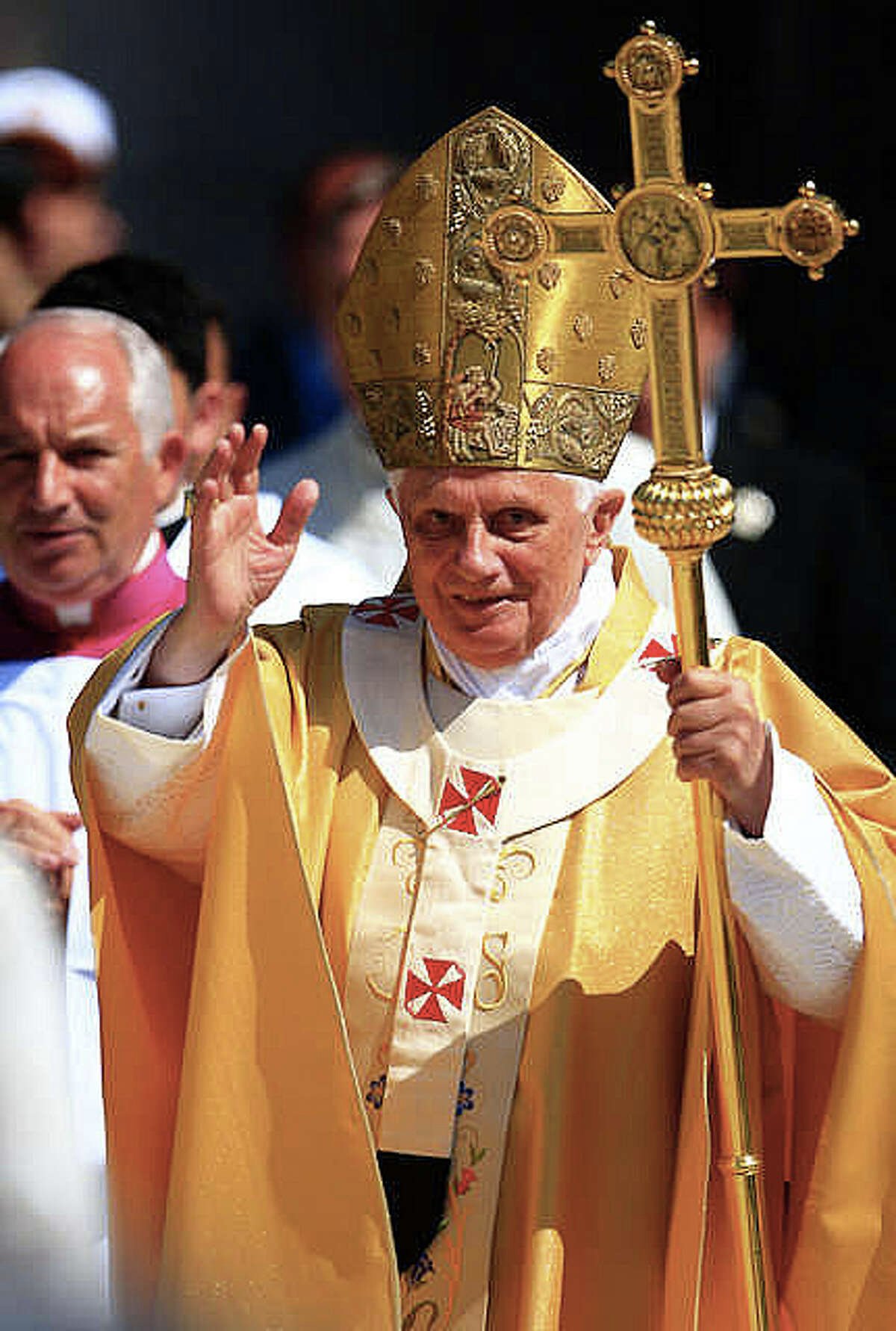
Yesterday, Bishop Peter Elliott, Auxiliary Emeritus of Melbourne, Australia, passed away at the age of 81. His Excellency was a strong supporter of the traditional liturgy, and wrote a well-regarded manual for the new rite, Ceremonies of the Modern Roman Rite; his scholarly work covered a great many other topics as well, on Church history, marriage and family, and religious education. He was also very much involved with the establishment of the Anglican Ordinariate in Australia.
Bishop Elliott was born in 1943, the oldest son of an Anglican priest, and converted to Catholicism while studying at Oxford University in the 1960s. He was ordained to the priesthood for the archdiocese of Melbourne in 1973, and after serving there for several years, did a doctorate at the Lateran University in Rome, specializing in the theology of marriage. He then served as a representative of the Holy See at various international conferences, including the United Nations population conferences in Cairo and Beijing; he was also a consultor to the Congregation for Divine Worship. In 2007, he was made an auxiliary bishop of his native diocese by Pope Benedict XVI, and retiring from that position in 2018.

I had the pleasure of meeting Bishop Elliott in 2016, when I was invited to speak for the first time at the Fota Liturgical Conference in Cork, Ireland, an event which His Excellency attended several times. When I asked a question after his talk, the first of the day, he was so kind as to say, “Congratulations to NLM - whenever we’re feeling a bit down, we know we can always take a look at NLM and find something to feel good about.”

Deus, qui inter Apostolicos sacerdotes famulum tuum Petrum pontificali fecisti dignitate vigere: praesta quaesumus; ut eorum quoque perpetuo aggregetur consortio. Per Christum, Dominum nostrum. Amen.

God, who didst raise Thy servant Peter to the dignity of bishop in the apostolic priesthood, grant, we beseech Thee, that he may be joined to the everlasting fellowship of the Apostles. Through Christ our Lord. Amen.

Monday, April 21, 2025

Pope Francis RIP

Deus, qui inter summos sacerdótes fámulum tuum Franciscum ineffábili tua dispositióne connumerári voluisti: praesta, quáesumus; ut, qui Unigéniti Filii tui vices in terris gerébat, sanctórum tuórum Pontíficum consortio perpétuo aggregétur. Per eundem Christum, Dóminum nostrum. Amen.

Courtesy of Shawn Tribe and Liturgical Arts Journal
God, Who in Thy ineffable providence, did will that Thy servant Francis should be numbered among the high priests, grant, we beseech Thee, that he, who on earth held the place of Thine Only-begotten Son, may be joined forevermore to the fellowship of Thy holy pontiffs. Through the same Christ, Our Lord. Amen.

Saturday, January 04, 2025

Dr William Mahrt, RIP

NLM’s parent organization, the Church Music Association of America, has issued the following notice of the death of our publisher, Dr William Mahrt, on January 1st.   

With great sorrow, but with hope in the resurrection and confidence in God’s providence and mercy, we announce the passing of Dr. William P. Mahrt on January 1, 2025, the Octave Day of Christmas and Solemnity of Mary, Mother of God. Dr. Mahrt died peacefully, having received the sacraments of the Church and the apostolic pardon, and surrounded by faithful friends and students who sang and prayed the liturgical offices in which he had so many times directed them.

Dr Mahrt holding a large decorated folio with the introit of the St Ann Choir’s patronal feast.
Born in 1939, Dr. Mahrt dedicated his life to the study and performance of the Catholic Church’s sacred music, leaving an indelible mark on the field of musicology, as well as on the hearts and souls of those who knew him. His insights into the characteristics of the various forms of Gregorian chant elucidated the nature of the chant as integral to the sacred liturgy, even explicating the nature of the sacred liturgy itself. His exposition of the nature of beauty and its embodiment in Catholic sacred music, liturgical gestures and symbols, and architecture has served as an important guide in the Church’s understanding of the purpose of artistic beauty in divine worship. His work with medieval and Renaissance polyphonic masters illuminated the performances and scholarship of many choirs and students.

Dr. Mahrt’s academic journey began at Gonzaga University, near his family’s wheat farm in rural eastern Washington (near Reardan), where he earned his B.A. in 1960. He went on to receive an M.A. from the University of Washington in 1963 with a thesis on the keyboard fugues of Schumann. Driven by an insatiable curiosity and a deep love for music, he continued his studies at Stanford University, where he completed his Ph.D. in 1969 with a dissertation entitled “The Missæ ad organum of Heinrich Isaac.” Throughout his illustrious career, Dr. Mahrt held prestigious teaching positions at Case Western Reserve University, the Eastman School of Music, and Stanford University, where he inspired countless students as an Associate Professor, teaching courses on medieval notation, the modes, medieval and Renaissance repertoire and analysis, and the music of Johannes Brahms.
William Mahrt served as the President of the Church Music Association of America starting in 2005 after first joining the board in 1977. Under his editorship of the CMAA’s journal (2006–present) Sacred Music, the oldest continuously-published music journal in the United States, the publication expanded in length and breadth to serve as an important locus for the study and praxis of the Church’s music. The editorials he wrote for the journal evince a profound understanding of both the sacred liturgy and its music and were remarkable both for their integration of scholarship and Catholic theology, as well as for the wide range of topics covered. As president of the CMAA, Dr. Mahrt played an important role in the discussions of the United States Conference of Catholic Bishops which led up to the 2007 publication of guidelines on music in the liturgy, Sing to the Lord. At the initiative of his friend and the CMAA’s then-director of publications, Jeffrey Tucker, a collection of his essays, The Musical Shape of the Liturgy, was published in 2012.
Known for his expertise in Gregorian chant, medieval performance, and the works of composers such as Machaut, Dufay, Isaac, and Lassus, Dr. Mahrt’s scholarly contributions earned him numerous accolades, including the NEH’s Newberry Library Fellowship in 1976, the Albert Schweitzer Medal in 1991, and the Thomas Binkley Award in 2010. He served as President of the Northern California Chapter of the American Musicological and Chairman of the Bay Area chapter of the Latin Liturgy Association. He was a frequent presenter and attendee at the International Congress on Medieval Studies in Kalamazoo, the International Fota Conference, as well as the conferences of the Society for Catholic Liturgy, International Musicological Society (IMS), and the IMS’s study group Cantus Planus. In demand as a teacher, Dr. Mahrt was a regular faculty member and plenary speaker at the CMAA’s annual Sacred Music Colloquium, Cantores in Ecclesia’s annual Byrd Festival in Portland, Oregon, the Lumen Christi Institute of the University of Chicago, the Singers’ Retreat in San Anselmo, California, the Renaissance Polyphony Weekend in Dallas, Texas, the Sacred Music Institute of America, and the Catholic Institute of Sacred Music at St. Patrick’s Seminary in Menlo Park.
In addition to his scholarly achievements, Dr. Mahrt was a founding member of the St. Ann Choir in 1963 and served as its director for most years since 1964. Under his leadership, the ensemble developed an extensive repertory of medieval and Renaissance motets and masses, singing each Sunday and principal feast day a Missa cantata in Latin, with Gregorian propers, two motets, and a mixture of Gregorian and Renaissance ordinaries at St. Thomas Aquinas Church in Palo Alto, California. Dr. Mahrt played an organ prelude and postlude for every Mass in which the organ was permitted. The choir, in response to an initiative by Dr. Mahrt several decades ago, also sings Sunday Vespers and Compline, with Vespers usually at the St. Ann Chapel, the choir’s original home in Palo Alto. The ensemble is one of the few in the world which has a continuous tradition of singing the Church’s treasury of sacred music, all the while implementing the reforms to the sacred liturgy called for by the Second Vatican Council’s Sacrosanctum concilium and the 1967 Instruction Musicam Sacram.
Dr. Mahrt was a graceful and compelling advocate for the place of Gregorian chant and sacred polyphony as the central music of the Roman rite, especially in the celebration of the modern Roman missal. He carefully collected and produced editions of important and interesting polyphonic works, teaching them to his choir with love and enthusiasm for the music in all its aspects. The choir continues singing from these editions, as well as the large choirbook-style score of the Gregorian chants from Annie Bank Editions, even inspiring the production by longtime choir member Susan Alstatt of beautiful illuminations of the choir’s patronal feast’s propers. The extensive library of the St. Ann Choir, complete with its elegantly accurate translations of many motet texts, was a core part of the early formation of the Choral Public Domain Library by one of Dr. Mahrt’s students at Stanford, Rafael Ornes.
Many of Dr. Mahrt’s students from Stanford joined his ensemble to augment their experience of the music, in its proper liturgical context, about which they were writing dissertations and theses. Singers flocked from all backgrounds to sing with him in this unique ensemble, and they are the core of those who attended Dr. Mahrt’s bedside until his hour of death. The friendships formed in the choir by Dr. Mahrt served as an anchor in his life and the lives of so many others. His leadership of the St. Ann Choir and the Stanford Early Music Singers was a testament to his unwavering commitment to sacred music, the true and deep bond between the highest levels of scholarship and praxis, and a fervent love for his Catholic faith.
To celebrate his life and legacy, a conference entitled “The Musical Shape of the Liturgy: Celebrating the Life and Work of William P. Mahrt” was held in November of 2023, marking the 150th volume of Sacred Music and honoring the establishment of a new chair in sacred music at St. Patrick’s Seminary in Menlo Park under the leadership of Dr. Jennifer Donelson-Nowicka. Scholars, musicians, and friends from around the country gathered to celebrate Dr. Mahrt’s remarkable accomplishments and work.
His contributions to the field of musicology and his passionate dedication to sacred music will be remembered and cherished by his family, friends, students, colleagues, and the countless lives he touched through his work. His legacy will continue to inspire and guide future generations in the pursuit of beauty and excellence in sacred music.
More than just a scholar and a musician, Bill—as he liked to be called—was a gentleman, a colleague, and a dear friend. Highly respected by his students, singers, and all who knew him, he was a very modest man and always remained a humble worker in the vineyard of the Lord. After a year of several health problems, Bill suffered a stroke while in the hospital receiving care for other matters. He was preceded in death by his mother, Evelyn, his father, Peter, and his sister Kathryn. He is survived by his sister Susan Perkins, brothers-in-law Tom Brannon and Norman Smith, nieces and nephews, and their children and grandchildren.
Bill, you have been a shining light for so many of us, and you shall never be forgotten. Requiescas in pace!
NON NOBIS DOMINE SED NOMINI TVO DA GLORIAM
Funeral arrangements are being handled by Duggan’s Funeral Service. Those wishing to send flowers should contact Duggan’s (https://www.duggansfuneralservice.com/). The wake will take place at St. Thomas Aquinas Church in Palo Alto, California (751 Waverley St.) from 5 p.m. to 9 p.m. on Thursday, January 9, 2025. All are invited to come at any time during the wake. Vespers will be sung at 6 p.m., a rosary will be prayed at 7 p.m., and Compline will be sung at 8 p.m. The funeral is at noon on Friday, January 10, 2025 at Mission Dolores in San Francisco, California (3321 16th St.). Parking is available in the school lot, with an entrance on Church St. A reception will follow the funeral. Burial arrangements are TBA.
Anyone who would like to sing for the funeral is invited to do so. Required sign-up is available here: https://forms.gle/R68wXzBQ3P9ux9Xa8. A required rehearsal will be 9 a.m. to 11 a.m. in the basilica church at Mission Dolores.

Friday, September 20, 2024

Giancarlo Ciccia, RIP

Of your charity, please pray for the repose of a friend, Mr Giancarlo Ciccia, who passed away in Rome earlier today as the result of a long-term illness. For many years, he served as one of the masters of ceremonies and sacristans at Santissima Trinità dei Pellegrini, the FSSP parish in Rome; the reputation which that church has long enjoyed for the superb quality of its liturgies is due in no small measure to his constant hard work and diligence. He was very much involved in the revival of the church’s confraternity, whose members helped greatly with taking care of him during his illness; he was also an extremely talented Latin scholar, and had taught Latin at the Dominican university in Rome, the Angelicum.

Inclína, Dómine, aurem tuam ad preces nostras, quibus misericordiam tuam súpplices deprecámur: ut ánimam fámuli tui Joannis Cároli, quam hodie de hoc sáeculo migráre jussisti; in pacis ac lucis regióne constituas, et Sanctórum tuórum júbeas esse consortem. Per Christum, Dóminum nostrum. Amen.

Incline Thine ear, o Lord, to our prayers, by which we humbly ask for Thy mercy, that Thou may set the soul of Thy servant Giancarlo, which today Thou hast commanded to go forth from this world, in a place of light and peace, and command him a portion with Thy Saints. Through Christ our Lord. Amen.

Thursday, May 02, 2024

Fr John Hunwicke, RIP

I am very saddened to report (via the Facebook page of the Oxford Oratory) that the great Fr John Hunwicke died on Tuesday, after a long battle with pancreatic cancer. As many of our readers know, he was a priest of the Ordinariate of Our Lady of Walsingham; his blog, Fr Hunwicke’s Mutual Enrichment, has long been an incomparably valuable repository of wisdom, wit and erudition, and we have very often highlighted his articles here on NLM over the years. Many of his posts have been devoted to the defense of the authentic liturgical tradition of the Roman Rite, and the exposure of the scholarly impostures that underpinned its would-be replacement. This series which touched on the historical question of the epiclesis was a particularly fine achievement, one among many:

https://www.newliturgicalmovement.org/2015/04/reforming-canon-of-mass-some.html

Fr Hunwicke and I corresponded a few times; he was very generous in allowing us to reproduce what he had written, and in his gratitude for some assistance I was able to provide him on some points of liturgical history. He is survived by his wife, children and grandchildren; let us pray for their consolation, and, of course, for his eternal repose.
Deus, qui inter apostolicos sacerdotes famulum tuum Joannem sacerdotali fecisti dignitate vigere: praesta quaesumus: ut eorum quoque perpetuo aggregetur consortio. Per Christum, Dominum nostrum. Amen.

God, who among the apostolic priests made Thy servant John to flourish with priestly dignity: grant, we beseech Thee: that he may also be joined unto their perpetual society. Through Christ our Lord. Amen.

Wednesday, April 03, 2024

Bishop Vitus Huonder, RIP

We received word earlier today that His Excellency Vitus Huonder, Bishop Emeritus of the diocese of Chur in Switzerland, just passed away; he would have celebrated his 82nd birthday on April 21. During his time as bishop of Chur, he was a generous supporter of the traditional rite, and performed ordinations for the Ecclesia Dei communities. On his retirement in 2019, after a bit less than twelve years as an ordinary, he lived in a Swiss house of the Society of St Pius X, with the permission of the Pope. The pictures below show him celebrating a solemn pontifical Mass for the feast of St Sebastian in 2013.

Deus, qui inter Apostolicos sacerdotes famulum tuum Vitum pontificali fecisti dignitate vigere: praesta quaesumus; ut eorum quoque perpetuo aggregetur consortio. Per Christum, Dominum nostrum. Amen.
God, who didst raise Thy servant Vitus to the dignity of bishop in the apostolic priesthood, grant, we beseech Thee, that he may be joined to the everlasting fellowship of the Apostles. Through Christ our Lord. Amen.

Saturday, February 03, 2024

Mons Arthur Calkins, RIP

Earlier today, I learned of the death of Mons Arthur Calkins, a retired priest of the archdiocese of New Orleans who worked for the Ecclesia Dei commission for nearly 20 years, from 1991 to 2010. Many of the communities which celebrate the traditional liturgy were encouraged by his friendship and support especially in those years. Of your charity, please pray for his eternal repose.

Deus, qui inter apostolicos sacerdotes famulum tuum Arthurum sacerdotali fecisti dignitate vigere: praesta quaesumus: ut eorum quoque perpetuo aggregetur consortio. Per Christum, Dominum nostrum. Amen.

God, who among the apostolic priests made Thy servant Arthur to flourish with priestly dignity: grant, we beseech Thee: that he may also be joined unto their perpetual society. Through Christ our Lord. Amen.

Sunday, December 31, 2023

The First Anniversary of Pope Benedict XVI’s Death

Deus, qui inter summos sacerdótes fámulum tuum Benedictum ineffábili tua dispositióne connumerári voluisti: praesta, quáesumus; ut, qui Unigéniti Filii tui vices in terris gerébat, sanctórum tuórum Pontíficum consortio perpétuo aggregétur. Per eundem Christum, Dóminum nostrum. Amen.

God, Who in Thy ineffable providence, did will that Thy servant Benedict should be numbered among the high priests, grant, we beseech Thee, that he, who on earth held the place of Thine Only-begotten Son, may be joined forevermore to the fellowship of Thy holy pontiffs. Through the same Christ, Our Lord. Amen.

As we pray for the eternal repose of His Holiness Pope Benedict XVI, who died one year ago today, let us also remember with gratitude the gift of his papacy, his graciousness and good humor, his many wise and well-considered writings, his paternal love especially for priests and religious, but of course above all, his restoration to the Church of the incomparable treasure of the traditional Roman Rite, an act which will continue to bear great spiritual fruit and lead the way for much-needed reform. “What earlier generations held as sacred, remains sacred and great for us too, and it cannot be all of a sudden entirely forbidden or even considered harmful.”
Joseph Ratzinger serving an open-air solemn Mass in the town of Buchfelln in 1947, when he was 20. Tradition will always be for the young!

Saturday, December 31, 2022

Pope Benedict XVI, RIP

Deus, qui inter summos sacerdótes fámulum tuum Benedictum ineffábili tua dispositióne connumerári voluisti: praesta, quáesumus; ut, qui Unigéniti Filii tui vices in terris gerébat, sanctórum tuórum Pontíficum consortio perpétuo aggregétur. Per eundem Christum, Dóminum nostrum. Amen.

God, Who in Thy ineffable providence, did will that Thy servant Benedict should be numbered among the high priests, grant, we beseech Thee, that he, who on earth held the place of Thine Only-begotten Son, may be joined forevermore to the fellowship of Thy holy pontiffs. Through the same Christ, Our Lord. Amen.

As we pray for the eternal repose of the deceased Pope Emeritus, let us also remember with gratitude the gift of his papacy, his graciousness and good humor, his many wise and well-considered writings, his paternal love especially for priests and religious, but of course above all, his restoration to the Church of the incomparable treasure of the traditional Roman Rite, an act which will continue to bear great spiritual fruit and lead the way for much-needed reform. “What earlier generations held as sacred, remains sacred and great for us too, and it cannot be all of a sudden entirely forbidden or even considered harmful.”

Friday, January 14, 2022

Alice von Hildebrand R.I.P.

Shortly after midnight today, Dr Alice von Hildebrand, one of the great defenders of tradition in the Catholic Church in all its aspects, including the traditional liturgy, passed away at the age of 98. A great scholar, philosopher and theologian in her own right, she was also dedicated to preserving the legacy of her husband Dietrich von Hildebrand, whom Pope Pius XII once called a “twentieth-century Doctor of the Church.” She had been retired from teaching since 1984, but continued to write and speak; her most recent book was published in 2014.

Deus, cui proprium est miseréri semper et párcere, te súpplices exorámus pro ánima fámulae tuae Aliciae, quam hodie de hoc sáeculo migráre jussisti: ut non tradas eam in manus inimíci, neque obliviscáris in finem, sed júbeas eam a sanctis Angelis súscipi, et ad patriam paradísi perdúci; ut, quia in te sperávit et crédidit, non poenas inferni sustíneat, sed gaudia aeterna possídeat. Per Dominum...
O God, to whom it belongeth ever to have mercy and to spare, we humbly entreat Thee for the soul of Thy servant Alice, which this day Thou hast bidden to pass from tis world, that Thou may deliver her not into the hands of the enemy, nor forget her forever, but command her to be taken up by the holy Angels, and led to our home in paradise, so that, since she hoped and believed in Thee, she may not suffer the pains of hell, but possess everlasting joys. Through Our Lord...
TLM: ... There are those critics of the ancient Latin Mass who point out that the crisis in the Church developed at a time when the Mass was offered throughout the world. Why should we then think its revival is intrinsic to the solution?
AVH: The devil hates the ancient Mass. He hates it because it is the most perfect reformulation of all the teachings of the Church. It was my husband who gave me this insight about the Mass. The problem that ushered in the present crisis was not the traditional Mass. The problem was that priests who offered it had already lost the sense of the supernatural and the transcendent. They rushed through the prayers, they mumbled and didn’t enunciate them. That is a sign that they had brought to the Mass their growing secularism. The ancient Mass does not abide irreverence, and that was why so many priests were just as happy to see it go.

Saturday, December 04, 2021

Fr Joseph Santos, RIP

This morning, Fr Joseph Santos, pastor of the church of the Holy Name in Providence, Rhode Island, and long-time celebrant of the regular traditional Masses in that city (my native place), passed away after a long struggle with covid-19. Fr Santos, whose family was Portuguese, was a priest of the archdiocese of Braga; we have shared pictures of the Palm Sunday ceremony at Holy Name, which he would celebrate each year according to the Braga Missal. I would be remiss not to speak of my gratitude to him for his great generosity in the care which he took of my parents when they were dying. My sister said the same to another priest of Providence, and he replied, “There are so many other people who have said that.” Twelve years ago today or tomorrow (memoria fallitur), he gave my father Extreme Unction; shortly thereafter, he left his first-class relic of Padre Pio in the house for my mother, which she found a great comfort in her final illness. Two months later he anointed her, which required racing to the hospital in the deep of a cold night, and later celebrated her funeral Mass. (From this post of 2018, Fr Santos blessing the palms at Holy Name.) 

Deus, qui inter apostolicos sacerdotes famulum tuum Joseph sacerdotali fecisti dignitate vigere: praesta quaesumus: ut eorum quoque perpetuo aggregetur consortio. Per Christum, Dominum nostrum. Amen.

God, who among the apostolic priests made Thy servant Joseph to flourish with priestly dignity: grant, we beseech Thee: that he may also be joined unto their perpetual society. Through Christ our Lord. Amen.

Wednesday, June 23, 2021

Thomas Gordon Smith RIP

I just learned from Duncan Stroik that the architect Thomas Gordon Smith passed away this morning. He was one of the most important leaders in the movement to reclaim beauty in architecture, and particularly church architecture, over the last few decades, a movement which has born great fruits both in his own work, and in the work of those trained and mentored by him. I had the pleasure of meeting Dr Smith on two occasions, once at the consecration of the FSSP seminary in Nebraska, which he designed, and again in Rome in the company of his wife, and his son, Fr Innocent Smith OP. (Fr Smith is a musicologist specializing in the chant tradition of the Dominican Order, and whose work we have featured a few times here on NLM.) He was a very kind man, and will be missed by many. Our condolences to all of his family and friends.

The chapel of Our Lady of Guadalupe Seminary in Denton, Nebraska, designed by Thomas Gordon Smith.
Deus, cui proprium est miseréri semper et párcere, te súpplices exorámus pro ánima fámuli tui Thomae, quam hodie de hoc sáeculo migráre jussisti: ut non tradas eam in manus inimíci, neque obliviscáris in finem, sed júbeas eam a sanctis Angelis súscipi, et ad patriam paradísi perdúci; ut, quia in te sperávit et crédidit, non poenas inferni sustíneat, sed gaudia aeterna possídeat. Per Dominum... – O God, to whom it belongeth ever to have mercy and to spare, we humbly entreat Thee for the soul of Thy servant Thomas, which this day Thou hast bidden to pass from tis world, that Thou may deliver him not into the hands of the enemy, nor forget him forever, but command him to be taken up by the holy Angels, and led to our home in paradise, so that, since he hoped and believed in Thee, he may not suffer the pains of hell, but possess everlasting joys. Through Our Lord...

Monday, November 02, 2020

Fr Giuseppe Vallauri, RIP

We have just received news of the death earlier this morning of Fr Giuseppe Vallauri, a priest of the Sons of Divine Providence, and one of the pillars of the early movement to preserve and promote the traditional Latin Mass. Not long after the Ecclesia Dei indult was promulgated, Don Vallauri, who was (if I remember correctly) stationed in Ireland at the time, made a tutorial video on how to the celebrate the TLM called “The Most Beautiful Thing This Side of Heaven.” Many of the priests who offered the old Mass under the indult regime learned to do so at least in part from this video (back when there was no internet and people still had VCRs.) For many years, he worked in the Roman Curia, and celebrated the Mass for pilgrims at various shrines in the area of Rome, at weddings and funerals, and in more recent years, as the TLM has continued to flourished, helped with the magnificent Holy Week services at the FSSP church in Rome, Santissima Trinità dei Pellegrini. (He had a beautiful baritone voice, and was perfect as the Christus for the singing of the Passions.)

Deus, qui inter apostolicos sacerdotes famulum tuum Joseph sacerdotali fecisti dignitate vigere: praesta quaesumus: ut eorum quoque perpetuo aggregetur consortio. Per Christum, Dominum nostrum. Amen.
God, who among the apostolic priests made Thy servant Joseph to flourish with priestly dignity: grant, we beseech Thee: that he may also be joined unto their perpetual society. Through Christ our Lord. Amen.
Fr Vallauri was born in the town of Robilante, near Cuneo in the northern region of the Piedmont, on Sept. 7, 1945. He entered the congregation of the Sons of Divine Providence (founded by Don Giuseppe Orione in 1903, and also known in Italian as the “Orionisti”) in 1956 at the age of 11. He served in the order’s parish in Bantingford, England for 24 years (his English was excellent), then Ireland, before going to Kenya in 1996. In more recent years, he served as an archivist in the Roman Curia and at the community’s house in Pompei. He was 75 years old, a professed religious for 58 years, and a priest for 48.

Monday, September 14, 2020

“What One Good Teacher Can Do: A Musical Reminiscence” by Fr Anthony Cekada†

Gregory DiPippo informed readers last Friday, September 11, of the death of Fr. Anthony Cekada. Although I never met Fr. Cekada in person, he and I would exchange emails from time to time on musical matters. Readers are no doubt aware that he was a great lover of sacred music in all its varieties. At one point, when we were discussing easy choral Masses in Latin with organ accompaniment, he offered to send me copies of a number of Masses for two- and three-voices, which I gladly accepted. He ended up sending me a considerable number of them, which I still have on my bookshelf.

On June 15, 2016, Fr. Cekada sent the following article, with illustrations, to his email list. I knew that Father was a composer of modest and useful sacred music, but I had not realized the extent of his musical training until this charming article and its illustrations. I thought it would be a fitting way to remember him, in spite of the fact that we obviously had profound disagreements in matters of ecclesiology. The article was prefaced with a note.

"Dear Fathers, Seminarians, Church Musicians, Teachers and Friends,

"During the past week or so, I’ve had a lot of correspondence with musicians, including some professionals who live by this glorious art. In one exchange, I told the unusual story of my own musical education in my early and mid-teens. It took place over two intense years, exactly a half century ago. The education took me from being an untrained but eager musical ignoramus at 14 to being the accomplished and technically adept orchestral composer of a major work at 16. The credit for my transformation belongs to one amazing man: Michael P. Hammond. The story of what he did and its final outcome is a testament to the lasting and profound change that one good teacher can make in the life of a willing student.

"Unfortunately, Mr. Hammond soon departed for another teaching post. His successors spurned the traditional principles he had taught me and insisted we composed noisy, irrational junk. I quit composition in disgust, turned to the organ, put all my works away, and, for a half century, gave little thought to my teenage composing days. But very recently, you’ll see, I went back for a look at the music I had composed. It was only with fifty years perspective that I could see in it the miracle that Michael Hammond worked on the teenage Anthony Cekada. I thank God for Michael Hammond — and all great teachers like him!"

“What One Good Teacher Can Do: A Musical Reminiscence”
Fr. Anthony Cekada†
Michael Hammond was not a composer, but he was an amazing man and musician. When I met him, he was about 30, and had just been appointed director of the Wisconsin Conservatory of Music and of the Milwaukee Civic Orchestra.

I studied with him for a mere two years, 1966-1968, when I was 15–17. To me, Mr. Hammond was a spectacular speeding comet, shedding bright light on all corners of the musical universe and leading me on an exhilarating, non-stop journey towards excellence in the composer’s craft.

By that time, Mr. Hammond was already the complete Renaissance man — a polymath in classics, philosophy, sociology and medicine; Rhodes scholar; student at Oriel College; expert in medieval polyphony; instructor in physiology and anatomy at the University of Wisconsin; researcher in neuroanatomy; student of Indian music and the sitar under Ravi Shankar, and, incredibly, a speaker of the Menominee American Indian language! After he left the Conservatory, he would go on to become founding dean of the music department at SUNY-Purchase; Assistant Conductor of the American Symphony Orchestra under Leopold Stokowski, conductor of the Norman Dessoff Choirs; dean of music at Rice University; president of Rice University, and in 2001, be appointed by President Bush as the eighth chairman of the National Endowment for the Arts.

When I began studying with Mr. Hammond, my only previous musical training consisted of Catholic grade school music classes, singing the daily High Mass with the rest of the children and going to concerts, courtesy of the wealthy lady who employed my father as her chauffeur. In grade school, I desperately wanted to play the piano, but it was physically impossible to get one into our tiny apartment.

Fortunately, when I started high school in 1965 at age 14, I finally got access to pianos, and better yet, to practice organs. I found a nun to teach me organ.

I promptly composed my first piece, an organ march to be played after Mass. (Ex. 1).

At the same time, I began trying to compose sacred choral music by studying scores of the old masters and trying to imitate them. The post-Vatican II liturgical changes has just been introduced, and the new music that came with it revolted me. Everyone else might produce insipid musical junk for Mass, but not the teenage Anthony Cekada! He would learn how to be a composer and then write real sacred music!

My father’s employer, Paula Uihlein, was a great patroness of the arts in Milwaukee, and when she got wind of this, she arranged for me to meet Mr. Hammond, who had just taken up his post as the conservatory director.

I brought Mr. Hammond all my compositions, and told him what I aspired to do: compose good, traditional sacred music. He said that what I’d shown him was very promising and showed that I had a real ear for the older styles, but that I needed to learn all the correct rules of technique.

The program Mr. Hammond laid out for me was this. Two years of piano training, then organ. He would personally tutor me in counterpoint, in those those principles of composition and theory where he thought I needed the most help, and in introductory orchestration. These lessons, he said, I could immediately apply to my own compositions — a point that he probably figured would keep my interest fired up.

When I graduated from high school, Mr. Hammond added, I should then coordinate taking the formal composition curriculum at the Conservatory with my theology courses at the diocesan seminary. This would ensure that in the long run there would be no gaps in my formal training.

So each week, I spent a very intense hour or so in Michael Hammond’s office, correcting exercises, learning principles and making practical applications to my compositions-in-progress. He was an astoundingly lucid teacher and an exemplary mentor.

To begin our sessions, Mr. Hammond had me select any score from the library or his office that interested me, and pick a page or two in it. We’d then go through my selection to understand what was going on musically and why. At first, I picked Bach cantatas or Mozart symphonies, and I was amazed at his ability to do on-the-spot piano reductions of the dozen instrumental staves [stacked lines of music showing the note for each individual instrument], often in different keys. Little stinker that I was, I later started to test him by picking monster scores from Wagner, Mahler, Stravinsky and Schoenberg. None of it fazed him in the least — instant reduction, then ”Here’s the musical context... Now look at this, this and this…”

After two years of this, alas, Mr. Hammond was off to Purchase and to Stokowski. But what practical effect, if any, did his tutoring have on the musical compositions of Anthony Cekada, 16-year-old aspiring composer?

Up until a few days ago, I couldn’t have given you a clear answer. Sure, Mr. Hammond’s tutoring had undoubtedly improved my composing, but I couldn’t have told you much about how or why. In 1970, I sealed up my completed scores in two envelopes, and never looked at them again.

But my discussion with a young musician on Monday piqued my curiosity, so I opened the envelopes and pulled out the scores. What I found after 45 years absolutely astounded me. I had come to Michael Hammond as a musical ignoramus with grade-school music training, but full of teenage eagerness to get things right. After just two years with him, here is some of what he got me to produce:

A homophonic Ave Maria imitating Palestrina. (Dec. 1966, age 15) With few exceptions, it followed correct voice leading and harmonization rules, but with little touches of the modern or the unexpected here and there. It showed a nice attention to subtle dynamics. A parish choir performed it. (Ex. 2)

A Renaissance-style Kyrie. (Prob Fall 1966, age 15). Scored for SSTB a cappella in mode I. The two soprano parts were an exercise in how to handle voice lines that overlap.

Motet Acclamationes Sanctae Virgini. (May 1968, age 16). A cappella with two choruses alternating (SSAA, TTBB), possibly imitating Cristobal Morales. Observes all the correct Renaissance rules. Treats successive sections of the text (Tota Pulchra es Maria) in a variety of textures. Eighty bars long! Alas, it was never performed. (Ex. 3)


A baroque pastiche on Nun Komm der Heiden Heiland (March 1969, age 17). Scored for four-part chorus, continuo and a challenging violin obliggato. (Ex. 4)


“Mass of Praise and Glory” (begun early 1967, age 15; completed January 1968, age 16) (Ex 5)

Friday, September 11, 2020

Fr Anthony Cekada, RIP

It was announced earlier today that Fr Anthony Cekada has passed away after suffering a stroke several days ago. He will be known to our readers as the author of Work of Human Hands: A Theological Critique of the Mass of Paul VI, and The Problems with the Prayers of the Modern Mass, a study of the systematic omission of certain doctrines (such as miracles and hell) from the prayers of the post-Conciliar Missal. Fr Cekada was a sede-vacantist and believed that the Mass of Paul VI is invalid, positions which we reject without reservation, but this does not change the value of his work for the study of the liturgy. As Dom Alcuin Reid wrote in a review of Work of Human Hands which we published in 2011:


“Some will dismiss this study because Father Cekada is canonically irregular and a sede-vacantist. Whilst these are more than regrettable, ad hominem realities are not sufficient to dismiss this carefully argued and well researched work. We must attend to his arguments on their merits. ... Father Cekada’s great service is to flag the big question that we have not widely, as yet, been prepared to face. Whilst it is certainly better to celebrate the modern liturgy in a traditional style using more accurate translations, that is not enough. For if the Missal of Paul VI is indeed in substantial discontinuity with the preceding liturgical and theological tradition, this is a serious flaw requiring correction. It is high time, then, that we not only recognise, but do something about the elephant in the liturgical living-room.”

Deus, qui inter apostolicos sacerdotes famulum tuum Antonium sacerdotali fecisti dignitate vigere: praesta quaesumus: ut eorum quoque perpetuo aggregetur consortio. Per Christum, Dominum nostrum. Amen.

God, who among the apostolic priests made Thy servant Anthony to flourish with priestly dignity: grant, we beseech Thee: that he may also be joined unto their perpetual society. Through Christ our Lord. Amen.

Image from Wikimedia Commons by DizzinessOfFreedom, CC BY-SA 4.0 

Tuesday, July 23, 2019

Bishop Juan Rodolfo Laise, R.I.P.

Yesterday, His Excellency Juan Rodolfo Laise, Bishop Emeritus of San Luis, Argentina, passed away at the age of 93 at the Capuchin Convent of San Giovanni Rotondo, Italy, where he had been living in retirement for several years. A native of Buenos Aires, he was ordained as a priest of the Capuchin Order in 1949, and served as bishop of San Luis for just under 40 years, from July of 1971 to June of 2001. In 2015, he attended the annual Populus Summorum Pontificum pilgrimage in Rome, celebrating Pontifical Vespers and Benediction at Santissima Trinità dei Pellegrini, and the principal Mass the following day in St Peter’s Basilica. Bishop Laise was also an ardent defender of the traditional practice of receiving Holy Communion on the tongue, a subject on which he wrote a very useful book; during his time as bishop of San Luis, he refused to allow permission for Communion in the hand within the diocese.

Bishop Laise imparting the Pontifical Blessing at the end of the Mass in St Peter’s Basilica, during the 2015 Populus Summorum Pontificum pilgrimage.
Deus, qui inter Apostolicos sacerdotes famulum tuum Joannem Rudolphum pontificali fecisti dignitate vigere: praesta quaesumus; ut eorum quoque perpetuo aggregetur consortio. Per Christum, Dominum nostrum. Amen.

God, who didst raise Thy servant Juan Rodolfo to the dignity of bishop in the apostolic priesthood, grant, we beseech Thee, that he may be joined to the everlasting fellowship of the Apostles. Through Christ our Lord. Amen.

Saturday, December 15, 2018

Count Neri Capponi, RIP

Count Neri Capponi, a prominent Florentine legal scholar and canonist, and one of the great defenders of the rights of those attached to the traditional Mass, passed away on Thursday in his native city of Florence, Italy. Count Capponi taught for many decades at the University of Florence, while also serving on the marriage tribunal of the archdiocese; he was also recognized as a canon lawyer with the credentials to speak before the Roman Rota. He was one of the very few to argue insistently that the Roman Church’s traditional liturgy had never been formally abolished, a position which he sustained against all comers, and in which he was finally vindicated by Pope Benedict XVI in the motu proprio Summorum Pontificum. He was also a regular contributor to The Latin Mass and other traditionalist publications.

Inclína, Dómine, aurem tuam ad preces nostras, quibus misericordiam tuam súpplices deprecámur: ut ánimam fámuli tui Nerium, quam de hoc sáeculo migráre jussisti, in pacis ac lucis regióne constítuas, et Sanctórum tuórum júbeas esse consortem. Per Dóminum.

Incline, o Lord, Thy ear to our prayers, by which we humbly pray for Thy mercy; that Thou may set the soul of the servant Neri, which Thou hast commanded to depart from this world, in the place of peace and light, and command Him to share the lot of Thy Saints. Through our Lord...

Count Neri Capponi and Michael Davies at an Una Voce conference.

More recent articles:

For more articles, see the NLM archives: