
Didacus of Alcalá (1400-63) came from a poor but pious family in Spain. He is known to us today as a saint from the (communal) Franciscan Order, his first aspirations were to be a hermit. He embraced the hermit’s life as a child, placing himself under the spiritual guidance of a hermit who lived not far away. And when he was old enough, he became a wandering hermit.
 |
| Portrait of St Didacus, 1651-53, by the Spanish painter Francisco de Zurbarán (1598-1664). |
But after a while, Didacus felt a calling to the religious life. He entered the Observant (or Reformed) branch of the Order of Friars Minor in Albaida and was sent to the friary in Arruzafa, where he was received as a lay brother. A lay brother was a member of a religious community who did not pray in choir or prepare for holy orders. Lay brothers did most of the manual labor in a community while their better-educated brethren focused on liturgy, preaching, and leadership. For Didacus that meant working at various trades to support the friary.
 |
| Spaniards and the Guanche people on the Canary Islands. |
The Canary Islands, located about sixty miles off the coast of North Africa, had recently been conquered by Spain, and the Franciscans wished to bring the Gospel to the native Guanche people. Didacus was among the first missionaries to set foot on the islands. In 1445, he was appointed as Guardian of the Franciscan community on Fuerteventura. It was unheard of to make a “mere” lay brother the Superior of a community, but Didacus stood out for his holiness and prudence. He was also passionate about justice. His defense of the Guanche against the genocidal practices of the colonizers forced his return to Spain in 1449.
After a brief stay in Rome helping victims of an epidemic, Didacus spent the rest of his life in the friary of Santa María de Jesús in Alcalá. After his death, his body is believed to have remained incorrupt, not undergoing rigor mortis and emitting a pleasant odor.
Two posthumous miracles seem to corroborate this belief. During a hunting trip, King Henry IV of Castile fell from his horse and injured his arm. After doctors failed to alleviate the intense pain, the king prayed to Didacus for a cure. The Saint’s body was then removed from its coffin and placed next to the king. Henry kissed the body and placed Didacus’ hand on his injured arm. Instantly, it was healed.
 |
| Henry IV of Castile |
Second, Don Carlos of Asturias fell down a flight of stairs after a night of carousing and landed on his head. Partially paralyzed, blind, and feverish, he asked to make a petition to Didacus. The Saint’s body was brought to the prince and the prior placed the prince’s hand on Didacus’ chest. Carlos fell into a deep sleep, had a dream in which Didacus told him he would be alright, and awoke healed.
If “Saint Didacus” does not sound familiar, perhaps you know the Spanish version better: “San Diego.” California’s second-most populous city received its name when Sebastián Vizcaíno (1550-1629), commanding the ships San Diego, Santo Tomás, and Tres Reyes, landed on the shores of the San Diego Bay on November 12, 1602, and had Mass said in honor of St. Didacus, even though Didacus’ feast day is on November 13. After the Mass, Vizcaíno named the bay after the Saint.
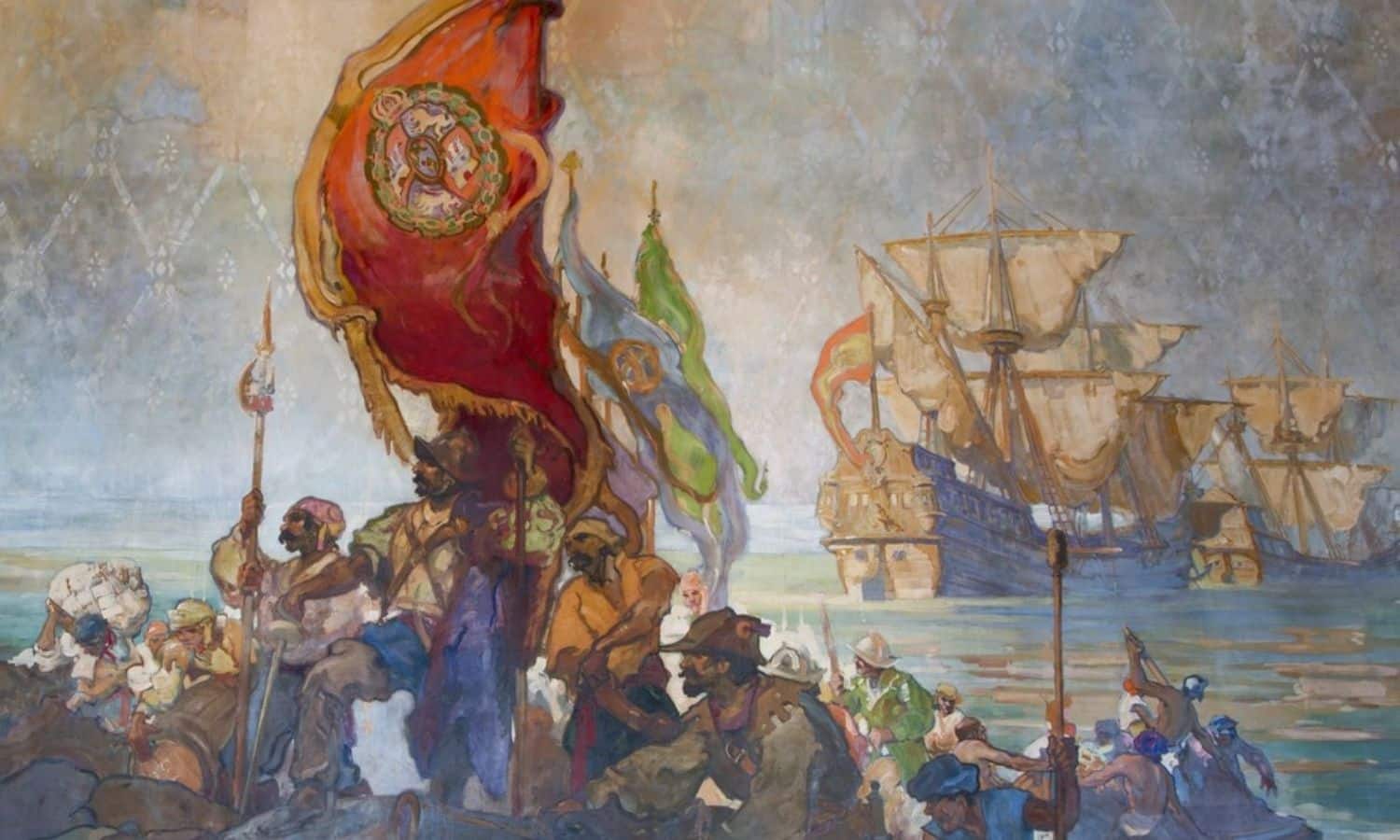
But whether Didacus is the Latin version of Diego remains disputed. All we know is that when Rome canonized the man, they named him Didacus, which in turn is inspired by the Didache, a first-century Christian text. Apparently, the Congregation reviewing Diego’s holiness was so impressed that they considered him to be an embodiment of the ideals of primitive Christianity. And thus the name Didacus/Diego was transferred from a book to a man to a bay to a city.




