
In those days, behold I, John, saw in the midst of the throne and of the four living creatures, and in the midst of the elders, a Lamb standing as it were slain, having seven horns and seven eyes: which are the seven Spirits of God, sent forth into all the earth. And he came and took the book out of the right hand of him that sat on the throne. And when he had opened the book, the four living creatures, and the four and twenty ancients fell down before the Lamb, having every one of them harps, and golden vials full of odours, which are the prayers of saints: And they sung a new canticle, saying: Thou art worthy, O Lord, to take the book, and to open the seals thereof; because thou wast slain, and hast redeemed us to God, in thy blood, out of every tribe, and tongue, and people, and nation. And hast made us to our God a kingdom and priests, and we shall reign on the earth. And I beheld, and I heard the voice of many angels round about the throne, and the living creatures, and the ancients; and the number of them was thousands of thousands, saying with a loud voice, “The Lamb that was slain is worthy to receive power, and divinity, and wisdom, and strength, and honour, and glory, and benediction.” (Apocalypse 5, 6-12, the Epistle of the Mass of the vigil of All Saints. This part of the book, St John’s vision of God on His throne with the heavenly court and the Saints standing before Him, has long been a favorite source for artistic depictions of Heaven. This specific passage contains the first mention of Christ as “the Lamb that was slain”, and the book’s first occurrence of the word “Saints”.)
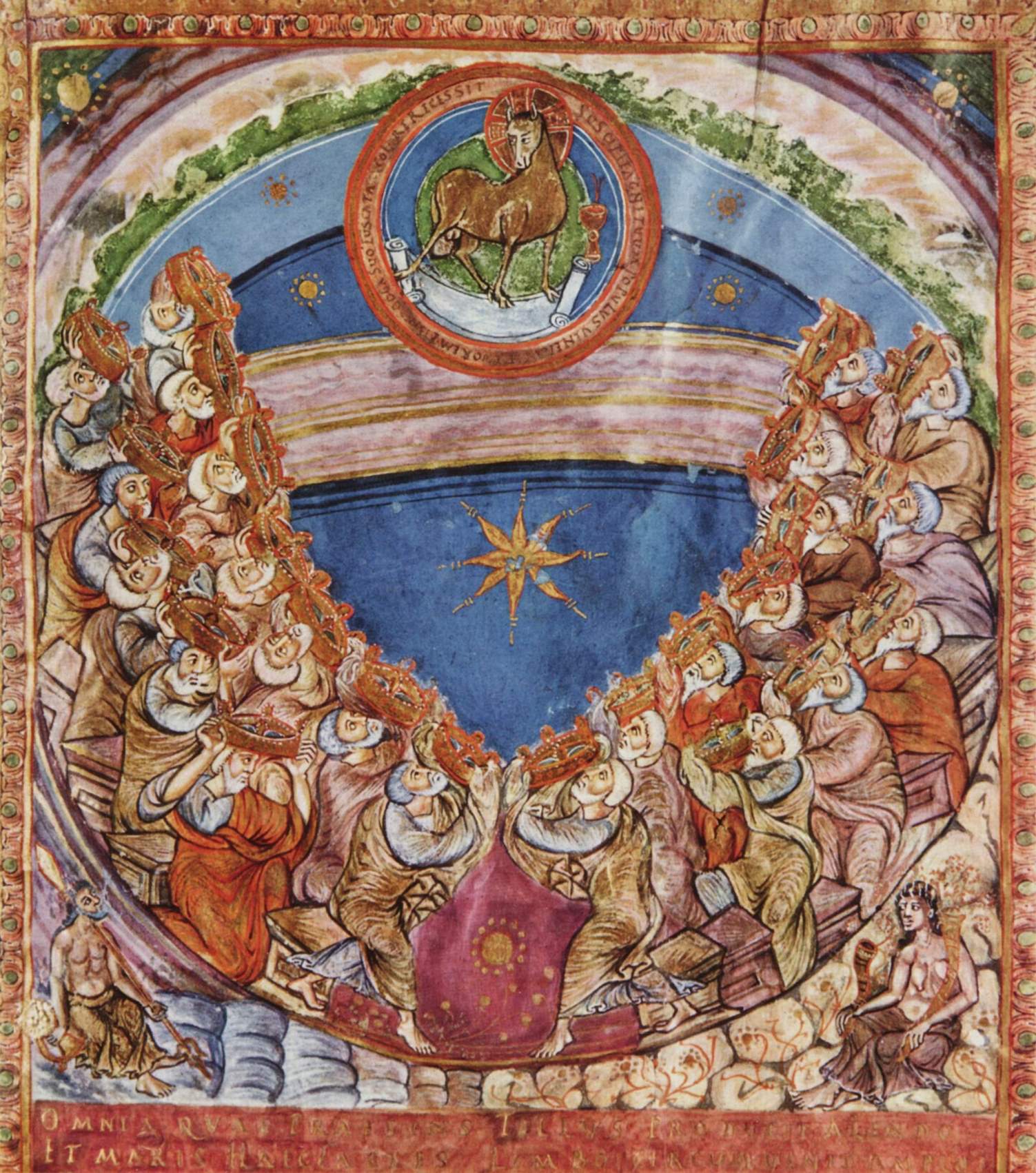 |
| The Adoration of the Lamb, from the Gospel book known as the Codex Aureus of St Emmeram, 870 AD. |




