

Van Gogh, Man and the Earth
Lost in Translation #156
In the Canticle of the Sun, Saint Francis moves from a direct praise of the Creator to a praise of the Creator in individual creatures such as the sun, water, and air. And in the eighth stanza, he zooms out to a more complex object:
Laudato si, mi Signore, per sora nostra matre Terra,la quale ne sustenta et gouerna,et produce diuersi fructi con coloriti fior et herba.
Which I translate as:
Praised be You, my Lord, through Sister Mother Earth,who sustains us and governs us and who producesvaried fruits with colored flowers and herbs.
As we have noted in an earlier article, Francis chose the title “brother” or “sister” based on the gender of the noun in Italian: since the Italian word for earth or land (terra) is feminine, Francis calls the earth “sister.”
But we never explained why Francis addresses creatures as siblings in the first place. Why not, for example, call the sun and the earth friends or comrades instead? The answer, I believe, is to emphasize that all creation has the same Maker and that subsequently, all creatures are related to each other. Rather than see the environment as something that is alien or “other” than us, the healthier model is to see us all as products of God—while still acknowledging, of course, our unique dignity as human beings.
Moreover, when something is your brother or sister, you feel a familial responsibility to take care of it. It is said that some Arab cultures refer to a chivalrous man as a “brother of girls.” As Msgr. Arthur Tonne explains, the expression indicates a man “to whom God has given a clean heart to love all women as his sisters, and strength and courage to fight for their protection.” Imagine if all humankind were a “brother of girls” to each other and to all creation.
But can creation also be our mother? The danger in saying so is that it might lead to pantheism, the believe that everything is God (which ends up meaning that God is nothing). G.K. Chesterton goes so far as to say:
Unfortunately, if you regard Nature as a mother, you discover that she is a step-mother. The main point of Christianity was this: that Nature is not our mother: Nature is our sister. We can be proud of her beauty, since we have the same father; but she has no authority over us; we have to admire, but not to imitate. This gives to the typically Christian pleasure in this earth a strange touch of lightness that is almost frivolity. Nature was a solemn mother to the worshippers of Isis and Cybele. Nature was a solemn mother to Wordsworth or to Emerson. But Nature is not solemn to Francis of Assisi or to George Herbert. To St. Francis, Nature is a sister, and even a younger sister: a little, dancing sister, to be laughed at as well as loved.
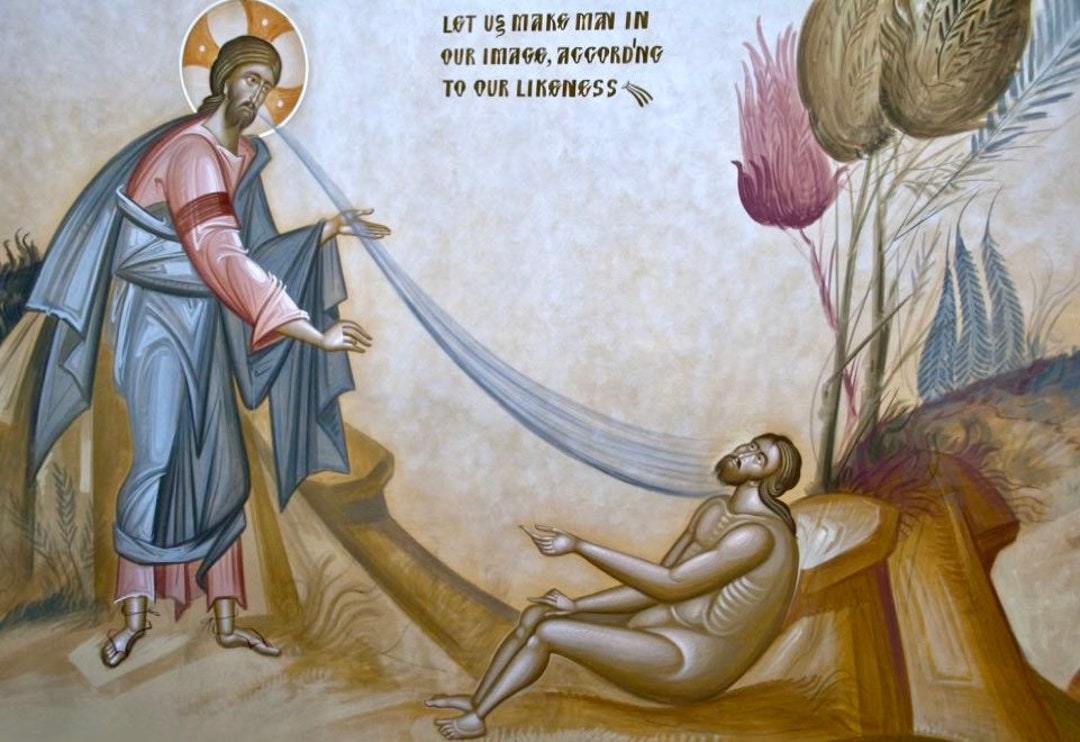
Chesterton may be exaggerating a bit, but I believe his main concern is the reason why Saint Francis calls the Earth “Sister Mother.” If he called her “Mother” only, it could make him a nature-worshipper; but if he called her “Sister” only, it would be a denial of the earth’s role in governing all of the individual elements Francis has been talking about it in the canticle. “Sister Mother” makes no sense in describing normal family relations, but it makes all the sense in the world in describing our peculiar relationship to the planet on which we dwell. For even though we receive our unique spiritual essence from our Heavenly Father, it was he who chose to make us from the slime of the earth.
This article originally appeared in the Messenger of St. Anthony 127:10, international edition (October 2025), p. 15. Many thanks to its editors for allowing its publication here.




