
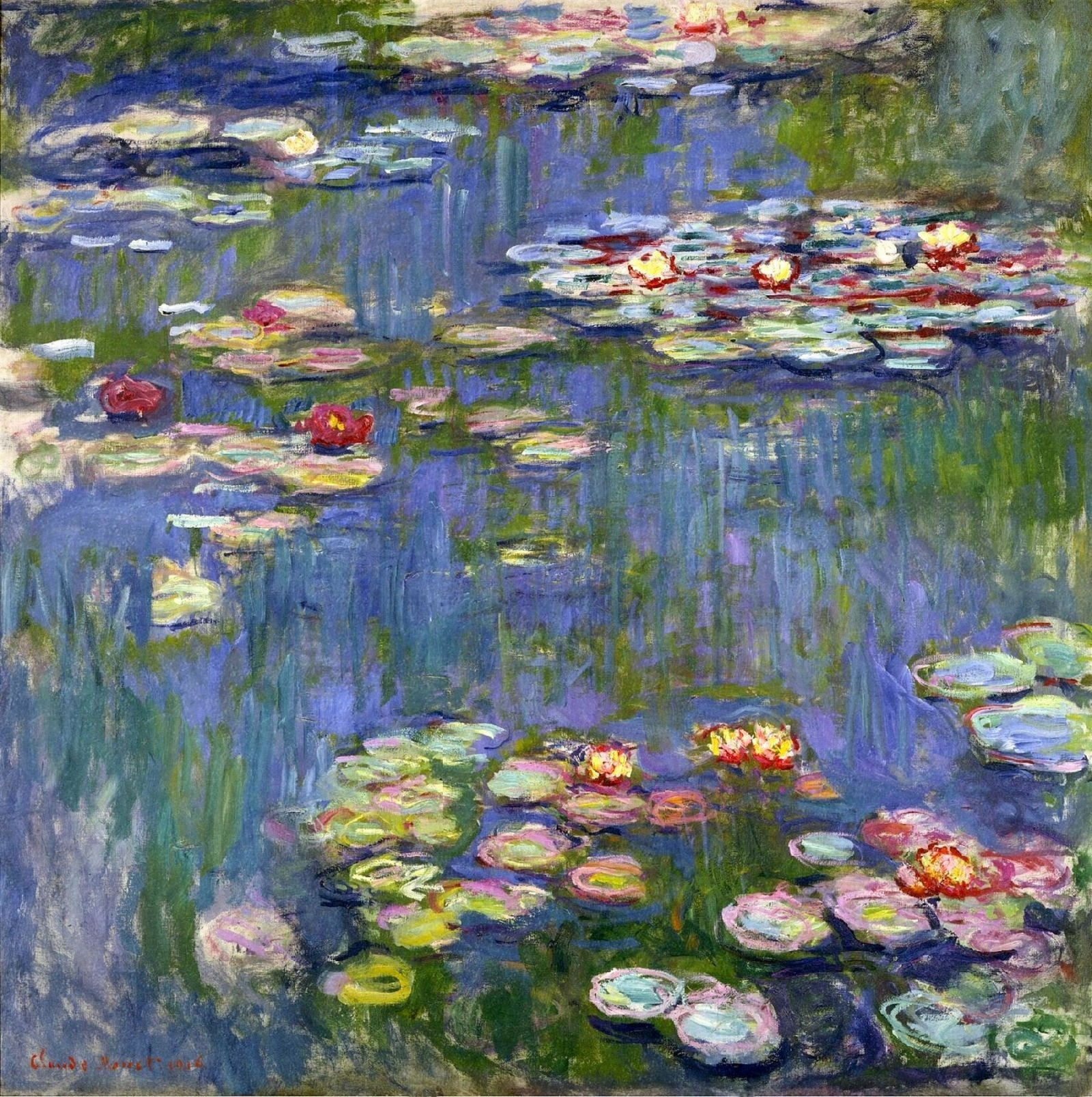
Claude Monet, Water Lilies
Lost in Translation #154
After wishing that Brother Wind and the air praise God, Saint Francis turns to Sister Water:
Laudato si, mi Signore, per sor’Acqua,la quale è multo utile et humile et pretiosa et casta.
Which I translate as:
Praised be You, my Lord, through Sister Water,which is very useful and humble and precious and chaste.
Water, it would seem, captures the human imagination like no other earthly element. “Meditation and water are wedded for ever,” writes Herman Melville in Moby Dick. “Take almost any path you please, and ten to one it carries you down in a dale, and leaves you there by a pool in the stream. There is magic in it.” Norman Maclean concludes his beautiful novel A River Runs through It with this observation:
Eventually, all things merge into one, and a river runs through it. The river was cut by the world’s great flood and runs over rocks from the basement of time. On some of the rocks are timeless raindrops. Under the rocks are the words, and some of the words are theirs.I am haunted by waters.
And this magic stuff becomes even more magical, so to speak, when mixed with sanctifying grace. Our Lord knew what He was doing when He made water the matter for the sacrament of our initiation into eternal life. In the Old Testament, water is both life and death: life, for example, for the Hebrews crossing the Red Sea and death for the Egyptians who followed them. Water is also cleansing and healing, as in the case of the Naaman the Aramean who was cured of leprosy after bathing seven times in the River Jordan. The sacrament of baptism combines all these characteristics: being plunged in the waters of baptism brings death to self and life in Christ, and it washes us clean of all sin.
Saint Francis gives three descriptions for water. First, it is “very useful.” Water not only sustains our lives but the lives of every other creature on whom we depend for sustenance, every plant and animal. And there is no beverage we consume that does not contain H2O. Water is also essential to cleanliness and, despite its dangers, it is a lot of fun to boat on or to swim in or simply to gaze upon from the shore.
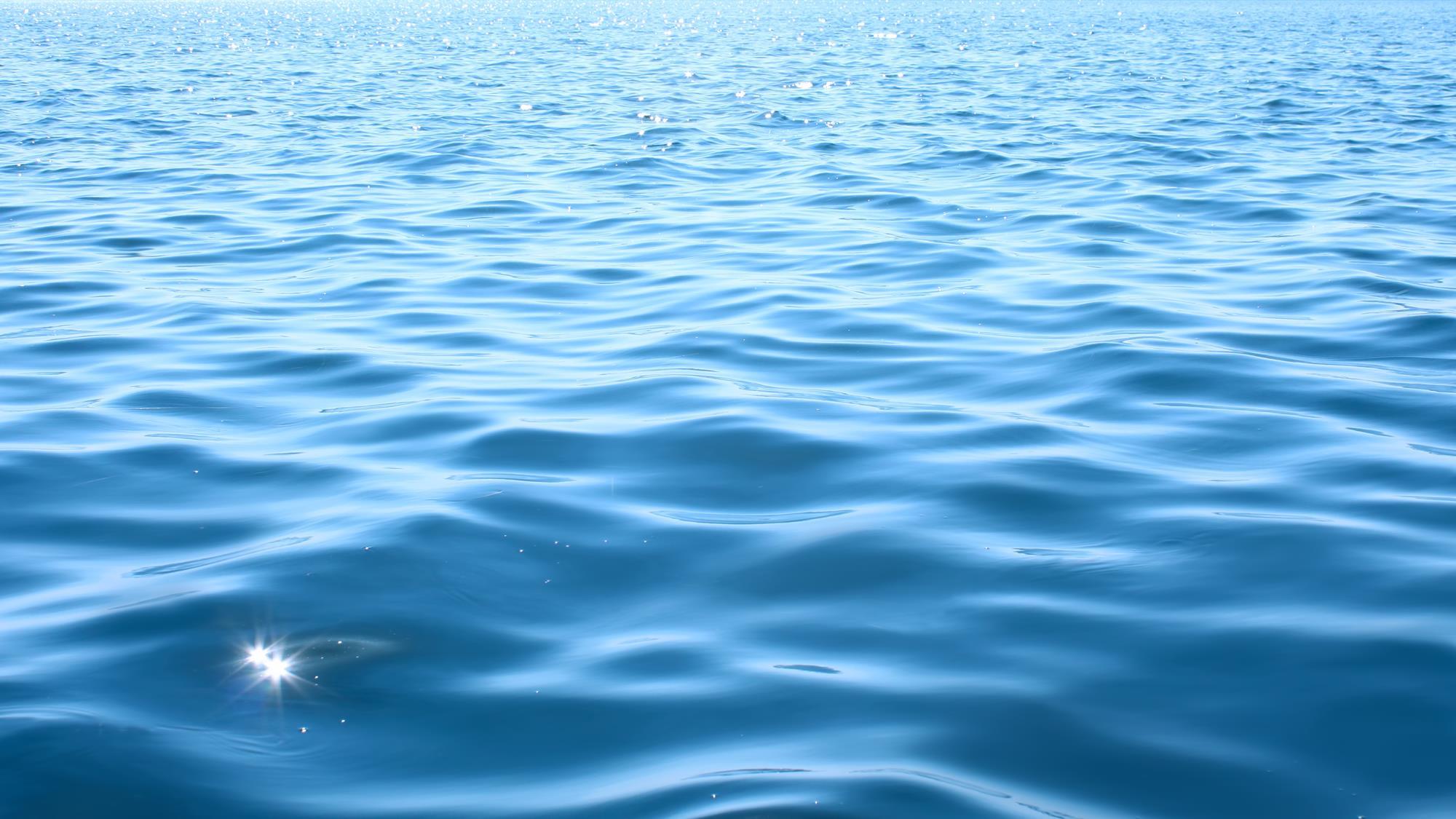
Second, water is precious. Thanks to our impressive modern water-treatment plants and an amazing network of indoor plumbing, it is easy to forget how difficult it was for many of our ancestors to have a reliable source of potable water, and how difficult it still is in some parts of the developing world. Francis was surely grateful for water. “To him,” writes Msgr. Arthur Tonne, “plain Sister Water tasted better than the richest wine.”
Third, the Saint calls water “chaste.” It is a curious choice. No doubt he is referring to water’s purity, but like English, the Italian language has its own word for purity. Chastity, on the other hand, is a special kind of purity, a purity regarding sexual desire and activity. The image that emerges is of Sister Water as a humble and dear maiden, not unlike the Blessed Virgin Mary. It is a surprising image but fitting, since Francis has personified water by calling it/her his sister.
And perhaps this image of chastity should make us more concerned about polluting or sullying Sister Water. The Great Pacific Garbage Patch is an island of microplastic debris in the Pacific Ocean three times the size of France; and 703,000,000 people today (one in ten) lack access to clean water. Let’s do a better job protecting our sister’s chastity.

The Great Pacific Garbage Patch
This article appeared as “Song of Water” in the Messenger of St. Anthony 127:7, international edition (July/August 2025), p. 33. Many thanks to its editors for allowing its publication here.




