
In the New Testament, Jesus Christ is compared to several animals: He is the Lamb of God (John 1, 29), the Lion of Judah (Rev. 5, 5), a mother hen (Mt 23, 37), and so forth. Although it is understandable to focus on Our Lord’s relation to the Passover Lamb during the Triduum and Easter, Christians over the centuries have also understood the Pascal Mystery in piscatorial terms – that is, in terms of fish and fishing.
The Mysterious ICHTHUS
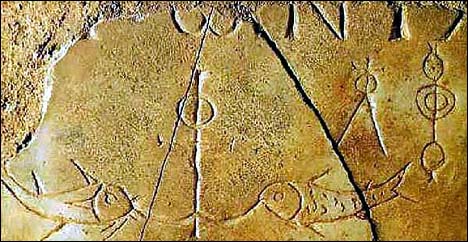
In the early Church, the greatest artistic symbol of Christ was a drawing of a fish (or sometimes a dolphin, one of man’s best friends in the sea). Specifically, the first generations of Christians saw the fish as a symbol of Jesus present in the sacraments of the Eucharist and Baptism. Already in the Book of Tobias, early Christians saw a foreshadowing of the Messiah. Like Christ in the Eucharist, the fish that Raphael caught is food for the pilgrim, a repellent of demons, and enlightenment for the blind. In the New Testament, Jesus multiplies fishes along with loaves of bread, miracles that anticipates the miracle of bread and wine turning into Christ’s Body and Blood. And after the Resurrection, the Risen Lord provides fish and bread, the fish symbolizing His humanity and bread His divinity. It is Christ’s humanity that enabled Him to be raked across the coals, so to speak, during His passion and death; or as the Church Fathers more eloquently put it, the Messiah is the Fish taken from living water and immolated on the altar of the Cross by the fire of His love, who feeds His own with His own substance. [1] And Jesus Christ is also fully divine, or as He describes Himself, “the Living Bread descended from Heaven” (John 6, 51). “He who was able, as a man, to be grilled like a fish,” proclaims Pope Gregory the Great, “restores us with bread as God.” An epitaph written in the second century on the tomb of a Christian named Abercius uses similar imagery for Holy Communion. Describing his travels from one end of Christendom to the other, he writes:
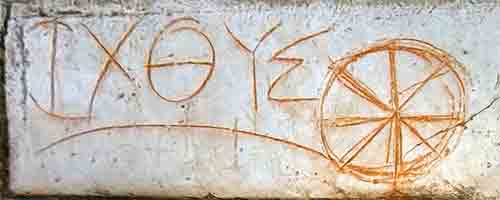
 No wonder that the early Church interpreted the Greek word for fish, ichthus, as an acrostic for Iesous Christos Theou Uios Soter: Jesus (I), Christ (Ch), God’s (Th) Son (U), Savior (S). Christians used drawings of a fish as a secret code during the Roman persecutions, enabling them to recognize Christian safe places and centers of worship (they are all over the catacombs). In fact, it is said that after the Cross the fish is the second most popular symbol of Christianity.
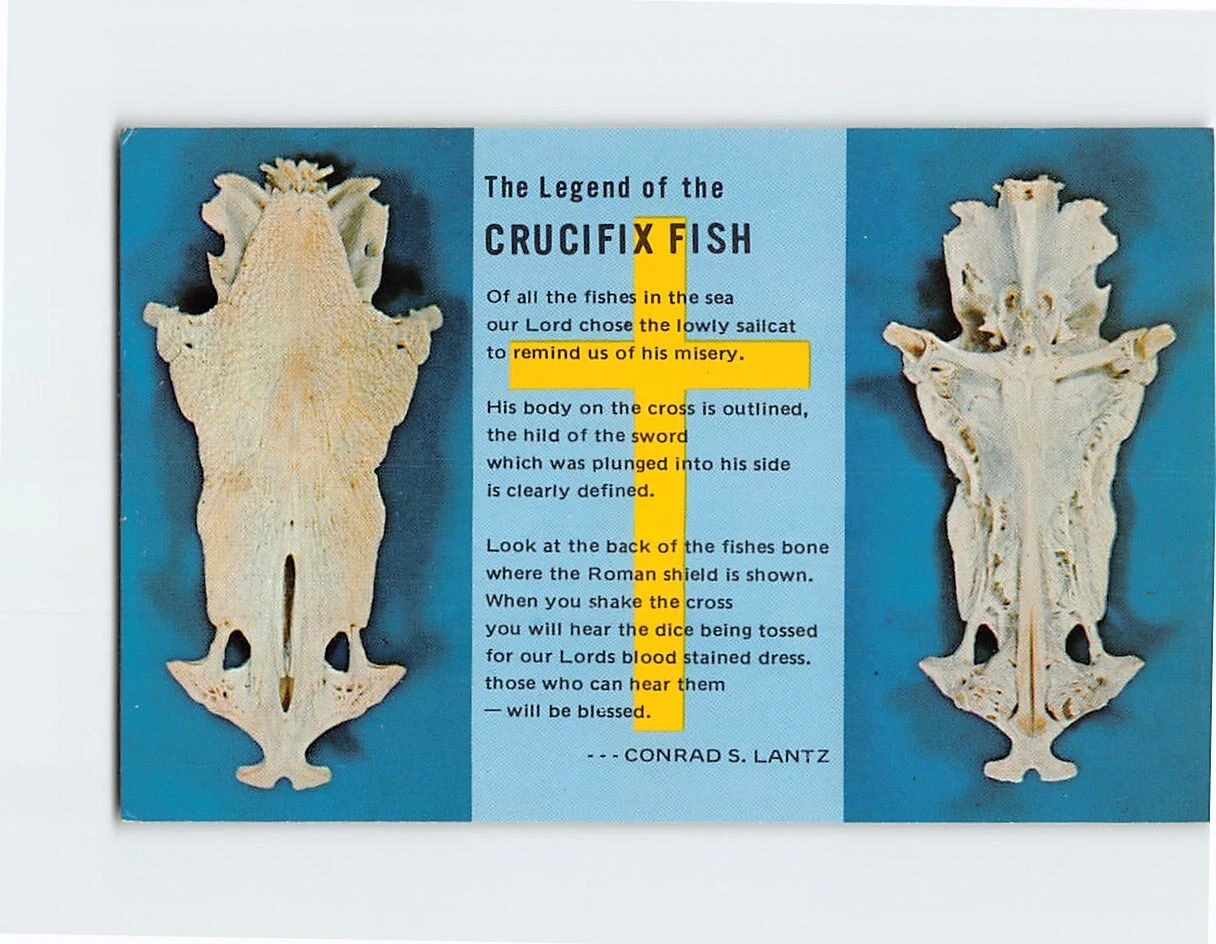 The so-called Fish Hook Theory can also be found in other Church Fathers, such as St. Gregory Nazianzen:

Faith everywhere led me forward, and everywhere provided as my food a fish of exceeding great size, and perfect, which a holy Virgin drew with her hands from a Fount and this it [Faith] ever gives to its friends to eat, it having wine of great virtue, and giving it mingled with bread. [2]
Jesus as Bait
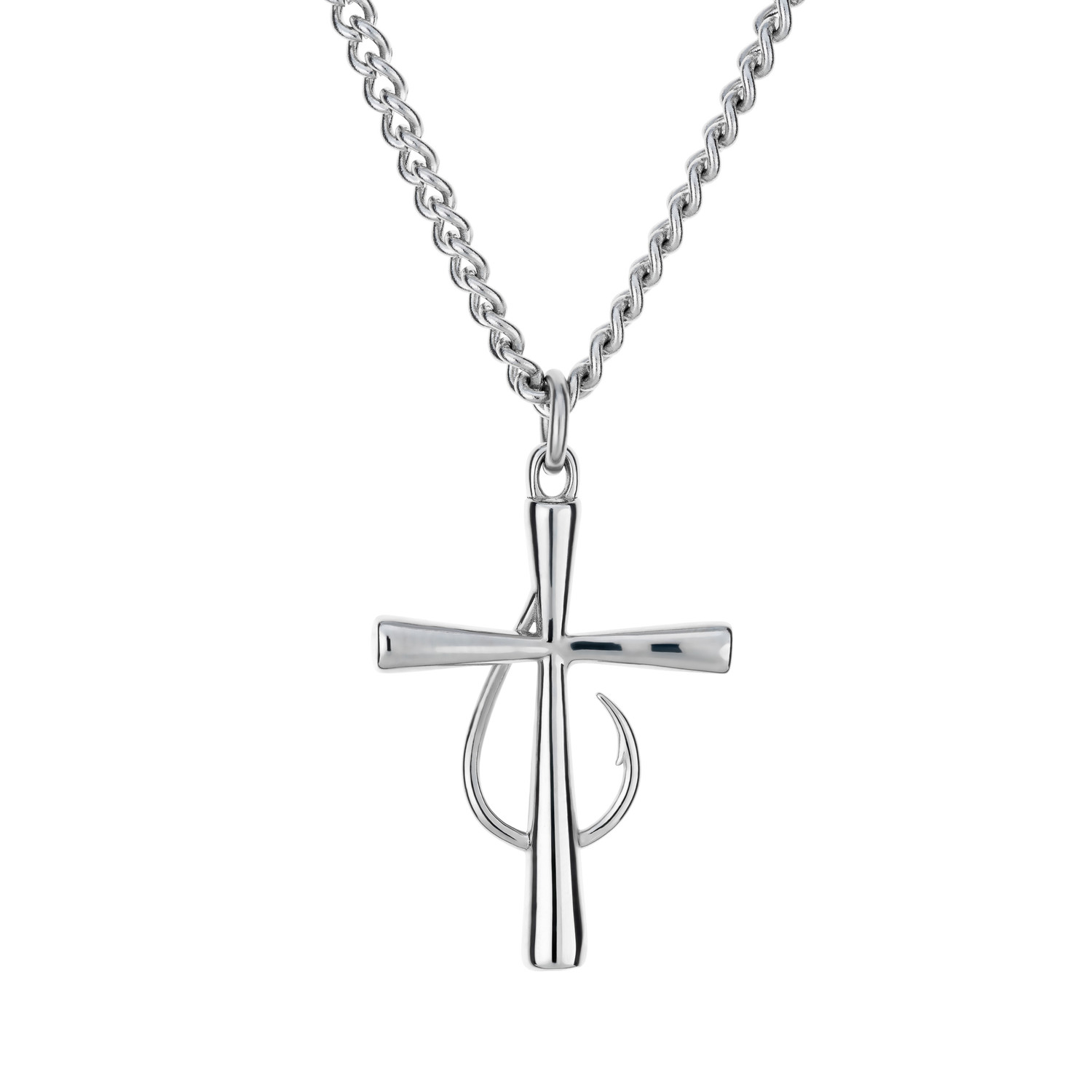
Jesus Christ is our Ichthus or Fish, but He is also the bait. According to St. Rufinus of Aquileia (d. 411), when the Word of God became flesh and dwelt among us, it was as if God were fishing for the Devil. Christ’s divinity was the sharp hook, cleverly concealed by His humanity, the bait. Christ offered His flesh as a bait, Rufinus explains, so that “His divinity underneath might catch [the Devil] and hold him fast with its hook, through the shedding of His immaculate Blood.” And sure enough, the Devil took the bait, conspiring in all sorts of ways to have Jesus of Nazareth persecuted and rejoicing when He was crucified. But the Devil did not know that this holy man was also the Second Person of the Trinity, and that only the Precious Blood of this God-man could pay the price of our redemption. As Rufinus puts it:
If a fish seizes a baited hook, not only does it not take the bait off the hook, but it is drawn out of the water to be itself food for others. So too, he who had the power of death seized the Body of Jesus in death, not being aware of the hook of divinity enclosed within it; and having swallowed it, he was caught immediately, and the bars of Hell was burst asunder, and he was drawn forth, as it were, from the abyss to become food for others.[3]
It may sound strange to think of the Devil as food for others, but this is not the rich nourishment that Our Lord the Ichthus provides in Word and Eucharist. Rather, the Devil is a nasty river dragon whose flesh becomes a kind of fodder for beasts and carrion. Rufinus cites Ezechiel 29:3-5 in support of his interpretation, when God is speaking to Egypt and calling it a “great dragon”:
I will put a bridle in thy jaws… and I will draw thee out of the midst of thy rivers… And I will cast thee forth into the desert…I have given thee for meat to the beasts of the earth, and to the fowls of the air.
[I]t was not in the nature of the opposing power to come in contact with the undiluted presence of God, and to undergo His unclouded manifestation. Therefore, in order to secure that the ransom on our behalf might be easily accepted by him who required it, the Deity was hidden under the veil of our nature, that so, as with ravenous fish, the hook of the Deity might be gulped down along with the bait of flesh, and thus, life being introduced into the house of death, and light shining in darkness, that which is diametrically opposed to light and life might vanish; for it is not in the nature of darkness to remain when light is present, or of death to exist when life is active.[4]
St. Maximus the Confessor makes a clever connection between this atonement model and Psalm 21,7:
“I am a worm and not a man.” (Ps. 21:7, LXX) He truly became, and was thus called, a worm because He assumed the flesh without being conceived by human seed. For, just as the worm is not born through copulation or sexual procreation, so too our Lord was not born in the flesh through sexual procreation. Moreover, the Lord mounted His flesh on the fish-hook of His divinity as bait for the devil’s deceit, so that, as the insatiable serpent, the devil would take His flesh into his mouth (since its nature is easily overcome) and quiver convulsively on the hook of the Lord’s divinity, and, by virtue of the sacred flesh of the Logos, completely vomit the Lord’s human nature once he swallowed it. As a result, just as the devil formerly baited man with the hope of divinity, and swallowed him, so too the devil himself would be baited precisely with humanity’s fleshly garb; and afterward he would vomit man, who had been deceived by the expectation of becoming divine, the devil himself having been deceived by the expectation of becoming human. The transcendence of God’s power would then manifest itself through the weakness of our inferior human nature, which would vanquish the strength of its conqueror. As well, it would be shown that it is God Who, by using the flesh as bait, conquers the devil, rather than the devil conquering man by promising him a divine nature.[5]
And finally, St. John Damascene:
Since our Lord Jesus Christ was without sin (for He committed no sin, He Who took away the sin of the world, nor was there any deceit found in His mouth). He was not subject to death, since death came into the world through sin. (Rom. 5:12) He dies, therefore, because He took on Himself death on our behalf, and He makes Himself an offering to the Father for our sakes. For we had sinned against Him, and it was meet that He should receive the ransom for us, and that we should thus be delivered from the condemnation. God forbid that the blood of the Lord should have been offered to the tyrant. Wherefore death approaches, and swallowing up the body as a bait is transfixed on the hook of divinity, and after tasting of a sinless and life-giving body, perishes, and brings up again all whom of old he swallowed up. For just as darkness disappears on the introduction of light, so is death repulsed before the assault of life, and brings life to all, but death to the destroyer.[6]
No wonder that in places such as Costa Rica, Holy Saturday is a time for bromas or practical jokes, like stealing your neighbors’ furniture and rearranging it in the town plaza. The association of Holy Saturday with practical jokes makes sense, since it was during the Paschal Mystery that the biggest joke of all was played on the Enemy.
Notes
[1] St. Paulinus of Nola, Epistle 13; St. Augustine, Confessions 13.23.34; St. Ambrose, the hymn Ad coenam Agni providi.
[2] See H. Leclerq, “Inscription of Abercius,” Catholic Encyclopedia, (New York: Robert Appleton Company, 1914).
[3] Commentary on the Apostles’ Creed 16, trans. W.H. Fremantle, in Nicene and Post-Nicene Fathers, Second Series, vol. 3, eds. Philip Schaff and Henry Wace (Buffalo, NY: Christian Literature Publishing Co., 1892).
[4] Great Catechism 24.
[5] Ad Thalassium 64: On the Prophet Jonah and the Economy of Salvation.
[6] An Exact Exposition of the Orthodox Faith 3.27.




