
Or are there standards by which we can measure it?
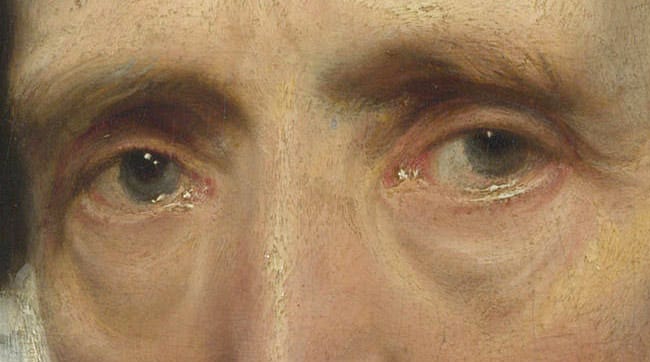 |
This is not always easy to answer with certainty, so we must look to tradition for help here.
We follow the traditional assumption that when we apprehend beauty in the world around us, we are discerning a property that belongs to the objects regarded. Consistent with this, we call beauty an objective quality. The subject—the person who views the object—makes a personal judgment on its beauty. To categorize beauty as an objective quality is not to say that everyone makes the same judgments. Clearly, there is a varying subjective element to the apprehension of beauty, as we all know, because there are differences of opinion about what is beautiful.
There is no contradiction in recognizing that there may be a differing subjective response to the same objective quality. There are several reasons two people might look at the same object and differ in their sense of its beauty. It might relate to the proper functioning of the senses: someone who is colorblind will very likely have a different sense of the beauty of something than someone who differentiates colors well.
A second reason concerns legitimate differences in the perceived goodness of the object. Some things can be good for one person but bad for another. The sound of a babbling brook, for instance, has the beauty of the sweetest music to the man who is dying of thirst, but is horrifying to a man who is drowning and sees the water level in the pond rise due to that brook.
A third reason relates to the person’s attitude toward God. Given that beauty is a sign of the divine, someone who hates God will hate beauty also and so be disinclined to accept that it is beautiful. The power of beauty to delight any particular person depends on whether or not God delights or repels him. It is important to note, therefore, that when we stated earlier that it is intrinsic to beauty to delight us, the assumption is that the person is properly ordered in his desire for God, which, in practice, will not always be the case.
Nevertheless, these subjective responses do not undermine the principle that beauty is an objective quality too. The fact that we may have differing abilities to apprehend that quality does not change the fact that we are responding to a reality - the form and appearance of the object itself. It is just as with any physical property that might be investigated by natural science. For example, two different scientists determine an object’s mass differently depending on the quality of the equipment they use to measure it, but that doesn’t mean the object has two different masses. It simply means that it is difficult to determine the mass precisely. So it is with beauty. The fact that it is difficult to know for certain that something is beautiful doesn’t undermine the principle of objective beauty.
Until the modern era, very few people dissented from the idea of beauty’s objectivity. For example, the philosopher most often cited by Catholics on the nature of beauty is St. Thomas Aquinas, who consistently treats it as an objective quality.
According to St Thomas, to be able to apprehend the beauty of an object, we need to know certain things about it:
First, we must know what we are looking at (if we are discussing visual beauty) and its purpose—this is called clarity. If we look at something and have to ask, ‘What is it?’, then it lacks this property of clarity, and we will struggle to determine whether it is beautiful.
Once its purpose is clear to us, we intuitively judge how well suited it is to that purpose and how good or noble that purpose is. When we judge whether something is well-suited to its purpose, we are considering a property known as integrity.
Then, we judge how appropriately its various parts are arranged within it to have high integrity—this is called due proportion. When it has a due proportion, all the parts are arranged within the object so that it can be well suited to its purpose.
The assumption here is not that people systematically consider these elements, one after another, before deciding whether something is beautiful. On the contrary, people just react instinctively and instantaneously to what they see, and in a moment, they see beauty, or they don’t. What St Thomas is describing through his own observation is what properties are present in things that many people, in general, see as beautiful. Similarly, knowing that beauty consists of these sub-categories does not help us to ascertain by reason what is beautiful, for in judging each aspect - clarity, integrity, and due proportion - we are still making personal judgements in regard to each sub-category. We can be no more certain in our judgment of these sub-categories than we can in our judgment that the whole is beautiful.
So, where can we look in order to ascertain what is beautiful? Is there any authority that we can trust? The traditional approach to resolving this difficulty is to seek a broad consensus. So, we can begin to create a measure of beauty that might be accepted by all by considering the common reaction to beauty. When we fully apprehend something as beautiful, we delight in it because we can see its goodness in the context of God’s purpose. St Thomas Aquinas observed this phenomenon and then based his definition of beauty on it. He told us that pulchra dicuntur quae visa placent, which means ‘things that give pleasure when they are perceived are called beautiful’. Here, he is telling us the ‘common sense’ of beauty. There is no assumption here that all people individually form the same opinion when observing a single object or react in the same way when they see something beautiful. Rather, he is describing the ideal that emerges from the general pattern of observation of many people.
 |
| Portrait of Dora Maar, by Pablo Picasso, Spanish, 20th century... an ugly portrair of a beautiful woman? (Picture by myself, taken at the Musée Picasso. |
This description of the essential elements of beauty assumes an interrelatedness between the observer and the observed object. Accordingly, for someone to be able to observe an object, that object must radiate information about itself to us so that we can perceive it with our senses. For this reason, beauty is often defined alternatively as the radiance of being.
When something is lacking in one or more of these things, we take less delight in its appearance, and we might call it ugly. Ugliness is considered to be a ‘privation’ of beauty. So when viewed in this way, ugliness is not actually a property that anything possesses; rather, something is ugly when it is not as beautiful as it ought to be. Ugliness is, therefore, a sign to us that the object is not fully what it ought to be.
There are various reasons something might be judged ugly.
The object might be distorted or damaged somehow, and so lacks due proportion and integrity because it cannot fulfill its intended purpose. Alternatively, it might be that it can fulfill its intended purpose, but that purpose is evil.
It might be that we are not fully apprehending the object, and it lacks clarity. Perhaps the object is not radiating sufficient information about itself to us, as might be the case in the dark. Alternatively, our senses may be impaired. A blind man cannot appreciate the beauty of a painting.
Even if the object is beautiful and our senses are good, we might misunderstand what we are seeing. This can be, for example, because our intellects are not fully equipped to process information from the senses, or because, even with our sinful natures, we misjudge or reject the good we see. (All these considerations become particularly complex in the judgment of the beauty of people, and we will discuss this later.)
In the properly ordered world, all things would be as they ought to be, and we would have the capacity to recognize this. In such a world, all would be beautiful, for all things exist and are made by God or man to contribute in some way to His glory.
However, we live in a fallen world in which many things are not perfect, and our capacity to judge such things is also impaired, so there appears to be much ugliness in the world. Nevertheless, an imperfect object is still good, even if not as good as it should be. It is still beautiful, even if not as beautiful as it should be. Notwithstanding these imperfections, all aspects of Creation can serve as signs that point us toward the good and our role in the world. We are called to participate in God’s creative work and direct our efforts to the perfection of all things through cooperation with grace. To the extent that we achieve this, we will be good stewards of the world, elevating the natural world by fashioning matter into beautiful art and architecture, and by creating beautiful gardens, farms, homes, and cities. To the degree that we achieve this, contemporary culture will also be beautiful, surpassing even the beauty of the wilderness - the natural world untouched by humans - for we are raising the wilderness up to something higher.
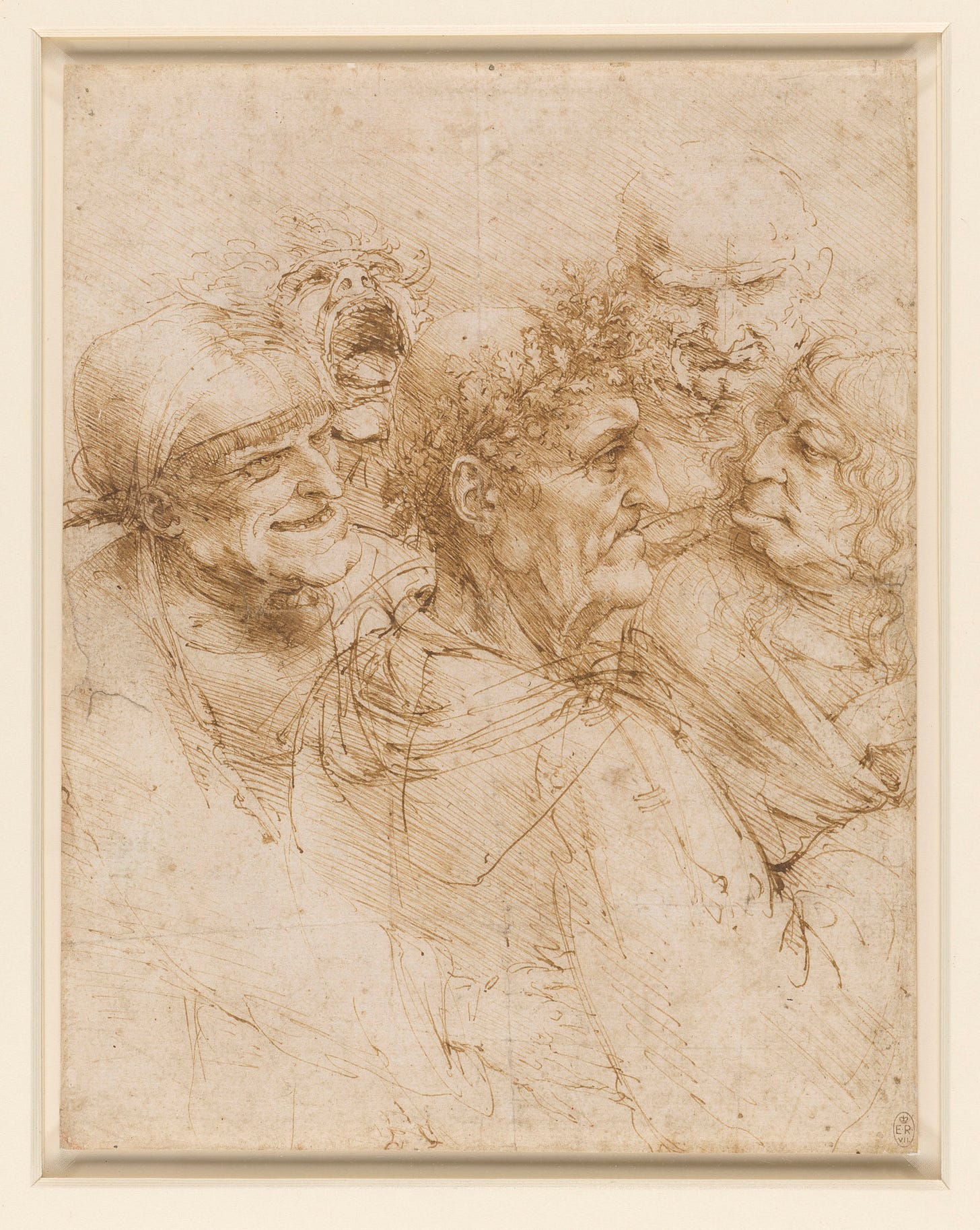 |
| Five Grotesque Heads, drawing by Leonardo da Vinci, Italian 15th century... a beautiful portrait of five ugly men? |
The Importance of Tradition to a Culture of Beauty
I have argued that beauty is an objective quality but that people can, for various reasons, differ in their ability to apprehend it. This, in turn, leads to different opinions about what counts as good art and what counts as bad art. When there is a difference of opinion, one might ask, “How do we know who is right? What standard is there to help us make such a judgment?”
This is not an easy question to answer. In another context, if we were considering the morality of someone’s action, for example, we might look to the Magisterium or to scripture directly for an authoritative judgment. Murder is wrong, for example, because Scripture tells us so.
However, God has not revealed an equivalent ‘Ten Commandments of Beauty’. As a consequence, rational arguments that one thing is more beautiful than another or that my judgment is more accurate than yours are usually fruitless because there is no accepted visible standard to back up such a claim.
 |
| Moses Receiving the 10 Commandments, Anonymous, 12th-century, from St Catherine’s Monastery, Mt Sinai, Egypt. God gave us moral clarity through revelation…why couldn’t he have revealed principles for beauty too? |
Some might ask: what about the criteria already mentioned—integrity, clarity, and due proportion—can I apply them to obtain a definitive answer?
These can help to a degree, but the difficulty here is that we still have to make a personal judgment on the degree of integrity, clarity, and due proportion that the object possesses, and so are effectively left with the same difficulty, except multiplied by three!
The capacity of unaided human reason to judge beauty is so variable that we cannot be sure of the validity of any single judgment.
All is not lost, however. Just because it is difficult to be sure that any single human judgment is good, it doesn’t mean that we have no measure at all. We know that human nature is drawn to beauty just as it is to the common good; thus, we can examine the broad patterns of most people’s likes and dislikes over time in society to consider what is beautiful. We might term this the ‘common taste,’ analogous to concepts such as common sense, common law, and the highest of these, the common good.
The common good is not a physical good that is to be divided up so that a small part is given to everyone; rather, it is a metaphysical principle, the Good, which is ultimately God, to which we are all drawn naturally - although we can exercise free will in rejecting the call of God. It is termed the common good because when someone does what is good, it is good for the person and, simultaneously, good for society as a whole.
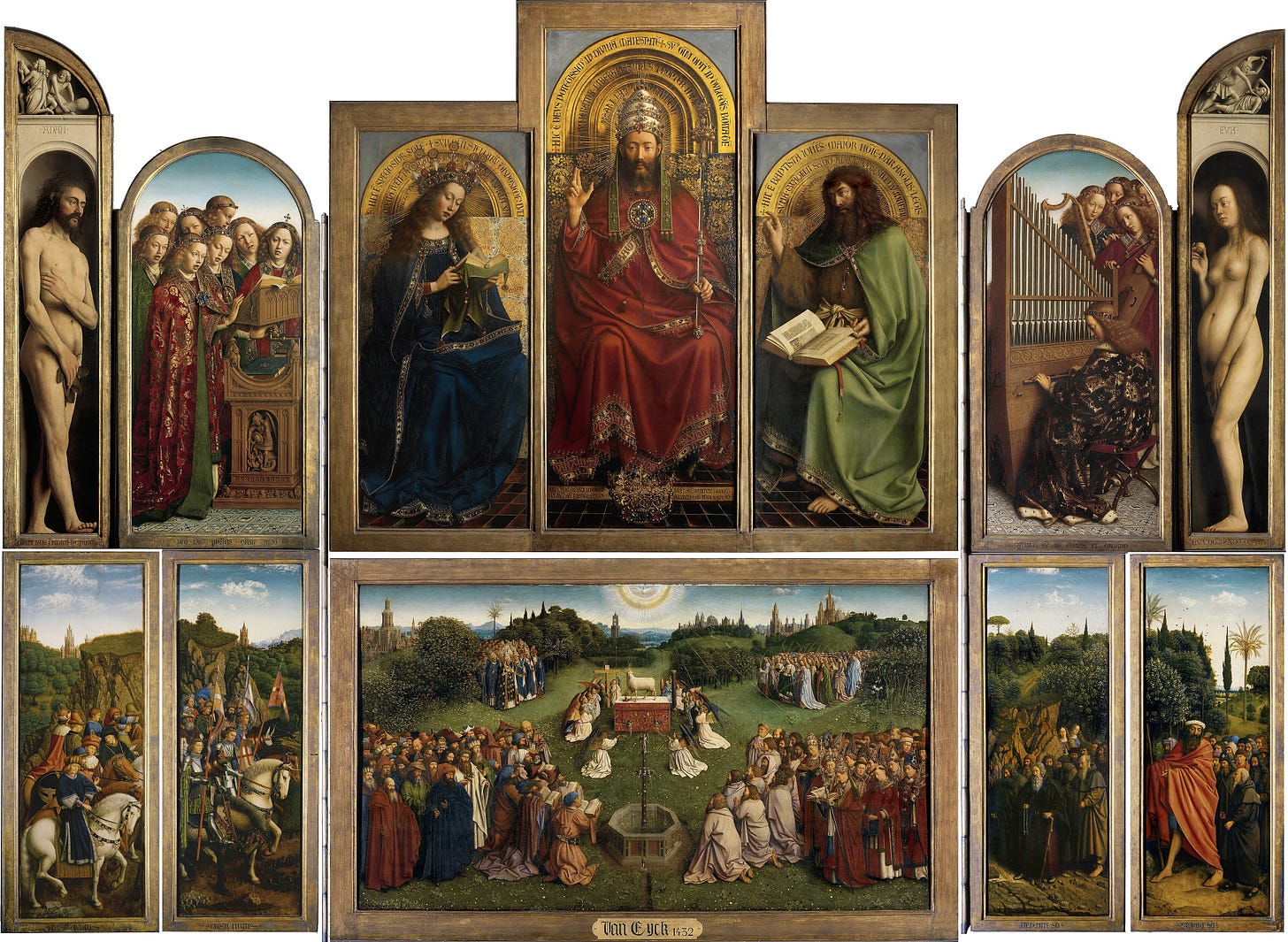
The ‘common taste’ or, put another way, the common sense of what is beautiful, is that standard that emerges over time and in consideration of most people in a society. It is a tradition that preserves and passes on this common taste over generations. As cultural phenomena, artistic traditions can vary across societies, even while retaining universal principles. For example, within the iconographic tradition of sacred art, each national church tends to develop its own style, so that Greek icons are distinct from Russian icons, which are distinct from English Romanesque icons. These are different traditions of iconography, each beautiful in its own way.
Therefore, the best way to determine whether a work of art is beautiful is to ask what tradition tells us about it. That is to say, if something has been considered beautiful by many people for a long period of time, then there is a greater chance that it is beautiful than for those objects that people appreciate for a short period of time. Tradition is not an infallible guide, but I suggest a more reliable guide than a panel of elite intellectuals in a university art department…or even, dare I say it, sacred art writers on Catholic blogs!
In consulting tradition, we consider the society for which a beautiful object was intended. So we would say that the cosmos was made for all men to behold. If we want to consider whether or not the cosmos is objectively beautiful, we ask ourselves if men have generally thought that it was.
Similarly, in sacred art, the best guide to the goodness of the style is its impact on the worshipers for whom it was intended. Does it, overall, draw people to God as intended? The pool of people to draw on in this latter category is much smaller than ‘all men’, and so the reliability of the judgment of the effect will be less certain, but it is still the best that we have.
Popular Culture vs Tradition
This appeal to general opinion will likely disturb some readers who, sensing that popular art and popular culture are low-brow and superficial, worry that it is an overreliance on democracy and popularity. Doesn’t this just tend to the lowest common denominator, rather than an elevated common taste, one might ask? In the short term, the answer is, very possibly yes. However, if we give at least as much weight to the past as to the present, we have a chance, at least, of overcoming the vagaries of fashion. The next generation will not know much of what is popular today. However, some popular items will remain known and appreciated in subsequent generations, and these are more likely to be truly beautiful. Chesterton called this approach of considering past and present opinions the ‘democracy of the dead’. The more we look at the art that transcends its own time and has been considered beautiful by many people in the society for whom it was intended, the greater chance we have of being able to choose the best.
I would argue that we should be so respectful of tradition that, in judging the best art, we should adopt a general principle referred to by Benedict XVI as a ‘hermeneutic of continuity’1. By this principle, the default position is always with tradition. We assume that tradition has the best answer, content, and style unless we have compelling evidence to the contrary. If current needs are identical to those of the past, we conform to tradition. Where needs differ, we may respond accordingly and adjust accordingly to the extent those needs are met. The artist’s whim is not considered here. This principle was articulated by Pius XII in the encyclical Mediator Dei when he said the following:
What we have said about music applies to the other fine arts, especially to architecture, sculpture and painting. Recent works of art which lend themselves to the materials of modern composition, should not be universally despised and rejected through prejudice. Modern art should be given free scope in the due and reverent service of the church and the sacred rites, provided that they preserve a correct balance between styles tending neither to extreme realism nor to excessive “symbolism,” and that the needs of the Christian community are taken into consideration rather than the particular taste or talent of the individual artist. (Mediator Dei, 195)
These principles guide our judgment. There is room for much variation, individual expression, and taste while remaining in conformity with the principles Pius articulates. This is true of all artistic traditions. A tradition is not defined by unbending rules that cannot be adapted to different situations. Rather, every identifiable tradition, such as the Baroque, Gothic or iconographic traditions in art, conforms to core principles that characterise it unwaveringly, but those principles can be applied differently according to different needs. Indeed, it is the mark of a living tradition that it can always adapt to contemporary needs without contravening the principles that define it.
 |




