

Lost in Translation #153
In the Canticle of the Sun, Saint Francis moves from the sun, moon, and stars to Brother Wind, the air, and the weather:
Laudato si, mi Signore, per frate Uentoet per aere et nubilo et sereno et onne tempo,per lo quale, a le Tue creature dài sustentamento.
Which I translate as:
Praised be You, my Lord, through Brother Wind,and through the air, cloudy and serene,and every kind of weather through whom you give sustenance to Your creatures.
Survivalists talk about the so-called the Rules of Three. It is extremely difficult to survive three months without companionship, three weeks without food, three days without water, three hours in a harsh environment, and three minutes without air.
The wind and the air, filled as they are with oxygen, provide life for all creatures on earth. But they have also been loaded from time immemorial with theological significance. In the Bible, there is often an equivalence between wind and spirit: indeed, in Hebrew, Greek, and Latin, they are the same word – ruah, pneuma, and spiritus, respectively. In the Book of Genesis, the spirit of God moves over the waters when God creates the heavens and the earth, and the “spirit” here can either be a wind or the Holy Spirit. At the first Pentecost, it is both, for the Holy Spirit manifests Himself on that occasion as a mighty wind; indeed, one of the titles of the Holy Spirit is the Breath of God. And when Jesus imparts the Holy Spirit on the Apostles after He rises from the dead, He does so by breathing on them:
And He said to them: “Receive ye the Holy Ghost. Whose sins you shall forgive, they are forgiven them; and whose sins you shall retain, they are retained” (John 20, 22-23).
Furthermore, in Saint Francis’ day and up until the 1960s, the Roman Rite of Baptism required the priest to perform ritual acts of breathing. The “insufflation” was when he breathed three times on the baptismal water and said to Almighty God: “Do You with Your mouth bless these pure waters: that besides their natural virtue of cleansing the body, they may also be effectual for purifying the soul.” The “exsufflation,” on the other hand, was when the priest breathed three times on the baptismal candidate and said to the devil: “Go out of him...you unclean spirit, and give way to the Holy Spirit, the Paraclete.”
Finally, besides the Holy Spirit, wind can symbolize the human soul: “And the Lord God formed man of the slime of the earth: and breathed into his face the breath of life, and man became a living soul” (Gen. 2, 7).
__99659.1541619784.gif?c=2)
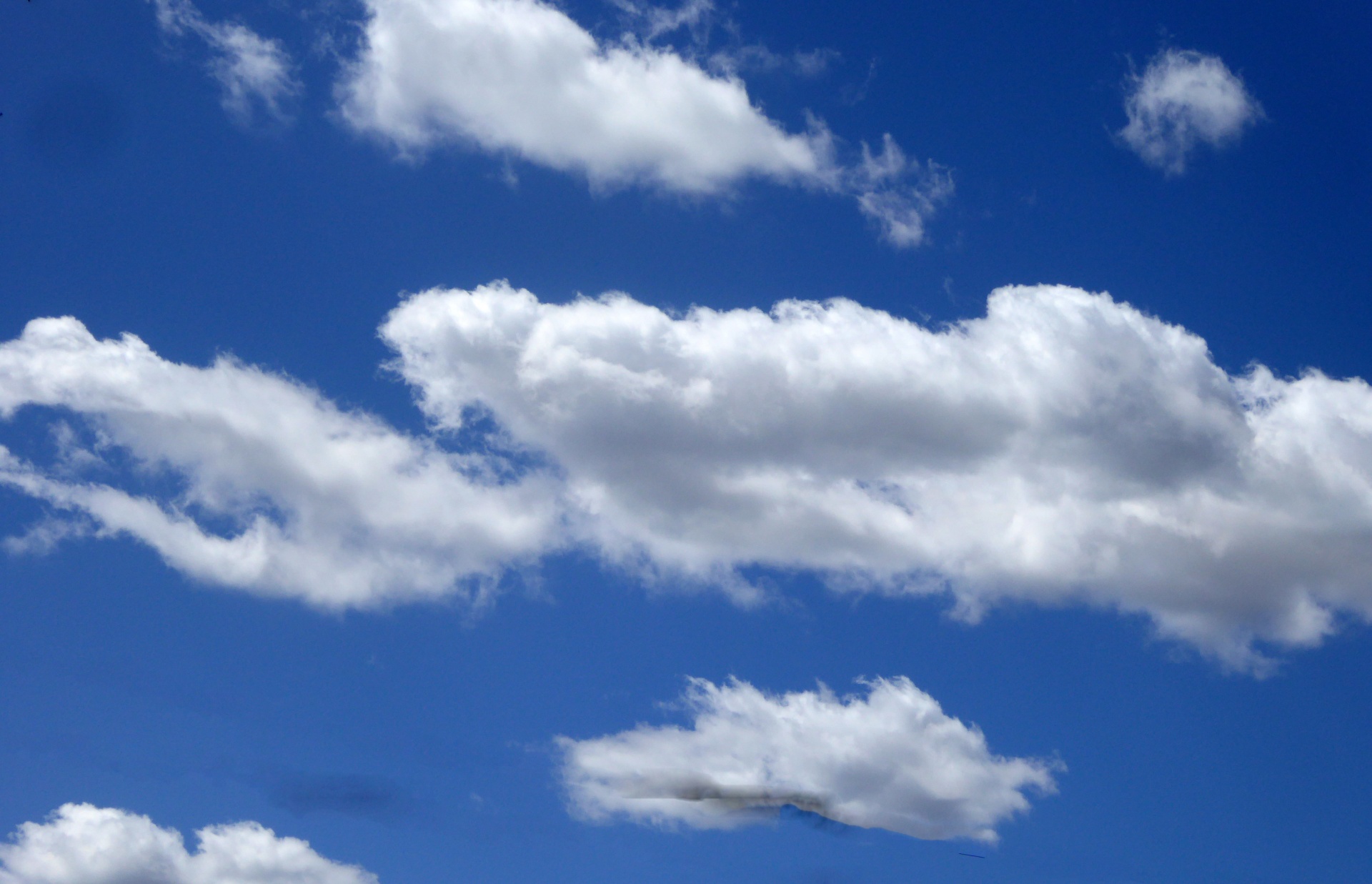
Saint Francis next praises the air as cloudy and serene. For me, these words conjure up the picture of a bright blue sky populated by puffy white clouds, the kind that can look like all manner of animals and faces.
In the past century we have learned not to take the air for granted. Industrial pollution of the atmosphere has led to smog, acid rain, lead poisoning, and according to scientific consensus, climate change, with carbon dioxide emissions creating a greenhouse effect that leads to more extreme weather.
And weather is possibly the theme of Saint Francis’ final object of praise in this stanza. I say “possibly” because the standard English interpretation of the word Francis chose, tempo, is “every kind of weather.” But a more direct translation of tempo is simply “season.” Is Francis praising rain, drought, sleet, and snow, or spring, summer, fall, and winter? In some respects, it does not matter, for it is indeed through the seasons, which consists of different kinds of weather, that God gives sustenance to all His creatures. And for that we are grateful.
This article appeared as “Brother Wind” in the Messenger of St. Anthony 127:6, international edition (June 2025), p. 21. Many thanks to its editors for allowing its publication here.




