

Soon I discovered that most people have no clear notion of the origin, background, and true meaning of these customs which they observe in their homes. Since the great majority of our Christmas, Easter, Thanksgiving, and other observances actually go back to the inspiration of liturgical thought and symbolism, I judged it a worthwhile subject to explain. Also a priestly subject; for, given the fact that our popular customs contain the radiation of the liturgy, the understanding of this radiation would make the celebration of our Christian feasts within the family warmer, holier, and more truly joyful. At the same time, a better grasp of the religious meaning and message of our family customs would give parents valuable help for the religious training of their little ones.
--Rev. Francis X. Weiser, SJ
Last week, we surveyed the life and writings of Fr. Francis X. Weiser, SJ, whom we have dubbed “The Domestic Heortologist.” This, week, we examine the principles undergirding his work on the liturgical year.
In the paragraph cited above, Weiser outlines four features of his liturgical works that are worth examining in detail (albeit in a different order): 1) an explanation of customs to correct widespread ignorance; 2) the formation of children; 3) the radiation of the liturgy; and 4) an emerging American melting pot of devotional practices. To these we add a fifth: Weiser’s relationship to the Liturgical Movement.
1. Correction of Ignorance
Weiser begins his Holyday Book thus:
“Many people celebrate the holydays and know their names; but of their history, meaning and origin they know nothing … Truly, such ignorance deserves to be blamed and ridiculed” – St. John Chrysostom … This book was written to provide the information which St. John would have wished the faithful to possess.
Like other voices in the Liturgical Movement, Weiser placed a premium on a historical understanding of liturgical and paraliturgical practices, and lamented the lack of historical accuracy in much of the literature on the subject. On one end of the spectrum are “viciously false” attempts to trace every Christian holiday to a pagan source; on the other are pious “etiological” explanations that substitute for careful historical research. Weiser sought a middle ground between these two extremes.
2. Formation of Children
In his publications and in his forty-year pastoral ministry to college students in Austria and the United States, Fr Weiser had an abiding interest in the formation of Catholic youth, and he saw his liturgical writings as a part of that apostolate. In one of his last books on the Church year, he writes:
Happy the children who grow up in a home that is rich in traditional celebrations! Their lives will be more full and radiant through the inspiration of this childhood experience. Faith, culture, emotional security, absorbing joy, satisfaction of mind and heart, a warm spirit of love and union in the family, sound development of character and personality traits, appreciation of true values: these are some of the fruits which a childhood of such joyful family celebrations produces.
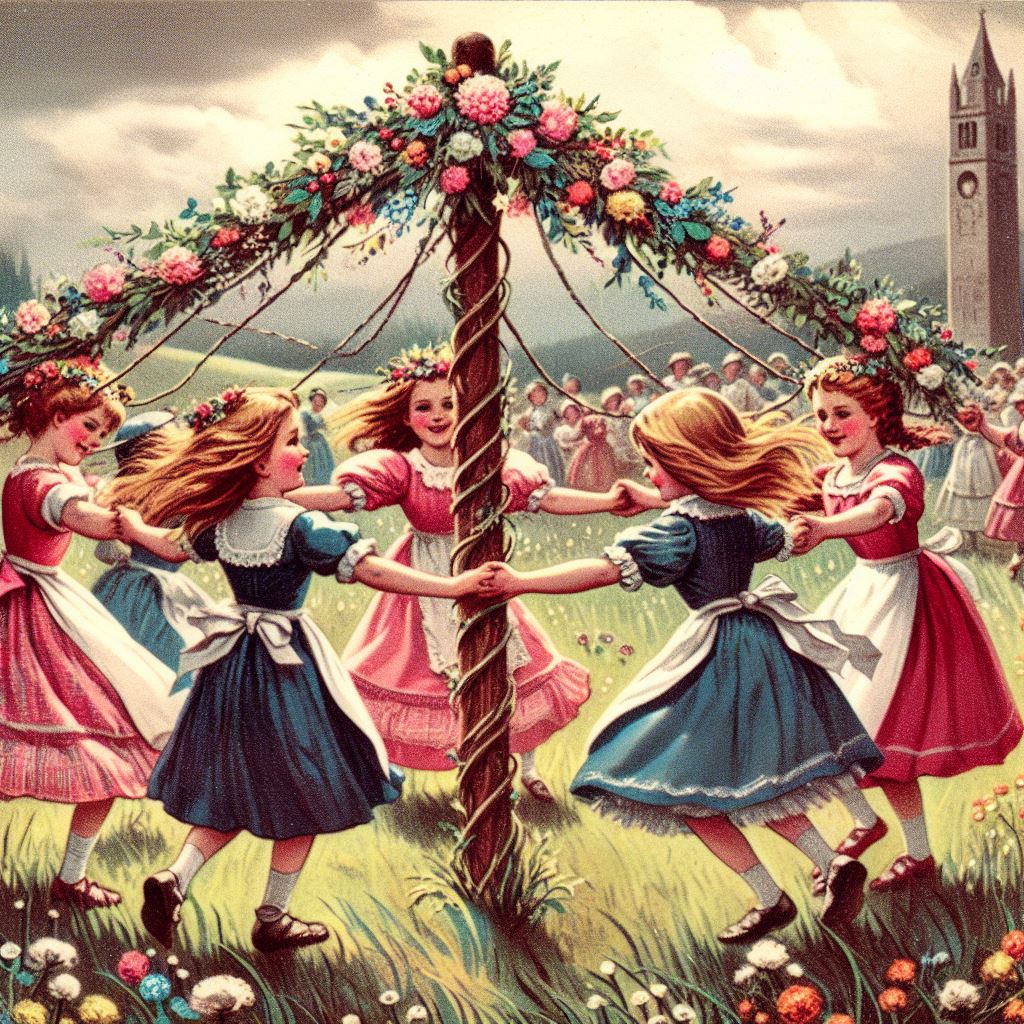
Weiser also believed that filling a home with liturgical joy was a form of evangelization. In his most popular juvenile fiction novel, Das Licht der Berge, the initially agnostic narrator Fritz describes the effect that his cousin’s pious home had on his brother Otto. Their cousin’s family observes a traditional Christmas Eve, which includes elaborately decorating the manger scene. Fritz notes that “Otto went about the job with the utmost interest. I could notice how his soul was opening out as a result of the religious atmosphere he breathed in this house.” Fritz would eventually be caught up by the same breath as well.
3. Radiation of the Liturgy
The religious atmosphere that Weiser describes is one that is informed by sacred liturgy (its rites and calendar) but separate from it. A phrase that he uses to describe the relationship between the Church’s official ceremonies and the laity’s domestic devotions is “the radiation of the liturgy into Catholic homes.” As he explains:
The radiation of liturgy has created many symbols, customs, and traditions that have enriched the observance of festive days and seasons in home and community, and remnants of pre-Christian lore have, in most cases, assumed new meanings and motivations through the influence of liturgical thought and celebration.
Therefore, Weiser concludes, understanding
this radiation would make the celebration of our Christian feasts within the family warmer, holier, and more truly joyful. At the same time, a better grasp of the religious meaning and message of our family customs would give parents valuable help for the religious training of their little ones.
Weiser’s works have been described as a study of the paraliturgical, but since the word, for some at least, denotes practices in opposition to the official liturgy, perhaps the better term is “periliturgical,” that is, customs surrounding the liturgy, like rays around the sun. In any event, his interest in the subject was shared by many Americans in the post-war era. As Msgr. Luigi G. Ligutti, leader of the Catholic rural life movement in the United States, writes in his preface to Florence Berger’s 1949 Cooking for Christ:
This book is an extension of the Missal, Breviary and Ritual because the Christian home is an extension of the Mass, choir and sacramentals. … Liturgical seasons or feast days were intended not merely for church and cloister. To be fully effective and enjoyable, they have to wrap kitchen and commons in their colorful mantle. The motto of the National Catholic Rural Life Conference is “Christ to the Country and the Country to Christ.” We paraphrase it here by saying “Christ to the Kitchen and the Kitchen to Christ.” This is reverent as well as simple.

Berger herself is more succinct: “If I am to carry Christ home with me from the altar, I am afraid He will have to come to the kitchen because much of my time is spent there.” In many respects, Weiser wrote his liturgical books for readers like Florence Berger.
4. The Melting Pot
Weiser describes American holiday life as one that is “molded into one unit out of the best national Christmas lore of various immigrant groups.” Our author wished to contribute to this eclectic molding by making people aware of the Christian meaning behind ethnic lore. His writing is at times nostalgic, but it is not antiquarian or archeologist. Despite his fond boyhood memory of the visit of St. Nicholas, for example, he does not advocate the restoration of this practice but rather “a revival of the veneration and annual celebration of the Saint, who is still patron of little children.”
Weiser was hardly alone in trying to create an American melting pot from international Catholic customs. As early as 1941, fellow emigrees like Therese Mueller published her Family Life in Christ. Of her Claudio Salvucci writes:
Having watched European parents relinquish their children’s Catholic upbringing to religious institutions, only to see the secularization of those institutions, she was keen on giving Catholicism a solid grounding within the home, including celebrating feasts, praying the Office, and maintaining a home altar. Mueller popularized the German Advent Wreath in the United States and helped standardize its violet and pink candles as an antidote to the “horrible, secularized, commercialized Santa Claus, more and more shameful each year.”
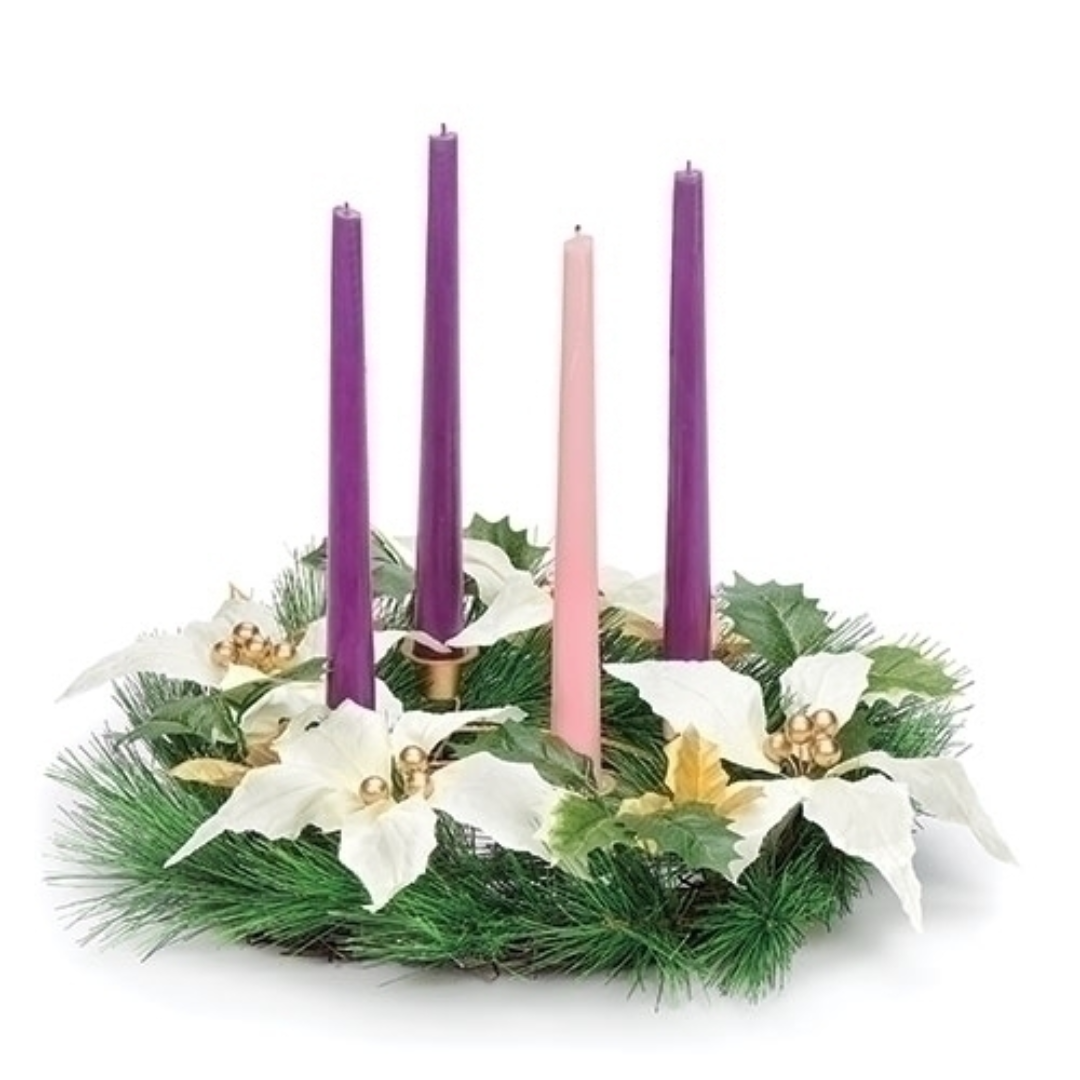
An American development: the violet and rose Advent calendar
Possibly the most famous author of this period was Weiser’s friend Maria von Trapp, who in 1955 wrote Around the Year with the Trapp Family, a compendium of periliturgical devotions. Again Salvucci:
Like Mueller, she was a German-speaking emigrant from the Hitler regime, and she had an existing, deeply Catholic Austrian cultural bank to draw from that her American friends admired. They said to her: “These lovely old folk customs of yours–couldn’t they be introduced in our homes too? They really are not necessarily Austrian or Polish or Italian–they are Catholic, which is universal.”
Kathryn A. Johnson notes that this chapter of American Catholic history was marked by a “shift from ethnic communities with special religious traditions to a ‘melting-pot’ approach to family rituals” and that popular literature was an important catalyst in this transition:
In the mid 1950s, for example, two manuals, Rev. Francis Weiser’s Religious Customs in the Family and Rev. Bernward Stokes’ How to Make Your House a Home, were published as aids “for persons whose duty it is to shape and mold the character of children.” These books covered the teaching of both general customs, like the sign of the cross and the sacraments, and special seasonal rituals, including Christmas traditions, Holy Week, and the customs of Lent. These books, and literally thousands of other books and articles—the Family Life Bureau alone published five books on family liturgical practices—taught Catholic parents “modern” ways to incorporate older customs into their homes.
5. The Liturgical Movement
Just as Weiser was responding to a moment in American history, so too was he capitalizing on and contributing to a moment in Church history. The Liturgical Movement in the United States was enjoying unprecedented popularity, with a growing thirst for the kind of information that Weiser was providing. Weiser himself supported this movement, dedicating his Holyday Book to “the Liturgical Movement in the United States.”
But Weiser was also critical of certain strains of the Liturgical Movement of his time. In an article entitled “Some Observations on Recent Literature,” he warmly welcomes the flood of literature that, like his own, attempts to enrich family life with religious customs. But he also points out three areas of concern:
First, he did not approve of trends that blurred the difference between priest and laity, liturgy and domestic custom. Some contemporary authors were advocating that the father merely repeat the words and actions of the priest at home, even to the extent of blessing an object with holy water and calling it a “sacramental.” Weiser advises caution: “It is possible that Rome will approve this new procedure. On the other hand, it might be advisable to make sure of such approval before spreading the custom too far.” Instead Weiser recommends:
Let liturgy, its thought and symbols, inspire your celebrations in the home; but instead of using liturgical texts and symbols in a mere imitation of what the priest does, create new and different forms for these thoughts and symbols in your home. (This is the way most of our beautiful customs developed centuries ago.) Know the liturgy, explain it to your children, make them love it; but don’t “perform” it vicariously in your home.
Second, Weiser was wary of unwarranted innovation,
It would seem to be of special importance that, above all else, we present the true story of these established customs and make them understood again in their original meaning. Since they exist already in millions of families, it should be comparatively easy to get our population (and not only the Catholics) interested in such explanations. Thus the radiant light of liturgical inspiration and religious thought could be rapidly spread everywhere by explaining the “old” customs before we try to introduce “new” ones.
and especially wary of innovation that arose from ignorance or haste:
Many Catholic writers, not familiar with the true history and meaning of our established festive lore, too quickly propose ready-made changes, substitutions and suppressions. The result is a confusing variety of well-meant suggestions, often advanced with more zeal than knowledge or psychological insight.
As mentioned earlier, Weiser was a student at Innsbruck of the famous Jesuit liturgical historian Josef Andreas Jungmann, to whom he dedicated his Handbook of Christian Customs:
This book is dedicated, as a belated but sincere token of gratitude, to my former professor at the University of Innsbruck (Austria), the Rev. Joseph A. Jungmann, S.J. The lasting influence of his personality and example no less than his masterful teaching inspired me, as it did many others of his former students, to attempt a modest contribution to the great task of making the treasures of holy liturgy better known and appreciated. May this handbook not only be useful to anyone seeking information and understanding of our feasts and folklore, but also help toward a joyful and fruitful celebration in our churches, hearts and homes.
His sincere gratitude, however, should not be mistaken for complete agreement. Jungmann was convinced that liturgy had become a “lifeless act” through clericalization and thus he became an advocate for sweeping liturgical reform. Weiser, as far as I can tell, does not recommend a single change to the liturgy. On the contrary, rather than see the liturgy of his day as lifeless, he saw it as radiating life and continuing to inspire personal, domestic, and cultural development around the world. “The celebration of our Christian feasts within the family [can be] warmer, holier, and more truly joyful” not through liturgical innovation but through a recovery of understanding why we do what we do.

Rev. Josef Andres Jungmann, S.J.
Reception
Weiser’s works were generally well received in the 1950s and 1960s. Nash K. Burger wrote in the New York Times:
Since books about Christmas seem as inevitable as Christmas itself, it would be well if they were all as satisfying as Francis X. Weiser’s “The Christmas Book.” Seldom have so many aspects of the origin, observance and meaning of this important Christian holy season been presented in such attractive form.
America Magazine called Handbook “a very palatable and often engrossing introduction to the liturgy”—nay more, it was “an introduction to Christian culture” that is “engagingly written.” Oxford’s Journal of Bible and Religion voiced a similar sentiment about The Holyday Book, describing it as a “a most informative and at the same time delightful book” written in a “friendly, sympathetic style” by an author who “manifests an extraordinary knowledge of languages, folklore, customs, liturgy, and even of cooking recipes” yet who “wears his scholarship gracefully and lightly.”
Responding to these compliments, Weiser revealed the “secret” of his writing as well as his perennial concern for the youth and his own high standards:
Allow me to tell you a secret. I never had the benefit of “studying” English; never had a teacher or any formal instruction in this language. All the English I know, was-to use a popular expression-just “picked up” by reading good English books. (The word “good” refers to both English and books.) That is the reason why I am now so keenly and sadly aware of the incredible harm which the atrocious language and spelling of our comic books must cause to the minds of children. If reading “good English” books gave me my knowledge of the language, what kind of language habits will the comics produce in our children?
According to the Archivum Historicum Societatis Iesu, Weiser’s biographies of famous Jesuits are brief, accurate, and designed to excite zeal for the missions. They also do a fine job relaying the facts but do not use the critical method of historical scholarship. His liturgical books are “a sketchy but deftly written survey of nativity plays, flowers, symbolic lights and fires, and Christmas foods. Although more comprehensive studies of this fascinating subject have been made by popular writers for a general public, the Christmas Book will find many interested readers among laymen of the Roman Catholic faith.” “Folklorists,” writes one reviewer, “will wish for a more detailed, carefully annotated study. The reference notes serve as a somewhat insufficient guide to the sources used in compiling the data.” “This book [in the genre] of popularization pursues a pastoral goal and includes neither a bibliography nor critical discussion,” writes another.
Aside from his own personal observations or experiences, Weiser depended on the scholarship of others to compile his overview of liturgical customs. One drawback to such a dependence is that one’s “sketches” are only as good as one’s sources; when they err, so do you. In Handbook, for example, Weiser opines that pretzels derive their name from bracellae, a supposed Latin name for “little arms.” The problem is that no such word exists in Latin; it is more probable that pretiola (“little rewards”) is the source of the word “pretzel.”
The Post-Vatican II Era
Weiser’s last monograph on heortology, The Year of the Lord in the Christian Home, appeared in 1964. After that, and aside from some miscellaneous articles on the Church, he returned to German juvenile fiction and biography: between 1966 and 1974, he published seven more books and three biographical entries for New Catholic Encyclopedia. His last book to appear in English was Kateri Tekakwitha in 1971, a translation of his 1970 Das Mädchen der Mohawks, and his last book of all was his 1974 biography of Jesuit priest and explorer Pierre de Smet, In den Bergen von Montana (In the Mountains of Montana).

In 1970 at the age of sixty-nine, Weiser retired from teaching at Boston College and moved to Campion Center in Weston: a Jesuit retirement community, the center is located on the campus of the former Weston College where he had taught twenty years earlier. (Weiser’s retirement may have had something to do with the 1967 Age Discrimination in Retirement Act, which mandated retirement at the age of sixty-five). The year that he retired, “in recognition of his scholarly and literary achievements,” his alma mater the University of Innsbruck awarded him a citation of honor and the Jubilee Medal. Francis X. Weiser, S.J. passed away on October 22, 1986 at the age of eighty-five.
It is not known why such a prolific author stopped writing on the liturgy. There may be several reasons.
First, Weiser may have said all that he wanted to say on the subject. The Handbook of Christian Customs is already a thorough compendium of the entire liturgical year, and his subsequent books on periliturgical practices cover all the essentials of domestic devotion.
Second, he may have recognized that the cultural conditions that made his works popular and useful were no longer as strong. The 1950s was a great melting pot moment; the divisive 1960s was not.
But perhaps the greatest reason for Weiser’s abandonment of heortology was the general reform of the Roman Rite that was already taking place in 1964 and that would culminate with the promulgation of a new Missale Romanum in 1969. The new missal included a significantly different calendar that at times makes difficult the implementation of Weiser’s assembled folklore. Gone were the customs surrounding Septuagesima and the customs surrounding saints’ feast days, such as St. Thomas the Apostle, whose feast (once rich in winter customs) was transferred from December 21 to July 3.
That said, Weiser’s work still contains valuable information that is relevant today [even for those observing the Novus Ordo]: almost everything he says about Advent and Christmas, for example, is still applicable, even for his beloved feast of St. Nicholas. Moreover, his work remains a model for us all, whether we are scholars or simply members of the Body of Christ trying to enrich our lives with the Church’s liturgy. As he writes: “When we Catholics write about our own religious feasts and customs, the goal is to present our very best, not only in devotion and inspiration but also in scholarship.”
A version of this article (with full annotation) appeared as “The Domestic Heortologist: An Introduction to Francis X. Weiser, S.J.” in Antiphon: A Journal of Liturgical Renewal 29:2 (2025), pp. 144-171. Many thanks to its editors for allowing its publication here.




